
Rethinking your flight path can unlock more of the world; open jaw flights are the first step to a smarter, more efficient itinerary. (Image by Philip Myrtorp)
If you’ve been around online travel communities, you may have come across the concept of “open jaw flights.” Simply defined, an open jaw flight is a return ticket where the destination or origin point is different on each leg of the journey. When drawn out visually, it creates a triangular diagram resembling an open mouth, hence the name.
While the term may sound technical, seasoned travellers have long used this flexible flight itinerary to plan multi-city travel. Once you understand how to use this smart travel planning strategy, you may not plan a round-trip the same way again.
Know the different types of open jaw flights
There are three types of open jaw flights, each with its own benefits. Here is what they are and how each looks in practice:
Destination open jaw
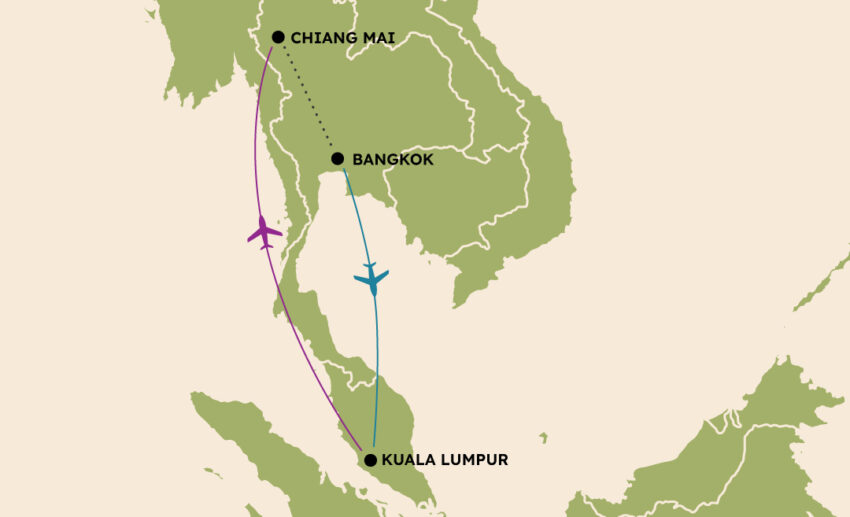
A passenger flies from one city to another, but returns to the origin city from a different city (fly from A to B, then return to A from C). If you’re planning to travel across multiple cities in a country, a destination open jaw flight is the way to go.
Example: You fly into Chiang Mai from Kuala Lumpur, take a road trip across Thailand with stops in several cities, and finally fly home to Kuala Lumpur from Bangkok.
Origin open jaw
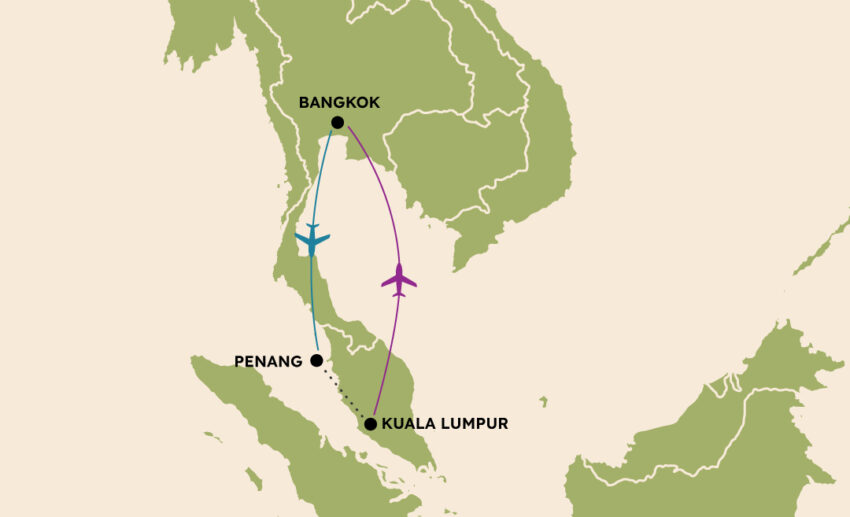
A passenger flies back from the destination into a different city from where they started the trip (fly from A to B, then return from B to C). This method of travelling works best for travellers looking to get somewhere fast and for a lower cost, with a longer journey home as a trade-off.
Example: You live in Kuala Lumpur but fly to Bangkok for a work conference. From Bangkok, you fly to Penang because the flight is shorter and thus costs less, then take the train or bus home.
Double open jaw
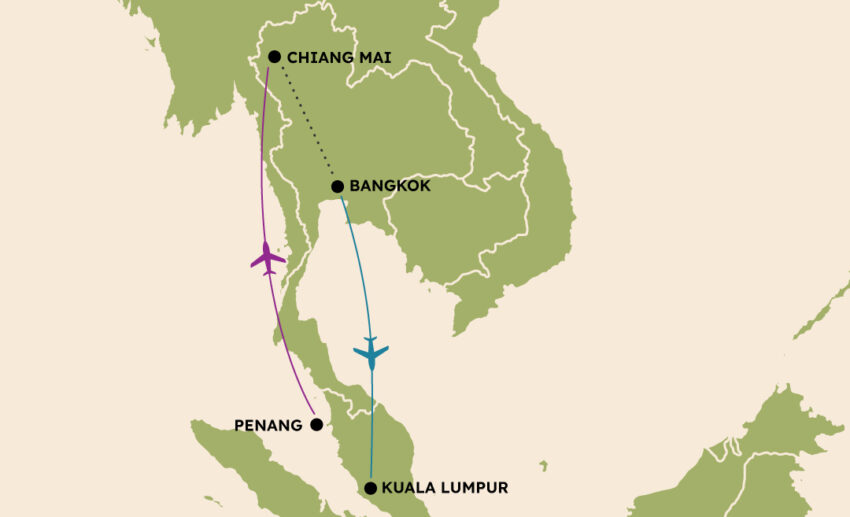
A round-trip flight itinerary where both origin and destination are different on the return leg. Note that different airports in the same city don’t count as an open jaw flight. Booking this type of flight is ideal if you’re planning continuous or long-term travel.
Example: You fly from Penang to Chiang Mai, have an adventure across Thailand that covers multiple cities, and then fly back to Malaysia from Bangkok to Kuala Lumpur.
Is it really worth the extra planning?

While it’s certainly more convenient to book a standard round-trip flight, there are a number of benefits that make an open jaw flight worth considering. The first obvious perk is being able to visit more destinations in one journey. It saves you time, too; a destination open jaw, for instance, eliminates the commute back to the original arrival airport. It’s also often easier and quicker to reach a more distant airport with a direct flight than to take a stopover from a nearer one.
Additionally, open jaw flights can be more cost-effective. Contrary to common perception, booking multi-city connections costs about the same, and sometimes even less, than standard round-trip flights. After all, the same fare components and codes apply when you book an open jaw itinerary.
That said, planning an open jaw flight itinerary does require organising logistics ahead of time. You’ll need reliable transfers between cities by land or sea. This means researching transport options, checking public transport routes, and booking train tickets or rental cars in advance. While you’re at it, booking accommodation in each city early can offer extra peace of mind.
How to book open jaw flights

Booking open jaw flights is fairly easy and can be done on most major flight aggregators. Simply use the ‘multi-city’ or ‘multi-destination’ option on tools like Skyscanner or Google Flights instead of the usual one-way or round-trip search. These platforms allow you to enter different destinations for each leg of the journey and often provide a handy calendar view to help you find the most cost-effective days to fly.
For your first flight, enter the origin airport and first destination. Next, enter the final city where you will fly home. For example, if you plan on flying from Penang to Chiang Mai and returning from Bangkok, you would enter Penang–Chiang Mai for the first flight and Bangkok–Penang for the second.
When using the multi-city option, be sure to include nearby airports and cities in your search. This can give you more options and help you find better airfare deals. Another option is searching for two one-way tickets, which can sometimes offer lower fares.
As you explore your options, remember to factor in the time and transportation cost of getting to and from the airport.
Booking an open jaw flight isn’t complicated once the process is demystified — it simply takes a little forward planning. If you’re looking to explore more intentionally and make the most of every journey, this is a smart way to travel further without unnecessary cost or backtracking.