From the soaring moon kites of Kelantan to the sacred, dream-woven textiles of Sarawak, Malaysia’s traditional crafts are more than just souvenirs—they are living stories of resilience and artistry that empower the communities keeping them alive. (Left image by @tobilaww. Right image by @tanoticrafts.)
Malaysia is more than just its food. Threaded through every state is a parallel story, told not in words but in handwoven fibres, fired clay, hammered metals, and carved wood. These living traditions connect travellers to communities and local artisans, whose skills have been passed down for generations and, in some cases, on the brink of extinction. Some of these crafts are celebrated and widely known; others are quietly disappearing, kept alive by a mere handful of makers.
Exploring these cultural art forms offers a way of sustainable travel that is rooted in respect and conscious support. Here are some of Malaysia’s most iconic local crafts, broken down state by state.
1. Perlis: Mengkuang Weaving
Malaysia’s smallest state keeps it simple and rooted. Mengkuang weaving uses dried Pandanus atrocarpus (screwpine) leaves to make mats, baskets, and food covers. The craft is deeply woven into the everyday life of village communities, with women traditionally working between the rhythms of domestic routines.
2. Kedah: Mengkuang Weaving and Rattan Basketry
Kedah shares the mengkuang tradition with its neighbour but leans harder into rattan. Baskets, trays, household containers, and furniture, all made from what grows nearby, reflect the state’s agrarian roots.
3. Penang: Nyonya Beadwork and Embroidery
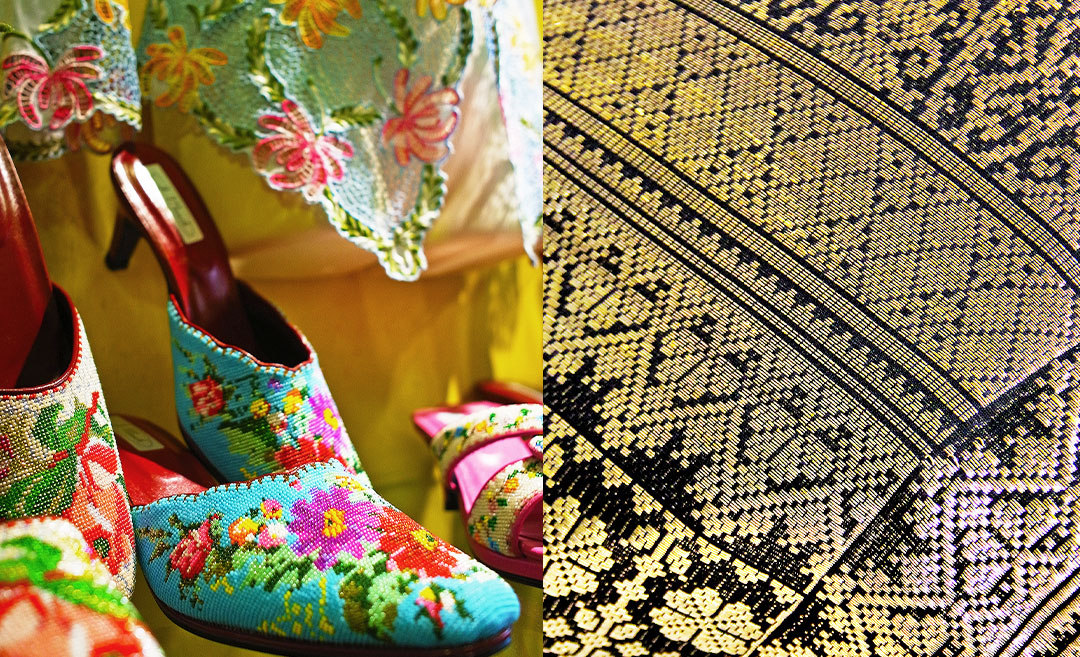
Penang’s craft identity is anchored in its Peranakan Chinese heritage, a hybrid culture born from centuries of trade, intermarriage, and cultural exchange between Chinese immigrants and local Malay communities. Nyonya beadwork and embroidery remain among the most painstaking expressions of this legacy, with thousands of tiny glass beads hand-stitched into floral and bird motifs taking weeks. The traditions extend into handmade joss sticks and paper offerings, ritual crafts tied to temple culture that remain very much alive.
4. Perak: Labu Sayong
Perak’s most distinctive craft, the labu sayong (clay pottery), is a gourd-shaped pitcher made in the village of Sayong, near Kuala Kangsar, for centuries. Iron-rich clay from the riverbank is hand-formed and fired over wood, then rolled in rice husks while still hot, giving it its signature matte black finish. The porous clay keeps drinking water naturally cool. Today, only a handful of artisans still make them the traditional way.
5. Kelantan: Wau Bulan and Wayang Kulit
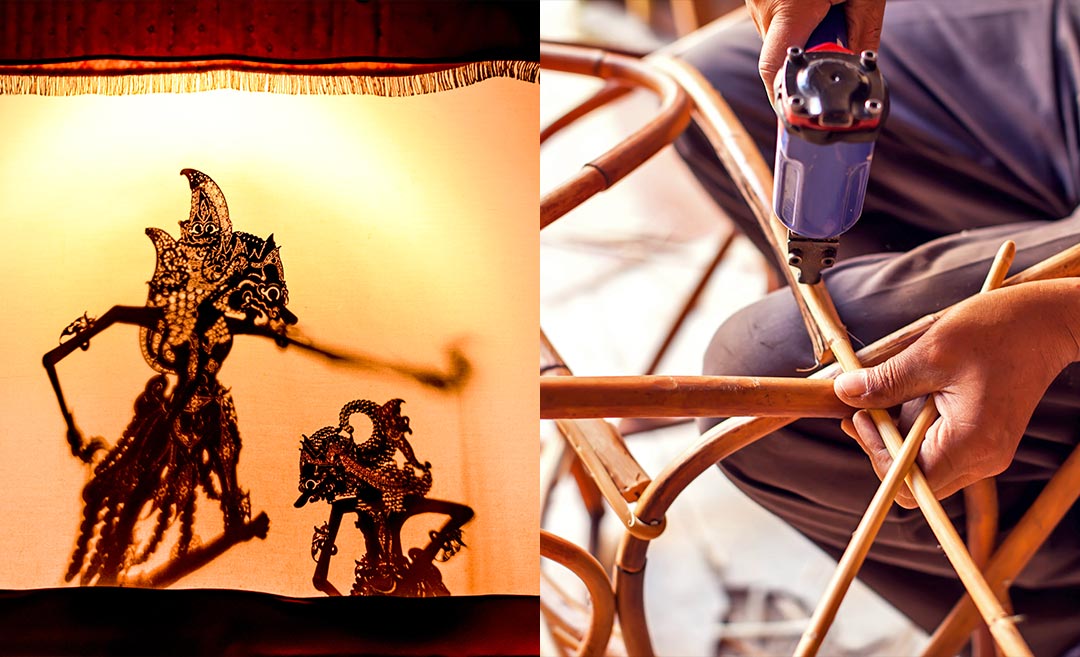
Kelantan is Malaysia’s craft heartland, with songket, batik, silverware, and wood carving all calling it home. But two stand out for cultural urgency. Wau bulan, the ornate moon kite featured on Malaysia’s 50-sen coin, can take months to complete, and the number of master craftspeople who still know how to make it is shrinking. Wayang kulit shadow puppets, carved from water buffalo hide and hand-painted in extraordinary detail, are equally endangered. Witnessing either craft in person is to see heritage in motion.
6. Terengganu: Songket and Traditional Boat Building
Terengganu’s songket is widely considered the finest in Malaysia; silk-and-gold brocade worn at royal events and weddings. Its quieter (and very endangered) sibling is traditional wooden perahu payang boat building, once central to the state’s fishing and maritime identity, and now kept alive by only a few craftspeople using hand tools and inherited joinery techniques.
7. Pahang: Jah Hut Woodcarving
Pahang is home to both tekat gold-thread embroidery and songket weaving, but its most distinctive contribution to the local craft landscape is the woodcarving tradition of the Jah Hut, one of Peninsular Malaysia’s Orang Asli groups. They carve bes, spirit figures believed to cause illness, as ritual objects used in traditional healing ceremonies. This is sacred work, not decorative. Around 10 known carvers still practise today, making it one of Malaysia’s most critically endangered craft traditions.
8. Selangor: Mah Meri Woodcarving
Royal Selangor pewter gets all the attention, but Selangor’s most significant traditional craft belongs to the Mah Meri, a small Orang Asli community found on Carey Island. They carve over 100 distinct designs of ancestor spirit figures (moyang) and ceremonial masks from nyireh batu, a mangrove hardwood, as well as pulai wood, drawing on an oral mythology of more than 700 gods. Land encroachment from oil palm plantations has severely threatened both the community and the materials they rely on, making each piece both an artwork and an act of cultural survival.
9. Negeri Sembilan: Minangkabau Wood Carving
Negeri Sembilan’s identity is inseparable from its Minangkabau roots, brought by migrants from West Sumatra centuries ago. This influence shows up most visibly in its rumah adat (traditional houses), where the curved rooflines are decorated with intricate floral and geometric wood carvings. Here, craft and architecture exist as one continuous expression of identity.
10. Melaka: Kasut Manek
Kasut manek, or Nyonya beaded shoes, are made by hand-stitching thousands of tiny glass beads onto canvas or leather in dense floral patterns. One pair can take months. Alongside Nyonya embroidery and kebaya needlework, they represent a craft culture that’s both highly decorative and deeply tied to rites of passage and intergenerational knowledge.
11. Johor: Rattan and Pandan Weaving
Johor’s craft traditions are practical by nature: rattan baskets, pandan mats, and woven household goods made by rural communities. Songket weaving and woodcarving traditions run parallel, shaped by both Malay and Orang Asli influence, adding a quiet layer to a craft identity that rewards those who look a little closer.
12. Sarawak: Pua Kumbu
If there’s one craft on this list that stops you in your tracks, it is this one.
Pua kumbu (sacred weaving) is woven by Iban women on backstrap floor looms using natural plant dyes (engkudu roots and stems, and tarum leaves) in a warp-ikat technique passed down through generations. Each cloth takes over a month and carries designs from Iban mythology, said to come to master weavers through dreams. The finished pieces are used in rites of passage, birth ceremonies, healing rituals, and funerals. Sacred in the truest sense, but with younger generations increasingly drawn away from the labour-intensive process, it is at risk of being lost.
13. Sabah: Rungus Weaving and Indigenous Beadwork
Sabah’s craft heritage spans multiple indigenous communities. The Rungus people of the Kudat Peninsula weave striking black-and-white geometric textiles on backstrap looms, while Kadazan-Dusun, Murut, and Rungus communities all produce elaborate beadwork for ceremonial necklaces, headdresses, and garments. Linangkit, fine embroidery stitched in thread on black cloth, rounds out a craft culture where every pattern encodes something about who you are and where you come from.