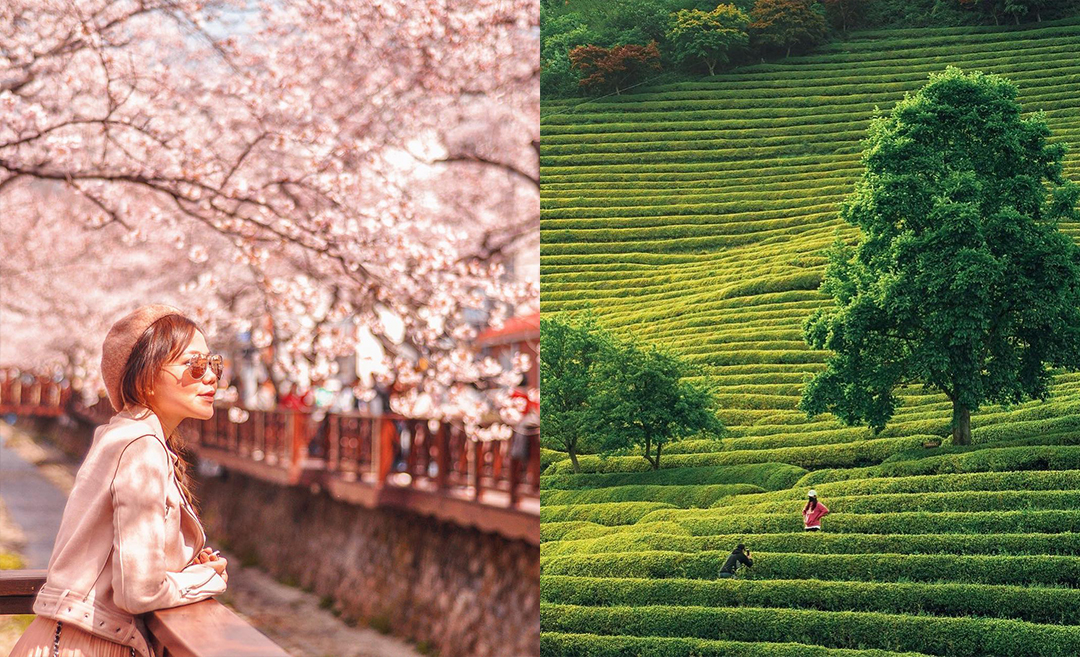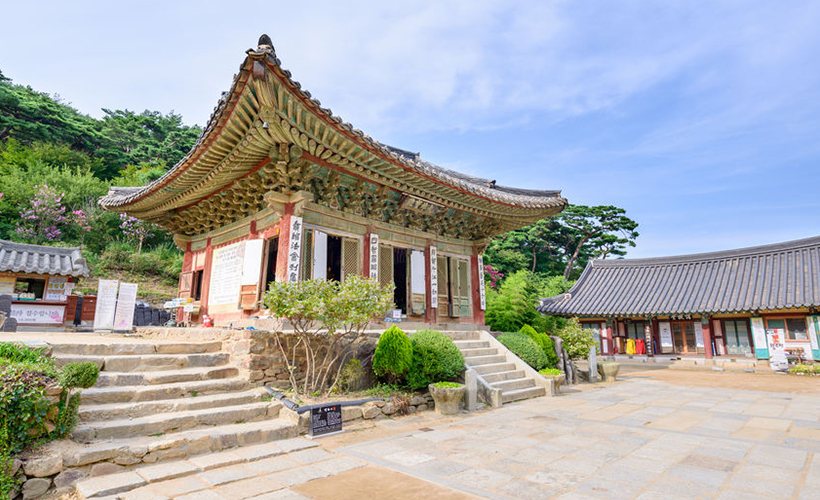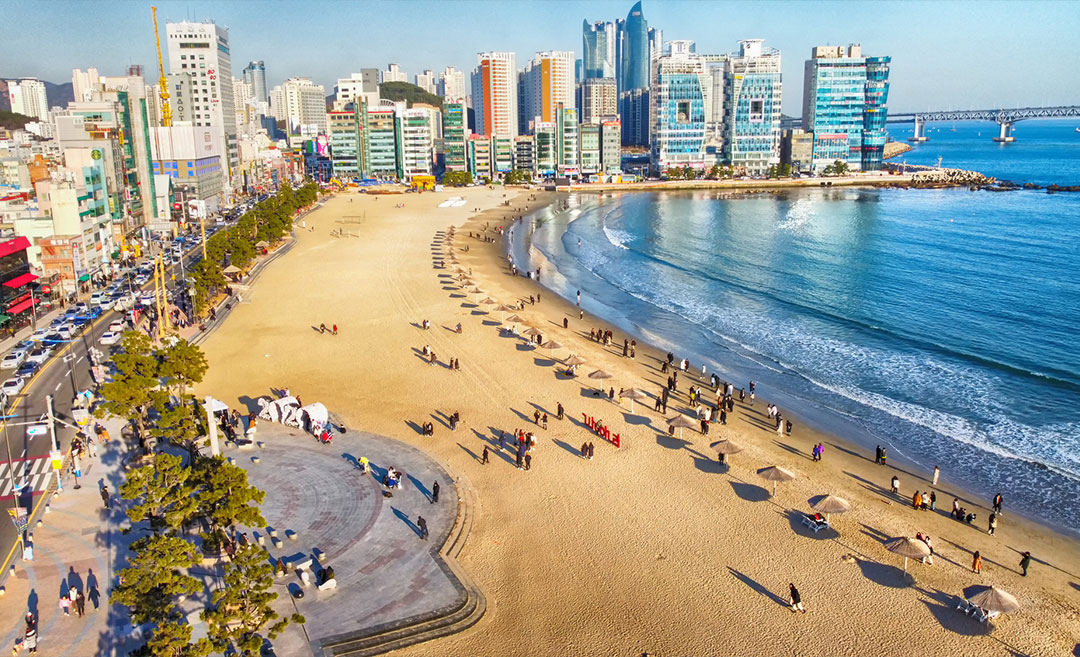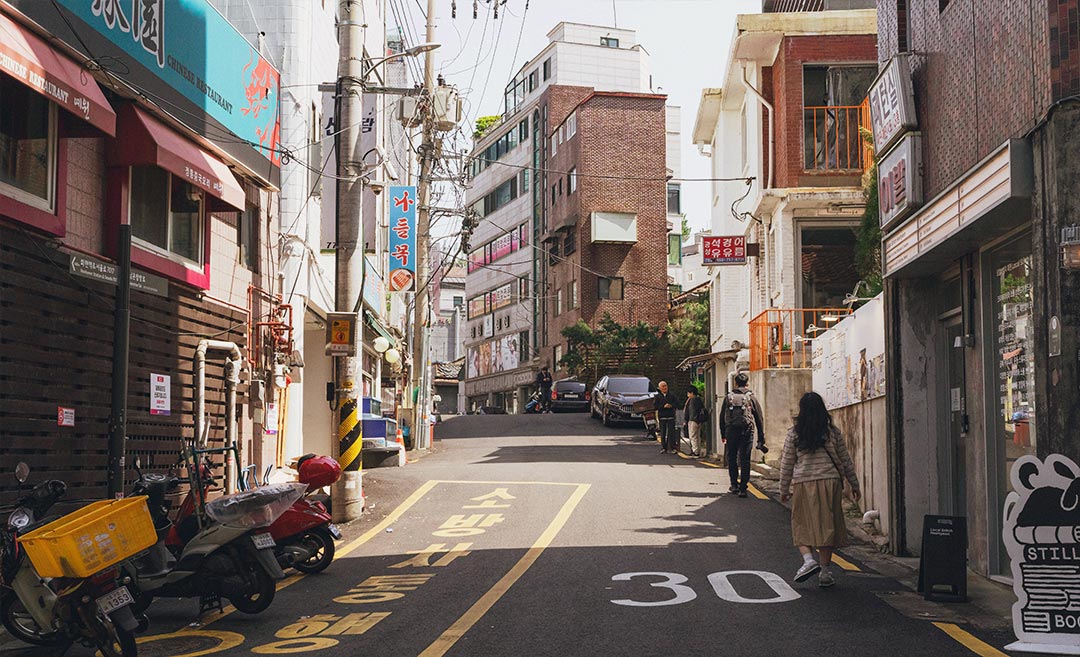
Caption: Exploring South Korea’s neighbourhoods is made easier by a city design that prioritises pedestrian flow and intuitive navigation. (Image by Theodore Nguyen)
I have been working and travelling in South Korea for the past few years, and I’m constantly in awe of how easy travel here feels, even with the language barrier.
I expected navigating daily life (at least at first) to be challenging. Instead, I found a country designed to make everyday movement surprisingly stress-free.
Although English is not widely spoken, smart systems and thoughtful conveniences make getting around far simpler than many travellers expect. These are the small details I’ve come to appreciate most — and why travelling around the country feels so effortless.
Door codes make accommodation check-in simple
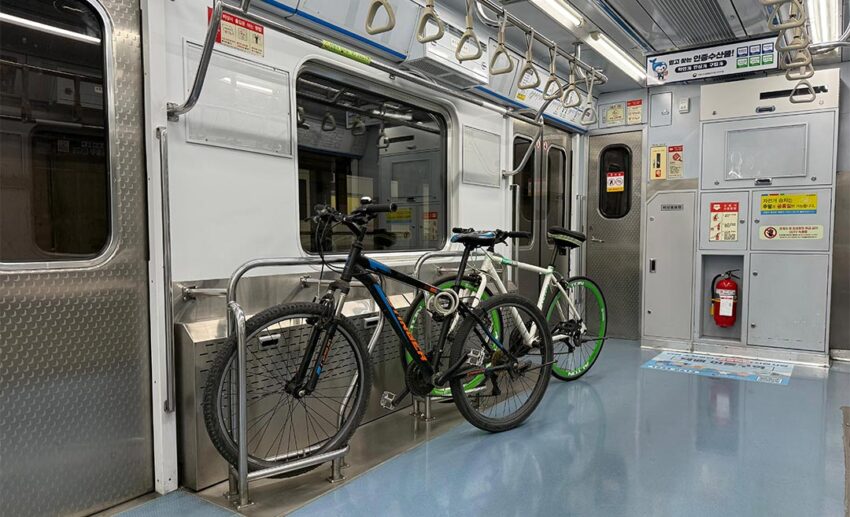
The city I live in, in South Korea, feels incredibly safe. You can drop your phone on the ground and find it still there many hours later. Many people even leave their bikes unlocked when parking them (I don’t, as my bike has been stolen once before!).
From my experience in South Korea, Koreans are kind, trustworthy and rule-abiding. You see Koreans waiting at pedestrian traffic lights until they turn green, despite not a single car being on the road.
This culture of trust is likely why electronic door-code locks are so common.
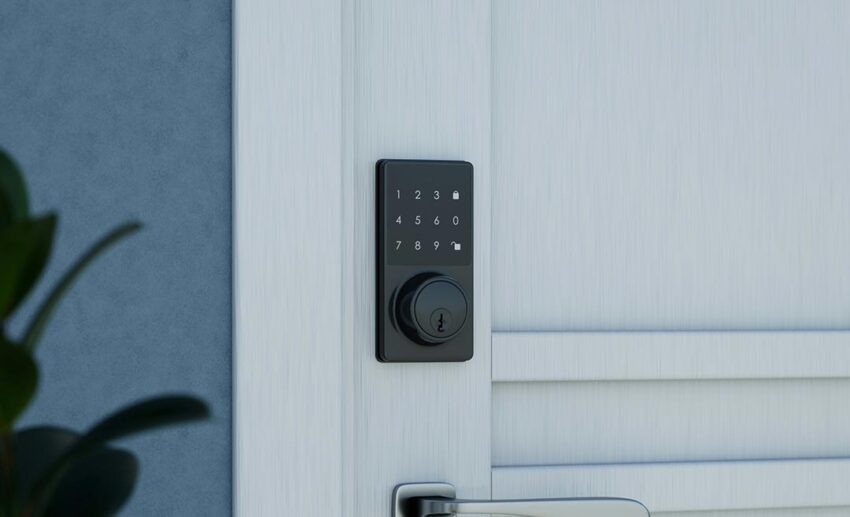
In every accommodation I have stayed in the country, I have been given a door code to enter. I just need to tap the code into the electronic door, and then I can enter the place. This makes life so much easier – no keys to chase or lose, and anyone you share the code with can enter.
It’s the same with many toilets in shop areas. Shops will give you a code, and you can enter the bathroom that is shared with other shops.
For travellers, this makes late check-ins and self-check-ins incredibly stress-free.
Self-order screens help you navigate the language barrier
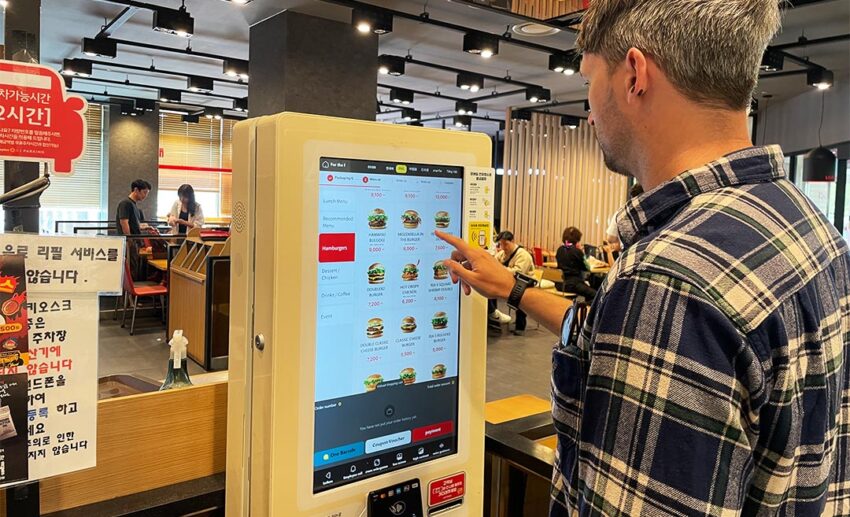
Whether you’re grabbing a smoothie to-go or sitting down to eat a poke bowl, you can order your food from a screen. Screens aren’t in every restaurant or cafe, but they’re extremely common in major cities.
Screens can be found outside a restaurant, at the counter or on the table you’re sitting at to eat.
For a non-Korean speaker like me, these screens are a lifesaver. Usually, there’s an option to change the language on the screen, and if not, I simply order using the photos.
I may miss some human interaction, but I definitely don’t miss awkward miming and broken Korean-English conversations.
Ordering through screens is not limited only to food, as I have also ordered a bike through a screen at a bike rental booth in the park!
Colour-coded roads make navigation easier
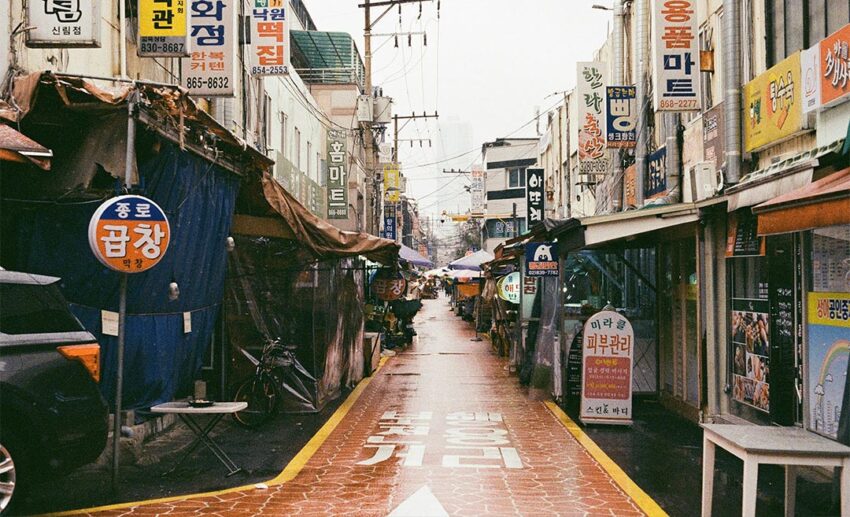
Here’s something I wish the rest of the world would adopt: colour-coded roads and paths.
When you are driving in South Korea, you will notice that some roads and turns are colour-coded. These colours are linked to road signs and Naver Maps (Korea’s version of Google Maps), so when you are navigating, you can quickly confirm you’re on the right route. Genius!
I have also seen pedestrian paths colour-coded. For instance, from the restaurant to the public bathroom is a colour-coded path you can follow to direct you. Despite signs being in Korean symbols and colour cues make navigation intuitive.
Download Naver Maps before your trip — it often works better than Google Maps in Korea.
Korean motels are surprisingly traveller-friendly
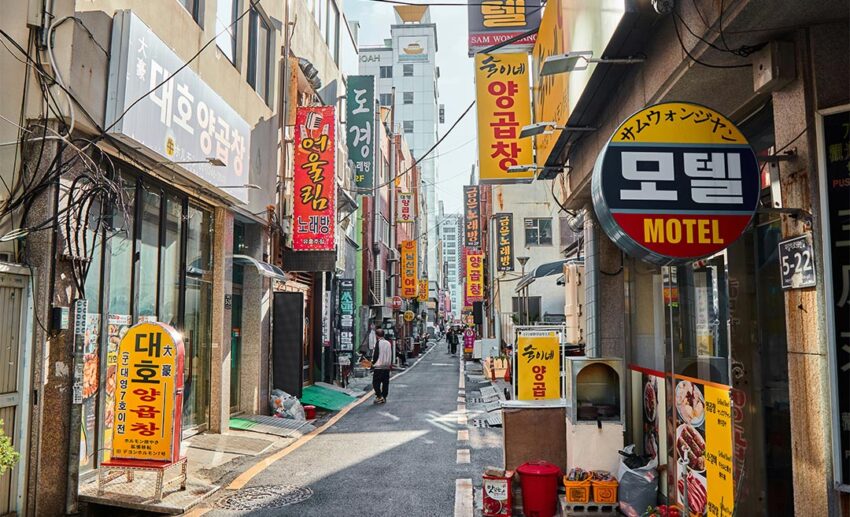
I mentioned this in my Seoul-to-Busan cycling trip article – the motels in South Korea make travelling so easy.
On my cycling trip, I would show up at a motel with no booking and usually book a room through a kiosk screen (see, they are everywhere!). The screen would dispense a key card, and I was all set.
Motels were often the same price (usually around KRW 60,000 per night) around the country, and usually came with a comfy bed, TV, a desktop computer and all the toiletries you would need (shampoo, body wash, toothbrush, shavers and more!).
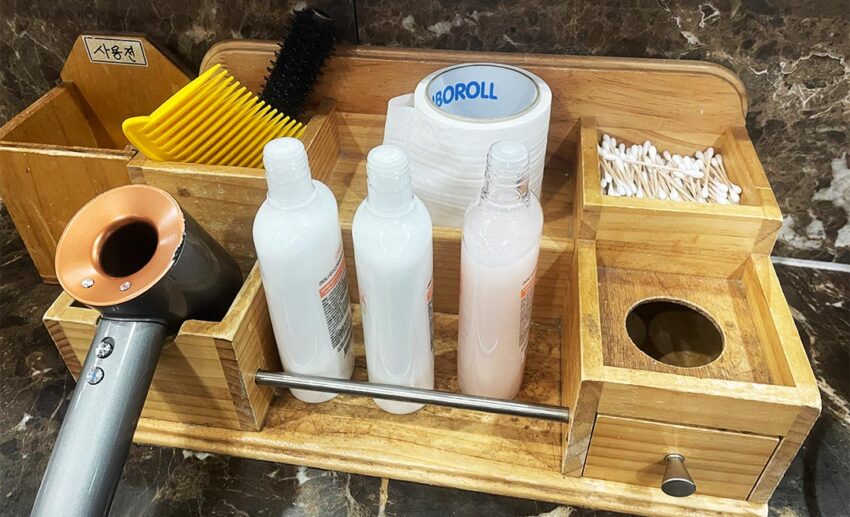
Offering things to make the experience more comfortable seems to be common in Korean businesses. At the Korean public bathhouses, body wash, towels and clothes are provided. In the surf rental place I went to in Busan, they offered cotton buds, combs and hair ties in the changing room.
These small details make the experience far more comfortable. I now travel lighter, knowing toiletries are almost always provided.
Clean public toilets reduce travel stress
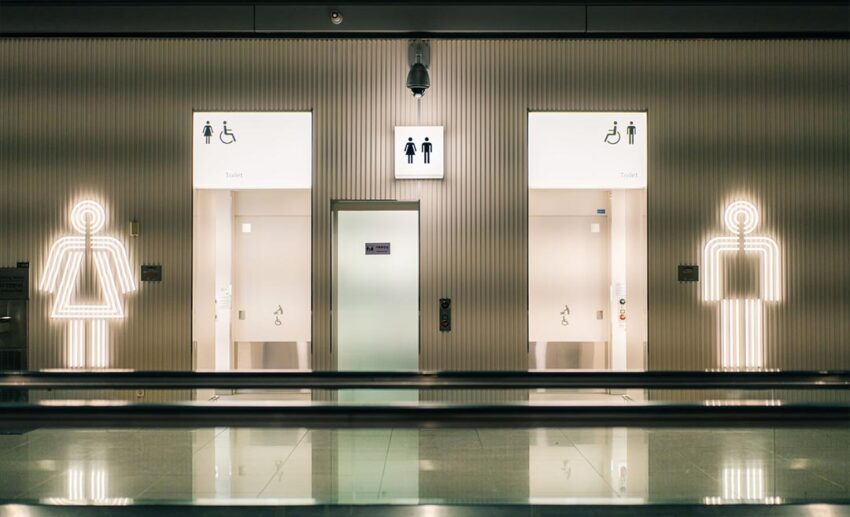
Past travel experiences have made me wary of public bathrooms. They are either filthy, flooded or clogged.
Yet South Korea has been different. In my experience, Korea’s strong hygiene culture shows in its public facilities. The public toilets I have been to in train stations, parks and shops are often dry, clean and functioning. I feel so much more at ease knowing a clean toilet is around the corner.
Just a tip, you usually don’t flush toilet paper in Korea because of delicate plumbing, so bin the paper in the dustbin provided.
Travelling in South Korea can feel surprisingly easy. For travellers — especially solo ones — these small conveniences can make a big difference when navigating a new country. They remove many everyday travel stresses and let you focus on exploring. And if technology ever fails, the Koreans I’ve met have been so kind and helpful that your trip will still run smoothly. Just remember to say gamsahabnida (thank you)!
Zafigo Pro-Tips: Effortless travel in South Korea
Navigating a new country is often the most high-effort part of a trip, but South Korea’s thoughtful infrastructure does the heavy lifting for you:
T-Money is Queen: Purchase a T-Money card at any convenience store (GS25, CU). It’s a unified payment system for all subways, buses, and even many taxis and vending machines, eliminating the need for cash.
Swap Google for Naver: As Sofia highlighted, Google Maps has limited functionality in South Korea for security reasons. Download Naver Maps for accurate walking directions and real-time bus arrivals.
The Papago advantage: Use the Papago app for translations. Its image feature is superior for translating handwritten menus or complex skincare labels during a shopping trip.
Solo-friendly dining: Look for restaurants with Hon-bab (solo eating) kiosks. Many traditional places require two portions for BBQ, but modern city kiosks are designed specifically for women dining alone.
Kids’ cafes for sanity: If travelling with little ones, look for a Premium Kids Cafe (there are many!). They are ultra-clean and have supervised indoor playgrounds where you can enjoy a coffee in peace while your children play safely.
The Bally-bally (or Ppalli-ppalli) work ethic: South Korea’s “hurry-hurry” culture means services are fast. If you’re on a business trip, the KTX high-speed train is more efficient and reliable than domestic flights for city-hopping.
Luggage-free transit: Use services like ZimCarry to send your heavy suitcases from the airport directly to your hotel so you can start exploring the city hands-free.
Climate-smart subways: In the humid May heat, South Korean subways are a sanctuary. Look for the “Weak Cold” carriages (usually the middle of the train) if the standard air-conditioning feels a bit too icy.
Department store food halls: For a high-quality, stress-free meal with English signage and clear photos, head to the basement of a Lotte or Shinsegae department store.
The Wi-Fi egg: While public Wi-Fi is common, renting a portable Wi-Fi Egg at Incheon Airport ensures you are always connected for life-admin tasks or navigation without draining your data.