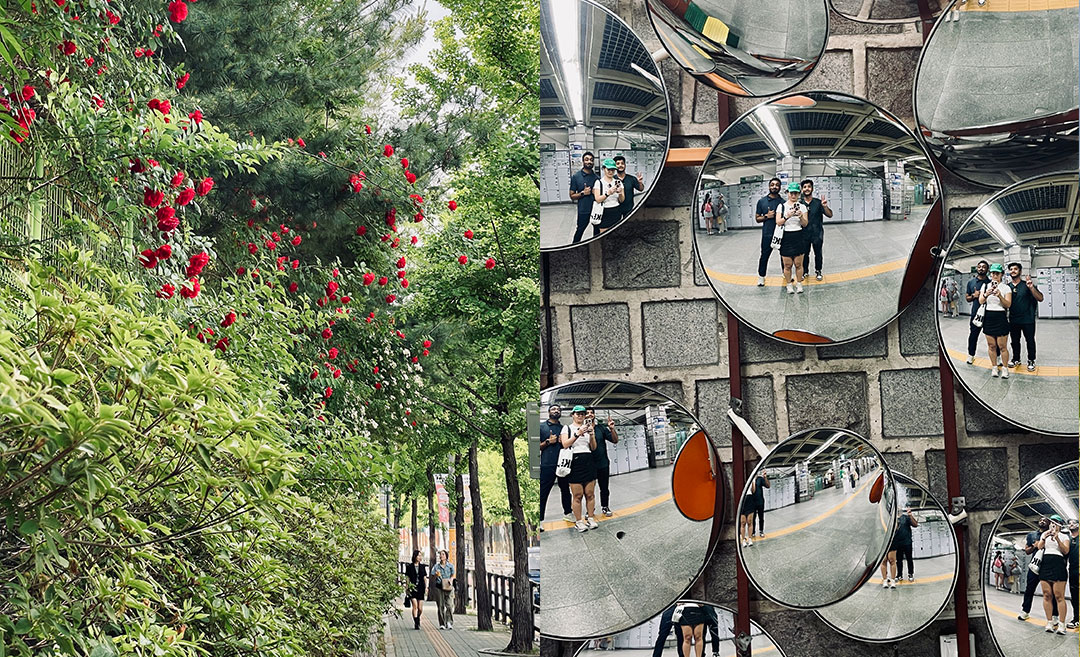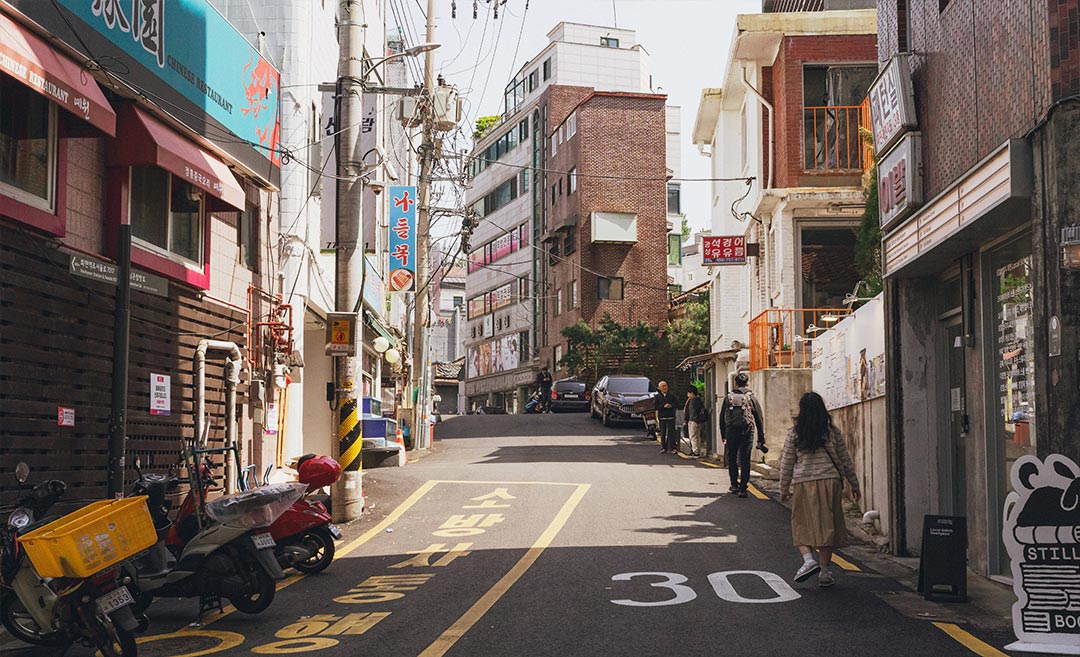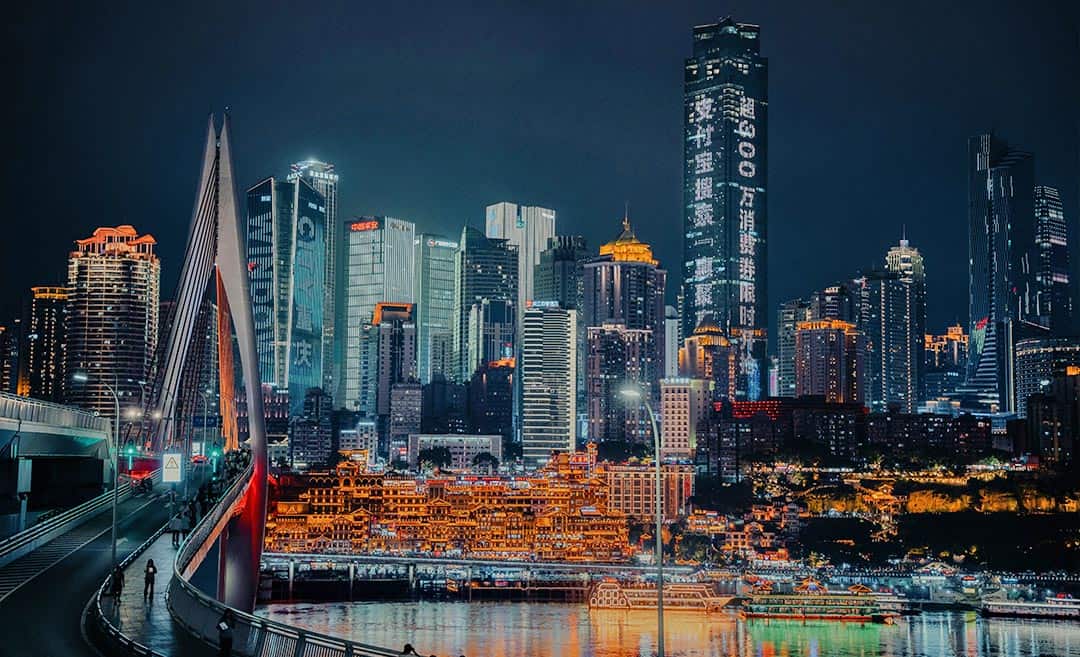
These cities are reshaping urban life through cleaner transport, smart technology, renewable energy, and greener public spaces.
Cities are changing, and some are looking a little more like something out of a science-fiction film. From megacities in China to geothermal-powered destinations in Iceland, urban centres around the world are finding new ways to combine technology, green design, and smarter public infrastructure.
But a futuristic city isn’t just about towering skyscrapers, driverless cars, or robots delivering your lunch. It’s also about making everyday life better for the people who live there, whether through cleaner public transport, more accessible green spaces, or innovative ways to manage energy and waste.
1. Shenzhen, China: Where electric transport meets high-tech living
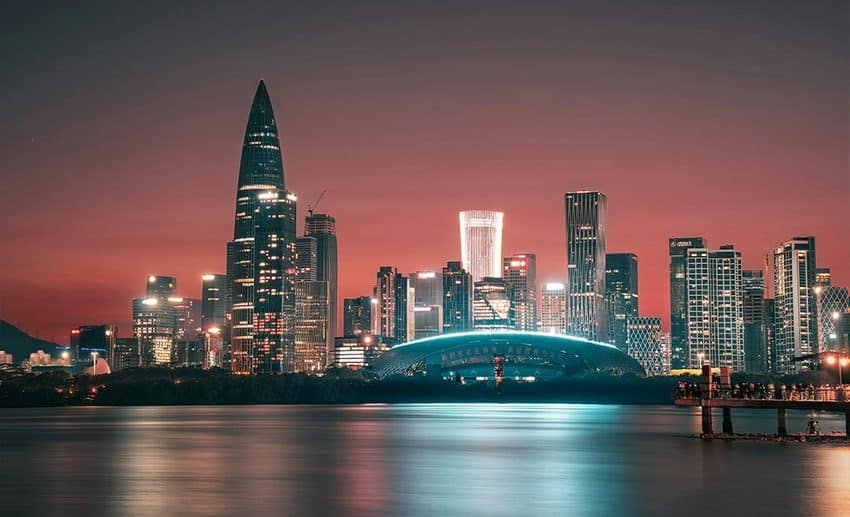
In China’s megacity of Shenzhen, cyberpunk architecture, food delivery drones, and electric taxis coexist with protected ecological spaces and more than a thousand public parks. The city’s built-up areas have a green coverage rate of 45.7%, making its urban landscape a surprisingly leafy one for a major technology and manufacturing hub.
One place where this modernity-meets-nature charm is apparent is OCT Harbour, a waterfront complex along Qianhai Bay. Its man-made canals and landscaped recreational spaces sit alongside entertainment and retail attractions. Nearby, visitors can explore Shenzhen’s museums and cultural spaces, or browse Zhongshuge, the Chinese bookstore chain known for its elaborate interiors, optical illusions, and grand architectural designs.
For a different perspective of the city, head to Futian Central Business District after dark. Its spectacular light shows illuminate the towering skyscrapers, turning the city skyline into a giant canvas.
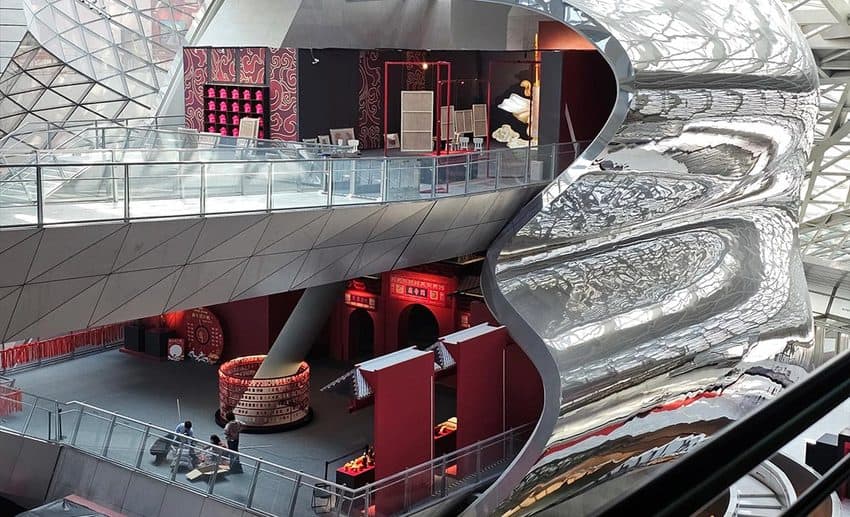
Shenzhen’s futuristic credentials aren’t just for show, though. The city was among the first in the world to fully electrify its public bus fleet, and its taxis are also overwhelmingly electric.
Then there are the food delivery drones. A growing part of everyday convenience in Shenzhen, these drones land at designated pickup kiosks around residential and commercial areas, delivering everything from lunch to late-night snacks. It’s a rather novel way to get your food fix, especially for visitors experiencing drone delivery for the first time.
2. Copenhagen, Denmark: Making sustainable living part of everyday life
It’s no secret that cycling is a way of life in the Danish capital. Dedicated bicycle lanes stretch across the city, and special traffic signals help cyclists navigate busy intersections. According to Visit Copenhagen, residents cycle an estimated 1.44 million kilometres every day. With its relatively flat terrain and extensive cycling infrastructure, it’s little wonder that bicycles are such a popular way to get around.
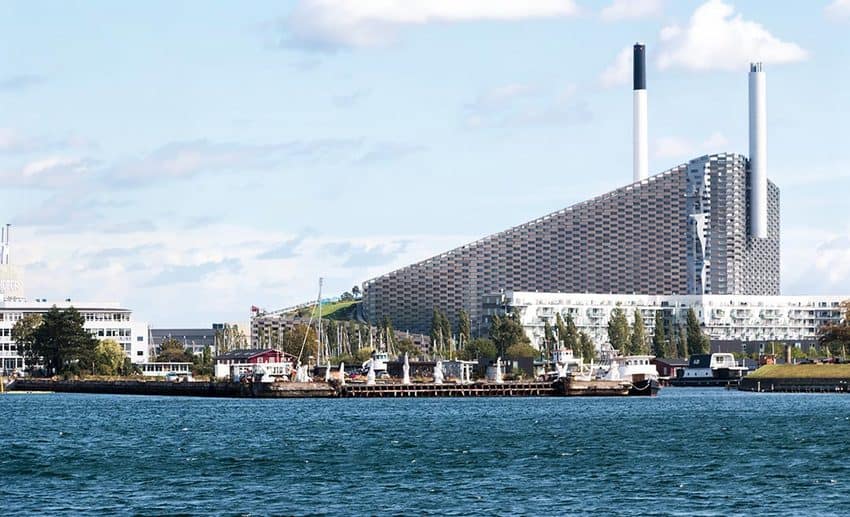
But Copenhagen’s approach to sustainability goes beyond getting people out of their cars. Take CopenHill, a waste-to-energy plant that doubles as an urban adventure park. The facility converts approximately 440,000 tonnes of waste annually into electricity and district heating for around 150,000 homes. Its rooftop has also been transformed into a recreational space where visitors can ski, hike, and enjoy panoramic city views. There’s even an 85-metre climbing wall.
It’s an unusual combination of industrial infrastructure and outdoor recreation, but one that captures the Danish idea of hedonistic sustainability: making environmentally responsible choices without sacrificing enjoyment or quality of life.
Getting around without a bicycle is easy, too. Copenhagen’s driverless metro operates 24 hours a day, connecting the airport with the city and its surrounding neighbourhoods. The journey from Nørreport Station to Copenhagen Airport takes approximately 15 minutes.
For visitors keen to make more considerate travel choices, there’s also CopenPay, an initiative that rewards tourists for sustainable actions. Cycle around the city, take public transport, or participate in a harbour clean-up, and you could earn rewards such as complimentary coffee, bicycle rentals, or cultural experiences.
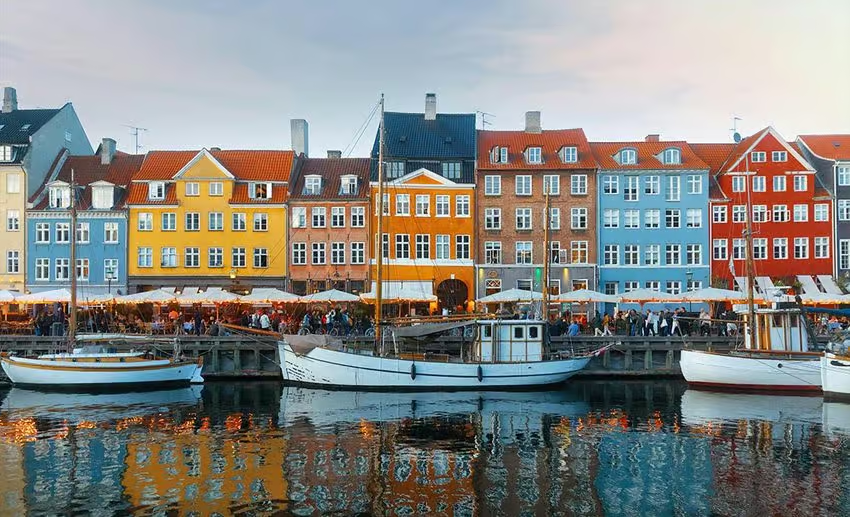
Nyhavn’s colourful townhouses and waterfront boats make for a picturesque stroll, while Tivoli Gardens, a 19th-century amusement park, combines beautifully landscaped gardens with vintage roller coasters and other classic rides.
3. Songdo, South Korea: A smart city built around green spaces
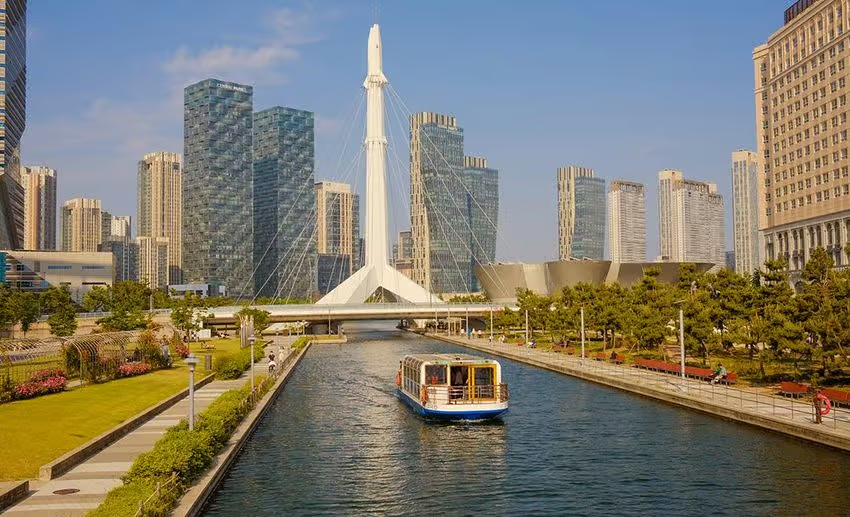
Just outside Incheon, approximately 20 to 30 minutes from South Korea’s Incheon International Airport, sits Songdo International Business District. Built on reclaimed land along the Yellow Sea, this master-planned smart city was designed with technology, sustainability, and green spaces at its core.
Songdo is something straight out of a science-fiction film, particularly when it comes to its waste management system. Rather than relying entirely on conventional rubbish collection trucks, the city uses an underground pneumatic waste collection network. Residents dispose of their rubbish through designated collection points, where it travels through underground pipes to central processing facilities for sorting and disposal.
The city also incorporates smart infrastructure, including sensors and digital systems that help monitor building energy use, traffic, and other urban services. These systems are designed to make resource management more efficient, reducing unnecessary energy consumption and improving the way the city operates.
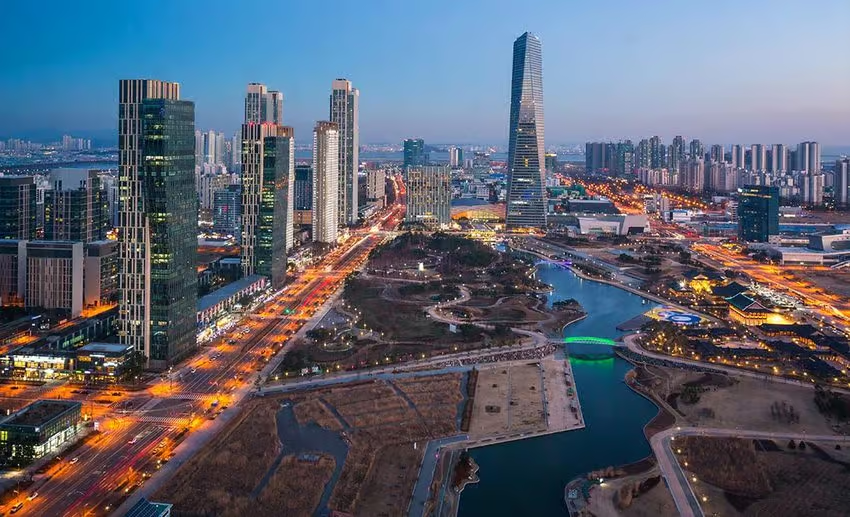
Despite its high-tech foundations, Songdo places considerable emphasis on outdoor spaces. More than 40% of its planned area is dedicated to open spaces and parks, including Songdo Central Park, which was inspired by New York City’s famous Central Park. Its waterways, landscaped grounds, and walking paths provide a welcome contrast to the surrounding modern buildings.
For the best seasonal views, visit in spring when cherry blossoms line parts of the park, or in autumn when the ginkgo trees turn golden.
Another worthwhile stop is the observation deck at G-Tower, where visitors can take in a sweeping view of Songdo’s planned urban landscape and, on clear days, the Yellow Sea.
4. Astana, Kazakhstan: An ambitious capital working towards a greener future
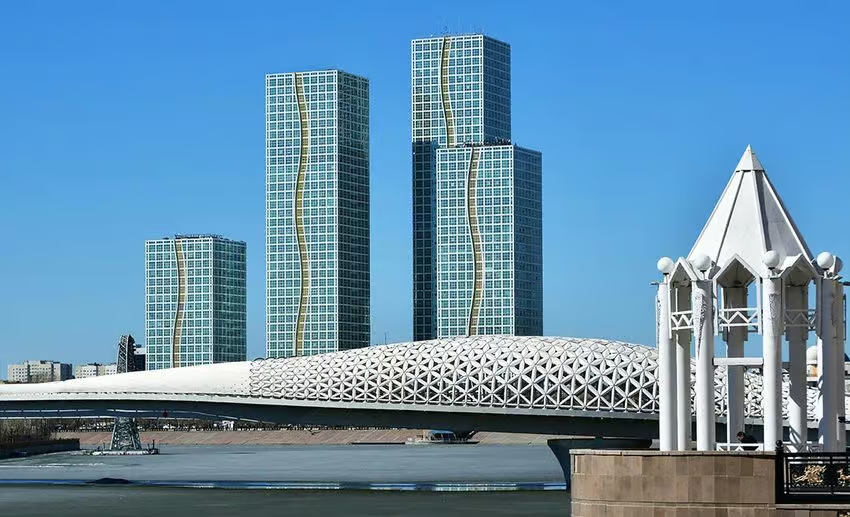
Astana, the capital of Kazakhstan, has undergone a remarkable transformation. What was once a relatively quiet town on the northern steppe has become a modern metropolis filled with bold, avant-garde architecture and ambitious urban developments.
Following the dissolution of the Soviet Union, Astana was selected as Kazakhstan’s new capital in 1997, replacing Almaty. Its development into the country’s administrative and economic centre brought an influx of new buildings, infrastructure, and investment, giving the city its distinctive futuristic appearance.
However, rapid urban development has also brought environmental challenges. Air pollution from coal-fired heating, power generation, and vehicle emissions remains a concern, particularly during the harsh winter months. The city and national authorities have been working towards improving waste management, expanding renewable energy capacity, and addressing pollution through environmental initiatives.
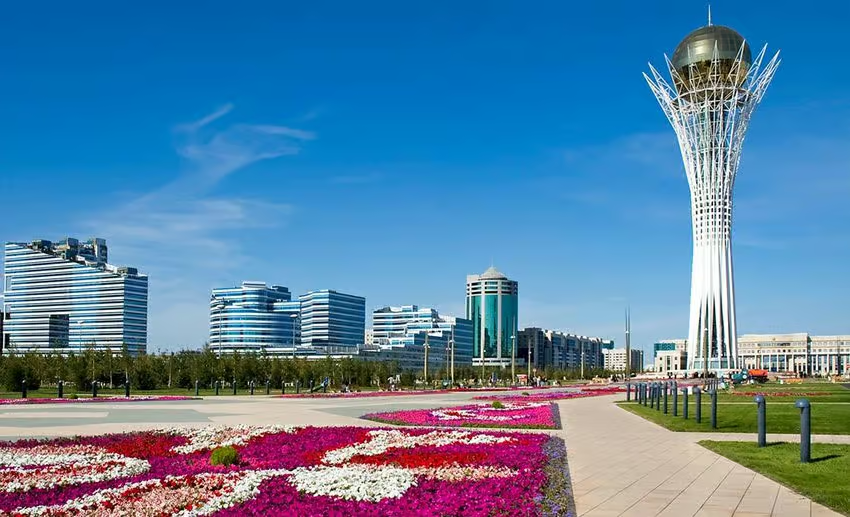
This makes Astana an interesting, if less straightforward, example of a city in transition. Its futuristic skyline represents the country’s ambitions, while its environmental challenges highlight the work still needed to make rapid urban development genuinely sustainable.
For visitors, the city’s architecture is a major draw. Bayterek Tower is perhaps its most recognisable landmark, representing the mythical Tree of Life with a golden egg perched at its summit. Another standout is Nur Alem, a giant spherical glass building that houses a museum exploring renewable energy and future technologies.
Those keen on a cultural evening can also visit Astana Opera, an imposing neo-classical building known for its architecture and performances.
5. Reykjavík, Iceland: A city powered by nature
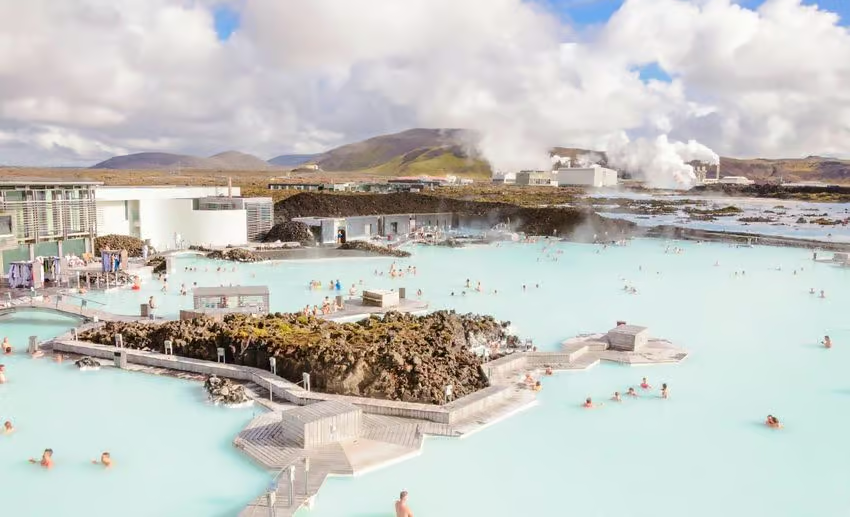
Last on the list, Reykjavík’s futuristic credentials come not from towering skyscrapers or driverless taxis, but from the way it harnesses the natural environment to power everyday life.
Iceland is one of the world’s leading examples of renewable energy use. Approximately 85% of its total primary energy supply comes from domestic renewable sources, primarily hydropower and geothermal energy. Almost all of its electricity is generated from renewable sources, while geothermal energy also supplies much of the country’s heating needs.
For Reykjavík residents, this means access to heating and electricity supported by the country’s abundant natural resources.
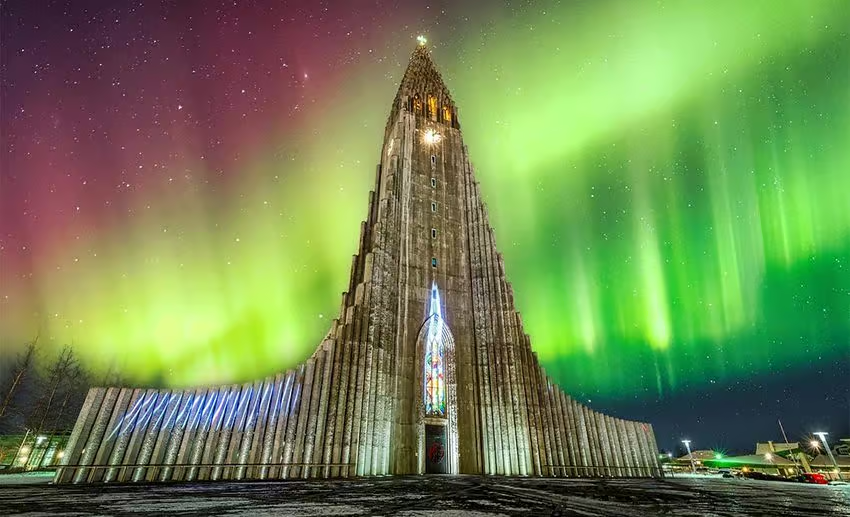
Beyond its energy infrastructure, Reykjavík has a distinctive architectural identity. Hallgrímskirkja, one of the city’s most recognisable landmarks, is a striking church whose design was inspired by Iceland’s basalt formations, mountains, and glaciers. Its towering structure is visible from various parts of the city, making it difficult to miss.
Nature is also never too far away. The surrounding ocean, volcanic landscapes, lava fields, and geothermal hot springs are all part of the wider Reykjavík experience. In winter, visitors may catch a glimpse of the northern lights, while summer brings almost endless daylight.
Reykjavík’s approach to sustainability is a reminder that some of the most effective urban innovations don’t necessarily involve complicated technology. Sometimes, it’s about understanding the natural resources around us and finding better ways to use them.