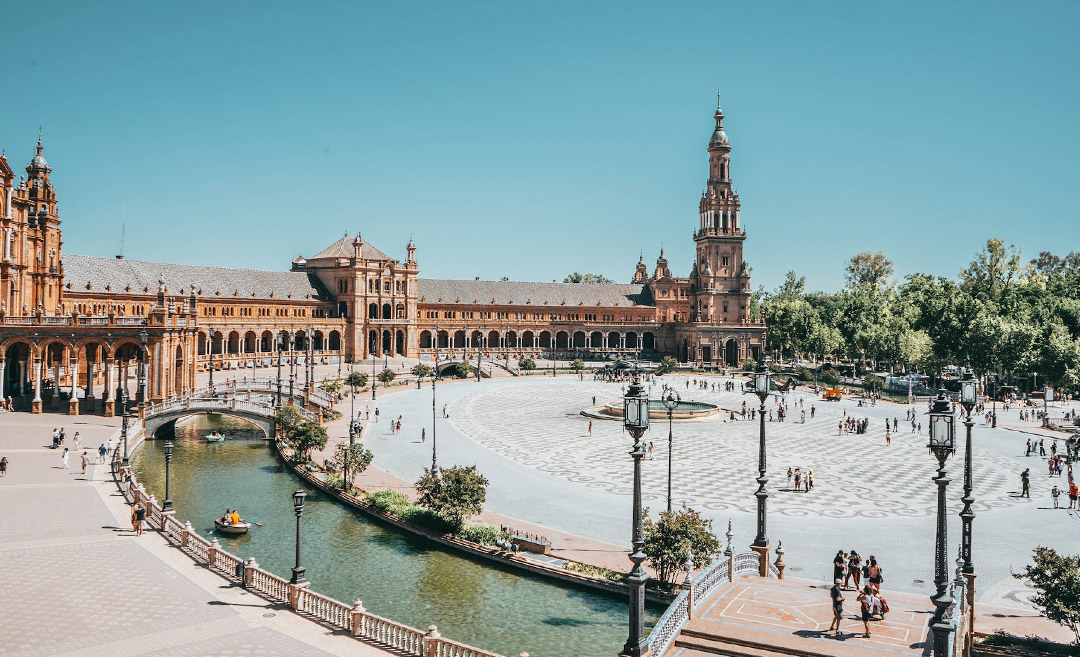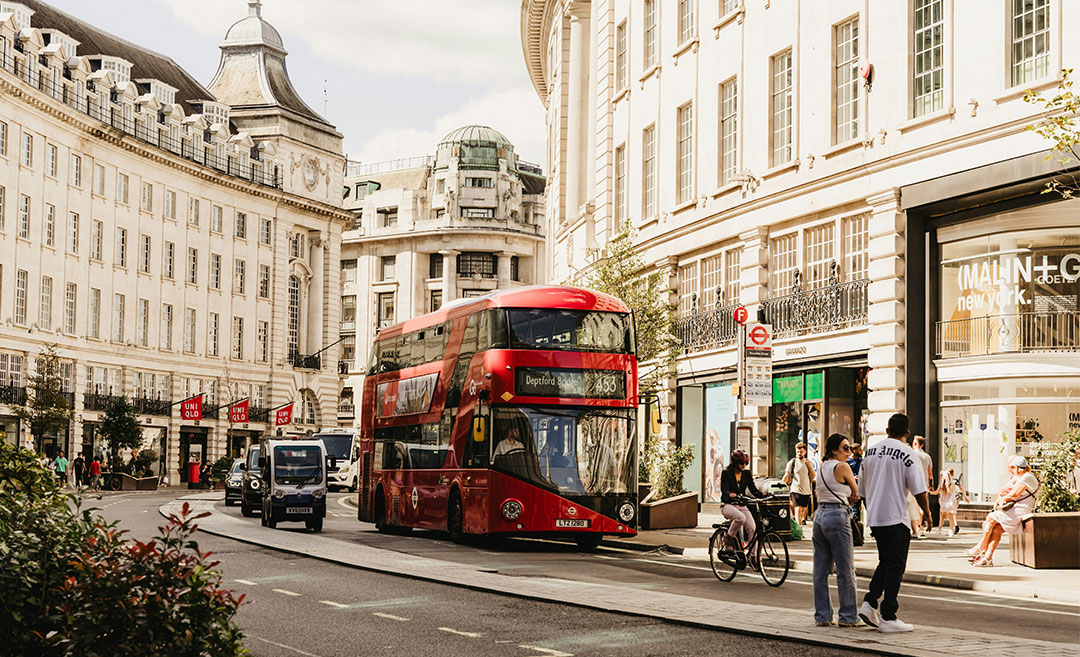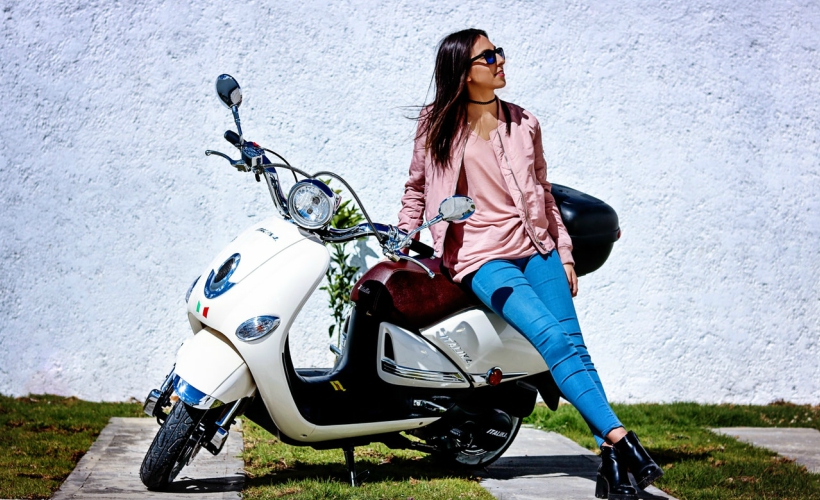
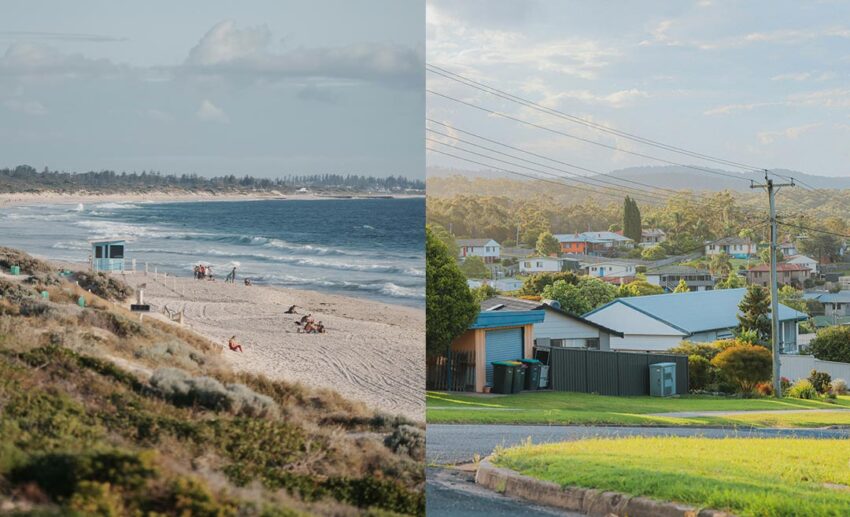
Moving countries at forty-one isn’t just about the adventure; it’s about the quiet, cinematic moments—like a morning coffee by the sea or learning the skyline of a city that is slowly becoming yours. (Left image by @bennies_bythebeach; Right image by @perth.local)
There is a particular kind of light that exists only in new places, and you really only notice it in the first few weeks: the way it falls through unfamiliar windows at angles you haven’t learned to predict, the way it makes even ordinary things, like sunsets, look slightly cinematic. The chipped mug on the kitchen counter. The street outside. Your own hands wrapping around a coffee you made in a kitchen that still doesn’t quite feel like yours.
I moved countries at forty-one—not as an adventure seeker or digital nomad with a ring light and a newsletter, and not because I was running away from home. I moved as a woman: a mother starting life overseas, with children who needed to be enrolled in school, boxes that took months to arrive, and a husband who started work on day two while I stood in a supermarket aisle trying to figure out which milk was full-fat.
The question everyone kept asking was: Are you excited? Are you loving it?
Honestly? In those first weeks, I was mostly just tired—living, learning how to live in a new country.
Stripping the Autopilot
Here’s what nobody tells you about moving to a new country in your forties: it strips your autopilot and shakes you in your core. Because every single mundane thing—the school drop-off route, the way you order your coffee at your favourite cafe, which bin goes out on which day— requires actual thought and planning when you’re Type A, like me.
And that forced presence, that low-level attention you have to pay to your own life, is uncomfortable and exhausting and also, I’ve come to realise, exactly what travel has always given me. I used to be someone who took trips to feel that. Long weekends, annual leave burned on flights to places with unfamiliar alphabets. I chased that familiar sensation of being slightly lost, slightly alert, slightly more aware of my surroundings than usual. We used to call this wanderlust.
What it actually was, I think, was the desire to feel like I was in my life rather than just running it.
Migration handed me that sensation, and then left me to live in it indefinitely.
The Ritual of the School Run
The school run is twenty minutes on foot. In the beginning, I walked it with Google Maps open, feeling faintly ridiculous. Now, six months in, I walk it the way you eventually walk everywhere you’ve become familiar with: slowly, noticing things.
The bakery that opens at seven and smells like something I can’t name but now associate with Tuesday mornings. The tween girl with a bright fuchsia pink backpack walking with her dad and dog to school. The way my daughter has started skipping the last half-block because she spotted a friend ahead.
I have started treating the school run the way I used to treat arriving in a new city. I take different routes. I look up at buildings. I let myself be someone who is still learning the shape of this place, because I am, and because that is not a failure but instead the early parts of living somewhere new.
“There’s also this: the gift of beginner’s eyes. Of not yet being numb to where you live.”
My coffee ritual has become something of an anchor. Back home, I had a machine, a specific bean I loved and, not to brag, a very efficient morning. Here, I make it slowly. French press, while the kitchen fills with that grey pre-school-run light, while my daughter eats toast and tells me something elaborate about a dream she had. And if I am not in the mood to make coffee, right before school drop-off, I stop by the coffee drive-thru near home. There is no efficiency in it. There is also, I’ve noticed, no scrolling. Just the coffee, the light, and the dream about talking horses or whatever it was.
This is what I mean by curating a life that feels like travel. Not that everything is exotic or exciting because most of it isn’t. It’s more that I’ve stopped waiting to arrive somewhere before I pay attention. I’m paying attention now to the texture of this particular morning, in this particular kitchen, in this country I chose and am still choosing every day.
The Grief and the Gift

There is grief in migration that people don’t always want to hear about when you’ve moved somewhere objectively lovely. The grief of the friends who are now no longer just a half-hour drive away. The grief of knowing your child is building a life in a language and culture that will eventually, in small ways, not be yours. The grief of being the person who doesn’t know where anything is.
But there’s also this: the gift of beginner’s eyes. Of not yet being numb to where you live.
I think that’s what I was always looking for in travel. Not an escape but a time to be fully present.
I live here now. And some mornings, with the coffee and the light and the twenty-minute walk ahead of me, I remember to feel lucky about that.
Some places you visit, and others you slowly, lovingly become.