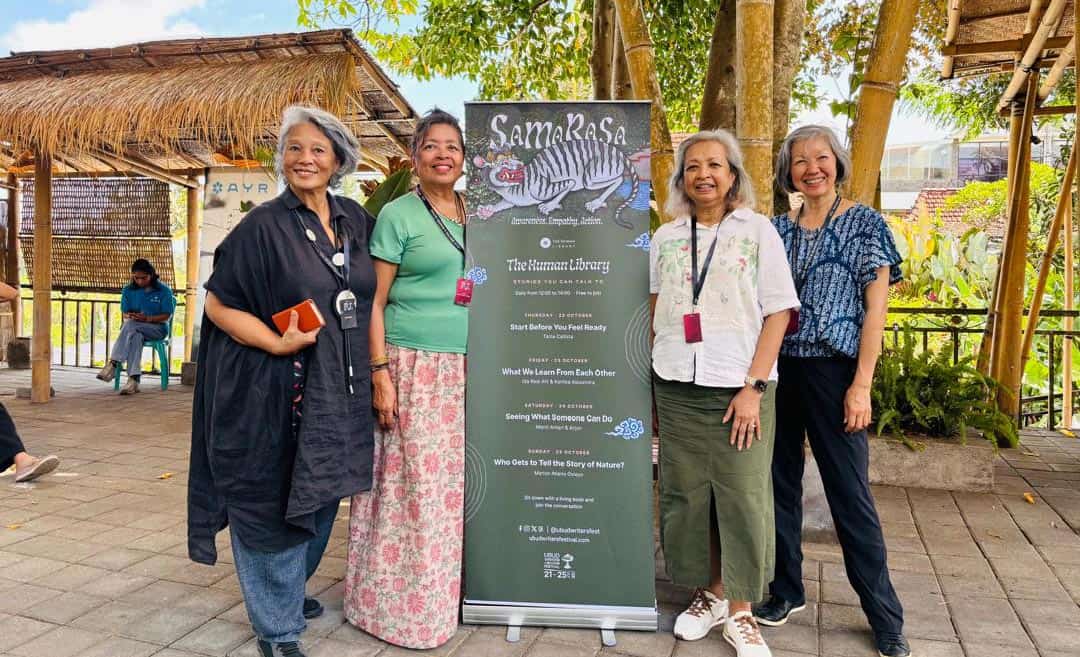
Marina Mahathir shares the joys of meeting literary icons, discovering local culture, and navigating the Ubud Writers Festival.
I’m a writer who loves to read. And I have non-writer friends who also love to read. As readers, we develop a love for writers that isn’t far different from fans of musicians and singers. Once we find authors whose books we love, we keep reading every book they publish, occasionally with disappointing results. For instance, I will devour every book by Arundhati Roy and Barbara Kingsolver that I can find because I love the way they write.
Just like music fans who go to concerts by their favourite artists, readers will look out for literary festivals where they can listen to and hopefully meet their writing idols. I started going to literary festivals with the George Town Literary Festival (GTLF) in Penang, which is not only nice, small, and manageable, but also the only free one I know. You get to wander the UNESCO-awarded old part of George Town from venue to venue to listen to various authors and, in between, stop for coffee at one of the many cafes or grab a bite to eat, just for a break and to get out of the heat.
It helps if you also have your own book to talk about. In 2021, when my memoir The Apple and the Tree was published, it opened the door to several litfests. It was just after the pandemic and, although I only did a video interview for the GTLF, I did get invited to the Ubud Writers and Readers Festival (UWRF) in Bali and the Emirates Literary Festival in Dubai.
The reader becomes a fangirl
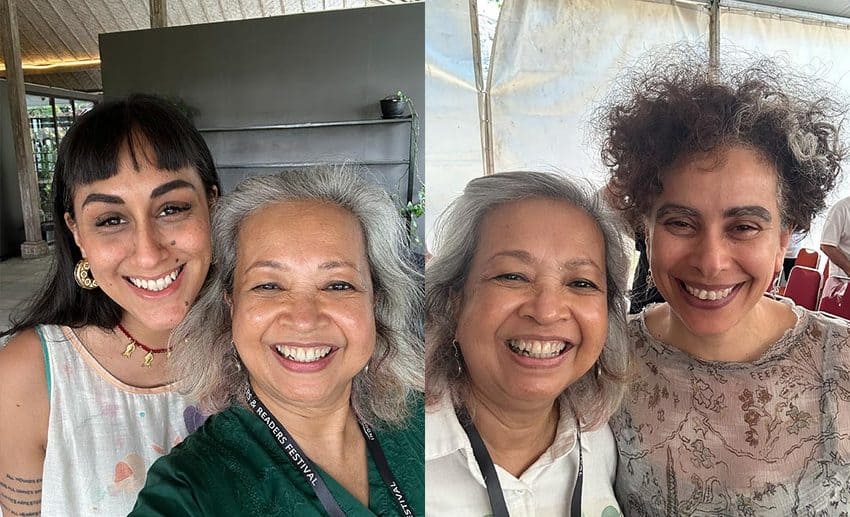
But the litfest that really got my fangirl juices up was the Dhaka Literary Festival in Bangladesh in 2023. I had never heard of it, but that year they were featuring the latest Nobel Prize for Literature winner, Abdurrazak Gurnah, the latest Booker Prize winner, Shehan Karunatilaka, AND the latest International Booker Prize winner, Geetanjali Shree. Added to that, the actress Tilda Swinton was also going to be there.
That did it for my friends Ivy and Mas. Luckily, Dhaka is not far and not expensive and, suffice to say, we had a great time, not least because we got all-access passes from the organisers and got to hang out with these literary and movie luminaries. I also had to speak about my book and presented one copy to one of my favourite writers, Amitav Ghosh. From then on, we were hooked on litfests.
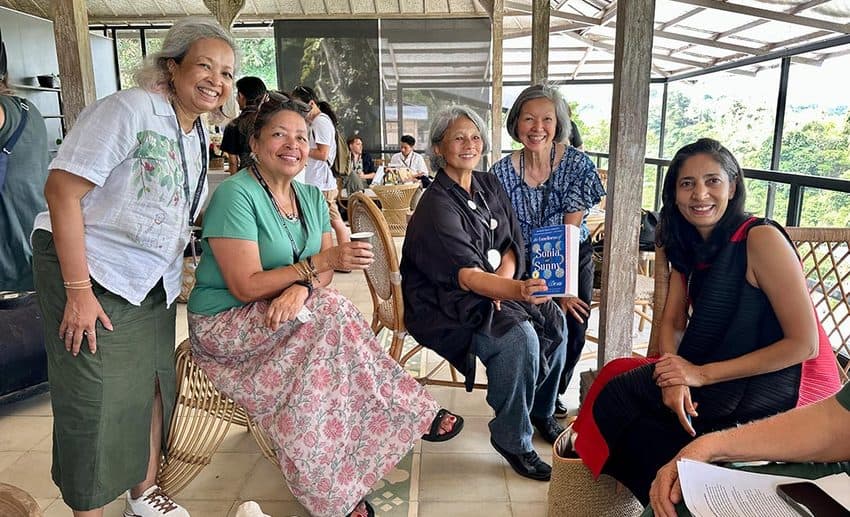
I had been to the UWRF in Bali three times previously. I had been a speaker twice, after which I got a bit tired of it because it seemed as if the audience comprised solely of elderly Australians. Last year, I decided to go again, mainly to stay with a friend who was unwell and because the 2025 International Booker Prize winner Banu Mushtaq (Heart Lamp) and the Egyptian-American writer Omar El-Akkad (One Day, Everyone Will Have Always Been Against This) were speaking. I even bought a ticket to a dinner at a wealthy patron’s house where I found myself sitting opposite the travel writer Pico Iyer and the historian William Dalrymple.
If this all sounds like name-dropping, it is, because half of the reason I go to these litfests is to hobnob with these award-winning writers.
A literary feast in Ubud
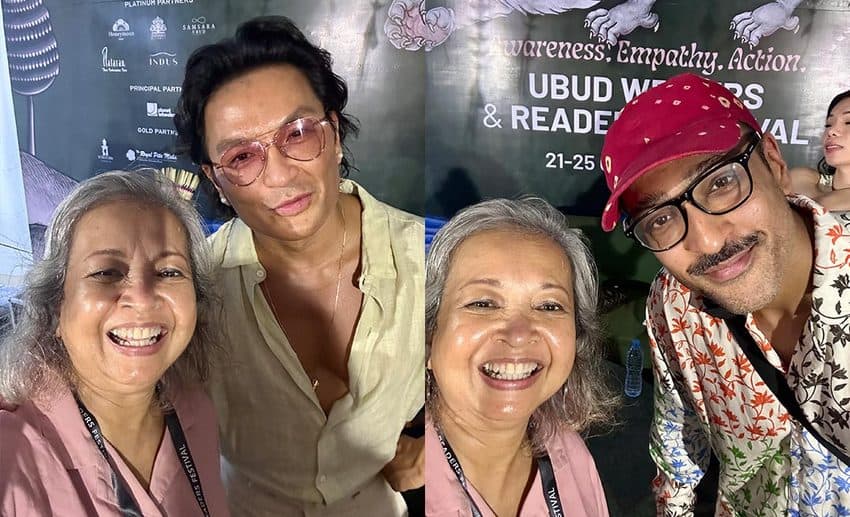
This year’s UWRF had a very stellar line-up. Founded by Janet de Neefe twenty years ago, the festival was originally conceived as a way of bringing visitors back to Bali after the tragedy of the Bali bombings. It has since grown into one of the literary world’s most-anticipated annual gatherings. The headliner was Francesca Albanese, the United Nations Special Rapporteur on the Occupied Palestinian Territory, whose outspokenness on the genocide in Gaza has won her many admirers, including me.
She was the icing on a cake that was already bursting at the seams with literary talent. There were two 2025 Booker Prize shortlisters, Kiran Desai and Katie Kitamura, the Palestinian author Adania Shibli, Malaysia’s very own Tash Aw, the Indian writer Karuna Ezara Parikh, the Nepali-American fashion designer Prabal Gurung and the Pakistani classical singer Ali Sethi. It was a wealth of literary riches that was too good to miss.
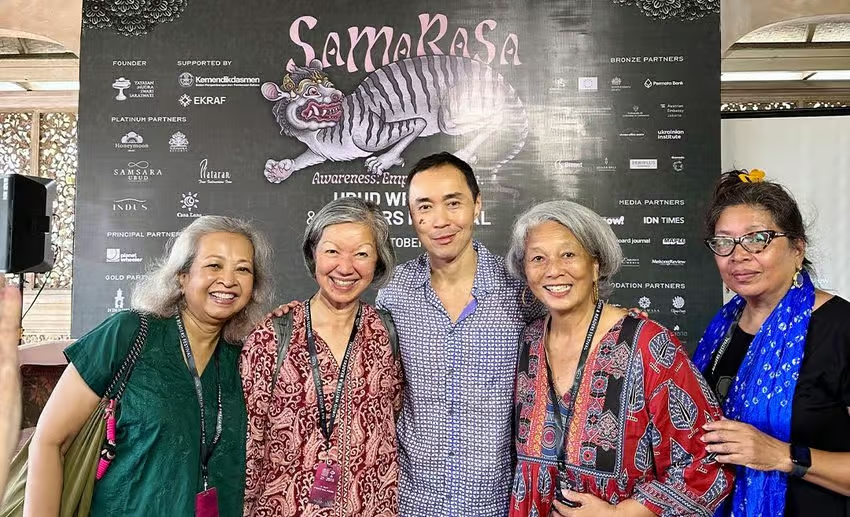
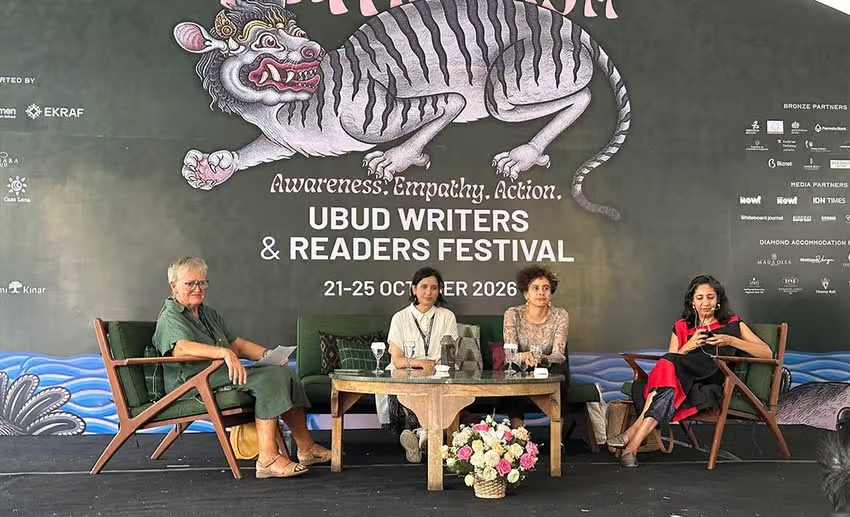
My friends were new to UWRF, so I became an erstwhile tour guide. The Opening Ceremony was held at the Ubud Palace against a stunning backdrop of carved Balinese gates and beautiful traditional dances. The next morning, we Grabbed over to Taman Baca, the site of the festival, driving past Ubud’s many tempting shops, cafes, and restaurants. We got our four-day pass lanyards and then headed down to one of the two main stages for the first session, which was Kiran Desai talking about her book The Loneliness of Sonia and Sonny.
From then on, it was a lot of climbing up and down stone steps (Ubud is very hilly) to get from one stage to another, or to grab some food at the few stalls or buy books at the Periplus bookstore to get them signed by the authors. In between, we tried to take lots of photos and videos, chat with whichever writers we could corner and with other attendees, and tried not to wilt in the heat.
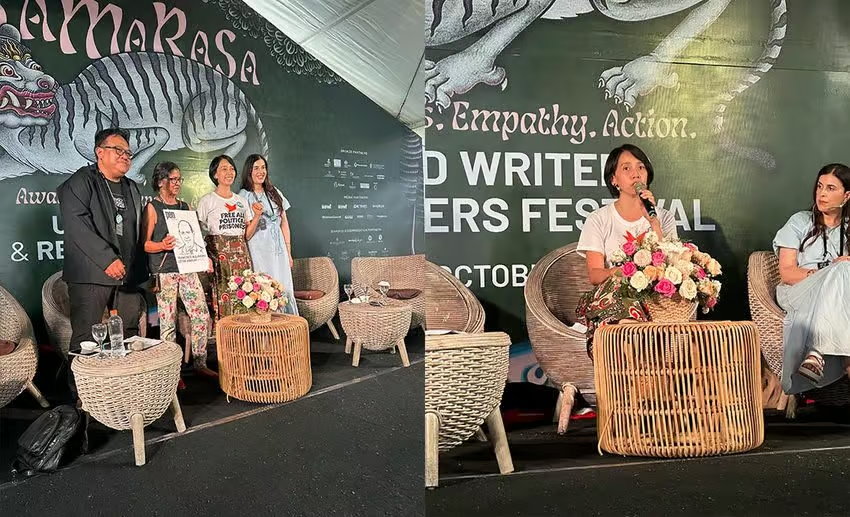
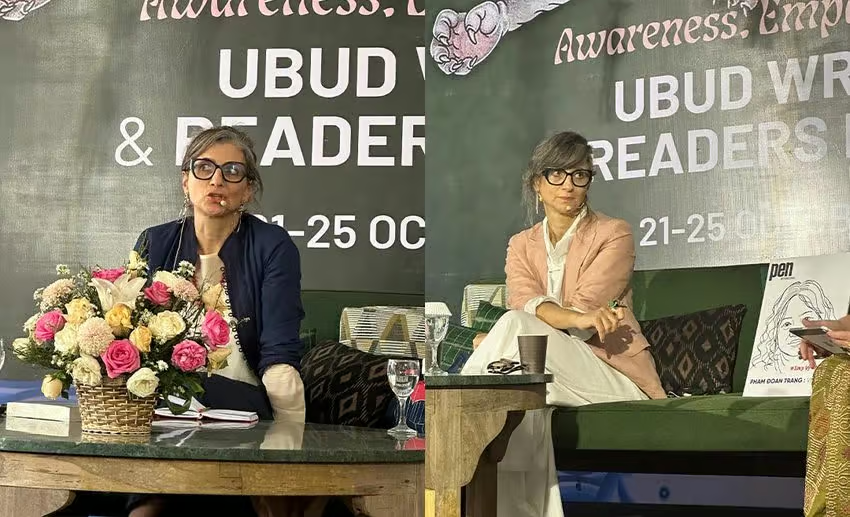
Francesca Albanese’s sessions were particularly moving. She spoke with the integrity and passion that have made her such a compelling voice on Palestine. Remarkably, she has not allowed despair to enter her life. “Palestine,” she said, “has been an awakening factor.” It was also lovely to see how generous she was with festival-goers, graciously signing books, posing for photographs, and even making time for a short interview with Zafigo.
Palestine was a particularly prominent theme this year, with Adania Shibli and Randa El-Fattah among the featured writers. Shibli’s novel Minor Detail, originally written in Arabic, gained wider international attention after its English translation. Her experience also recalled the controversy surrounding the cancellation of an award she was due to receive at the 2023 Frankfurt Book Fair. Meantime, El-Fattah’s invitation to the Adelaide Festival was revoked, causing all the other invited writers to boycott the entire festival. It was a reminder of how difficult it can be for Palestinian writers to have their voices heard.
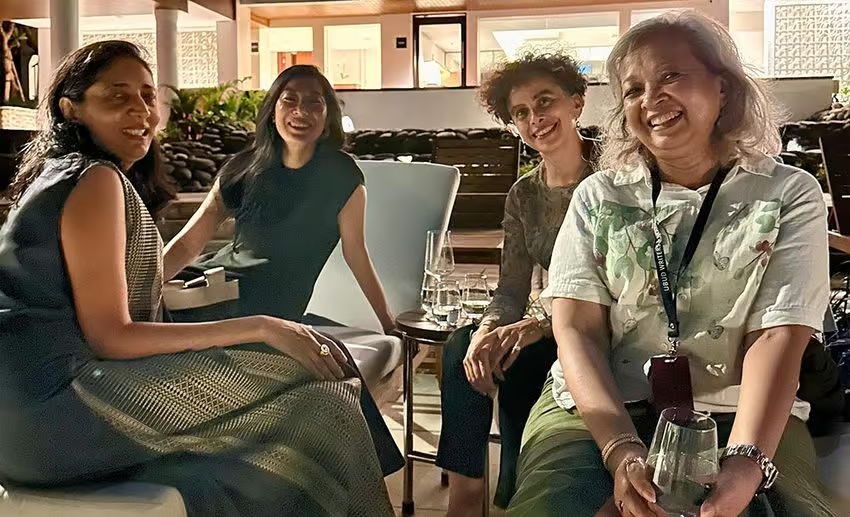
Plenty was happening beyond the sessions too, although you do need stamina to make the most of the UWRF and other litfests. I managed to go to one literary dinner where I found myself enjoying steak with Kiran Desai, Katie Kitamura, and Adania Shibli. The heat was so debilitating that we skipped most of the outdoor events, such as performances, poetry readings and book launches held mostly in restaurants and hotels in downtown Ubud. Last year, though, I caught the all-women wayang kulit troupe Wayang Women performing in a wonderful outdoor setting against a temple background, while the audience watched sitting on mats on the ground.
There were other memorable moments too. I bumped into quite a few Malaysians, many of whom had turned up to support Tash Aw during his session on his book The South (Not banned in Malaysia, but unavailable for sale). It was rather nice to see fellow Malaysians making the trip for a writer who has such a strong connection to home. The only other Malaysian writer, Zainah Anwar, spoke on a panel on feminism, but I missed that because I returned home early.
Another particularly entertaining session was Art, Apprenticeship and Ambition, featuring Prabal Gurung and Ali Sethi. Both were hilariously articulate about their journeys from their native countries to becoming immigrants in the United States, shapeshifting from one culture to the next. They emphasised that none of their achievements would have been possible without the training, dedication and hard work they put in. AI could never have done it for them because there were no shortcuts to their success. We were even treated to Ali Sethi’s wonderful singing voice.
I also finally got to meet someone I had been following on Instagram because I love her style, Karuna Ezara Parikh. A former TV host, model, and writer, she turned out to be just as warm, generous, and delightful to talk to as I had hoped. Her 2020 book The Heart Asks Pleasure First is a beautiful love story, set against the background of India-Pakistani conflicts.
Meeting the literary greats
I have to say, though, that as a writer I am very much an introvert and tend to be very inhibited in the company of literary superstars. Luckily for all of us, most writers, especially female ones, also tend to be shy. But once you say hello and express how much you sincerely liked their books, they will open up and be very friendly. None of them, despite their awards and accolades, made me feel inferior. Despite never having read me, these writers spoke to me as if I was an equal, while I tried to hide my imposter syndrome. Still, to avoid this feeling, it’s best to have read their books and to remember what they were about.
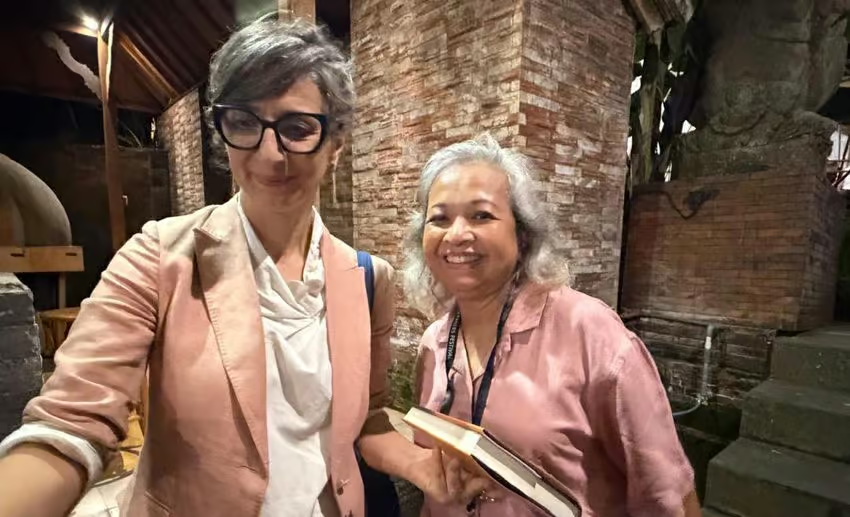
Finally, I would highly recommend going to a literary festival just to breathe in the atmosphere and be among people who love books. Anyone who loves books can’t possibly be bad.
Next stop, the world’s biggest litfest, the Jaipur Literary Festival. Maybe.
Zafigo Pro Tips: Making the most of a literary festival
From snagging Early Bird passes to striking up conversations with your favourite authors, here’s how to make the most of your next literary festival, in Ubud or elsewhere:
Follow the festival on social media. Keep an eye on @ubudwritersfest for programme announcements, registration dates, and updates.
Book early. Look out for Early Bird passes, and check whether ASEAN or regional rates are available.
Plan your sessions. Study the programme beforehand, shortlist the authors you really want to hear, and leave enough time to move between venues. Some dinners and special events may require separate tickets.
Dress for the weather. Ubud can get very hot, and you’ll be doing plenty of walking. Pack comfortable shoes, light clothing, a hat, and a portable fan.
Bring a book or two. The festival bookstore is a great place to pick up titles by featured authors, but you can also bring your own copies for signing. Leave some room in your luggage for new purchases!
Don’t be shy. Authors are often more approachable than you think. If you’ve enjoyed their work, say hello, ask a question, or request an autograph or photograph. Just be mindful of their time and personal space.
Make room for the unexpected. Don’t fill every hour with scheduled sessions. Some of the best conversations and encounters happen between events, over coffee or while browsing the book stalls.
All photos are by and courtesy of the writer, Marina Mahathir.