Sometimes we overthink and over-plan our holidays; there is too much information out there. These days, when travelling to a new destination, most of us Google the best things to do, the finest places to eat, and the most hospitable places to stay. In a few keystrokes, the holiday is solved.
Not so long ago, travellers set off with a guidebook in hand, only to discover on arrival that half the restaurants listed had closed and budget accommodation had become several times more expensive because of its popularity. They had to think quickly.
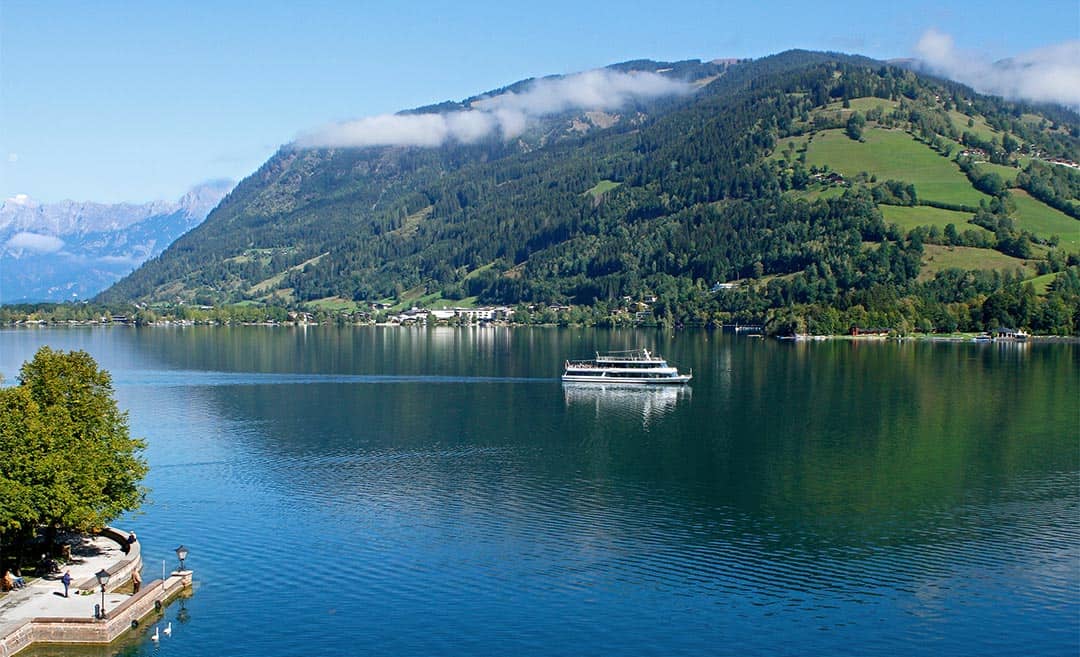
Recently, I returned to a restaurant where I have dined several times over the years, and my magical mystery meal is worth sharing. Rauchkuchl, which translates as ‘smoky kitchen’, is a 500-year-old restaurant in a remote part of rural Austria. It is in the village of Stuhlfelden, so small that few Austrians know of it. Stuhlfelden lies just 25 km down the Pinzgau Valley from Zell am See, one of Austria’s most popular year-round holiday destinations. Here, a daily-changing surprise menu showcases seasonal, locally sourced ingredients, making each visit a little different. On this visit, dining alone and not knowing quite what to expect led to some unexpected connections.
Inside Rauchkuchl, a 500-year-old Austrian farmhouse restaurant
Years ago, I was taken to Stuhlfelden and had such an amazing meal at this 500-year-old restaurant that I returned a few days later to continue my affair with its fresh, local ingredients. A few winters later, I came back with my family and stayed for a few days to enjoy all the delights that the owner, Theresia Bacher, prepared on an ancient wood-fired hearth.
The most fascinating thing was that my German was non-existent and Theresia’s English was rudimentary at best. So, the food did all the talking, and, to be honest, I was never entirely sure what I was eating. It didn’t matter; it was all fabulous.
On my most recent visit, I arrived from Zell am See by train and walked a few hundred metres to the restaurant. The village is so small that I was on autopilot and walked straight there. One of the chefs was in the lush, colourful garden, harvesting ingredients for the evening meal.
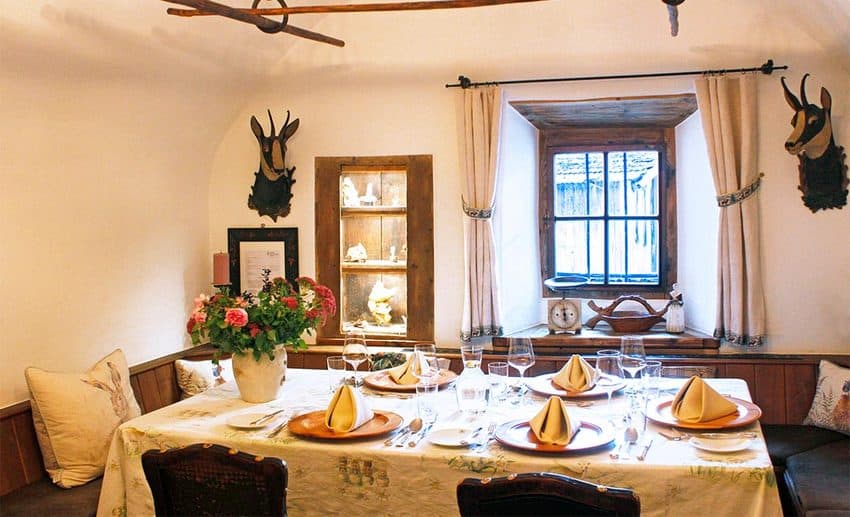
There were hugs all round when I saw Theresia, who hadn’t changed over the years, and I knew dinner would be wonderful. As I was early, I had a chance to inspect the three dining spaces, which occupy the downstairs rooms of a large family house. A cellar had been rejuvenated since my last visit, and wine was now a big part of the experience.
Rauchkuchl’s surprise menu and farm-to-table philosophy
Rauchkuchl offers a mystery, or surprise, menu that changes daily depending on what is available. Theresia’s son, Tobias, now oversees most of the cooking, tending the open hearth in the middle of the dining room where I was seated. He was adding wood to the fire when I arrived and preparing dishes for the 25 or so diners expected that evening.
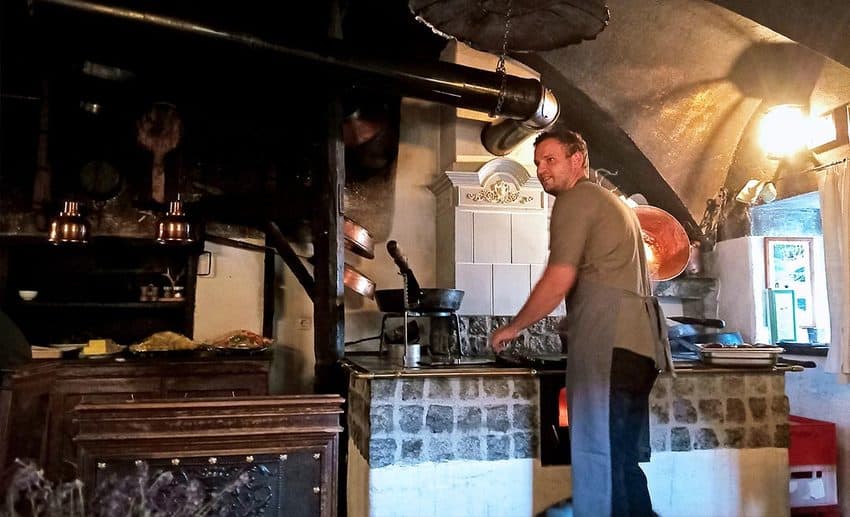
He told me that he advocates natural cuisine and that, with few exceptions, everything used is sourced from within 20 km. Many ingredients, depending on the season, come from Theresia herself, who now runs the family farm, where herbs are nurtured on alpine pastures. The restaurant also grows many of its own vegetables, fruit, berries, and flowers behind the house.
One of Rauchkuchl’s distinctive features is the absence of a conventional menu, allowing the chefs to serve what is available. Tobias explained that one dish leads to the next and that, by the end of the evening, the individual components come together as a whole.
This was the beauty of dining in ignorance. My senses were heightened as I tried to work out what was in front of me, and it allowed me to engage with my neighbours.
on how relinquishing control and embracing surprises deepen sensory appreciation
An evening of unfamiliar dishes, local wine, and shared tables
Theresia announced the evening’s courses in German. For my benefit, she did her best to explain them in English, but, to be honest, I still had no idea what was to come.
The three other tables in my dining room were naturally engaged in their own conversations, and there I sat alone, busily taking notes and trying to make sense of the wine list. I was trying to look as if I knew what was going on, but eventually one of my neighbours took pity on me and tried to explain the dishes as they appeared.
Tobias’s brother and father run the local bakery, and their sourdough was just one of many highlights of my memorable meal. The bread accompanied a dish I shall call pâté, although I’m still not sure what it was. Soon, I appreciated that this was the beauty of dining in ignorance. My senses were heightened as I tried to work out what was in front of me. It also allowed me to engage with at least one other table. My neighbour had brought his own wine, so it wasn’t long before I was sharing that, too.
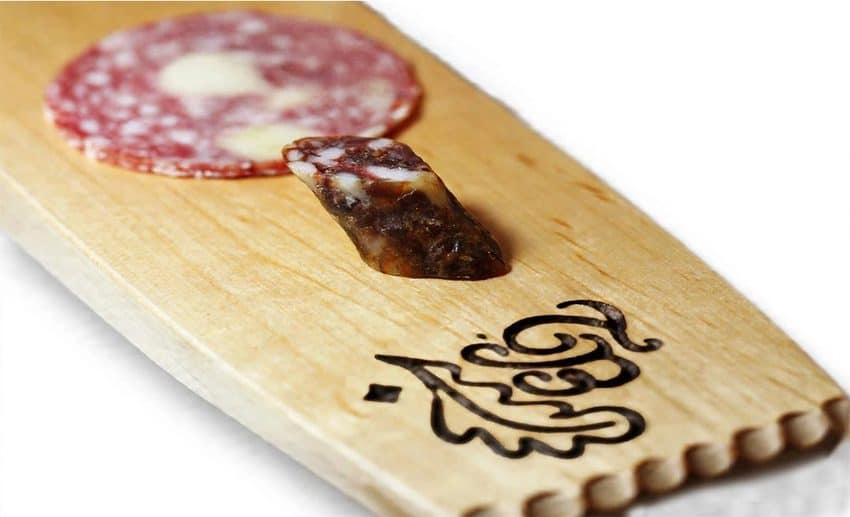
I recognised the next dish: a sliver of salami and a slice of spicy sausage, which I devoured with the remaining sourdough.
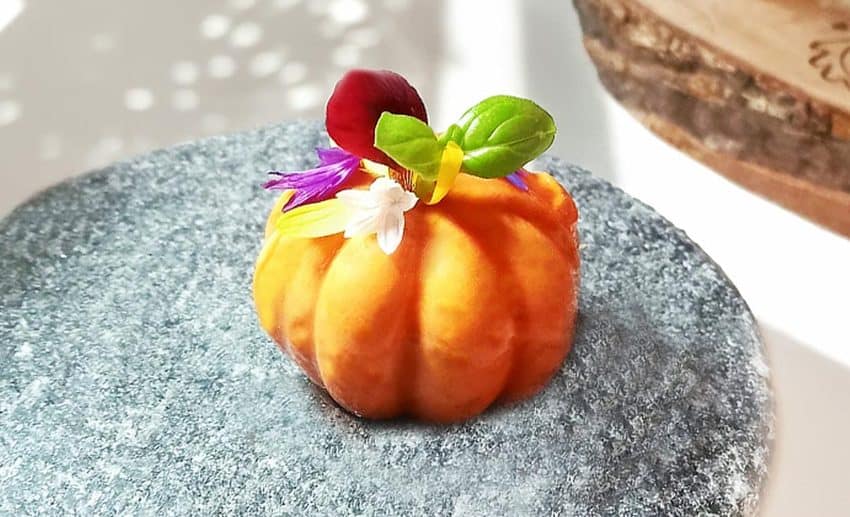
Edible flowers from the garden decorate many of the dishes, and I wondered whether the winter plates, without these flowers, could be as colourful.
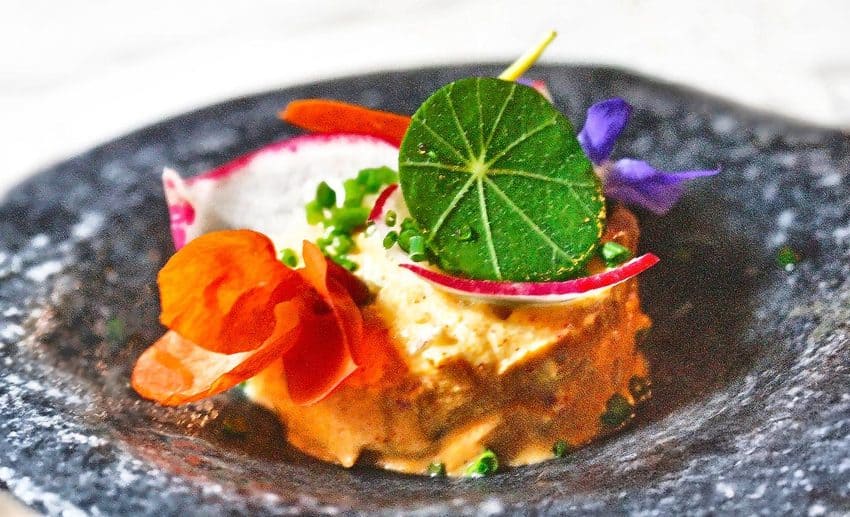
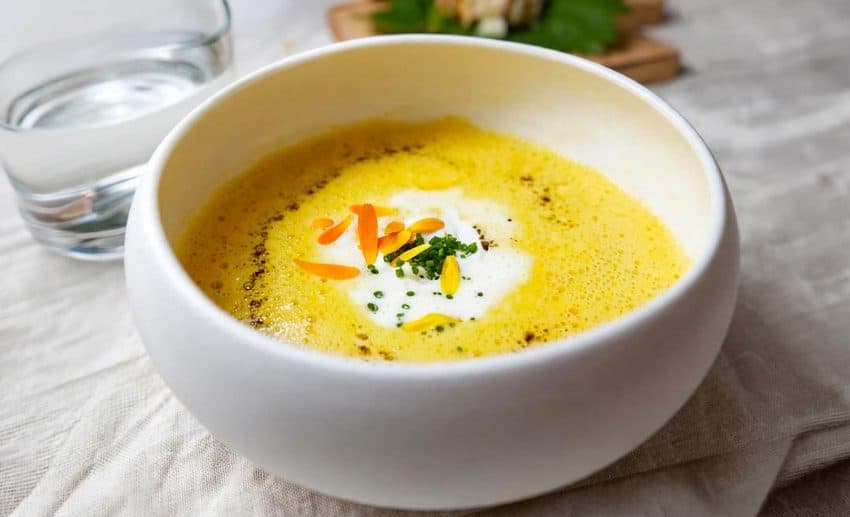
Despite it being pumpkin season, the pâté served earlier was shaped like a pumpkin. Next came corn soup with a generous dollop of soured cream.
The wine cellar houses mostly Austrian and South Tyrolean (Südtirol) wines, as well as speciality beers from the Stiegl-Gut Wildshut estate. Spirits are supplied by hand-picked local distilleries. Austrian wines are starting to appear on discerning Malaysian wine lists and are worth seeking out. My wines by the glass at Rauchkuchl included a Gelber Muskateller, a Schwarz Zweigelt, and a luscious Kracher Beerenauslese. Don’t let the Germanic names frighten you; drink these wines and enjoy them.

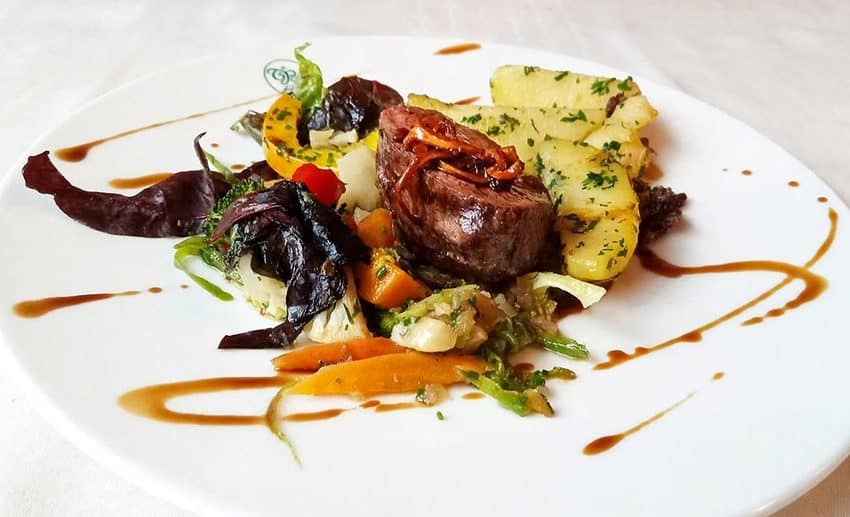
The main course was locally hunted venison accompanied by fried potatoes, cabbage, carrots, and capsicum. Theresia cooked the vegetables over the wood fire while chatting to her guests. The meat was very gamey, but it was the perfect accompaniment to the Zweigelt red wine.
Staying overnight at Rauchkuchl’s historic farmhouse
Schwaigerlehen, the farmhouse above the restaurant, has four guest rooms accommodating up to eleven guests. All feature antique wooden furniture dating back decades or even centuries. In winter, tiled stoves resembling ovens provide pleasant warmth. In keeping with the heritage setting, the bathrooms are at the rear of the accommodation, and each bedroom has its own washbasin.
Breakfast, with fresh pastries and bread from the family bakery, homemade jams, and eggs from the farm’s own hens, was a highlight when I stayed several years ago.
Sadly, I did not stay there on this visit, as accommodation had been arranged in Zell am See. The plan was to catch the last train, but Theresia wouldn’t hear of it. Diners from another room, to whom I had been briefly introduced, were enlisted to drive me back.
Like most people in the restaurant that evening, we arrived as strangers but left as friends. It was a reminder that solo travel has its benefits and that sometimes the most rewarding experiences are the ones we cannot plan. We were all there because the food at Rauchkuchl is so unique, but the evening gave us something more: an unexpected connection with people we might otherwise never have met.
The Rauchkuchl experience is so singular that it deserves a place on any itinerary that takes you to Austria’s remote Pinzgau Valley.
Travel Guide: Visiting Rauchkuchl in Stuhlfelden
We were all there because the food at Rauchkuchl is so unique, but the evening gave us something more: an unexpected connection with people we might otherwise never have met.
on the unexpected human connections forged around a shared dining table
Getting to Stuhlfelden from Malaysia
There are no direct flights from Malaysia to Austria, so travellers will need to connect en route. One option is to fly to Salzburg via Istanbul with Turkish Airlines, subject to the airline’s current route schedule. From Salzburg, continue by train towards Zell am See and Stuhlfelden, or arrange a road transfer.
Stuhlfelden is connected to Zell am See by the local railway. Check the latest connections and departure times with ÖBB, Austria’s national railway, before travelling. Allow enough time for the journey, particularly if you are planning to return to Zell am See after dinner.
Where to stay near Rauchkuchl
For a heritage stay: Schwaigerlehen’s farmhouse guest rooms offer the most immersive experience, with historic furnishings and breakfast featuring farm and family-bakery produce.
For a lakeside base with transport connections: Stay in Zell am See if you want to combine dinner at Rauchkuchl with lake views, shops, restaurants, and access to the local railway. This is also a practical option if you prefer to return to a larger resort after dinner.
For a quieter mountain-town stay: Consider accommodation in nearby Kaprun if your itinerary includes alpine scenery and outdoor activities as well as food experiences. Check transport arrangements to and from Stuhlfelden before booking.
Booking, dining, and solo travel tips
Reserve your table in advance. Contact Rauchkuchl directly to confirm availability, the menu format, and current dining arrangements. Check its website for seasonal breaks and closure periods before planning your visit; for example, the website currently lists an autumn break from 27 September to 3 November.
Ask about dietary requirements. The surprise menu depends on seasonal availability. If you have allergies, dietary restrictions, or foods you cannot eat, explain these when booking rather than assuming substitutions will be possible.
Plan your return journey before dinner. Check the last train or bus to your accommodation, or arrange a taxi or transfer in advance. Do not rely on fellow diners being able to drive you back.
Tell someone your plans if travelling alone. Share your itinerary and accommodation details with a trusted contact, and keep your phone charged for navigation and transport arrangements.
Bring a translation app. A little German can help with menus, transport, and everyday interactions, although the occasional language barrier can also become an opportunity to connect with other diners.
Allow yourself to be surprised. If you’re comfortable doing so, try a tasting menu or unfamiliar local ingredients. You do not have to plan every detail to make a trip rewarding; leave room for curiosity while keeping the practical essentials covered.