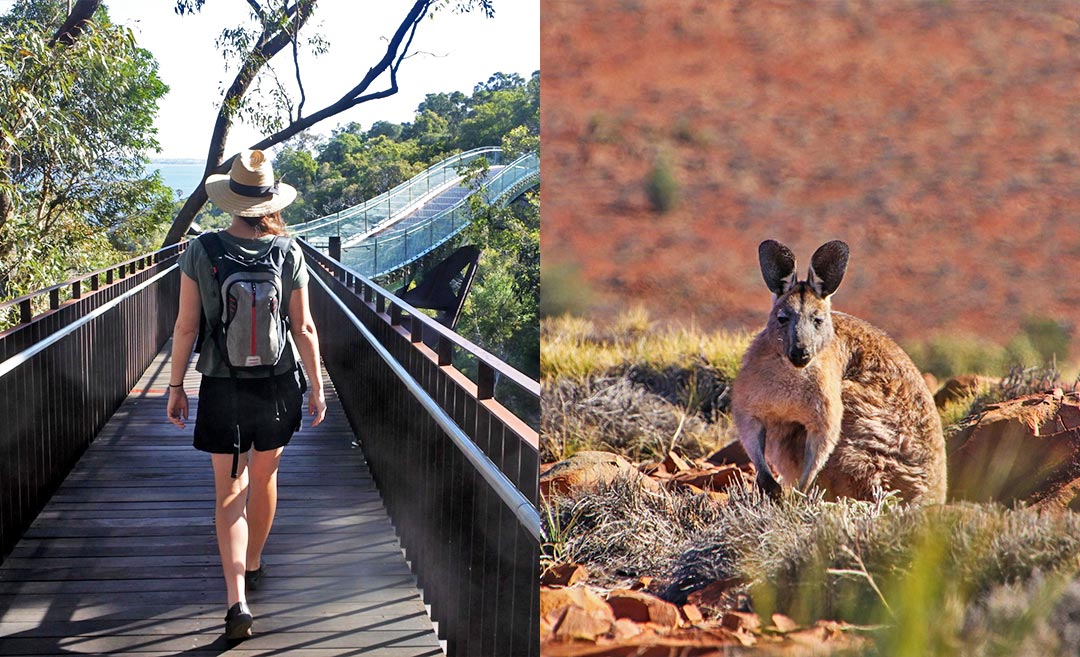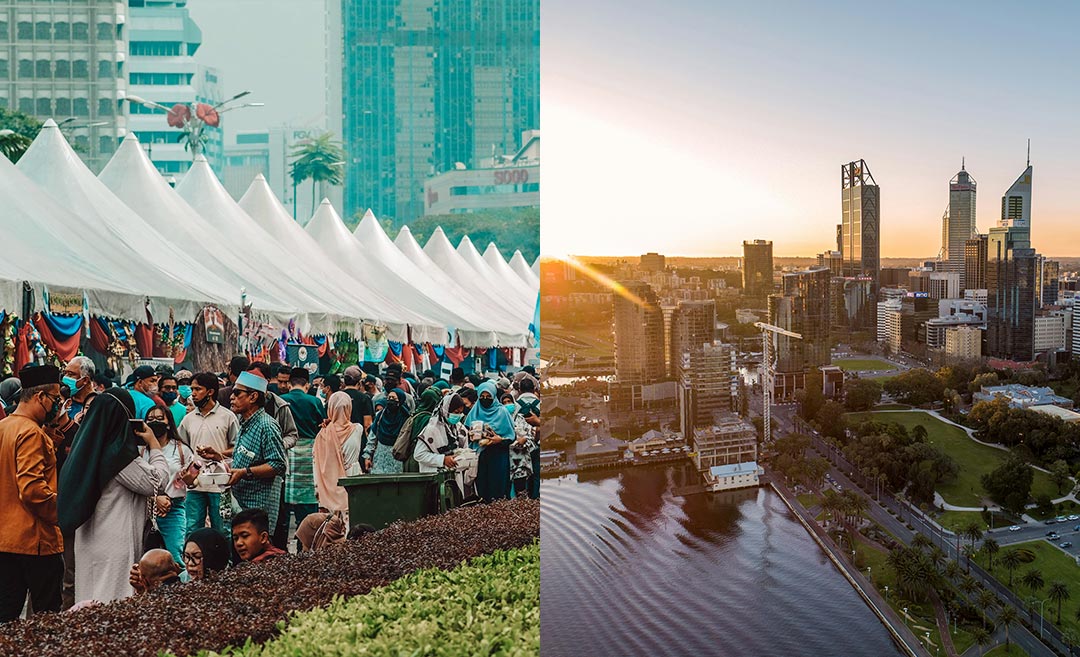
Moving from the crowded energy of a Kuala Lumpur festive season to the quiet, open spaces of Perth at golden hour was more than a change of scenery—it was a social and emotional recalibration. (Left image by anniehatuanh; Right image by Nathan Hurst)
I used to think the best time to travel was when everyone else was going too: during peak season, when flights were full, restaurants required bookings weeks in advance, and entire cities moved in sync with school holidays and long weekends.
Back then, crowds felt like confirmation. If a place was busy, it meant you were in the right place at the right time, having the right kind of experience. And it meant that you’d have the experience you’re supposed to, whatever that meant.
These days, as a millennial mum of two who has swapped Kuala Lumpur for Perth and is still figuring out how to make friends without sounding overly eager, I find myself doing the exact opposite.
I go when no one else is going, and often I go alone, especially within my new city. Not out of rebellion, or some romantic idea of slow travel, but because somewhere along the way, off-season travel started to feel easier to live with.
Returning to Kuala Lumpur after the festive travel rush
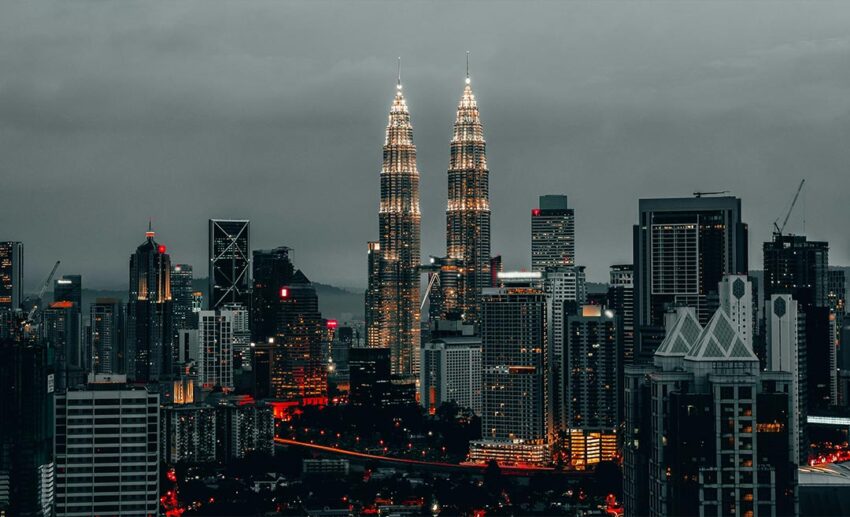
The shift became obvious the first time we flew back to Kuala Lumpur after a festive period instead of during it.
For most of my life, festive travel—whether during Christmas or Raya—meant movement at its most intense. Highways that didn’t seem to have an end with balik kampung traffic (having PTSD just writing this down), rest stops overflowing with human beings (and cars), and the kind of unnecessary urgency that makes a two-hour journey turn into an eight-hour test of endurance.
Sure, looking back, it was festive, but also exhausting in ways I didn’t fully register until I became a parent responsible for snacks, moods and very specific nap windows. Arriving after the rush felt like stepping into the same celebration, just at a different volume.
Homesickness, but a little gentler
Living away from home changes the emotional texture of returning in ways I hadn’t anticipated.
When you’re no longer just visiting, but trying to reconnect with a place that used to be yours, timing matters more than you think. Coming back during peak season can be a lot like trying to locate something familiar in the middle of too much noise.
But arriving after everything has quietened down makes space for something else.
You begin to notice the smaller, quieter details that tend to get lost in the rush—the way your mum moves through the kitchen without needing to think, the comfort of food (OMG MALAYSIAN FOOD!) that doesn’t require explanation, the rhythm of a home that still holds your place even if you no longer live inside it.
It doesn’t take away the homesickness entirely, and I don’t think it ever will, but it does change the perspective. It becomes less sharp, less urgent, and it’s something you can sit with rather than something you’re trying to fix in a limited amount of time.
“The periods just after the rush, or just before it begins, when everything feels slightly quieter and a lot more manageable, is where I’ve found a version of travel that doesn’t feel like something I need to keep up with.”
The city carried the remnants of festivity, but without the pressure to participate in all of it at once. Visits became less about timing and more about presence because house visits in Malaysia during the festivities can be overwhelming, to say the least. Post-season, conversations stretched without the underlying need to leave for the next house. Meals felt less like scheduled events and more like something you could settle into.
It was the same Kuala Lumpur I had always known, but gentler—much like the love I have for it.
Winter in Perth: The beauty of almost-empty beaches

And then there is Perth, which has its own version of quiet. Even at its busiest, the city feels almost restrained. But in winter, that restraint deepens into something that, at first, feels like absence. The beaches, which I had always experienced as lively, become wide stretches of uninterrupted coastline.
The first time I went to the beach in winter, I genuinely thought I had misread the situation. It was beautiful, undeniably so, but almost empty. Just a handful of people, scattered and self-contained.
Coming from Malaysia, where spaces like this are rarely experienced in isolation, it felt unfamiliar. A beach, to me, had always been something shared because it was full of movement, sound, and the comforting presence of other people. Here, it felt like something I was allowed to have to myself.
When less starts to feel like more
Somewhere between leaving Malaysia and building a life here, my relationship with travel—and even with movement itself—has changed.
I no longer need places to feel full for them to feel meaningful. Without the distraction of crowds or the pressure of peak-season expectations, there’s space to notice things as they are, rather than as they’re presented.
And the same applies to going home. When you stop chasing the “right” time to return, whether it’s the busiest, the most festive, the most socially acceptable, but instead choose moments that align with your life as it is now, the experience becomes less about keeping up and more about settling in.
“You begin to notice the smaller, quieter details that tend to get lost in the rush—the rhythm of a home that still holds your place even if you no longer live inside it.”
Making friends, but with zero pressure
Moving to a new country in your early 40s, with children, comes with a kind of social reset that no one really preps you for. Making friends is no longer spontaneous; it’s scheduled, negotiated, and often planned weeks in advance. Everyone is nice enough, but also busy, and you find yourself recalibrating what connection looks like in a place where life runs at a different pace.

In that sense, the physical quiet of Perth mirrors the social one. And yet, over time, I’ve found that this slower pace creates its own kind of ease. There’s less pressure to turn every outing into something memorable, less expectation to be doing more constantly.
It may not be immediate, but it feels sustainable, and I’m learning to appreciate that.
The in-between is where I am now
I still enjoy a good atmosphere, and I don’t think I’ll ever completely lose my appreciation for a place that feels alive with people and movement.
But these days, I find myself drawn more to the in-between. The periods just after the rush, or just before it begins, when everything feels slightly quieter and a lot more manageable.
The times when no one else is going because somewhere in that space—between Kuala Lumpur and Perth, between noise and quiet, between who I was at home and who I am now — I’ve found a version of travel that doesn’t feel like something I need to keep up with.