Swim with whale sharks and snorkel vibrant coral gardens along Western Australia’s Ningaloo Coast; an unforgettable and sustainably managed marine escape.
Stretching over 600,000 hectares along Western Australia’s northwest edge is the Ningaloo Coast, an ancient (read on to learn why) and arid landscape that gives way to turquoise waters teeming with marine life. The coastline is home to one of the world’s largest and most accessible fringing reef systems. It’s also where the desert meets the sea.
Unlike the more famous Great Barrier Reef, Ningaloo Reef’s underwater wonders can be reached just a few fin-kicks from the shore. And yet, it has managed to remain largely uncrowded, quietly preserving its place as one of the more extraordinary marine environments on our planet.
A world heritage coastline
In 2011, UNESCO recognised the Ningaloo Coast as a World Heritage Site, not just for its reef system that’s rich with over 300 species of coral and more than 500 species of fish, but for its coastal lagoons, karst formations, and seasonal aggregations of marine megafauna (think whale sharks and humpback whales) as well. It’s one of the only places in the world where whale sharks reliably gather in significant numbers close to shore, and more importantly, where sustainable tourism practices allow us humans and nature to coexist meaningfully.
Coastal adventures in Coral Bay
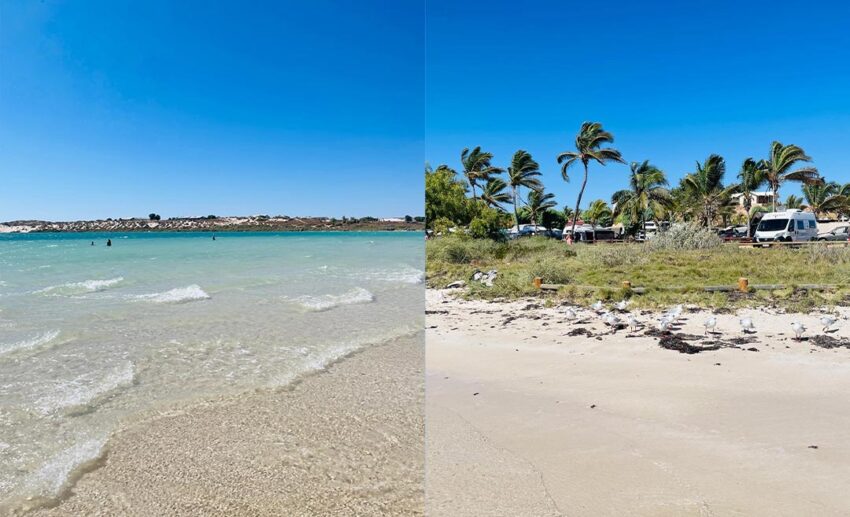
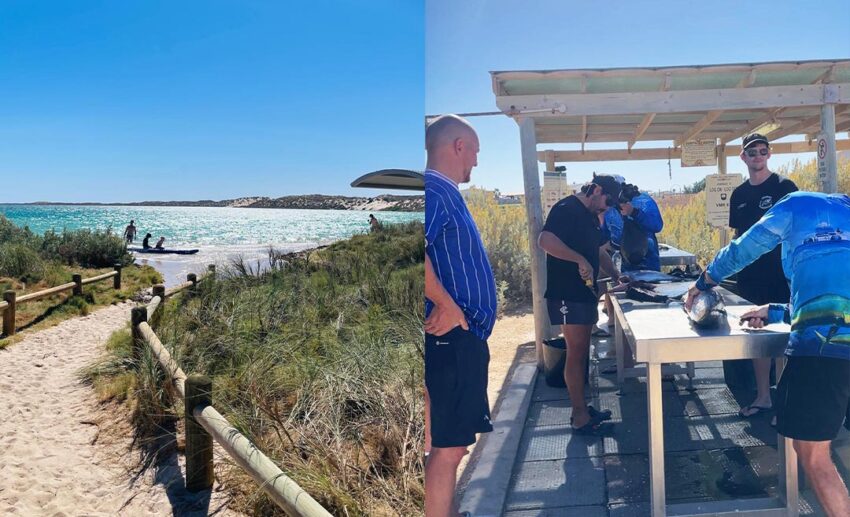
Just south of the reef, the small town of Coral Bay functions more like a sun-drenched, slow-paced outpost rather than a tourist hub. With just a single main street, one general store, and a handful of laidback eateries and excursion operators, it’s the ideal location for those seeking a more intimate connection with the reef.
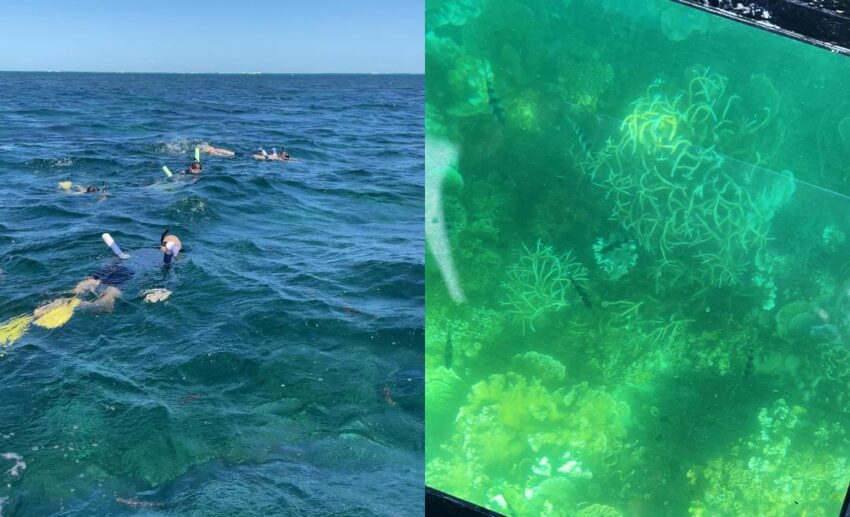
And just a few meters from shore, the coral begins. This proximity is what makes this coastal settlement one of the few places where fringing reefs can be accessed with such ease. It’s also where Miss Coral Bay III, a glass-bottom vessel operated by Ningaloo Coral Bay Boats, sets off on its daily snorkelling tours.
The tour begins with a slow cruise across coral gardens (waters are shallow and speed is reduced to avoid causing damage), offering an overhead view of the reef below through the glass panel. Coral plates, branching staghorns, and coral bommies (isolated outcrops of coral) drift beneath, while marine fauna like parrotfish, wrasse, and if you’re lucky, turtles, curiously swim close by. The boat then anchors at selected snorkelling sites for you to dive in. All this time, the crew, made up of nomadic and local marine enthusiasts, share detailed commentary in and out of the water, pointing out various species and coral types, while adhering to reef-safe practices.
Another thing that sets this tour apart is its exclusive permission to conduct controlled fish feeding. This practice is carefully regulated, ensuring that feeding is done responsibly to prevent any negative impact on the reef’s delicate ecosystem.
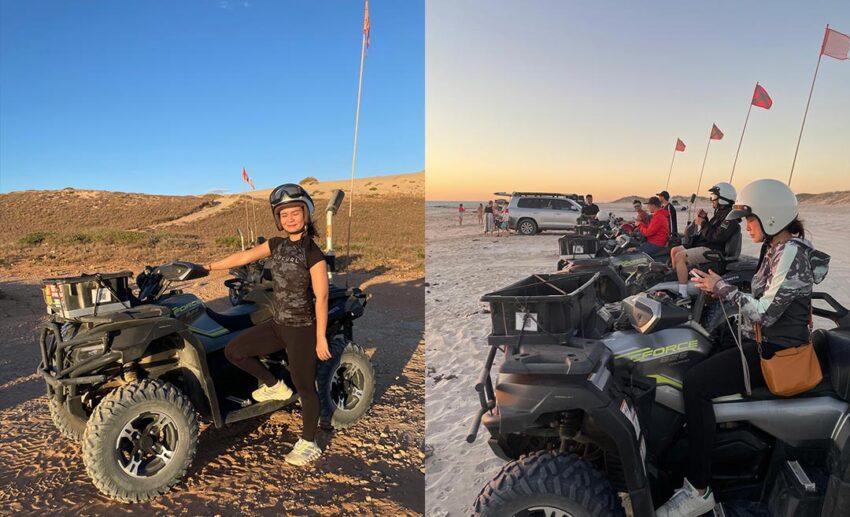
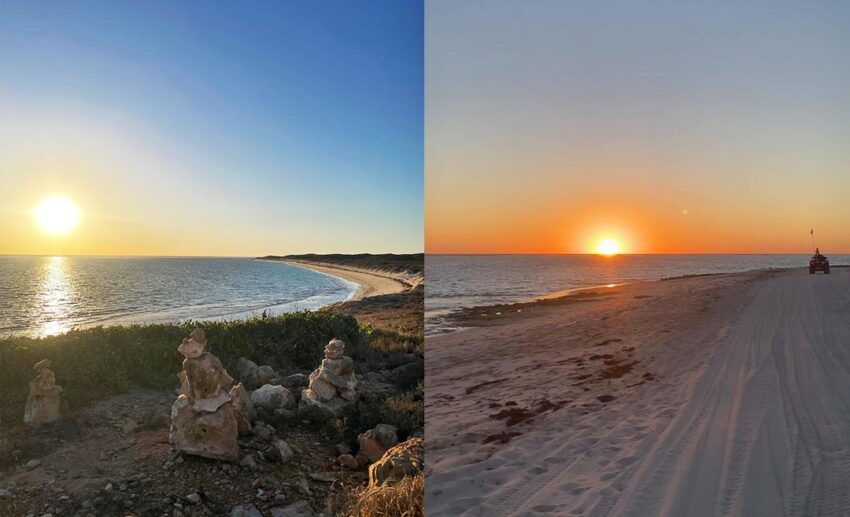
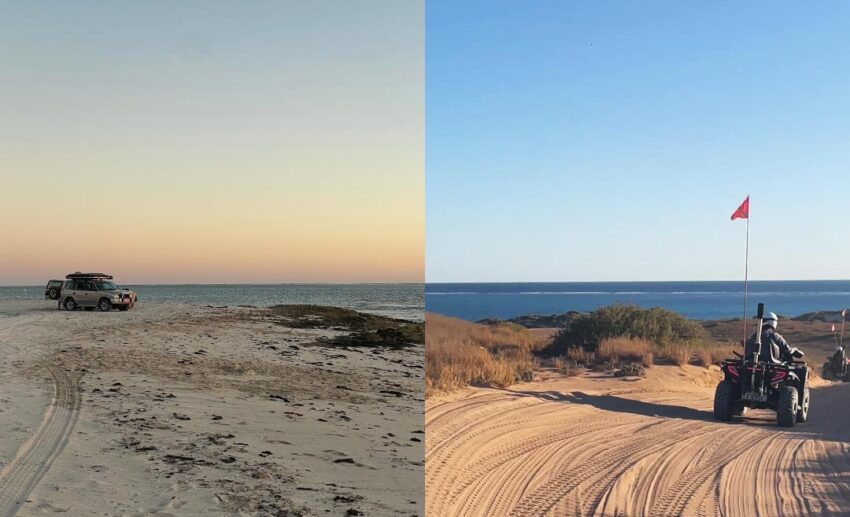
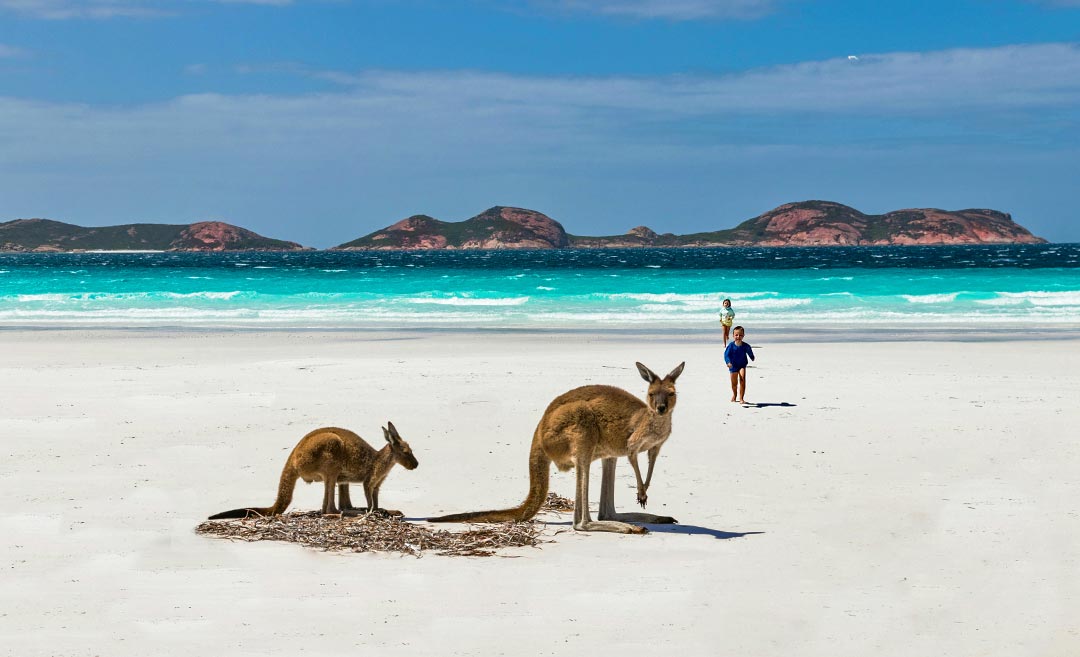
Coral Bay’s beauty isn’t just found offshore. Coastal Adventure Tours offers a different way to experience the coastline without getting wet; on a quad bike sunset tour. This ride begins with a bumpy yet fun drive through the sand dunes to Turtle Cliff, where riders often catch glimpses of turtles feeding near the reef’s edge. While no turtles appeared during our stop, the view from the cliff made up for it, and we were treated to a surprise sighting of a kangaroo, calmly observing as our fleet passed by.
As the sun dips, the group rides along the beach to Five Fingers Reef for a golden-hour finale. It’s a wonderful way to experience Ningaloo’s landscape from another perspective.
Cape Range, where land was once sea
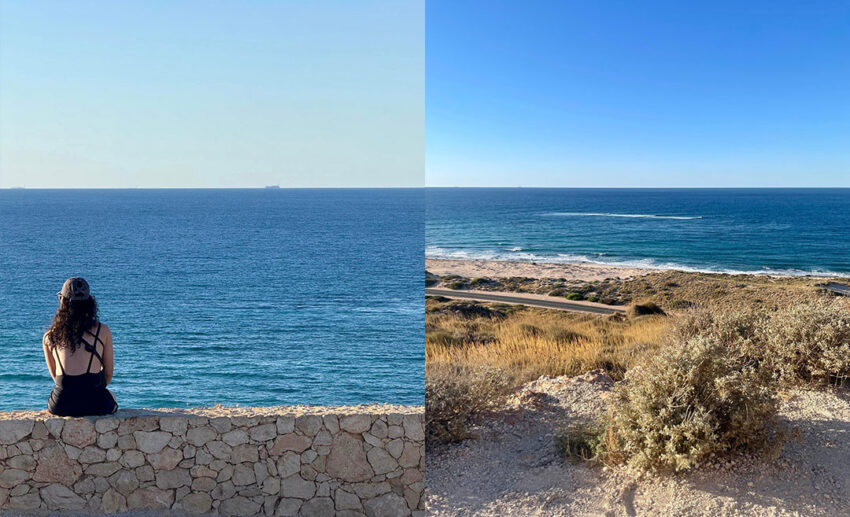
Up the coast near Exmouth lies Cape Range National Park, where white sand dunes and limestone gorges form the backdrop to one of Ningaloo’s best-known snorkelling spots: Turquoise Bay. Here, a drift snorkelling adventure is just steps from dry land, practically kissing the shore.
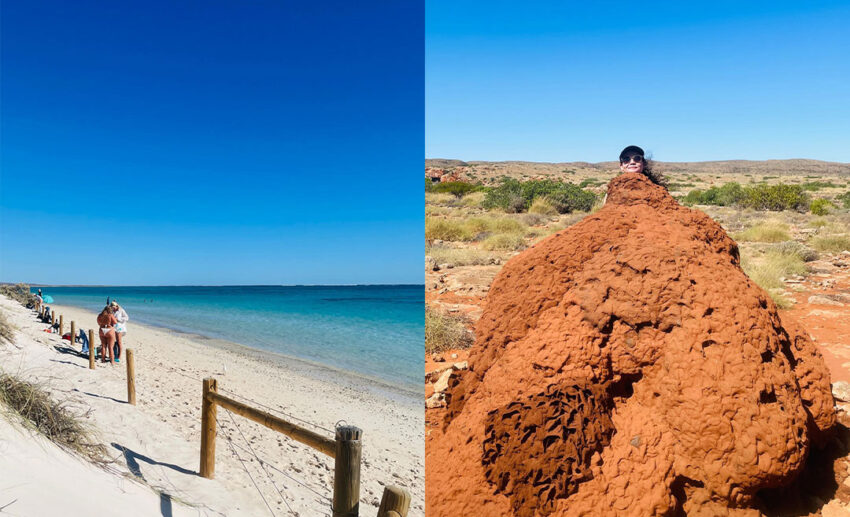
Swimmers and snorkellers enter the water from the southern end of the beach and let the current carry them over a patchwork of coral bommies filled with the likes of angelfish, clownfish, and occasionally, reef sharks.
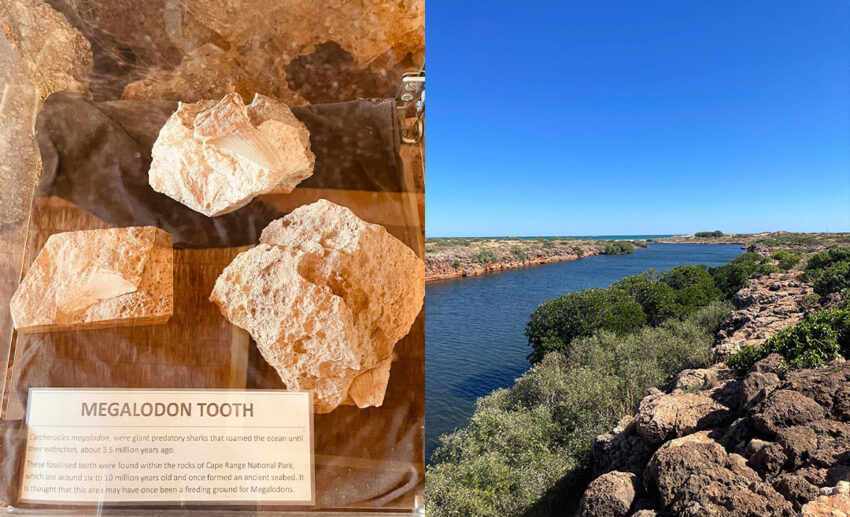
What many don’t realise is that Turquoise Bay sits on the coastal edge of Cape Range National Park, which is formed by limestone cliffs, red canyons, and shrubland. Long before it became a national park, the land here was part of a prehistoric underwater reef system, connected to what is now the Ningaloo Reef. As tectonic activity lifted the land over millions of years, ancient corals became fossilised into the rock. Today, those coral fossils can still be seen embedded in the limestone formations throughout the park.
Adding a deeper layer of intrigue to the area, it’s believed that this region may once have been a hunting ground for megalodons (yes, the ones like in The Meg movies) that once dominated oceans. Though they’re long gone, the teeth of these giant sharks have been found among the fossilised ancient coral.
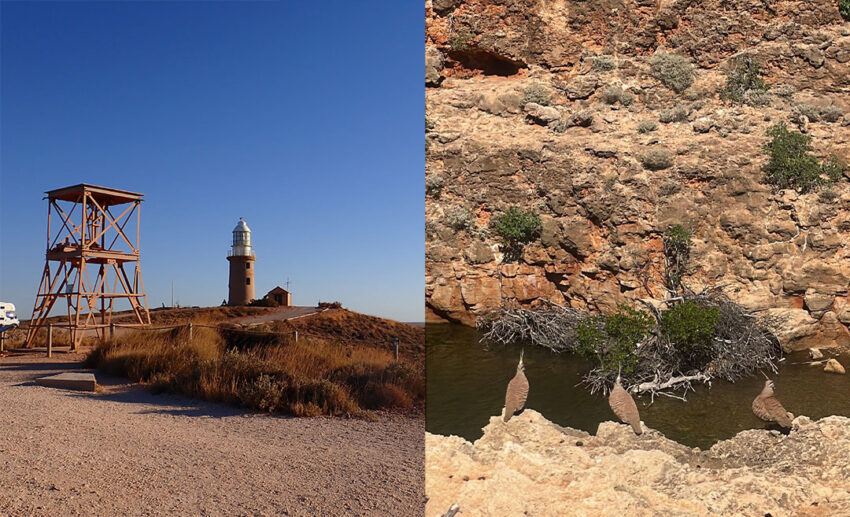
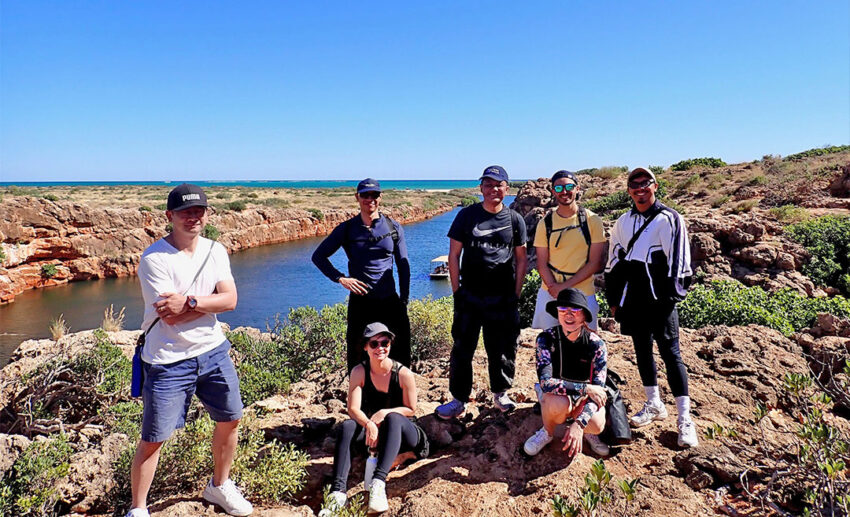
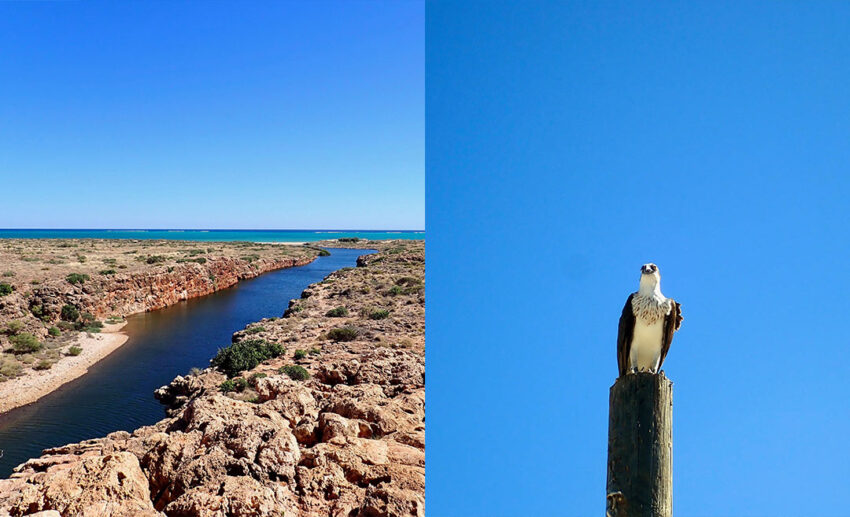
To explore this terrestrial side of Ningaloo, Yardie Creek is a must-visit. Located at the southern end of the national park, the creek flows between steep red cliffs and is home to wildlife like black-footed rock wallabies and ospreys. Walking the Yardie Gorge Trail rewards trekkers with beautiful views of both the gorge and the coastline beyond. It’s a stunning and welcome counterpoint to the reef’s underwater marvels.
To round out the day, Exmouth Adventure Co. includes a stop at the Milyering Visitor Centre, which features a gift store and has an exhibition on Cape Range’s geology and the local wildlife. There’s also time to take in the view from Vlamingh Head Lighthouse, a historic lookout where you can spot migrating whales during the right season. A couple of picnic stops are built into the itinerary, a breather between the short hike and snorkelling.
Swimming with ocean giants
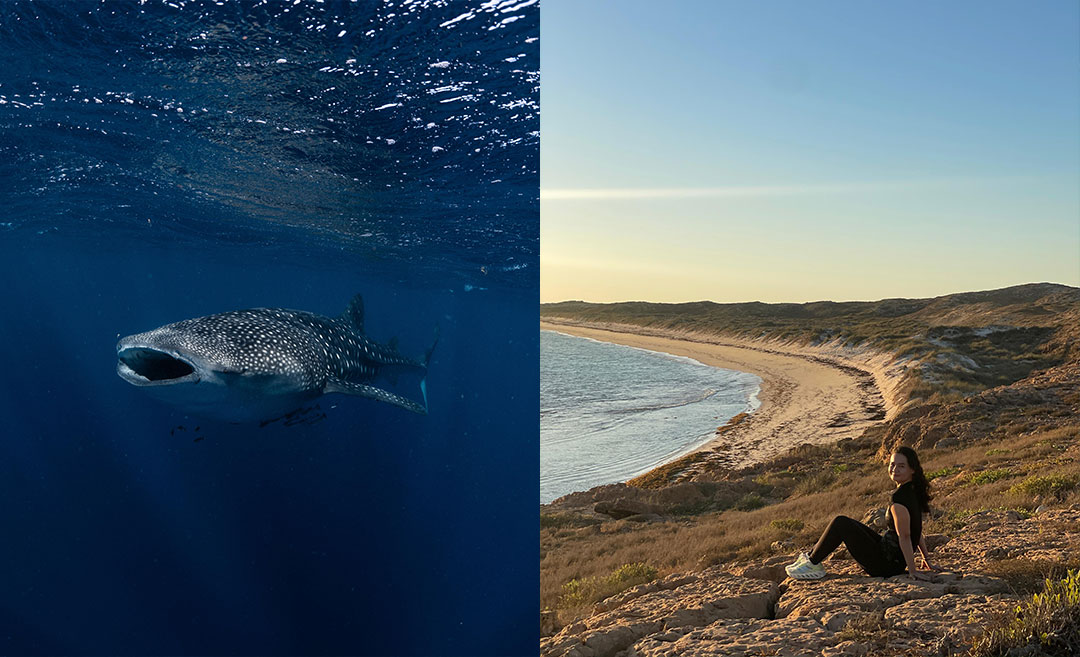
From March to August, the Ningaloo Coast becomes the (underwater) stage for one of nature’s most majestic performances: the annual whale shark aggregation. Sometimes up to 10 meters in length and weighing several tonnes, these ocean filter feeders congregate in the warm waters near Exmouth in one of the largest known seasonal aggregations in the world.
Three Islands Whale Shark Dive is one of the region’s most respected tour operators. Unlike other destinations where encounters can feel overcrowded or invasive – where multiple guides would lure them in with food and surround them with boats – the operators here emphasise ethical interaction. Using spotter planes to locate the animals, the crew coordinates with other boats to ensure only a limited number of swimmers are in the water at any one time. The result is a low-impact, high-empathy, and truly rewarding experience.
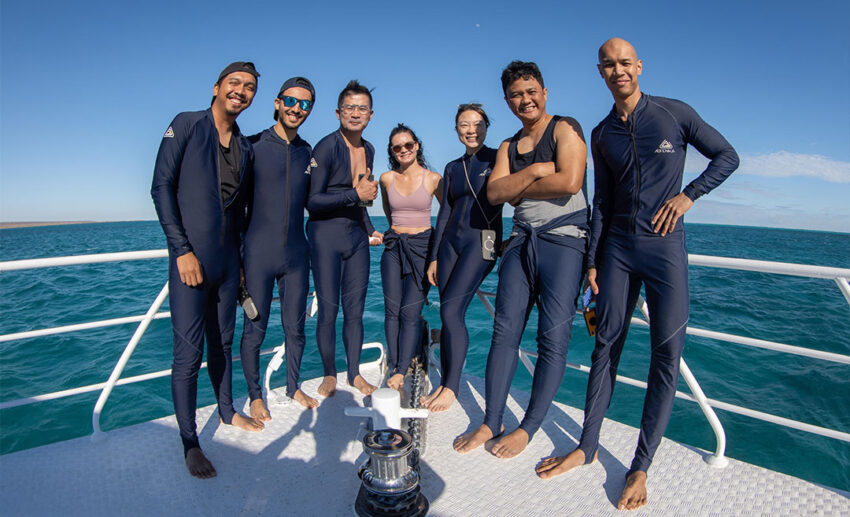
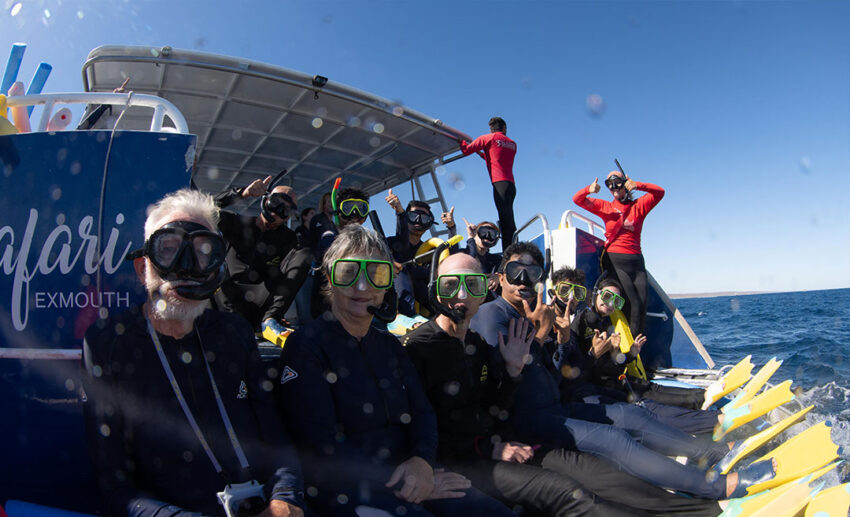
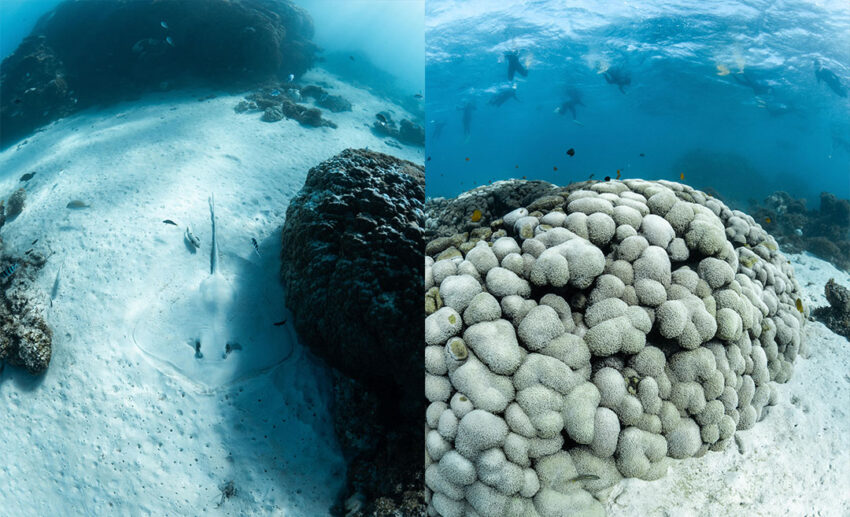
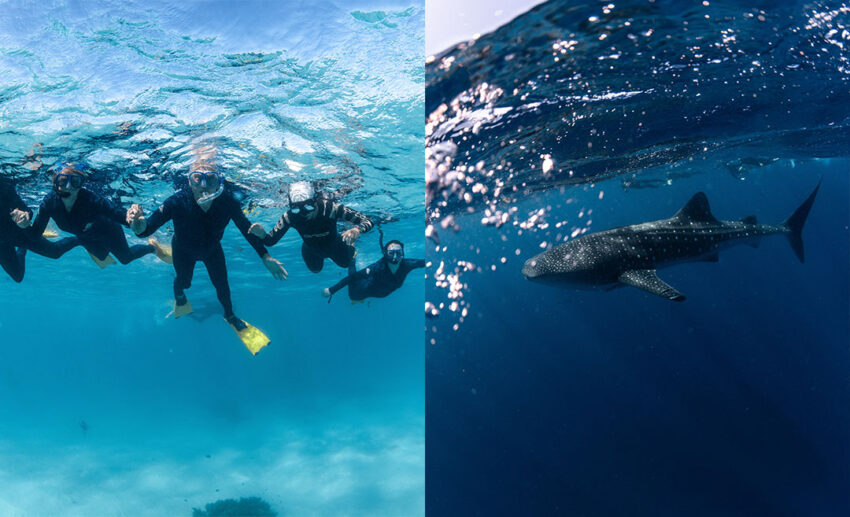
In the water, a guide leads the group into position. Then, as the whale shark appears, it’s a moment of shared rush and awe. There’s no touching, no crowding, just a respectful swim alongside these gentle, sometimes playful giants.
Three Islands also ensures that every tour includes a strong educational component. Guests are briefed on the biology of whale sharks, the threats they face globally, and how Ningaloo has become a model for sustainable marine interaction.
A model for marine conservation
The success of tourism along the Ningaloo Coast isn’t accidental. It’s the result of decades of policy and community involvement. Western Australia’s Department of Biodiversity, Conservation and Attractions (DBCA), in collaboration with traditional custodians and scientists, has implemented strict controls on how tourism is conducted in marine parks and has set a high standard for what sustainable marine tourism can look like.
Perhaps what’s most remarkable is how all these efforts manifest in the everyday experience. Tours don’t just show you the reef, they invite you to become part of its story.
Getting to Ningaloo Coast from Kuala Lumpur
Visiting Western Australia is now easier than ever for Malaysians. AirAsia X currently operates 14 direct flights weekly between Kuala Lumpur and Perth, with a flight time of just under six hours. Until 31 July 2025, travellers can enjoy up to RM200 off ticket purchases using the promo code AAPERTWA. Travel period: Now until 31 December 2025.
From Perth, travellers can either fly to Learmonth Airport (serving Exmouth) or embark on a scenic self-drive along the Coral Coast Highway, a journey of around 12 to 13 hours, with plenty of picturesque stops along the way.