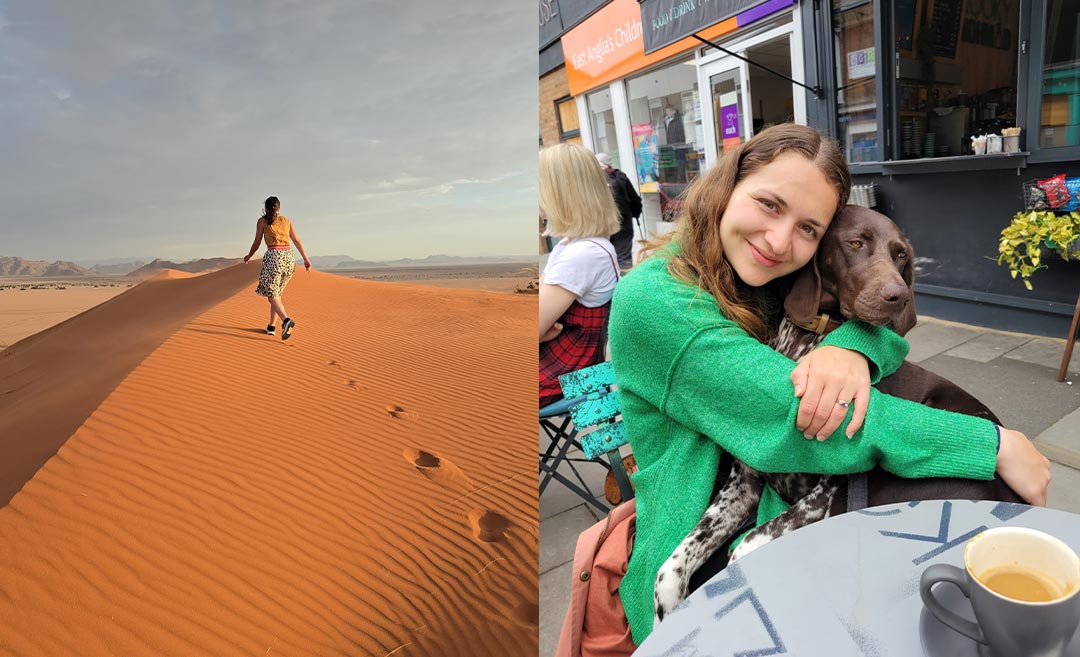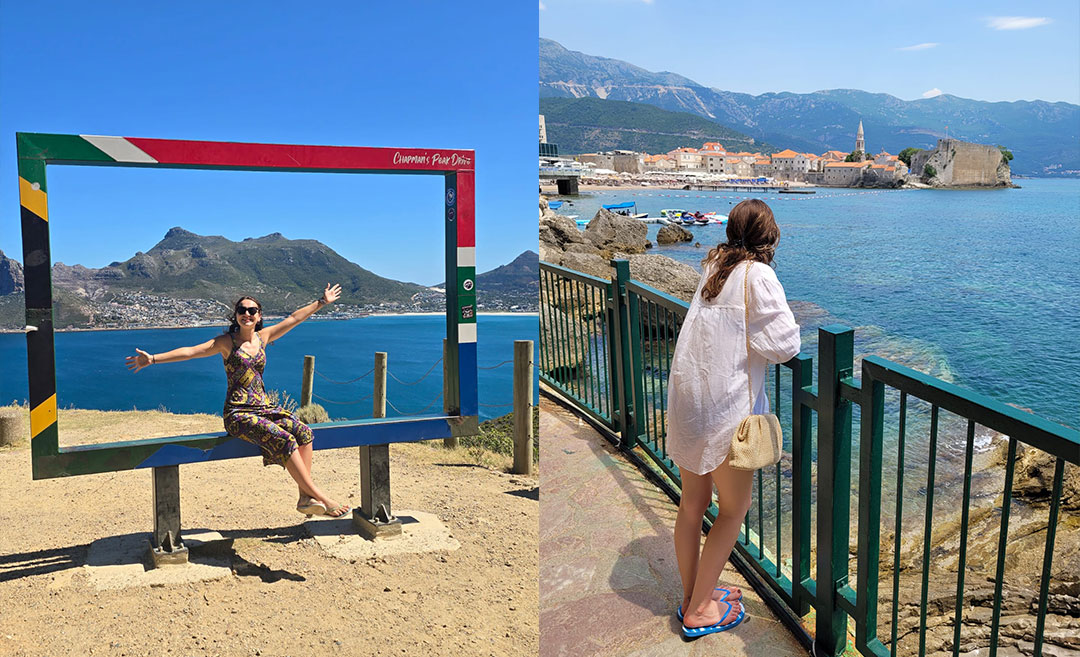
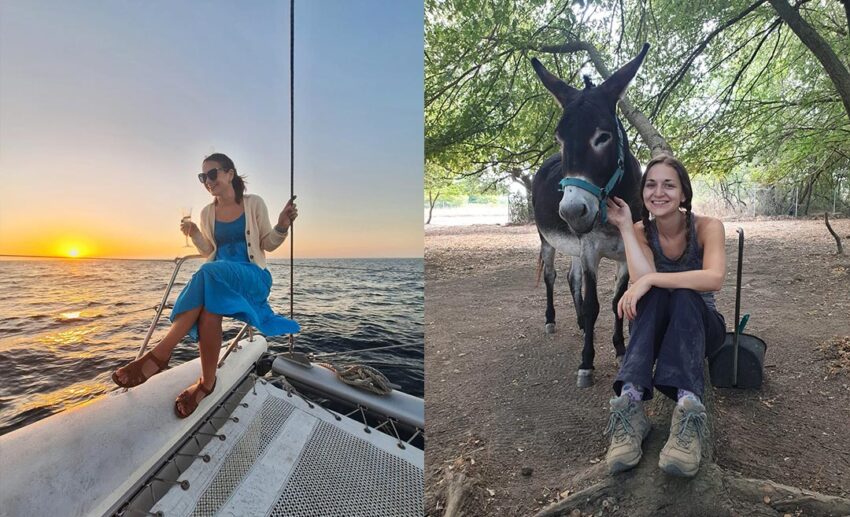
My transformation in frames: trading a rigid routine for a life of intentional travel, from the coastal energy of Cape Town to the quiet, rugged peaks of Montenegro.
The sun was rising over the outskirts of the city as I got into my car to drive back home. I’d been working for 16 hours straight, and I was bone weary. I sat in the driver’s seat, key in the ignition, but I didn’t start the car. Instead, I was mesmerised by the kaleidoscope of colours streaking through the air. Pale pink, opal purple, and soft apricot tones blended against a powder blue sky. It was a perfect July morning.
I sat back and watched nature show off for a moment. I realised I hadn’t stopped to appreciate the world around me for a very long time. I’d been so busy working long shifts after securing my dream job that I’d forgotten to do the things I enjoyed doing. Work had become my life. I’d been cancelling social plans, missing mealtimes with my husband, and running out of time to exercise or run errands. I was finally a major crime investigator for the police, but I was deeply unhappy.
There’s a certain pressure that comes from being a woman in a male-driven environment like policing. There’s also a certain pressure that we put ourselves under when we’ve decided to go down a particular path in life, as though we can’t reverse or change direction. I felt like I’d worked so hard to get where I was that I couldn’t admit that I wasn’t enjoying it.
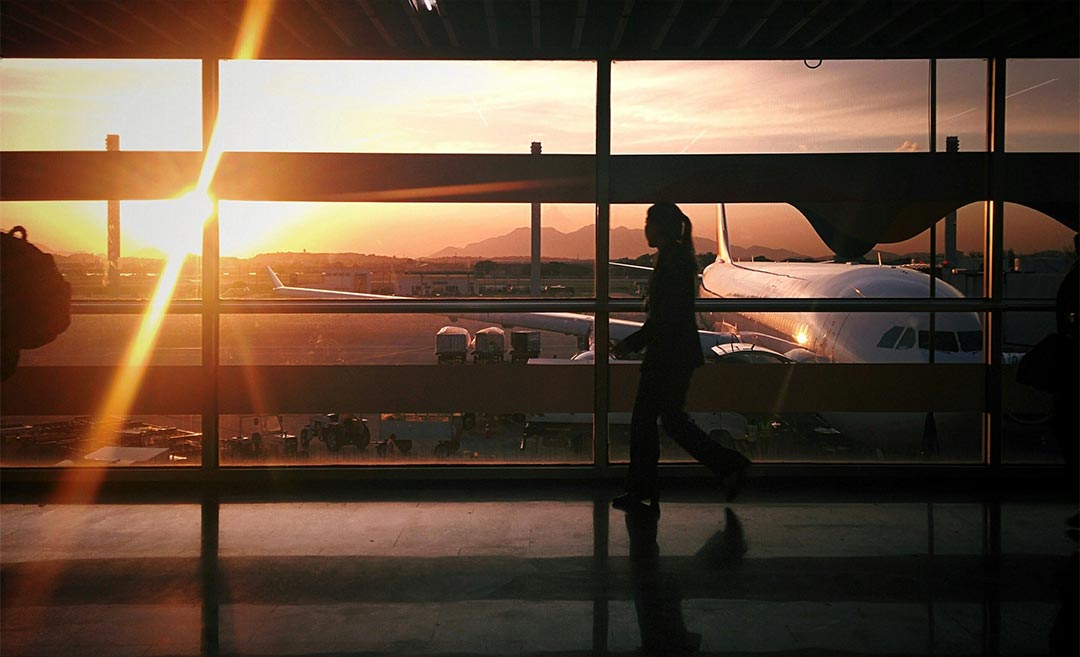
But deep down, I dreamt of watching the sunrise over distant cities and landscapes. Of spending more time outside in nature and less time working. I dreamt of building a career that allowed me to earn from anywhere. Part of me was begging to change direction. Another part of me thought people would think I was crazy if I switched careers and life paths after almost a decade of working towards the place I had gotten.
Somewhere in that sunshine-filled July, in a haze of caffeine and unhappiness, I finally snapped. I didn’t want to live this way anymore. I started looking for a way to build a career that could fund a life centred around travel.
Redefining what work looked like
The decision was one thing. Figuring out how to actually do it was something else entirely.
At the time, my career felt fixed. Policing isn’t a job you can take on the road. There’s no remote option or flexibility, no way to reshape it around a different kind of life. If I wanted travel to be part of my everyday reality, I knew I would have to build something new from scratch.
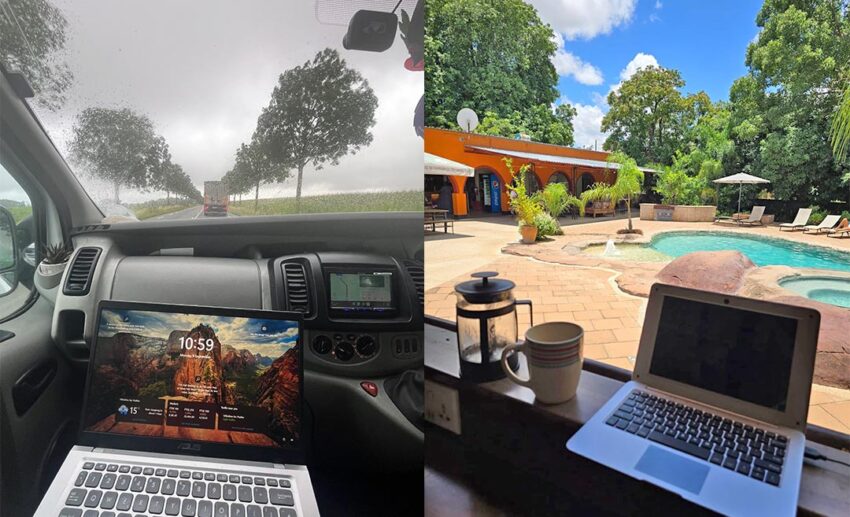
This would be impossible to do overnight. I spent months retraining as a writer while still working long shifts. I started taking writing courses, learning how to pitch to magazines, building a portfolio, and facing more rejections than I could count. Slowly, things changed. I built a website to market myself, secured regular freelance work, and eventually got a book deal. That was the turning point that allowed me to fully step away from my career.
At the same time, my husband was making his own decisions with travel in mind. Rather than choosing a career based purely on passion or salary, he chose one based on flexibility. He skipped university, completed an apprenticeship in accounting, and now works fully remotely.
We approached it differently, but with the same goal in mind: building work that would support the life we actually wanted.
Careers that make travel more possible

Not all careers are designed for flexibility, but more options exist now than ever before. If your goal is to travel more, it’s worth understanding the kinds of work that make that possible:
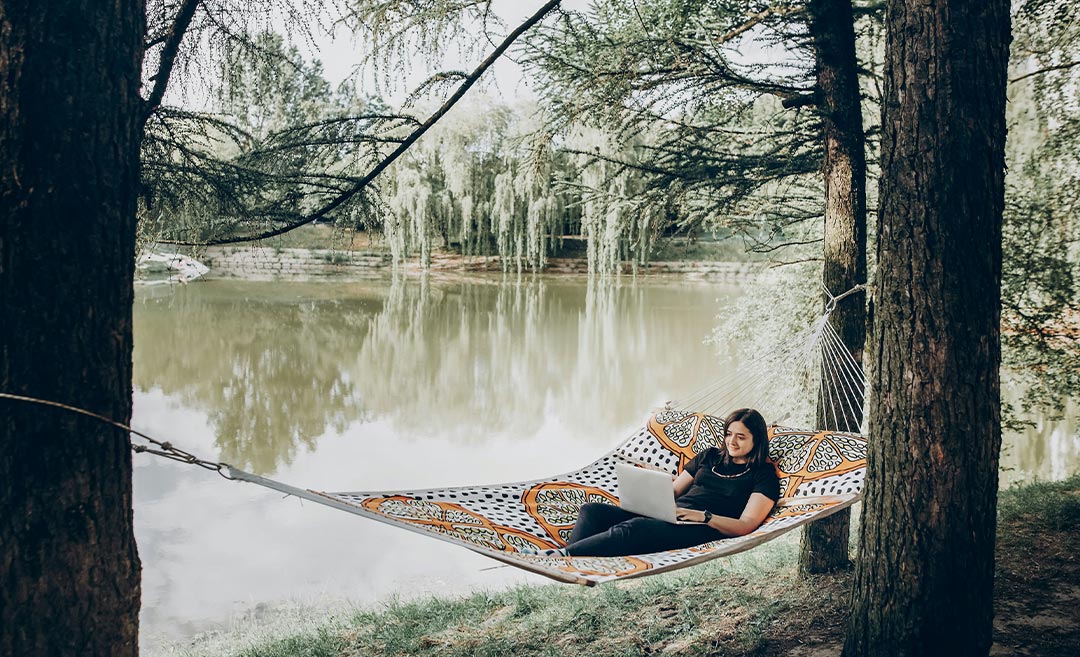
Remote roles: Jobs that can be done entirely online, such as account management, marketing, tech, customer support, and finance. These offer stability and a consistent income while allowing location freedom.
Freelancing: Work such as writing, design, consulting, photography, and social media. This offers maximum flexibility, but requires time to build up and can provide unpredictable work and income.
Portfolio careers: A mix of income streams such as part-time remote work combined with freelance or creative work. This can offer both stability and flexibility.
There’s no “correct” path. The best thing to do is align your work with your priorities, rather than trying to force travel around a job or lifestyle that doesn’t allow for it.
Why changing careers isn’t starting over
One of the biggest barriers to taking these steps is mental, not practical.
When you’ve invested years into a career, it can feel impossible to change direction. There’s a sense that you’ve gone too far down one path to turn back. I felt that. I had worked hard to get into a specialist and difficult role, and walking away felt like undoing years of effort. But the reality is, those years aren’t wasted. They shape how you think, work, and problem-solve. The skills transfer, even if the job itself doesn’t.
The change comes from reframing how you see change:
- You’re not starting from zero; you’re starting from experience
- A career isn’t a fixed identity; it’s something you can redesign
- Progress doesn’t have to be linear or entwined with climbing the career ladder
Building a flexible career rarely happens quickly, so you must have patience and perseverance too. It’s something you layer slowly, often alongside your existing job, until it becomes sustainable.
How to transition into a more flexible career

If you’re starting from a fixed role, the transition can feel overwhelming. Breaking it down makes it more manageable:
- Get clear on your “why”: Do you want to travel full-time, or just more often? Are you looking for flexibility, financial freedom, or a lifestyle shift? This shapes everything that follows. I highly recommend the book The Chimp Paradox by Steve Peters if you get stuck here.
- Identify flexible career paths: Research roles that align with your existing skills where possible. Look at job descriptions, not just job titles.
- Start building alongside your current job: Take courses, freelance on the side, or test remote opportunities before making any big decisions.
- Create a financial buffer: Having savings gives you space to take risks and navigate the early stages of transition.
- Be prepared for a slower timeline: This is rarely an overnight shift. It’s usually built over months or years to make it sustainable.
Financial habits that support a travel-first lifestyle
Designing a travel-led life is about managing money differently too.
A few things that made the biggest difference for me:
- Lowering fixed costs: Reducing rent and household expenses (for example, I do this through house sitting) creates immediate flexibility
- Building multiple income streams: Relying on one source of income can feel risky when you’re travelling
- Planning for inconsistency: Freelance income can fluctuate, so having savings and a buffer helps
- Tracking spending closely: Travel doesn’t have to be expensive, but it does require awareness
The real challenges of building a travel-first life

A lifestyle built around travel isn’t perfect, and it’s important to be honest about that. There can be less stability, especially in the early stages. Income may fluctuate. Career progression isn’t always possible. You may need to turn down opportunities that don’t align with your goal lifestyle.
There’s also a level of uncertainty that comes with building something less conventional. You may feel that people will judge you, or find that they question your decisions. Often this comes from a place of envy or misunderstanding. Remember, you’re living your life, not theirs.
In return, you gain many things: control over your time, your location, and how you spend your days.
Building work around travel changed everything

Looking back at that morning in the car, what I realise now is that I wasn’t just exhausted; I was disconnected from the life I actually wanted.
Changing direction wasn’t easy. It took time, persistence, determination, and a willingness to step into the unknown. But it allowed me to build something that feels far more like a life.
Travel is no longer something I squeeze into annual leave. It’s the structure of my life. And the shift, from fitting travel around work to building work around travel instead, is what made the biggest difference.
For any woman considering a similar path, it’s not about quitting everything overnight or having it all figured out. It’s about starting to think differently about what’s possible and taking the first step towards building a life that supports it.
All photos are by and courtesy of the writer, Jessican Holmes, unless otherwise stated.