Photo by Nathan Dumlao via Unsplash
We tend to think of coffee as a fairly straightforward affair: beans, water, perhaps some milk or sugar, and that first essential cup of the day. But coffee culture looks very different depending on where you are in the world.
From sweet, creamy egg coffee in Hanoi to spiced brews in Senegal and coffee prepared in heated sand, these drinks show just how much can be done with a humble cup of coffee. Some might sound unusual at first, but they are all rooted in local tastes, traditions, and histories.
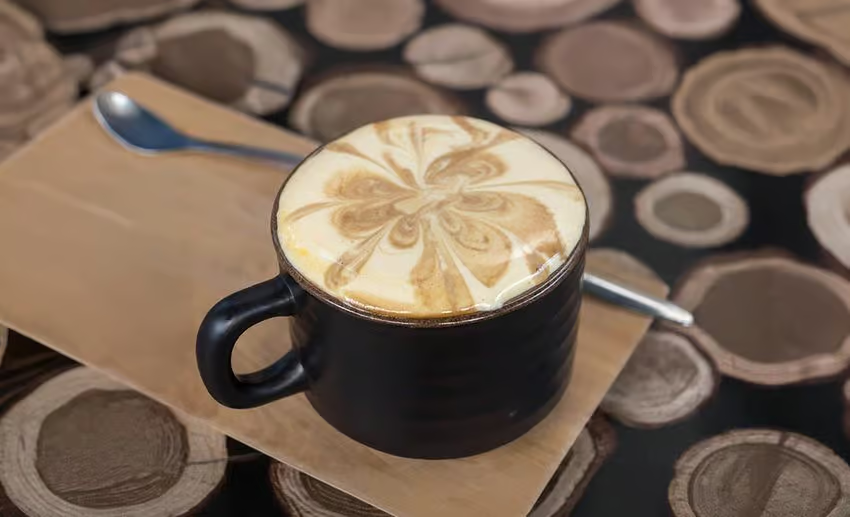
Vietnamese egg coffee with whipped egg yolk
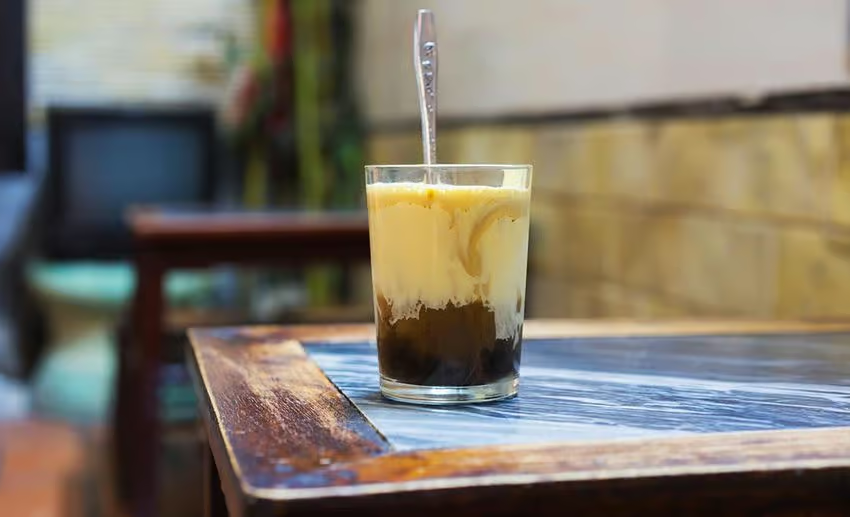
If you find yourself wandering the streets of Hanoi, skip the usual latte and try cà phê trứng, or Vietnamese egg coffee.
The drink was created in Hanoi in the 1940s by Nguyen Van Giang, a bartender who is said to have turned to whisked egg yolk and condensed milk when fresh milk was in short supply. The result is a rich, sweet coffee topped with a thick, creamy layer of whipped egg yolk and condensed milk.
Vietnamese coffee is strongly associated with Robusta beans, which tend to have a bolder, more bitter flavour than Arabica. That intensity works particularly well with the sweet egg topping, making cà phê trứng feel almost more like a dessert than your average morning pick-me-up.
For the full experience, try it in Hanoi, where the drink has become a signature of the city’s coffee culture.
Senegalese café Touba with spices
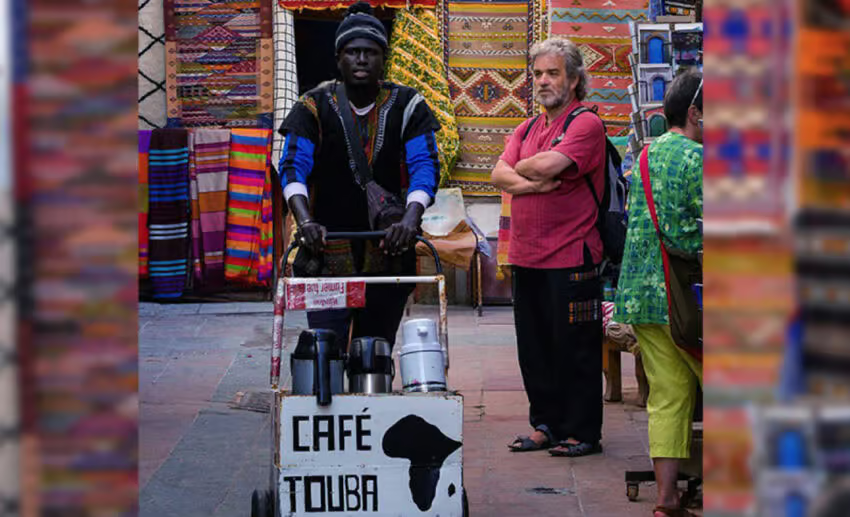
Named after the Senegalese city of Touba, café Touba is coffee with a distinctly peppery twist.
The coffee is flavoured with djar, also known as grains of Selim, a West African spice with a pungent aroma and flavours that can remind you of black pepper, cardamom, and even a little star anise. Traditionally, the spice is roasted together with the coffee beans before everything is ground and brewed.
The finished coffee is typically served black and sweetened generously with sugar. The result is aromatic, spicy, and considerably more complex than your standard cup of black coffee.
Café Touba is also closely associated with the Mouride religious tradition in Senegal, and has become an important part of the country’s everyday coffee culture.
Turkish coffee brewed without a filter
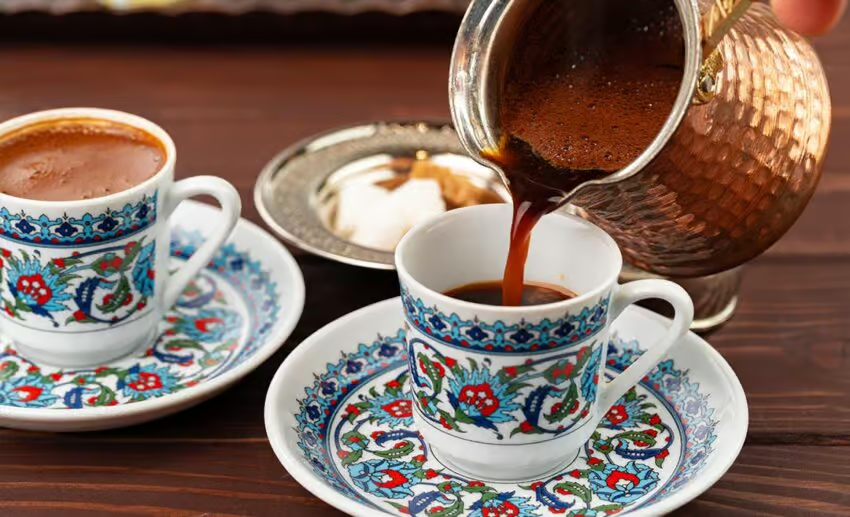
You may have seen videos of Turkish coffee being prepared in a tiny, long-handled pot called a cezve. The coffee is exceptionally finely ground and brewed directly with water, without filtering out the grounds.
One method you might also come across involves placing the cezve in heated sand. The sand helps distribute heat evenly, while the pot can be moved deeper or shallower to adjust the temperature. As the coffee heats, it develops a thick foam and rises towards the top of the pot. The process may be repeated several times.
What you are left with is a strong, unfiltered coffee with the grounds still sitting at the bottom of the cup. It is traditionally served alongside a small glass of water and often accompanied by something sweet.
And don’t rush to wash the cup when you’re finished. Reading the shapes left by the coffee grounds to tell fortunes is a long-standing tradition, too.
Mexican café de olla with cinnamon and piloncillo
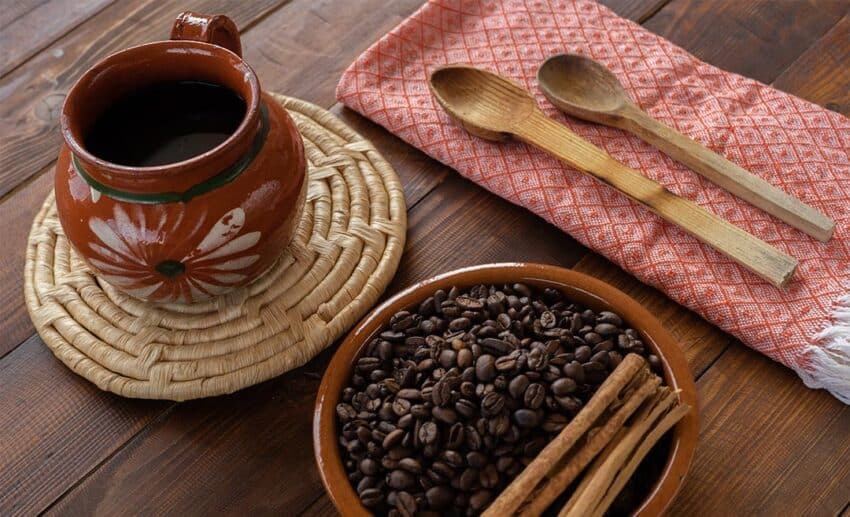
For coffee that is sweet, warming, and fragrant with spices, look to Mexico’s café de olla.
The traditional drink is brewed with cinnamon and piloncillo, an unrefined cane sugar that is usually sold in solid cones. Depending on the recipe, cloves, star anise, or other spices may also make an appearance.
The name refers to the olla, an earthenware pot traditionally used to brew the coffee. Brewing it in clay is said to add another subtle layer of flavour to the drink.
Café de olla is closely associated with the Mexican Revolution, when it was brewed in large clay pots over open fires. Today, it remains a beloved Mexican coffee tradition and is easy enough to recreate at home.
Ipoh white coffee with condensed milk
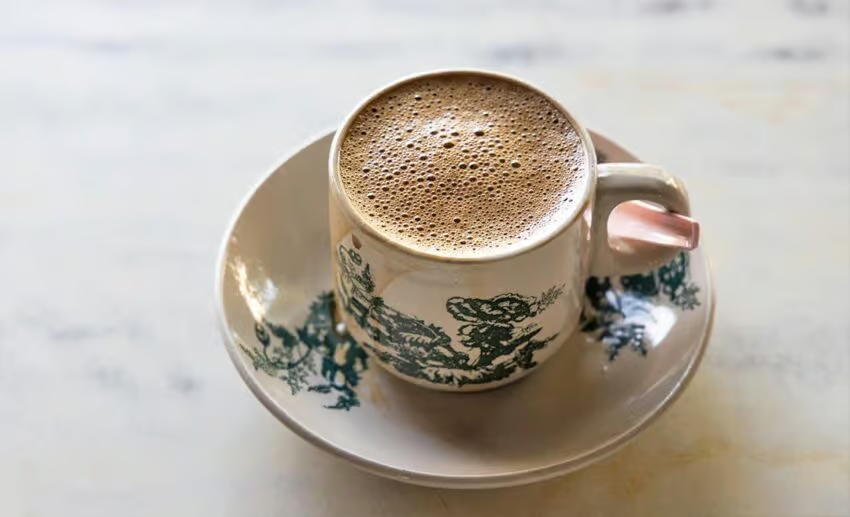
Don’t let the name fool you. Ipoh white coffee isn’t made from white beans, nor does the name refer to a particular coffee species. Instead, it describes a distinctive Malaysian roasting and preparation style.
Traditionally, the beans are roasted with margarine, producing a lighter roast and a smoother, less bitter flavour than darker-roasted coffee. The coffee is then brewed and commonly served with sweetened condensed milk, giving it the pale, creamy appearance that inspired its name.
Different blends can contain Arabica, Robusta, and Liberica beans, so Liberica isn’t a defining ingredient of Ipoh white coffee. That said, Liberica itself has an interesting place in Malaysia’s coffee story and is enjoying renewed attention among local growers and specialty coffee producers, particularly in Johor.
Ipoh’s coffee culture is closely linked to its Hainanese immigrant community and the kopitiams that became a fixture of the city. Today, a cup of Ipoh white coffee is as much a part of the city’s identity as its famous limestone hills.
Malaysian and Singaporean kopi gu you with butter
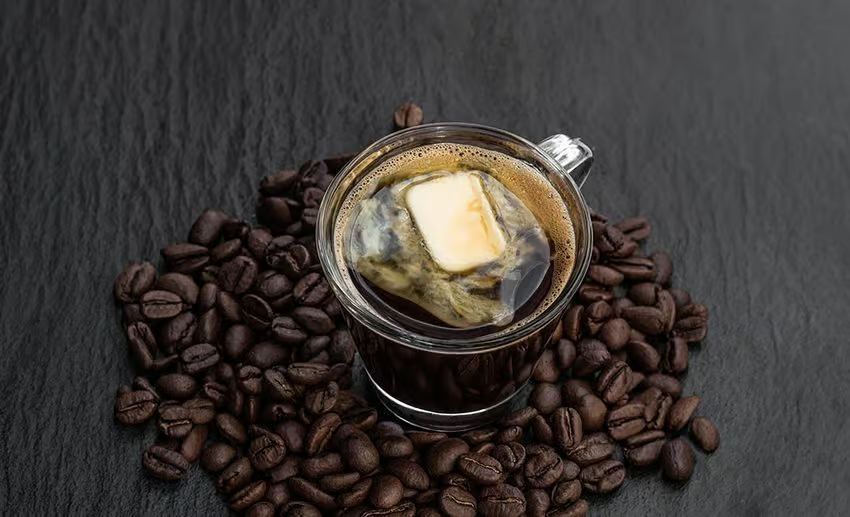
Butter in coffee might sound like a recent wellness trend, but Southeast Asia has been doing it for much longer.
Kopi gu you, or butter coffee, is part of the traditional Nanyang coffee culture found in Malaysia and Singapore. A small piece of butter is added to strong, dark-roasted kopi, often alongside condensed milk, creating a rich drink with a distinctly silky texture.
The idea may sound similar to the modern trend for “bulletproof coffee”, but the two belong to very different coffee traditions. Kopi gu you comes from the region’s long-established kopitiam culture rather than the contemporary wellness movement.
And while you might not want a slab of butter floating in your morning latte, the combination works surprisingly well with the intense, caramelised flavour of traditional kopi.
Vietnamese salt coffee from Huế
Salt in coffee? Hear us out.
Cà phê muối, or Vietnamese salt coffee, is associated with Huế, where the drink is believed to have emerged around 2010. It combines strong Vietnamese coffee with a sweet, creamy mixture containing salt.
The salt doesn’t make the coffee taste like seawater. Instead, a small amount helps balance the bitterness of the coffee while bringing out its sweetness. The drink is commonly served over ice, making it particularly refreshing in Vietnam’s hot climate.
What started as a local speciality in Huế has since spread to cafes across Vietnam, with different versions appearing along the way. Like egg coffee, it is another example of how Vietnamese coffee culture isn’t afraid to experiment with ingredients that might seem unusual elsewhere.
And yes, it works.
Editor’s Note: First published in May 2019, this article has been updated in October 2026 with refreshed information, updated details, and a new addition to the list.