Making magic from the mundane: Kuching-based designer Stefanie Sim transforms everyday Malaysian memories and cultural touchstones into vibrant textile art.
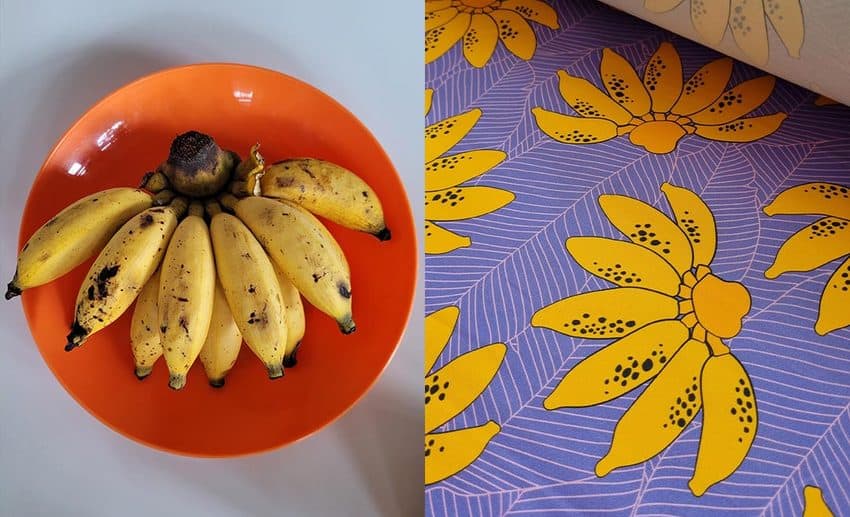
A plate of bananas, black spots and fruit flies included, may not be the first thing that comes to mind when you think of fashion inspiration. But for Stefanie Sim, founder of Sarawak-based print studio Santan Studio, it was the beginning of something rather unexpected.
Looking at the rather unglamorous bunch of fruit sitting in front of her, she wondered who would want to wear bananas all over. Then she drew them anyway, eventually turning the design into fabric and a dress.
It was an early expression of what would become Santan Studio’s guiding philosophy: making magic from the mundane. For Stefanie, inspiration doesn’t have to come from somewhere extraordinary. Sometimes, it’s already sitting on the kitchen table, waiting to be seen a little differently.
Finding her way back to Kuching
Stefanie left Kuching for New Zealand when she was 14 and returned to her hometown in her mid-20s. After spending so many years away, coming home wasn’t quite the seamless reunion she had imagined.
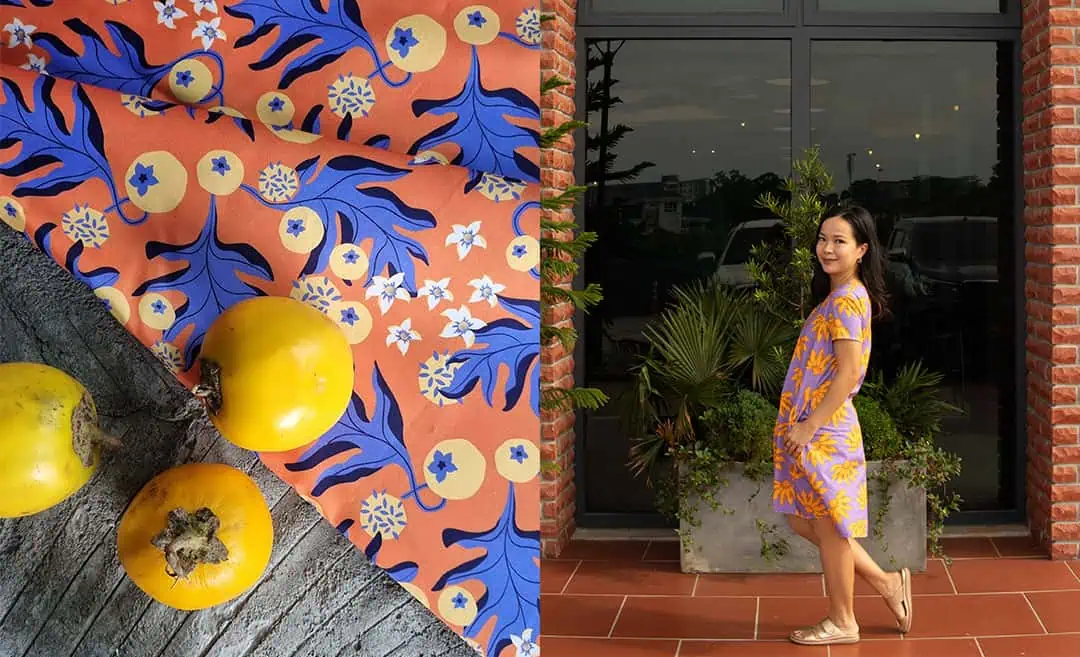
“Honestly, I felt a bit like a stranger in my own hometown, and in many ways, it felt like I was starting over again,” she shares.
Around this time, she was also navigating the transition into motherhood. Becoming a mum was transformative, but with so much of her world revolving around her children, she found herself losing some sense of her own identity.
Santan Studio began as a way to reconnect with a part of herself that had taken a back seat: her creativity. What started as a creative outlet gradually became something more, giving her a sense of purpose beyond motherhood while allowing the two parts of her life to coexist.
She had always been drawn to colours and patterns, although she wasn’t particularly confident in her drawing abilities. When she began experimenting with digital illustration during the COVID-19 pandemic, she taught herself to use Adobe Illustrator through online tutorials, learning by watching, trying, and figuring things out as she went along.
There was no grand business plan or elaborate vision for what Santan Studio might become. Initially, she just wanted to make cute things that made her and others happy.
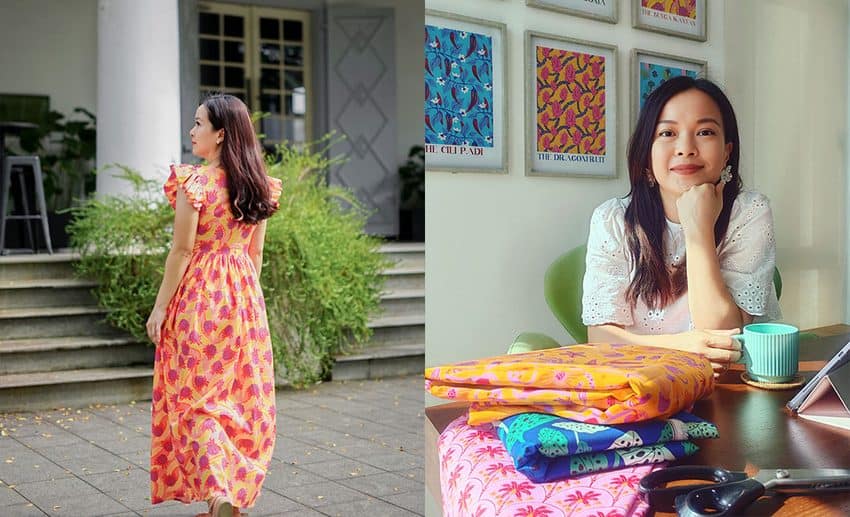
Anything has the potential to become a great subject.
on finding inspiration in the everyday
Even sharing her creations felt daunting. Her social media accounts were private, and she remembers how much courage it took to press “post” and let other people see her work.
The beauty in the everyday
For Stefanie, the appeal of everyday objects lies partly in their familiarity. Why search far and wide for inspiration when there’s already so much around us?
As a self-described kopitiam girl, she finds comfort in the sights, sounds, and rituals of Kuching’s coffee-shop culture. A cup of kopi isn’t just a drink; it’s tied to memories of gathering with others and the feeling of being home.
These familiar details often become the starting point for her designs. Take her Sarawak laksa print, inspired by a dish that’s both a staple in her life and an icon of her hometown.
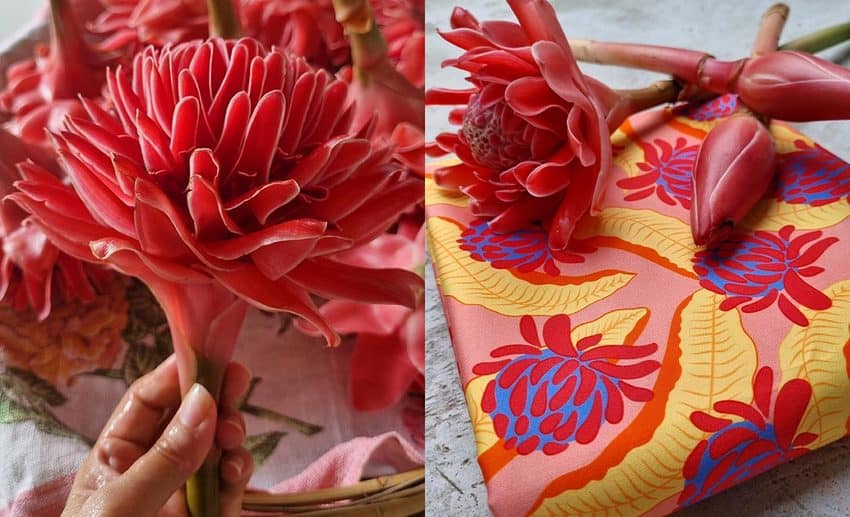
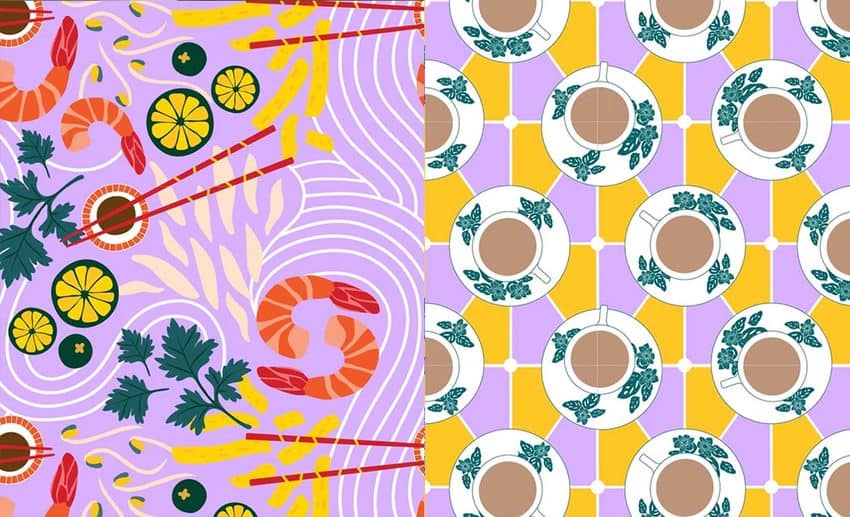
Instead of illustrating a bowl of laksa in the most literal sense, Sim decided to break the dish down into its individual components. Prawns, shredded chicken, bee hoon, and other ingredients became motifs in their own right, which she then arranged into playful compositions using colour and shape.
The result is a design that invites a second look. Someone might recognise the ingredients immediately, or they may need a moment to work out what they’re seeing. Stefanie enjoys that little moment of discovery, when an abstract arrangement suddenly becomes familiar.
The same thoughtfulness goes into her kopi C print. She thinks about how she likes her coffee — very hot, with a little sugar and a splash of evaporated milk — and the vintage porcelain mugs and old shoplot kopitiams where she enjoys drinking it. Even the familiar old-school floor tiles become part of the memory.
“I don’t create with the intention of appealing to everyone, but I hope that my own stories might spark memories or take on a different meaning for someone else,” she says.
It’s a philosophy that seems to be resonating. Her Sarawak laksa prints have become some of her bestsellers, with many buyers coming from Kuala Lumpur and Singapore. For Stefanie, there’s something meaningful about seeing a distinctly Sarawakian subject connect with people beyond her hometown.
Not every memory needs to look the same
Part of the charm of Stefanie’s work is that she doesn’t follow a single formula for translating memories into patterns. Some subjects call for playful experimentation, while others are best left close to their original form.
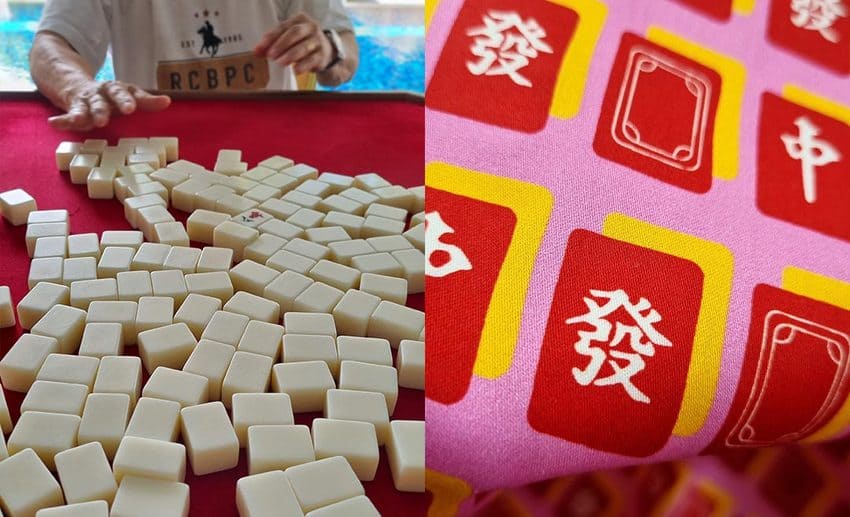
Her mahjong print, for instance, was inspired by regular Sunday afternoon mahjong sessions with her dad.
As these old kopitiams slowly disappear, I hope my prints can capture those moments that may one day exist only in our memories.
on preserving the familiar comforts of home
Rather than transforming the tiles into something abstract or overly quirky, she selected the “powerful” tiles and arranged them into a grid.
The design is relatively basic, but that’s precisely the point. The familiarity of the tiles carries the story without needing much embellishment.
Her laksa print takes the opposite approach, deconstructing a recognisable dish into individual motifs.
Across her work, bright colours and playful arrangements bring a sense of energy to the designs. The challenge is to capture the beauty of a familiar subject without turning it into a caricature.
“I want people to not only smile when they recognise the objects but also appreciate them as sophisticated design elements,” she explains.
A little piece of home to hold on to
Although many of Stefanie’s designs look back to childhood memories and the culture of Kuching, her work also documents the life she’s living now.
She admits that much of her own childhood is a blur. Instead, she finds herself recording her adulthood, motherhood, and her daughters’ childhoods through her designs. Life is constantly changing, and the present is already becoming the past.
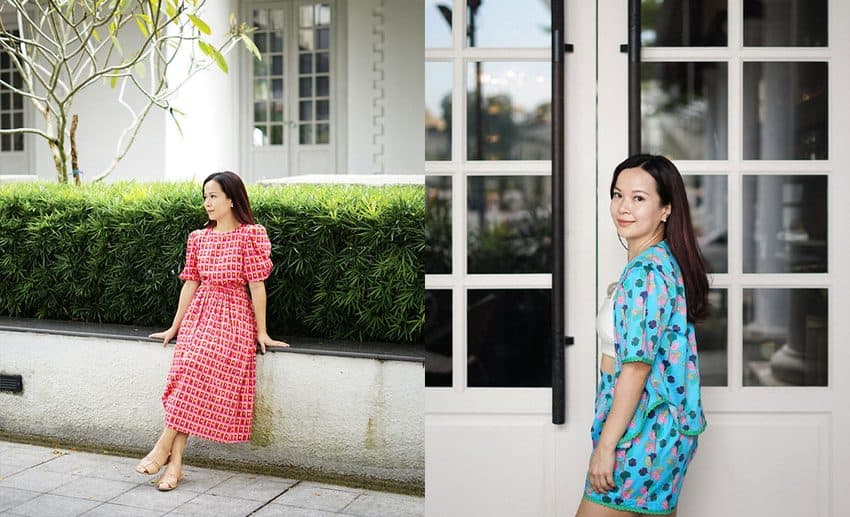
Her Permai collection, for example, draws on beach outings with her daughters. These may come across like ordinary family days, but they’re the kinds of moments she knows she’ll look back on fondly as her girls grow older.
There is something quite vulnerable about sharing a piece of yourself creatively.
on the personal nature of creative expression
In this way, pattern design has become a means of documenting her life, preserving little chapters that might otherwise slip by unnoticed.
Her Rooted collection holds a different kind of significance. Released in June 2026, it was the first collection she created after a long hiatus, during which she’d lost some of her motivation and joy in creating.
She wasn’t sure how it would be received, so seeing people respond warmly was especially encouraging. More than the designs themselves, the collection represents a return to something she’d missed: a feeling of finding her footing again.
That connection between the personal and the shared is particularly evident in the responses she receives from Malaysians living overseas. Customers have told her how her angku kuih, laksa, pineapple tart, and mahjong tile designs remind them of childhood or bring back the feeling of Chinese New Year spent at home.
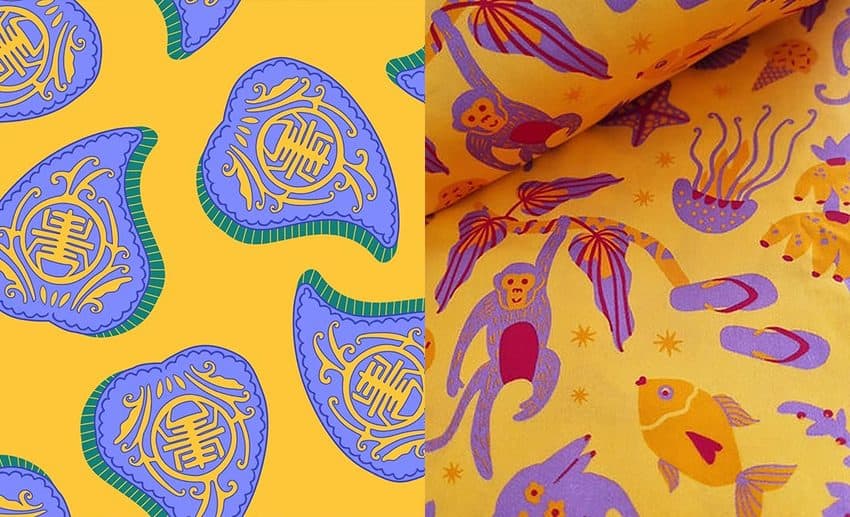
Knowing that something she’s drawn can make someone feel a little closer to home is incredibly rewarding.
The little things worth keeping
As Santan Studio continues to evolve, Stefanie has become more conscious of the stories she wants her designs to tell. She’s particularly interested in exploring things that may not be around forever: fading traditions, family recipes, familiar places, and everyday rituals that gradually change with time.
Translating these intangible memories into beautiful prints is both the challenge and the fun of what she does.
There is also a vulnerability in the process. Each design begins with something personal, and putting it out into the world means allowing others a glimpse into that part of her life.
When someone connects with a print and sees a little piece of their own story in it, she considers that a victory.
Through Santan Studio, Stefanie is finding a way to keep some of them close, one pattern at a time.
All photos are by and courtesy of Santan Studio.