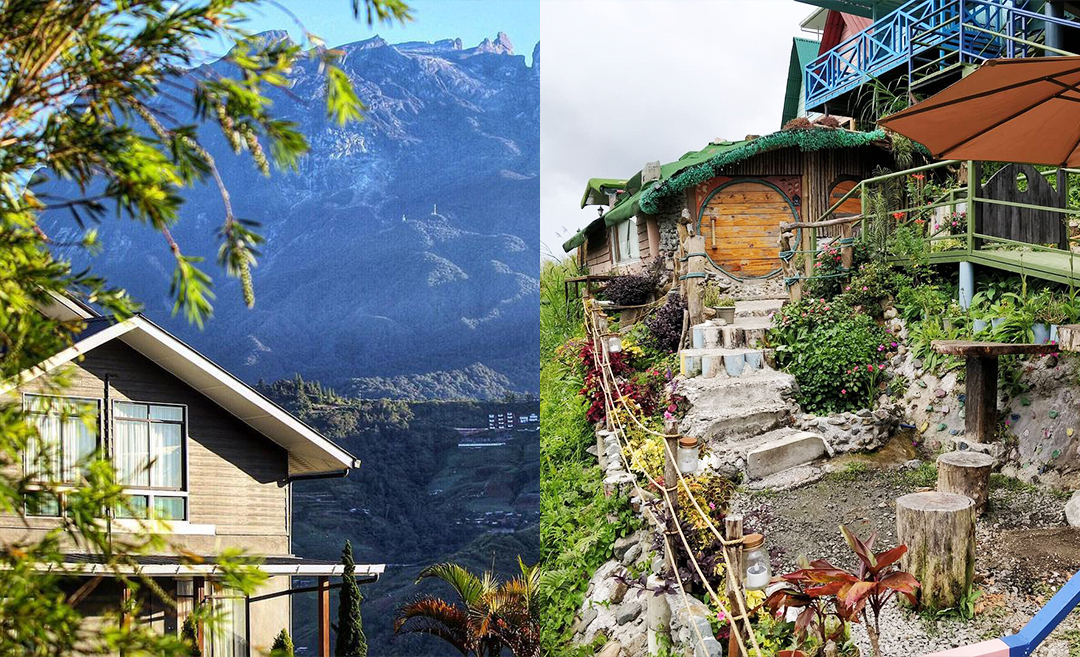
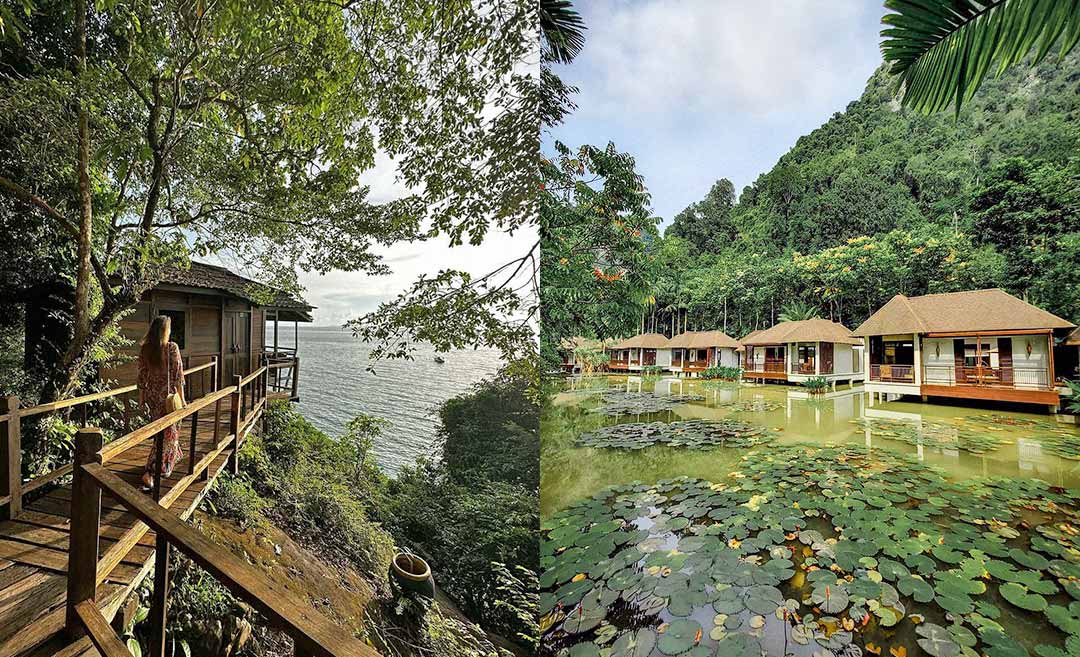
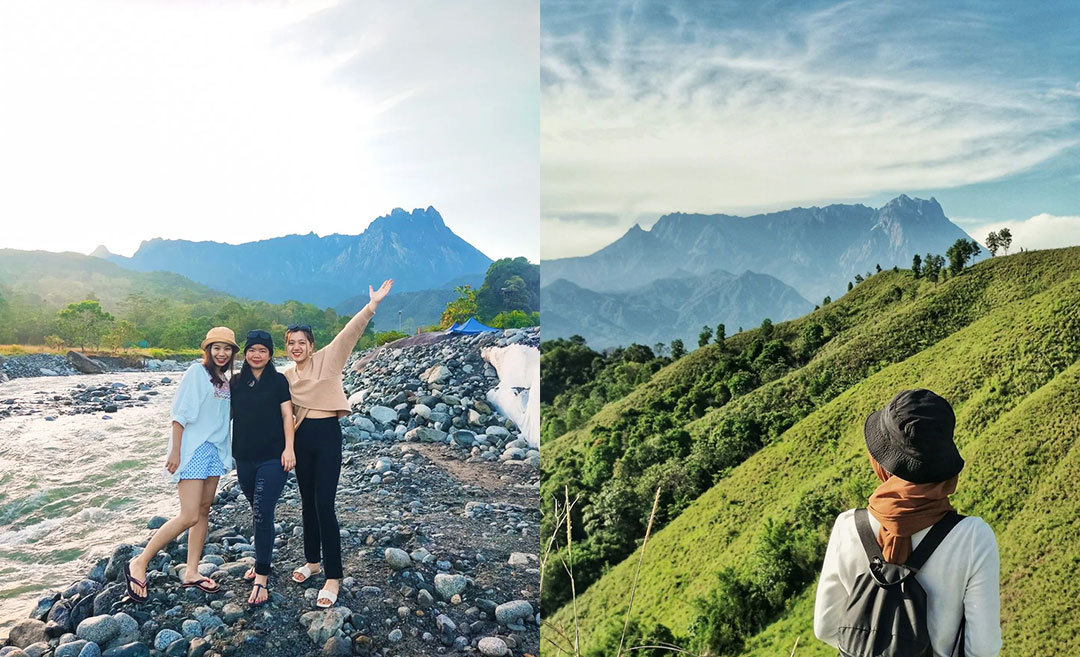
This Sabah resort doesn’t just offer sustainability—it offers heart. Through local partnerships, Shangri-La Rasa Ria invites you to fall in love with Tuaran. (Images courtesy of Shangri-La Rasa Ria)
With a curious and open mind, we explored this Sabah resort and got an inside look at its sustainability initiatives through a media familiarisation trip. What we found behind the facade was a lot of hard work and amazing people.
In 2024, Shangri-La Rasa Ria became the first resort in Malaysia (and the entire Shangri-La Group) to earn the ISO 20121 certification for sustainable event management. Beyond the achievement and being a choice MICE (Meetings, Incentives, Conferences and Exhibitions) tourism destination—for us regular travellers, how will this make a difference to our stay?
What keeps travellers coming back to Shangri-La Rasa Ria?
Spoiler alert: It’s the people—and their heartfelt passion for the local community.
Fiona Hagan, the general manager of Shangri-La Rasa Ria, described it well: “I think what guests love most about staying at Shangri-La Rasa Ria is how it makes them feel. It’s this human touch, the warmth of our people that guests often talk about long after they leave. The team at Rasa Ria has a way of making you feel seen, heard, and genuinely cared for—like you’re part of something more than just a holiday. Many guests speak fondly of individual team members long after they leave, which says a lot about the kind of emotional connection that’s formed here.”
Comfort & sustainability in every detail
Sustainability isn’t just about reducing electricity usage, minimising plastic waste, rainwater harvesting, and all that technical jazz (though we will get into it later). In a resort, green practices are seamlessly woven into every part of your stay.
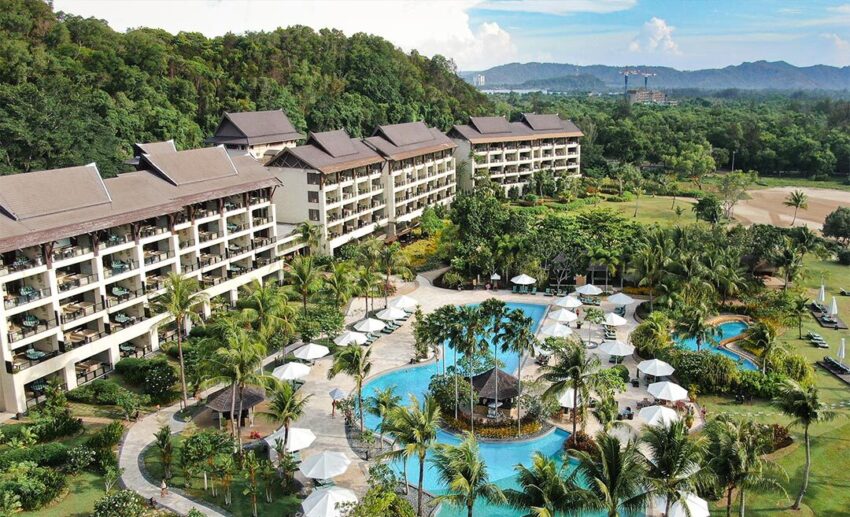
Shangri-La Rasa Ria, Ocean Wing (Image courtesy of Shangri-La Rasa Ria) 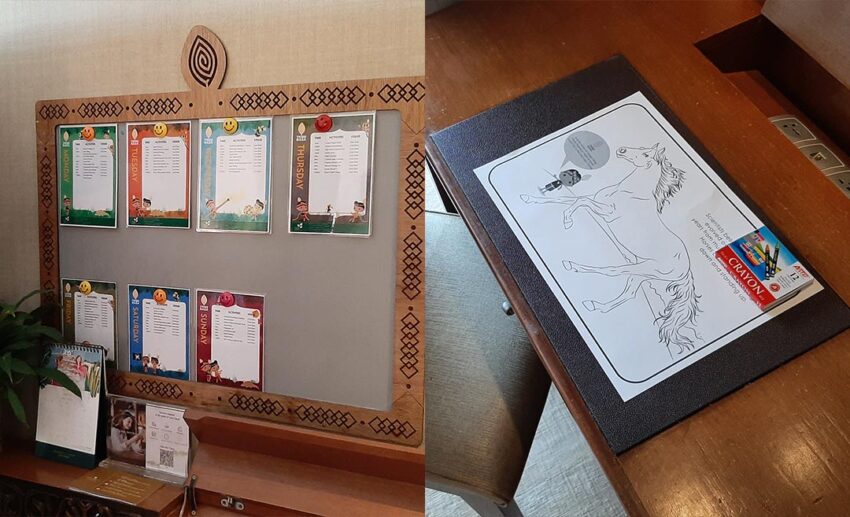
Activities for the little ones in the Garden Wing Deluxe Family Room.
The resort consists of two wings: the Ocean Wing and the Garden Wing. Both wings are connected and it’s easy to walk between both. Some of the ground floor rooms offer direct access to the pool; perfect for families. The family rooms are designed with children in mind, from cups and cutleries to activities and amenities placed in the rooms. Less worry and more relaxation for the parents!

Ocean Wing Junior Suite Garden View (Image courtesy of Shangri-La Rasa Ria) 
Ocean Wing Junior Suite Sea View (Image courtesy of Shangri-La Rasa Ria)
You know how they say first impressions are important? When I first stepped into the Ocean Wing Junior Suite at Rasa Ria, I had my jaw on the ground. This luxurious and spacious room was going to be my respite on this trip, with a scenic view of the ocean to match. Waking up to this very view every day was such a dream. Opening the sliding glass doors onto the balcony automatically shuts off the air-conditioning to save electricity—a common sustainability practice and a natural way to ventilate the room.
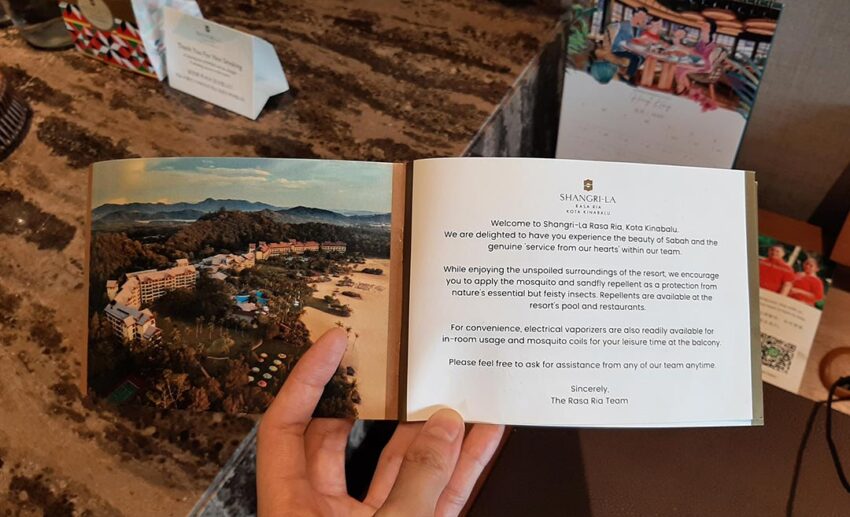
Curious about the little details, I found an information booklet about sandflies, mosquitoes, and geckos on the desk in the room. In addition to mosquito and sandfly repellents that are available at the resort’s pool and restaurants, the rooms are also equipped with electrical vaporisers and mosquito coils (for the balcony). The surrounding ecosystem is respected (no killing, just repelling) while prioritising guest comfort.
Pillow talk
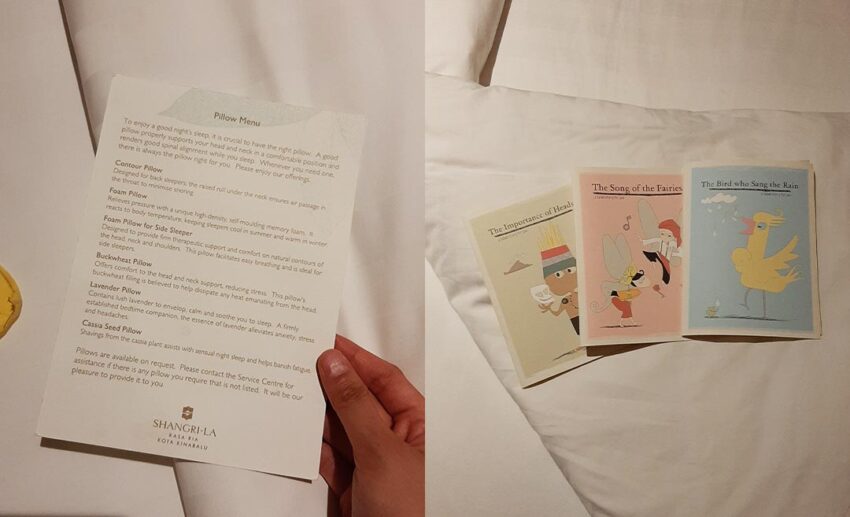
One of my favourite things in any hotel stay (when available) is the pillow menu. Having a supportive pillow is crucial for a comfortable night’s sleep. Of course, I had to peruse Rasa Ria’s pillow menu—suffice to say, I slept well during my stay here.
Upon returning to my room in the evenings, there was always a little surprise waiting. Besides the usual closed curtains and dimmed lights of a turndown service, there was also a bedtime story waiting. As part of Rasa Ria’s sustainability efforts, the bedtime stories are tales from/of Sabah, with pastel illustrations to match. Each night offers a different story—a comforting end to the evening and a great way to wind down.
Yummy in your tummy
Now, for the part that Malaysians love the most: food! Yes, Rasa Ria’s sustainability efforts extend to the dining experience here as well. Our first experience here was a chef-curated lunch at the private area of Oceano Modern Grill. Chef Daniele Milliani prepared a scrumptious meal that included locally-sourced seafood and meats. You can rest assured that if you’re going to book a special meal here for any occasion or a company event, Shangri-La Rasa Ria will do their best to impress your palate with sustainably sourced ingredients.
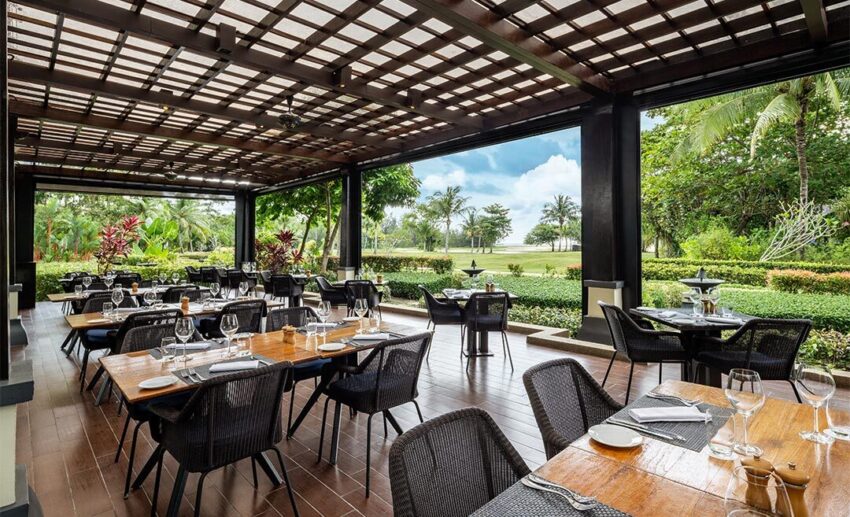
Breakfast at the Ocean Wing is served at Oceano Modern Grill as well. The breakfast spread here consists of a carefully prepared buffet—you have a selection of stations as well as an a la carte menu to choose from. Rather than an extravagant spread, the buffet is thoughtfully portioned to reduce waste. I found this not only more sustainable, but more appealing. Everything felt fresh and intentional, without feeling overwhelming or wasteful.
For those staying in the Garden Wing, the Coffee Terrace offers a breakfast buffet with lively stations. We had the chance to savour breakfast here after our Sunrise Hike. The egg station and noodle station were my favourites. There’s nothing quite like a warm bowl of noodles in the morning and nutritious eggs prepared fresh in your preferred style.
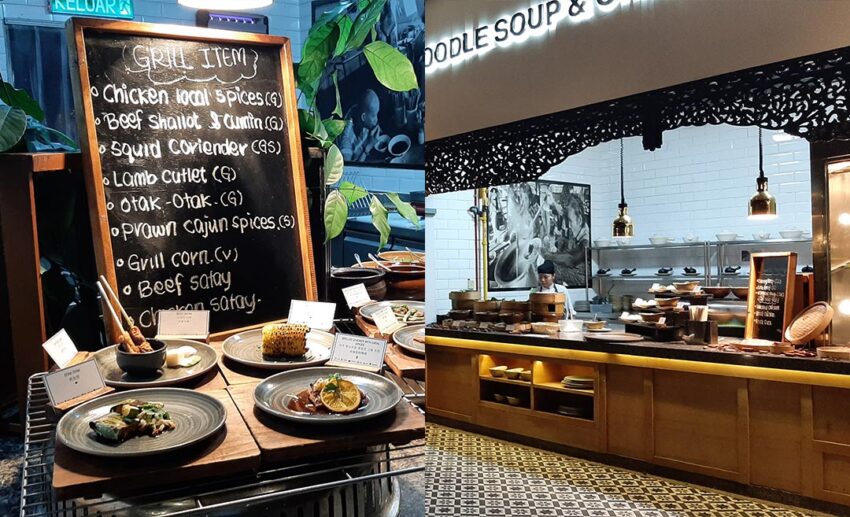
If you’d like to experience an al-fresco, poolside meal, Tepi Laut is the place. Dining here is such an interesting experience—the design of the food stations is a nod to Malaysia’s street food stalls. For lunch, there’s an a la carte menu with Malaysian favourites as well as well-loved dishes from Sabah. Dinner here is a buffet-style experience where each station offers a menu of different Malaysian flavours—the satay and grilled octopus were amazing. All the viands are prepared to order, so it’s fresh, steaming hot, exciting for the senses, and minimises food waste!
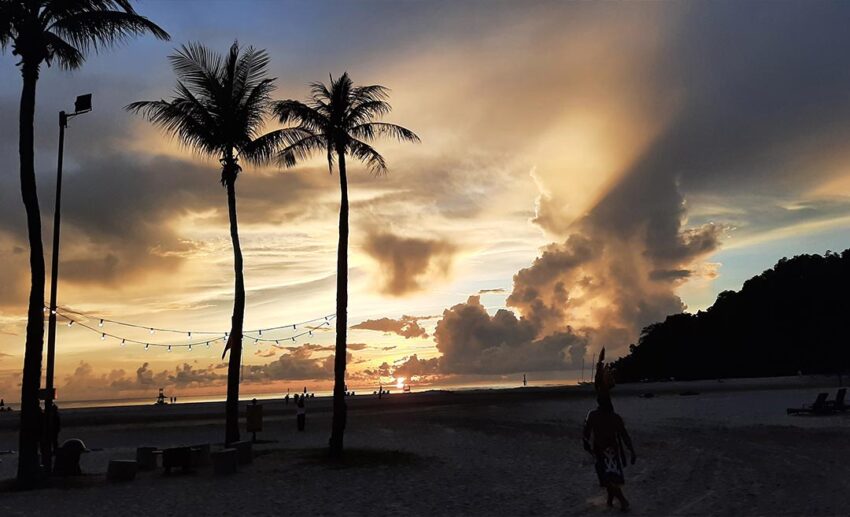
As sunset rolls around, head on over to Sampan Bar. It’s right by the beach; perfect for taking in the Sabahan sunset while sipping on refreshing drinks and nibbling on light snacks.
Shangri-La Rasa Ria partners with local suppliers to serve you the best meals—edible flowers from Dumowongi, local pineapples from the Kiulu region, and seafood from Champ Quality. Wherever you dine in Shangri-La Rasa Ria, you can dine with less guilt knowing that the local community is being supported and that they do their best to minimise waste and the impact on the environment.
The Rasa Ria Nature Reserve
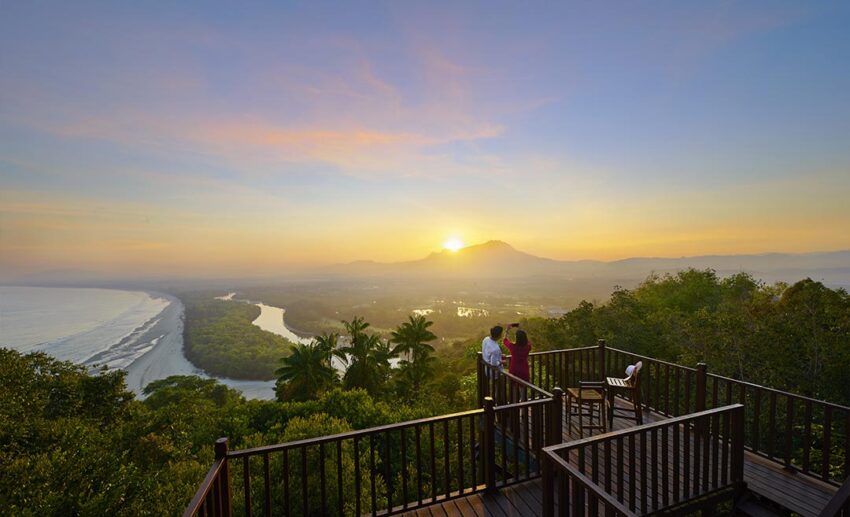
You can’t have a sustainable resort without nature-centred activities. Shangri-La Rasa Ria doesn’t just have that—they have their own nature reserve. When asked to describe the vibe of the resort, Fiona Hagan said: “A return to nature; I was told recently by a guest that our resort is “healing”. There’s something about the rhythm of the waves, the warmth of the people, and the energy of the land that quietly restores you.”
On our first morning here, we went on a Sunrise Hike. That’s where we learned about the Rasa Ria Nature Reserve. But first—the hike. The 98-metre hike to the highest point of the Nature Reserve isn’t too tough for anyone with an average stamina. This was definitely the highlight of my trip; the view of the sunrise over majestic Mount Kinabalu was a sight to behold.

The Rasa Ria Reserve serves as an important part of rehabilitation and conservation programmes in Sabah, and was set up in collaboration with the State Wildlife Department of Sabah in June 1996. Since the successful end of the Orangutan Rehabilitation Project in 2016, where the Nature Reserve served as a rehabilitiation centre for baby Orangutans, the 64-acre jungle reserve has continued its efforts in impactful initiatives.
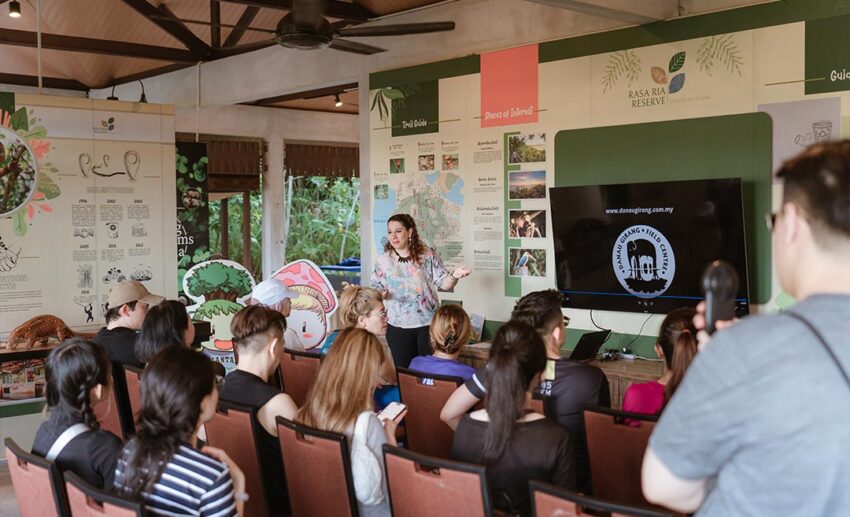
Danau Girang Field Centre sharing about conservation efforts in collaboration with the Rasa Ria team. (Image courtesy of Shangri-La Rasa Ria) 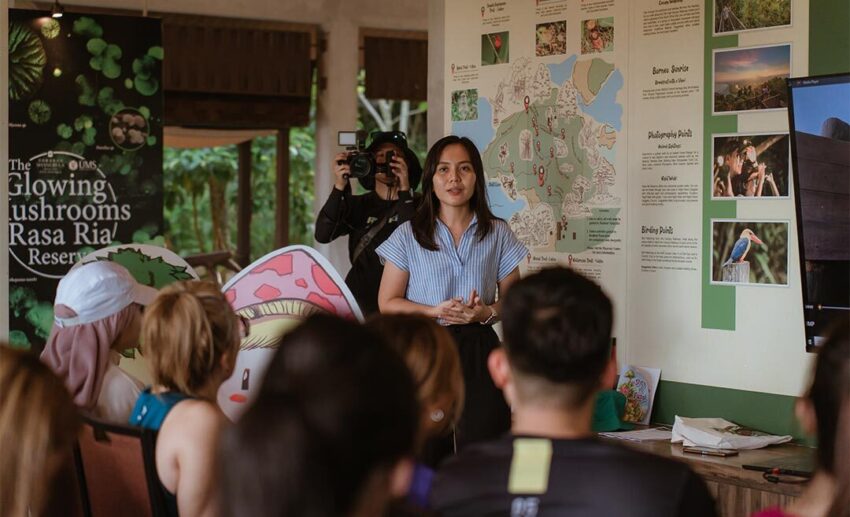
Dr Lauretta Andrew Laneng, senior lecturer from Universiti Malaysia Sabah, speaking about Pangolin conservation. (Image courtesy of Shangri-La Rasa Ria)
While we were here, we learned about their current conservation efforts of the critically endangered Pangolin, in collaboration with Danau Girang Field Centre and Universiti Malaysia Sabah. You can visit the Discovery Centre at Shangri-La Rasa Ria for more information about their conservation programmes.
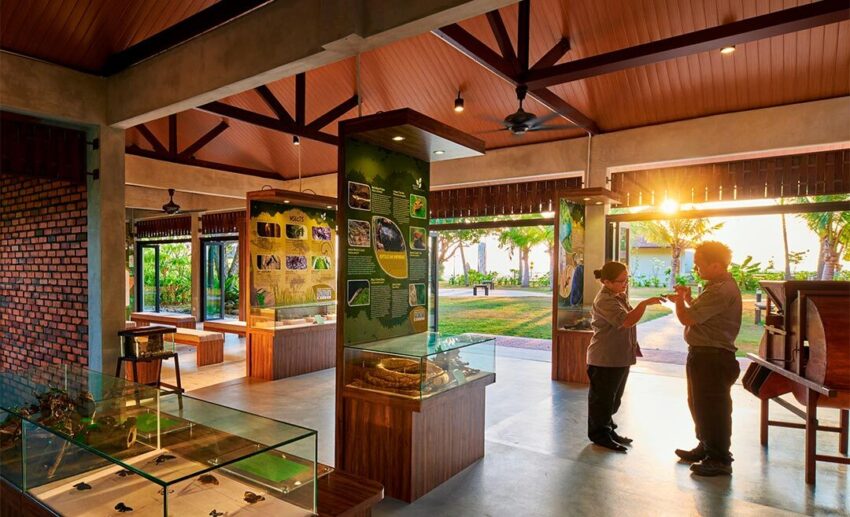
For travellers staying at the resort, fun, nature-centred activities await at the Discovery Centre—your gateway to the Rasa Ria Nature Reserve. From the Sunrise Hike to guided nature walks and a Mycologist Programme for the little ones, there won’t be a dull moment at Shangri-La Rasa Ria. Discover more about the Rasa Ria Nature Reserve activities here.
Exploring Tuaran
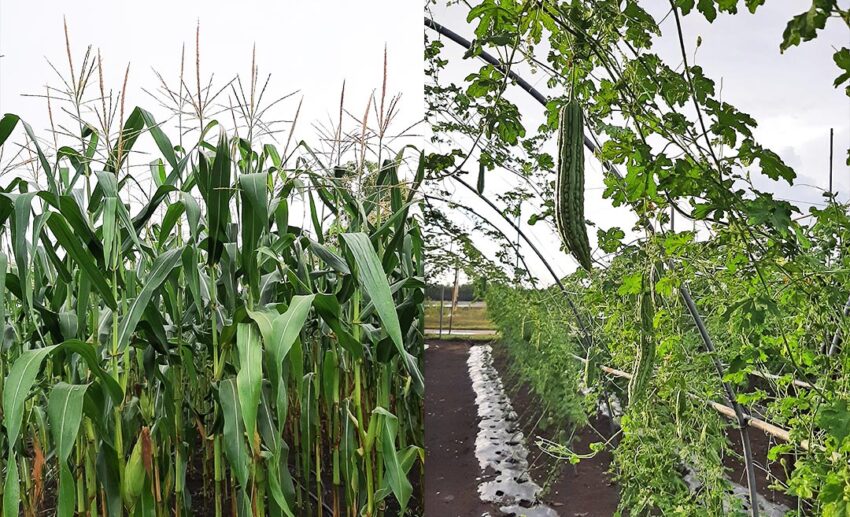
Our Land Eco Farm grows crops of their own for a farm-to-table experience. 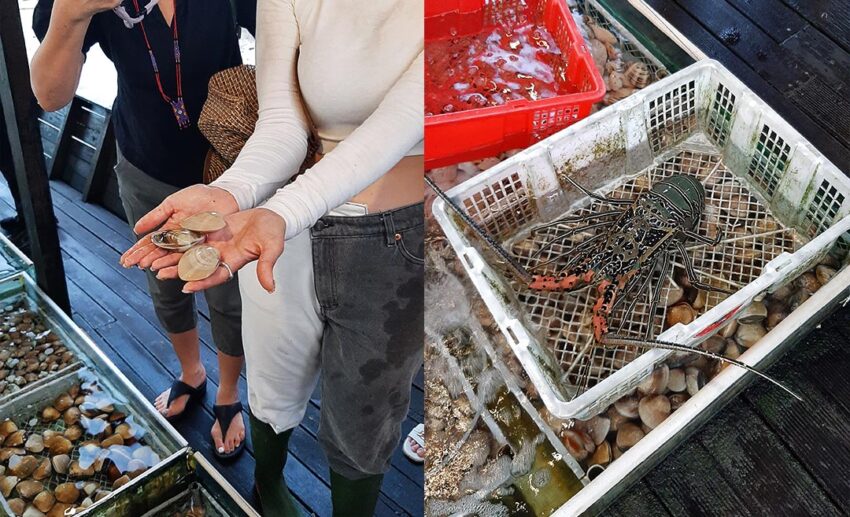
Our Land Eco Farm’s seafood is sourced from local fishermen. 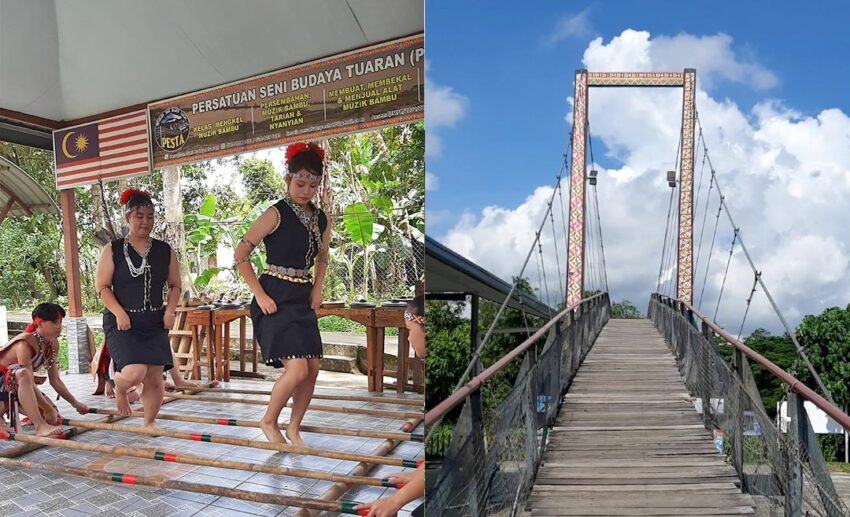
Left: Persatuan Seni Budaya Tuaran performing the Magunatip (Bamboo Dance) at Jambatan Tamparuli. | Right: Jambatan Tamparuli 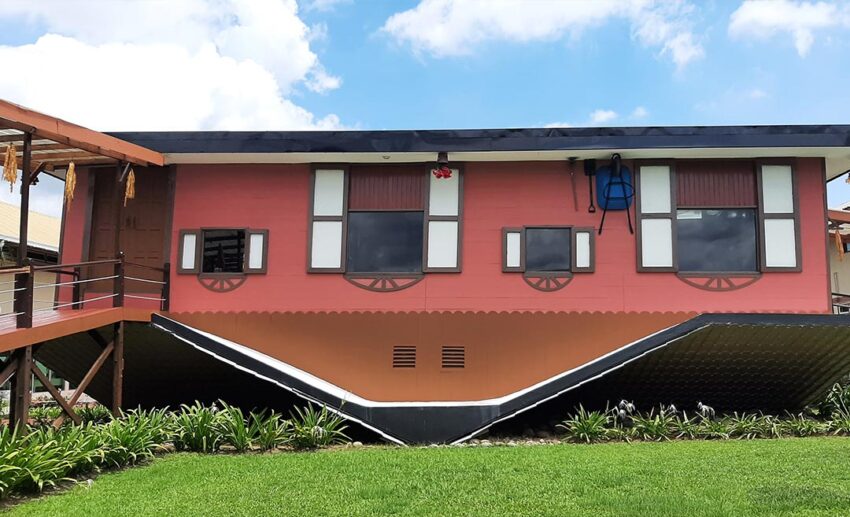
Rumah Terbalik Tamparuli (Upside Down House Tamparuli) 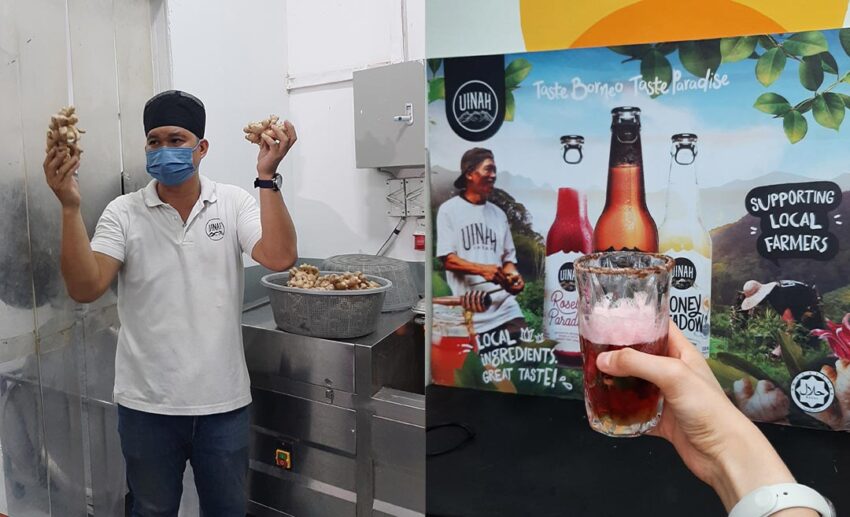
Left: Matthias, co-founder of UINAH, showing us around the craft soda factory. | Right: A refreshing mocktail made with UINAH’s Roselle Paradise soda.
Though often associated with Kota Kinabalu, Shangri-La Rasa Ria is actually located in the charming town of Tuaran, just 34km to the north. We had the opportunity to explore Tuaran during our stay here; here are some of the places we visited:
- Our Land Eco Farm Seafood Restaurant: This is a great dinner location with fresh seafood sourced from local fishermen, produce from their own in-house farm for that farm-to-table experience, and gorgeous views of the sea and sunset.
- Jambatan Tamparuli: A well-known suspension bridge in Sabah with an interesting folklore behind it. There’s even a Kadazandusun folk song written in its name.
- Rumah Terbalik Tamparuli: A unique attraction and the first upside-down house in Malaysia.
- Mango Garden Restaurant @ Rumah Terbalik Tamparuli: This restaurant at Rumah Terbalik serves authentic Sabahan food. We got the chance to participate in a Basic Sabah Ethnic Cooking Class and it was such a fun and insightful experience!
- UINAH Factory: A local craft soda brand that uses Sabah’s rich produce for its drinks, supporting the local economy and communities’ livelihoods. Their drinks are delicious and oh, so refreshing! Learn more about visiting their factory here.
Fiona Hagan also recommends guests try a popular local dish: “Tuaran Mee from a local warung. You can’t come to this part of Sabah without tasting the famous Tuaran mee. It’s handmade egg noodles, wok-fried to perfection, often served with local vegetables and meat of your choice.”
Exploring Tuaran added depth to our trip, connecting us to the vibrant culture and its people, just beyond the resort. Visits to attractions around Tuaran can be arranged with the resort if you prefer.
Relax & unwind
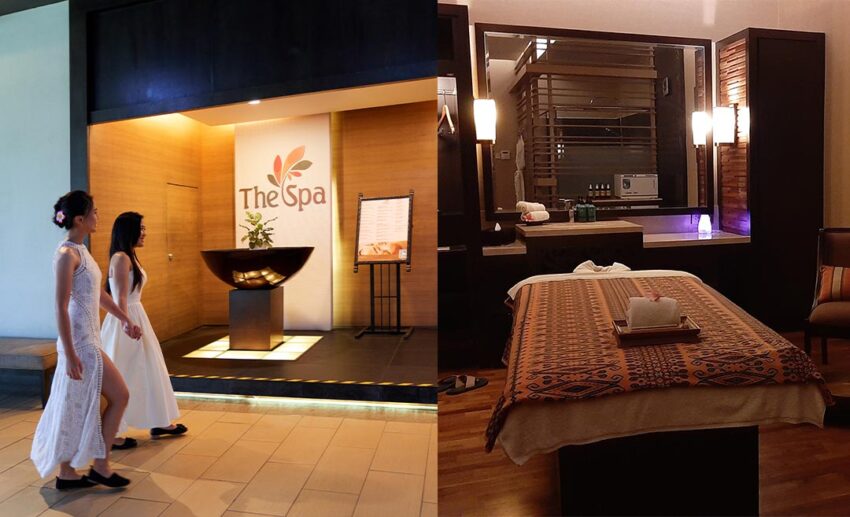
After all that exploration, it’s time for some relaxation. Spend time by the beach, unwind at the pool, or soak in the bathtub of your Ocean Wing Junior Suite. If you need a bit more kneading involved in order to relax, head over to The Spa.
The Spa offers a variety of treatments using natural and herbal products. During our visit here we got to try the Urutan Malaysia, which started off with a foot scrub and soak. Jasmine flowers, lime, and lime leaves were used for the foot soak, and while my feet were being pampered, the masseuse guided me into some Qigong breathing. After some long, deep breaths, it was time to be kneaded and sent to heaven for a bit.
EcoRia & rainwater harvesting
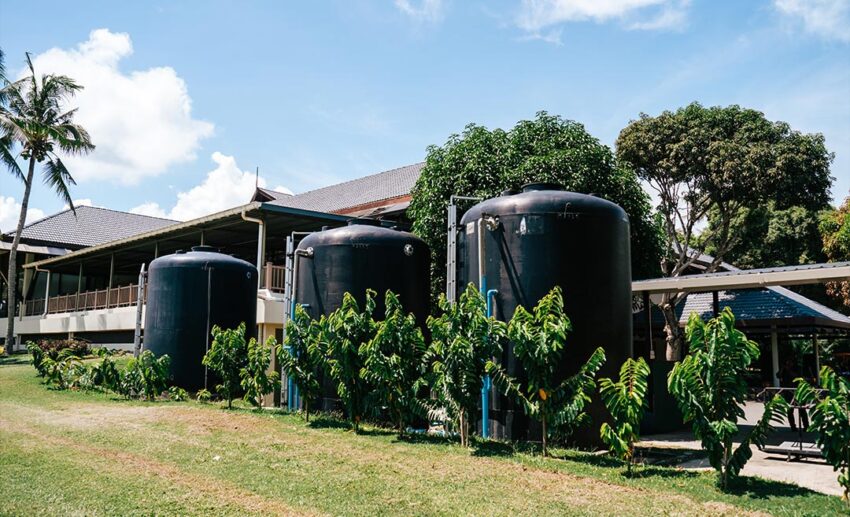
As promised, for my fellow eco-warriors, here’s the fun stuff. The rainwater harvesting system here is pretty straightforward—rainwater is collected, filtered, and used for gardening and landscaping at the resort. The resort’s engineers are currently researching if there are ways to turn the harvested rainwater into potable water. It’s still in development, but the possibilities are exciting.
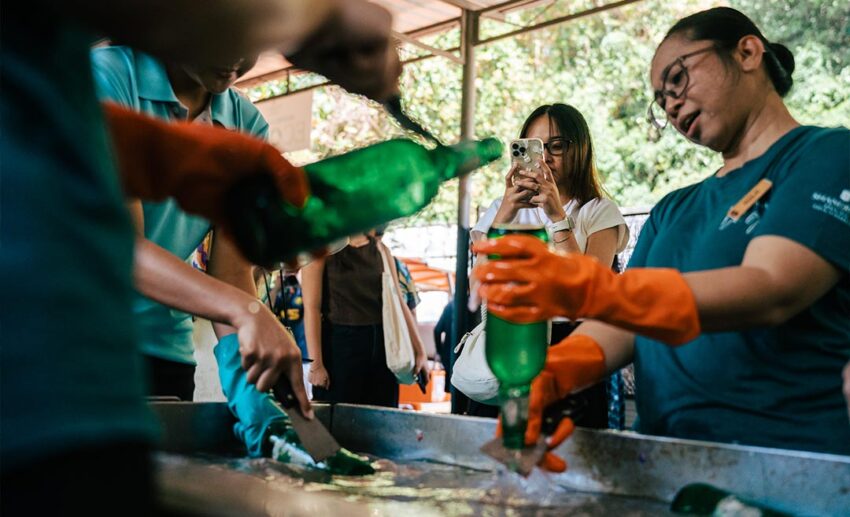
We also took a look at EcoRia, Shangri-La Rasa Ria’s glass bottle upcycling centre. Glass bottles used at the resort’s restaurants are brought here to be washed and labels removed before being crushed into fine sand. Together with Ripple Sabah, the glass sand is used for various projects around the resort, from landscaping to glass sand concrete crafts. The resort also welcomes used glass bottles donated by the public.
Everything comes full circle
The experience at Shangri-La Rasa Ria was so enriching that I did not turn on the TV once nor did I feel like I needed to. I was fully immersed in the experience and the resort did well to facilitate that. Personally, that’s how I’d like my travel experiences to be—learning and immersing oneself in the local culture.
What really struck me about my stay here was how the hotel staff were so involved—not just in the daily operations but in their passion for supporting the local community. They are constantly innovating and looking to uplift the local people.
Curious, I asked Fiona Hagan how she managed to get the resort’s team on board with sustainability practices, because it couldn’t have been easy. She said: “It’s true, getting an entire team aligned with sustainable practices doesn’t happen overnight. But at Shangri-La Rasa Ria, it started with a key principle: communication.
Rather than presenting sustainability as a checklist, we communicated our sustainability goals by showing our team how it connects to their daily lives, whether through their work, their community or the environment they call home.
What really made the difference was empowering everyone—from housekeeping to kitchen staff—to have a voice and role in the journey. When the entire team sees the impact of their efforts, not just in metrics but in guest feedback and community response, it becomes more than a task. It becomes a shared mission.”
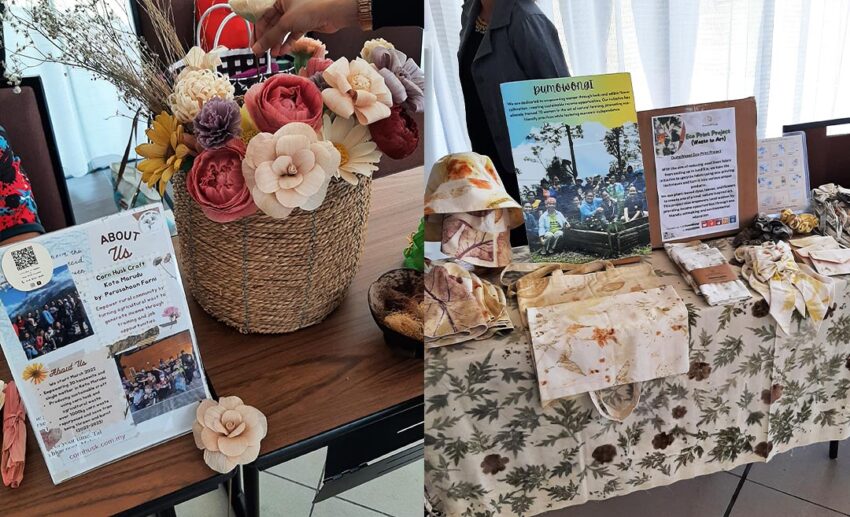
Take, for example, the resort’s display flowers. Corn Husk Craft Kota Marudu was discovered and introduced by one of the hotel staff, and the partnership came alive soon after. Corn Husk Craft makes handmade biodegradable flowers out of corn husks. This program empowers housewives and single mothers of Kota Marudu while saving agricultural waste from being thrown and burnt. Shangri-La Rasa Ria partners with them for display flowers, which can be seen at the resort’s dining establishments and events.
Hotel bed linens that can’t be used anymore are given new life with natural dye and eco-printing by Dumowongi. UINAH, the craft beverage brand mentioned earlier, sends their ginger waste to be used as scrubs at Shangri-La Rasa Ria’s spa, to Dumowongi for composting, or to be made into handmade soaps.
Everyone in the community works together to form sustainable habits and cycles. It all comes full circle.
Whether you’re planning a mindful retreat or simply a luxurious escape, Shangri-La Rasa Ria invites you to travel better, one meaningful stay at a time.
Address: Pantai Dalit Tuaran, 89208 Kota Kinabalu, Sabah
Contact: +6088-797 888