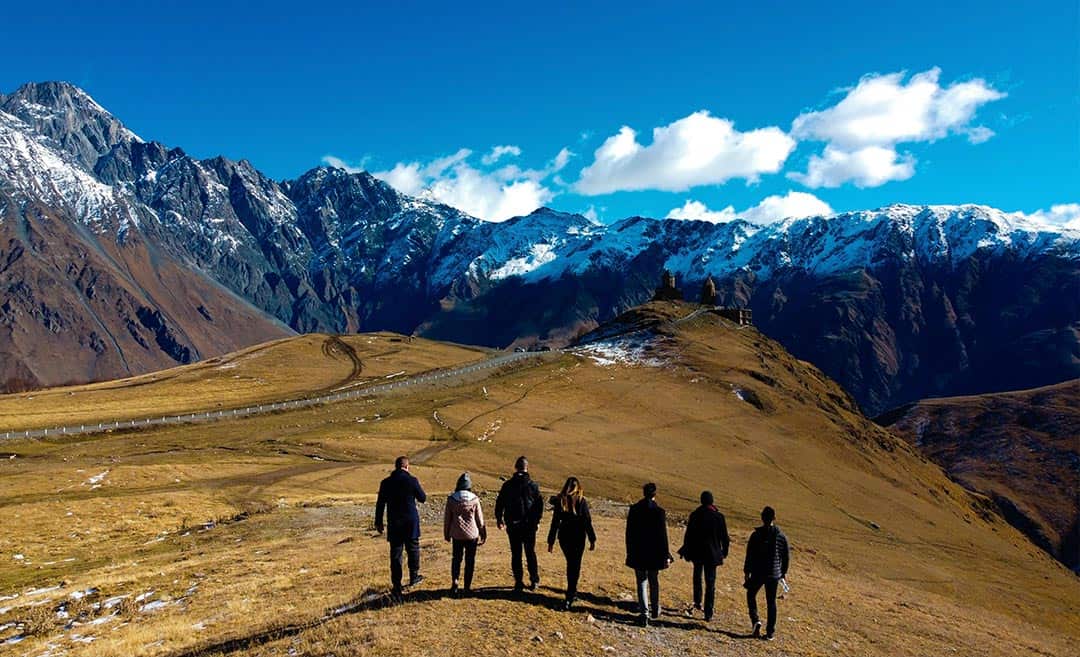
Self-guided journeys let you set your own pace, whether you’re travelling solo or with your favourite people. (Image by Mike Swigunski)
There’s a freedom that comes from not having to follow anyone else’s itinerary. No tour leader waving a flag. No group waiting while you stop for one more photo. No awkward small talk at breakfast with people you met yesterday and will probably never see again.
Yet (this is the best part), you don’t necessarily have to figure everything out yourself, either.
That middle ground is where self-guided travel comes in. You follow a route independently, either alone or with your own travel companions, while a tour operator or local organisation takes care of some of the less glamorous bits, such as accommodation bookings, luggage transfers, route notes, and transport. Some even provide apps or emergency support.
And it’s a format that seems to be finding its moment. Self-guided adventure specialist Macs Adventure recorded 43,657 travellers in 2025, a 35 per cent increase from 2022, while 16 per cent of adventure-tour operators surveyed in 2026 said self-guided trips were their fastest-growing segment. It’s easy to see the appeal.
For travellers who like a little adventure — but also like knowing there’s a bed waiting at the end of it — self-guided walking holidays offer a pretty good middle ground. Here are six journeys to try.
Japan: wander an ancient salt route through the Alps

There’s something wonderfully old-school about following a route once used to carry essential goods through the mountains. Walk Japan’s six-day, five-night Salt Road Wayfarer follows sections of an ancient trading route between Omachi in Nagano and Itoigawa on the Sea of Japan coast. During the Edo Period, the route was used by bokka porters carrying salt, fish, and other goods between the coast and landlocked Matsumoto, sometimes with loads of up to 60 kilograms.
Today, thankfully, you get to carry considerably less. Walk Japan transfers your main luggage between hotels and traditional Japanese inns, while you navigate the route with a detailed Wayfarer Route Booklet. There are also two pre-booked taxi transfers and English-language support in Japan.
The reward is five days of mountain scenery, forest trails, rural villages, regional food, and onsen baths — a much more intimate way to experience the Japan Alps than simply admiring them from a train window.
Best for: History buffs, Japan obsessives, and anyone who likes their adventure with an onsen at the end
Portugal: walk the wild Atlantic coast
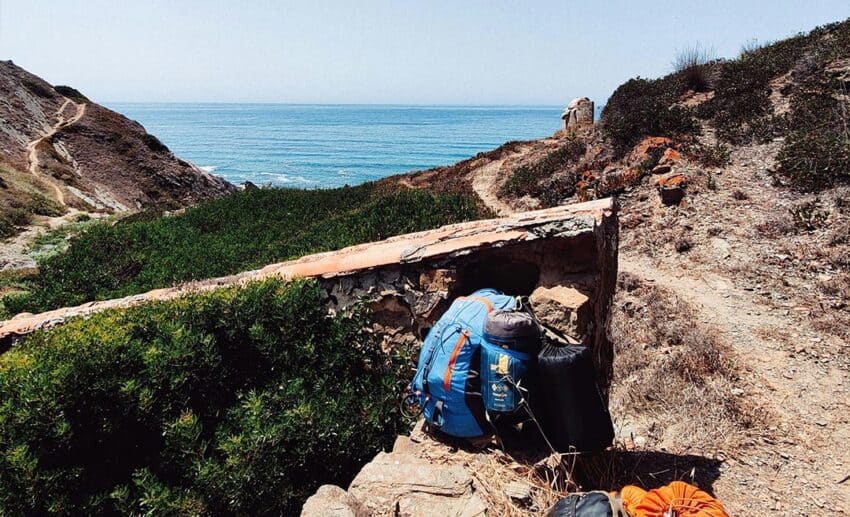
If your dream walking holiday involves dramatic cliffs, sandy beaches, fishing villages, and a suspiciously high amount of seafood, Portugal’s Fisherman’s Trail should be on your radar. The 210-kilometre route runs from Porto Covo to Lagos along the Alentejo and Algarve coast. Self-guided itineraries can run from six to 12 days, meaning you can choose how much walking — and how much lingering — you want to do.
Big Trail Adventures handles the logistical side: accommodation in small hotels and guesthouses, daily luggage transfers, route notes, GPX navigation, and support while you’re on the trail. You can walk alone, as a couple, or with your own group, with no fixed departure dates or tour leader setting your pace.
The result is less “hiking boot bootcamp” and more “I walked across Portugal and stopped for lunch because I felt like it”.
Best for: Coastal views, seafood, and travellers who want flexibility baked into the itinerary
Sri Lanka: discover tea country on the Pekoe Trail
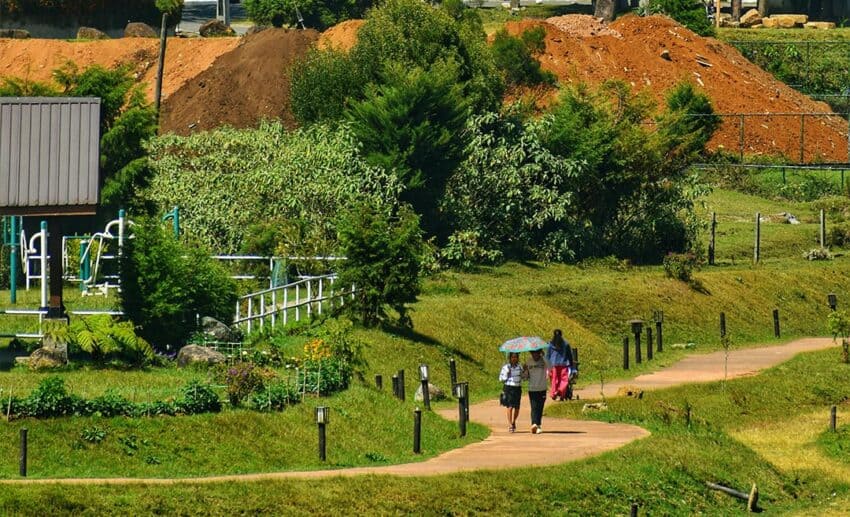
Sri Lanka’s Central Highlands are already known for misty mountains and tea plantations, but the Pekoe Trail is a way to experience them on foot. The 300-kilometre route is divided into 22 stages, winding through tea estates, forests, villages, national parks, and historic paths between the hill country around Kandy and Nuwara Eliya. Individual stages range from roughly nine to 21 kilometres, so you can build your own multi-day adventure rather than committing to the entire route.
It’s also deliberately designed for independent walkers, with an official trail app and pass system. The route connects around 80 villages and small towns, making the experience about more than pretty scenery: you’re walking through working tea country and communities that are part of the landscape.
For first-timers, this may be the most approachable kind of self-guided walking holiday: choose a few stages, base yourself around the highlands, and build a longer journey around them.
Best for: Tea lovers, culture seekers, and anyone who prefers their mountain views with a side of local life
New Zealand: roam the Abel Tasman Coast with a bed waiting
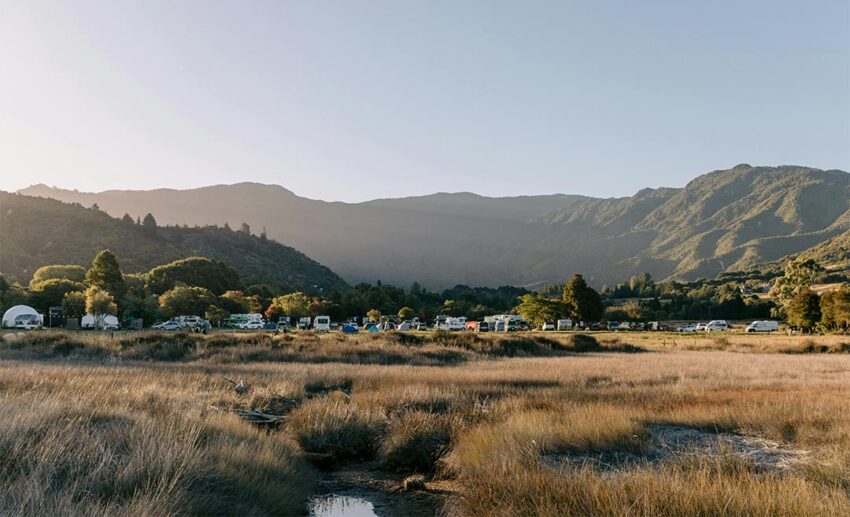
Self-guided doesn’t have to mean sleeping in a tent and carrying your entire life on your back. In Abel Tasman National Park, Wilsons Abel Tasman offers three- and five-day self-guided walking journeys along the coast, with stays at beachfront lodges. Accommodation, meals, boat transfers, luggage transfers, maps, and track information are all arranged, leaving you to concentrate on the actual walking.
Your overnight luggage travels between lodges by boat, so you only carry a small daypack. At the end of the day, there’s an en-suite room, a proper meal, and the option to simply sit back and enjoy the coastline.
You can also adjust the pace of your adventure, using boat transfers to shorten a walking day when you fancy more time by the water.
Best for: Soft adventurers, comfort seekers, and anyone who thinks “wilderness” should still include a hot shower
Iceland: tackle the Laugavegur Trail without a tour group
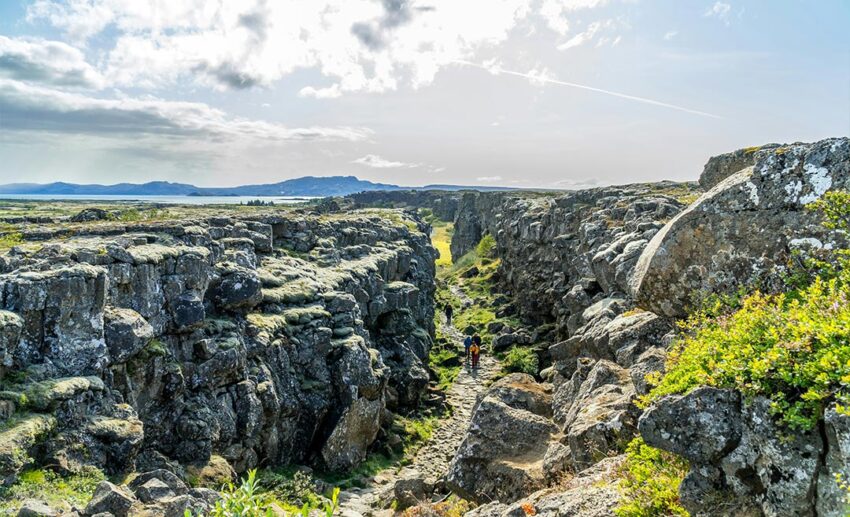
For something a little more rugged, head to Iceland’s Laugavegur Trail, where the scenery gets properly dramatic. The multi-day route crosses the southern highlands through geothermal landscapes, yellow rhyolite mountains, black volcanic deserts, canyons, hot springs, and the green valley of Þórsmörk.
UTracks’ self-guided version runs for five days, with four nights in mountain huts. Your main luggage is transferred between stops, while route notes, maps, trailhead transport, and an emergency hotline are included. This is the most challenging route on the list — expect walking days of up to seven hours, river crossings, steep sections, and weather that can change its mind quickly.
In other words, it’s still self-guided, but it’s not exactly a stroll.
Best for: Experienced walkers, big landscapes, and travellers who consider “challenging” a compliment
Canada: explore Newfoundland’s East Coast Trail at your own pace
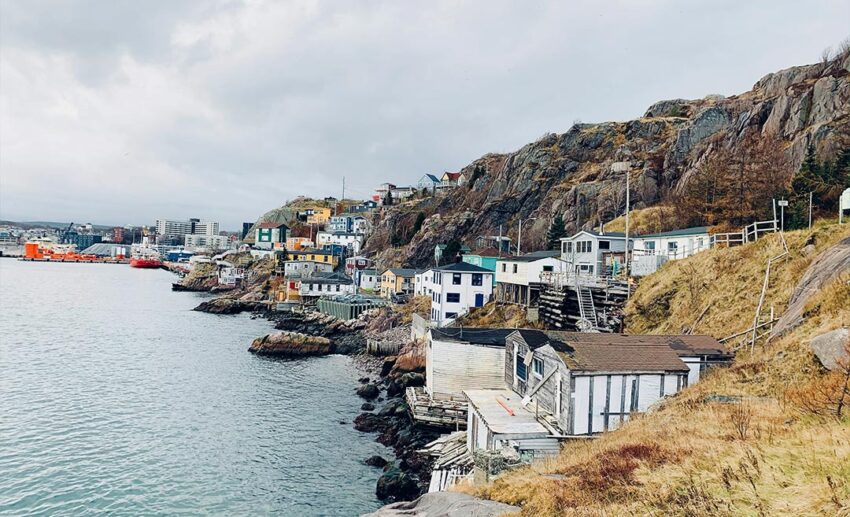
Newfoundland’s East Coast Trail is for those who like their coastal scenery wild, windswept, and slightly cinematic. The 336-kilometre network runs along the Avalon Peninsula, linking 24 historic communities with paths through coastal wilderness. Along the way are cliffs, sea views, coves, beaches, and plenty of opportunities to experience the communities that have grown around this rugged Atlantic landscape.
You don’t have to tackle the whole thing, either. The trail network is made up of 25 distinct paths, making it possible to create a multi-day itinerary around the sections that appeal most to you.
It’s a good reminder that self-guided travel doesn’t always have to mean ticking off one famous long-distance trail from beginning to end. Sometimes, the fun is simply choosing a direction and seeing where it takes you.
Best for: Big coastal landscapes, independent spirits, and travellers who like getting properly away from the crowds
Sometimes the best journeys are the ones where you choose the pace, the company, and the detours — and let someone else worry about where your suitcase is going.