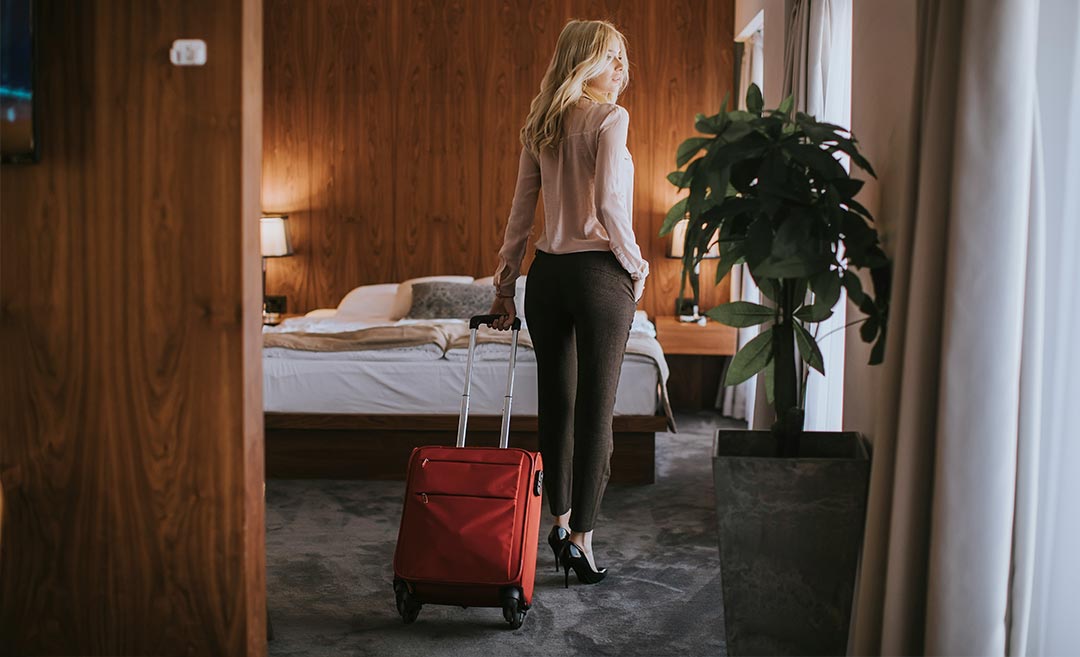
What happens when “that could never happen to me” suddenly does? (Image by Getty Images.)
You’re thousands of miles from home and you’ve checked into a quaint little hotel room after a long day of sightseeing. It’s time for a shower and some peace, but then something feels… off. Maybe a scent. Maybe a strange noise. You kneel to unpack your bag and suddenly realise—there’s someone under the bed.
This is exactly what happened to Ukrainian solo traveller Natali Khomenko in Tokyo and her story has since gone viral. Not because the intruder was caught; he wasn’t. Not because the police responded swiftly; they didn’t. But because her terrifying experience and the lack of support she received hit a nerve with women everywhere.
Her story is more than a one-off scare. It’s a mirror reflecting how vulnerable solo travellers, especially women, can be when institutions fail them.
What can you do if something like this happens to you? How do you get help when help is slow or nonexistent? And should you share your story online if the system won’t listen? Here’s our guide to keeping yourself safe, getting the support you need, and navigating the internet’s double-edged sword.
1. First things first: what to do if you feel unsafe
Whether it’s a hunch or something more concrete, trust your gut. Women are taught to second-guess themselves, especially while travelling. But instinct is one of your greatest tools and you shouldn’t ignore it.
- If you’re in the hotel room, leave immediately. Do not try to confirm your suspicion or play detective. Grab your phone, passport, and wallet if possible, and get out.
- Alert hotel staff right away. While using a firm tone, tell them you believe your room has been compromised and that assistance is required immediately.
- Insist on speaking to a manager or security. If you’re brushed off, don’t be afraid to raise your voice; figuratively or literally.
- Call the local emergency number. Save this on your phone before you travel. Most of Europe uses 112, the US and Canada use 911, and Australia uses 000. You can find a full list here.
- Document everything. Take photos or videos if it’s safe to do so. Write down times, names of staff, and exactly what was said or done.
If you’ve already left the room and are in a safe space—good. Take a breath. You’ve already done the hardest part.
2. Know your rights as a traveller, no matter where you are

Even when you’re in another country, you still have basic rights. You shouldn’t let language or location convince you otherwise.
Your core rights include:
- The right to safety and privacy: If you’ve paid for accommodation, the establishment has a legal obligation to provide a secure environment.
- The right to file a police report: No matter what anyone says, you’re allowed to document what happened through official channels.
- The right to an interpreter: Many countries are legally required to provide one if you don’t speak the local language.
You can request a written incident report and the log of keycard access for your room seeing as most electronic locks track this. Some countries may require a police report first.
3. What to do when no one’s helping

This part is tough because what does one do when institutions that should protect you seem to disappear. But, you still have cards to play.
Here’s who you can reach out to:
Your embassy or consulate
If things feel serious or you’re getting stonewalled, contact your country’s embassy. They can:
- Advocate for you with local police
- Help you find new accommodation
- Connect you with legal help
- Provide language support
Tourism authorities
Many countries have hotlines dedicated to assisting foreign tourists. These are often more responsive than local police for travel-specific issues.
Your travel insurance provider
If you have coverage, don’t forget to use it. Most decent policies include:
- Emergency relocation support
- Mental health or trauma counselling
- Compensation for lost accommodation time
Local expat or travel communities
Search for Facebook groups like “Expats in [City]” or “Solo Female Travellers”. They can be your fastest support system and they often provide real-time advice, translation help, or even someone to meet you if you’re too shaken to navigate this alone.
4. Prevention tips that go beyond the obvious
You’ve probably heard the basics: “Don’t walk alone at night” or “Keep your valuables hidden”. But here are more nuanced, practical tips for the real world:
Before you book:
- Zoom in on reviews. Look for comments about hotel staff entering unannounced, doors not locking properly, or guests feeling unsafe.
- Check the street on Google Maps. What does the building look like? Are there cafes or people around at night?
- Do your research and save all necessary numbers in the country you’re travelling to like general helplines, your country’s embassy, insurance helpline, and local authorities.
What to pack:
- A portable door lock (like Addalock)
- A doorstop alarm—wedge it under the door when inside
- A small personal safety alarm or whistle
- A “safe” phone with long battery life.
Once you arrive:
- Do a quick room sweep: under the bed, behind curtains, in the bathroom
- Use every lock available
- Share your location with a trusted friend or family member via WhatsApp, Find My iPhone or Life360.
- Don’t be afraid to ask for a room change if something feels wrong, even if you can’t explain why.
5. When the internet becomes your only megaphone

It’s easy to say, “Don’t put everything online”, but when the system fails, the internet sometimes feels like the only place that listens.
The upside of sharing:
- It can bring attention to your case, therefore, it mobilises those who are meant to help you more quickly.
- It may pressure hotels or authorities to respond
- It helps other women stay informed
But there’s also a cost:
- Trolls will crawl out with their comments and “two cents”
- You might face victim-blaming, especially from strangers with no context
- It can be emotionally draining to relive the trauma over and over
How to share safely:
- Protect identifying details until you’re ready (e.g. wait until you’ve left the country to post)
- Mute or limit comments
- Save screenshots of any threatening DMs or comments in case you need them later
- If you feel overwhelmed, ask a friend or someone you trust to help monitor responses
Remember: you don’t owe anyone your story in real-time. It’s okay to wait and it’s also okay to not share at all.
6. The truth: bad things can happen but you’re not powerless
Travel is one of the most enriching things you can do, and yes, it comes with risks. But those risks don’t cancel out your right to experience the world. If something terrible happens, know this: You are not overreacting. You are not too sensitive. You are not responsible for someone else’s violence or neglect. You are brave for showing up in new spaces. For trusting yourself and for continuing to go.
Save these global resources before you fly:
- Emergency numbers by country
- Embassy locator
- Travel safety apps: Life360, UrSafe, Noonlight
Natali’s experience in Tokyo shook a lot of us because it felt personal, especially for women. The countless times we’ve had to double-check locks, leave a light on, and the list goes on, just to feel safe. But knowledge is power, and what we know is there’s strength in community and preparedness too. Take that trip and always trust your instincts.