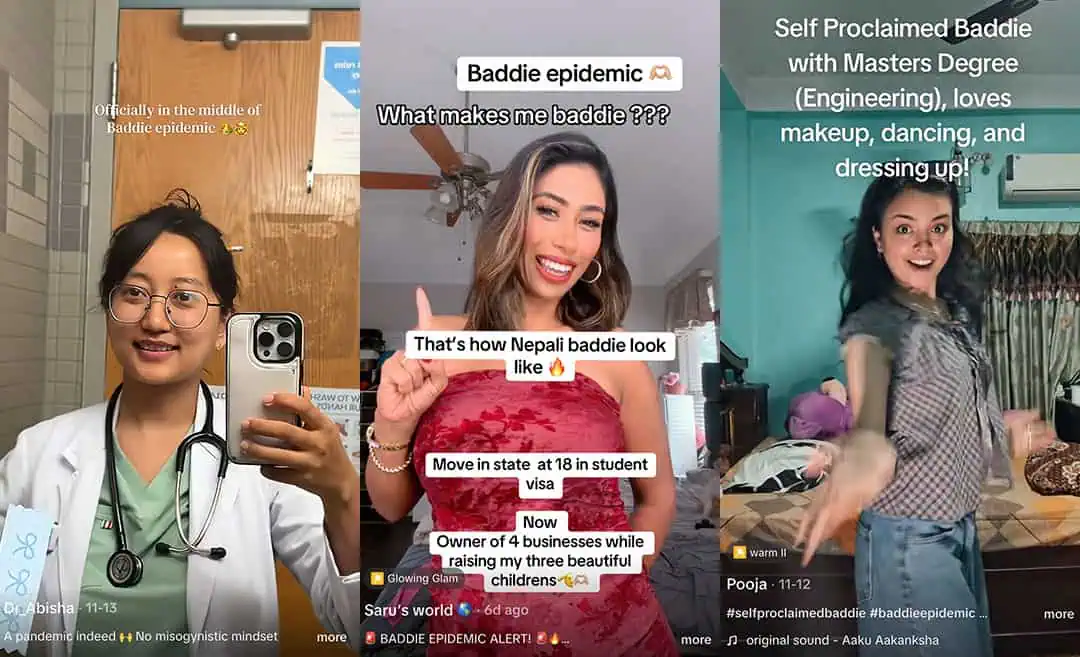
Instead of arguing with online critics, young Nepali women—including Dr Abisha, outdoor and lifestyle creator Saru’s world, and Pooja—are reclaiming a viral TikTok trend on their own terms. (Left image by Dr_Abisha; Middle image by Saru’s world; Right image by Pooja)
Being a ‘baddie’ usually brings to mind a certain look: carefully put-together outfits, flawless makeup, and the confidence to own it. But what happens when people assume there’s nothing more to you than your appearance?
That’s the question behind a viral TikTok trend in Nepal, where young women are responding to criticism of the so-called ‘baddie epidemic’ by introducing themselves on their own terms. Instead of getting drawn into an online argument, they’re sharing snippets of their everyday lives and showing there’s far more to them than meets the eye.
A comeback with a sense of humour
It began when Nepali TikTok creator Srizan Thapa (@immature_wisdom) posted a video questioning what young women he labelled as ‘baddies’ had to offer beyond their looks and fashionable lifestyles.
Instead of responding with a string of angry comments, women turned the criticism into a running joke. They used his audio to introduce themselves, sharing their professions, qualifications, interests and snippets of everyday life.
The responses range from playful introductions to glimpses of the work, hobbies and passions that rarely make it into a carefully curated social media post. What began as a criticism of how these women looked has become an opportunity for them to show the many ways they spend their time.
More than one way to be a baddie
Among those joining in was Dr Abisha Limbu, who appeared in her medical scrubs with a stethoscope. Creator Saru’s world offered a glimpse into her life, balancing her role as owner of multiple businesses and motherhood with her personal style, while creator Pooja, shared that she holds a master’s degree in engineering, alongside her love of makeup, dancing and dressing up.
Other women offered glimpses into their lives as nurses, entrepreneurs, creatives, and outdoor enthusiasts. Some highlighted their work educating rural communities about menstrual hygiene, while others shared their small businesses or adventures along Nepal’s mountain trails.
What makes these responses so enjoyable is that nobody seems particularly interested in giving up one side of themselves to validate another. A woman can be serious about her career and enjoy getting dressed up. She can spend her weekends hiking, dancing, or taking pictures with friends. None of these things cancels out the others.
Women don’t owe anyone an explanation
There’s a familiar double standard at play here. Women are often encouraged to take pride in their appearance, but those who put effort into fashion, beauty and presenting themselves a certain way can also find themselves dismissed as superficial.
The TikTok responses turn that assumption on its head, but they also raise a more interesting question: why should women have to demonstrate their qualifications, careers or achievements before they’re taken seriously?
Of course, there’s nothing wrong with wanting to show off a degree or talk about meaningful work. But neither should a woman need an impressive résumé to earn the same respect. Enjoying makeup, dressing up for a night out, or filling your camera roll with pictures of yourself is hardly a character flaw.
If anything, Nepal’s ‘baddie’ trend is a reminder that people are rarely just one thing. And women certainly shouldn’t have to explain all the other things they are just because they happen to enjoy looking good.