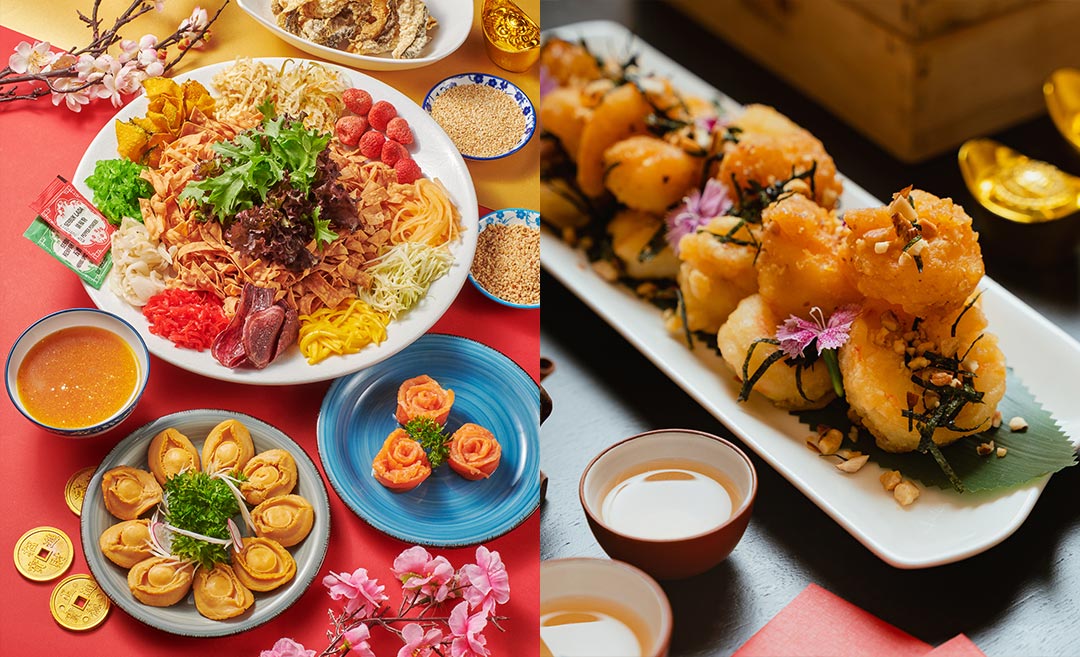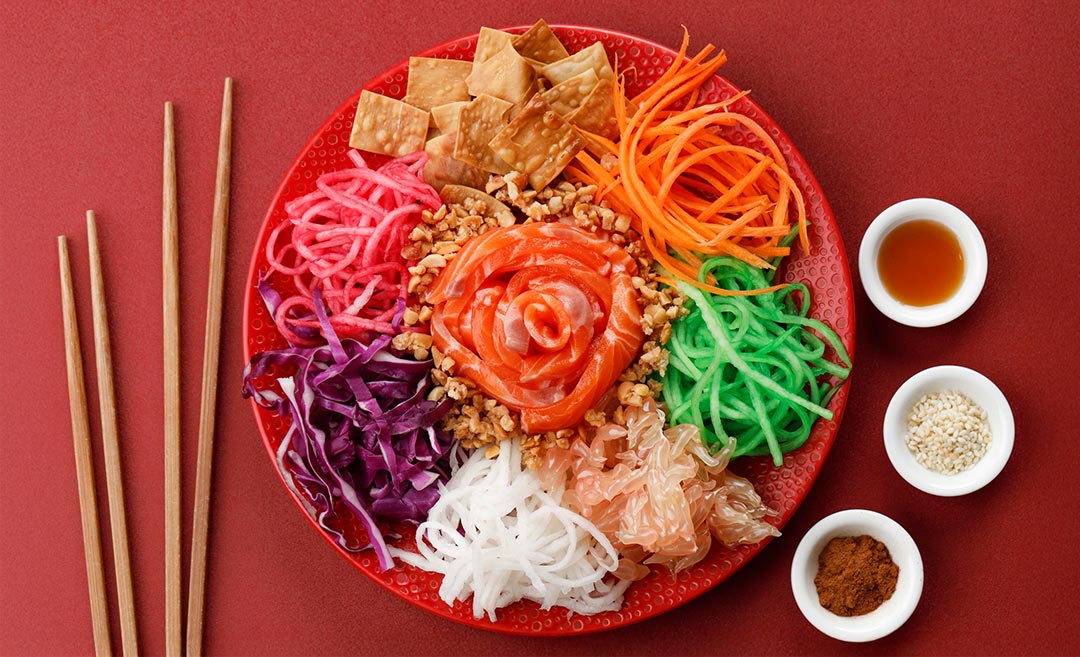
A vibrant Yee Sang platter: a beautiful, intentional tapestry of our shared Malaysian heritage and hopes for the new year. (Image by Ikarahma)
Hot take: Growing up, I was not a fan of yee sang. I couldn’t see past its lacklustre ingredients or the sweetness of its sauce—I liked my mains savoury and my desserts sweet, so a sweet appetiser? Hard pass, thanks.
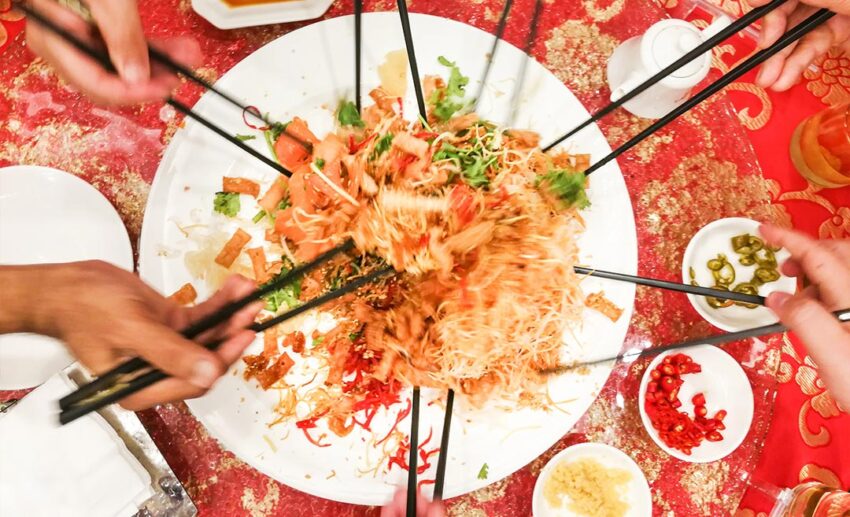
For me, the prosperity toss wasn’t really something I looked forward to; it was just something we did every Chinese New Year. Someone brings the yee sang platter, we gather around my uncle’s dining table, start tossing it with chopsticks as high as possible while my extended family boisterously shout things in a language I don’t understand, and then we nibble at this sticky mess.
For context, I come from a mixed background. Respectfully…I’m a “banana”—the kind of third-culture kid who grew up orbiting tradition without fully understanding it. Sure, I knew that each ingredient represented something and that we were wishing for good things like health, wealth, and happiness. My mom often and eagerly shared translations, meanings, and symbolism with me, but I was young and immature. I had different interests—ahem, boys—and my roots weren’t one of them.
I’d like to think I outgrew this phase. Learning the symbolism behind traditions like yee sang sparked a desire in me to be more present and engaged in my heritage. Here’s what I’ve learned about this:
1. It’s a relatively “young” tradition practised mainly in Malaysia and Singapore
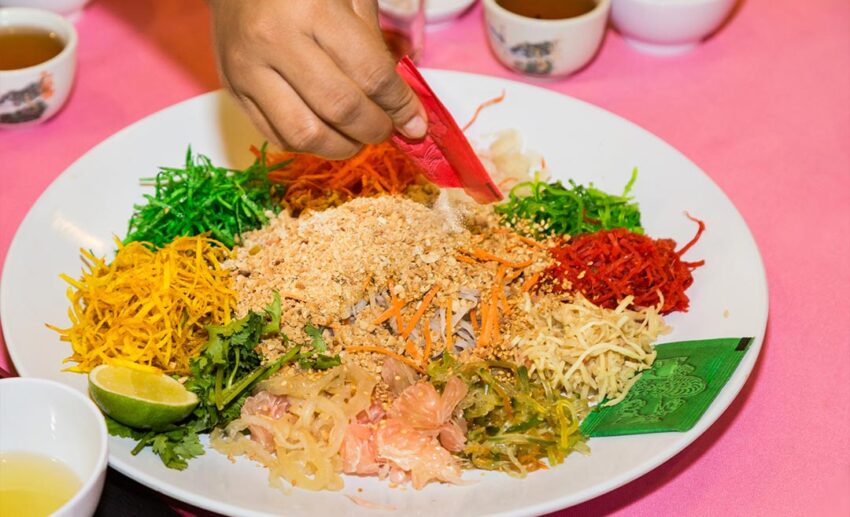
Brought to Malaysia and Singapore from Southern China in the 1930s, it was once a simple Cantonese dish of raw fish, lettuce, ginger, and vinegar eaten on Renri, the seventh day of Chinese New Year—a far cry from what it looks like today.
Though there are several legends as to how it came about, the oldest is attributed to Seremban chef Loke Ching Fatt, who created an elaborate version of yee sang (with approximately 30 ingredients and a signature sauce) for his catering business as a way to recover from World War II in the 1940s.
Despite its humble beginnings, yee sang has solidified its place on Malaysia’s National Heritage List and is now a cultural phenomenon among Chinese diaspora communities in neighbouring countries like Indonesia, Brunei, Thailand, and even Hong Kong.
2. There are many variations, but its core ingredients generally remain the same—and they all have meaning
In Chinese culture, homophones (when two words have the same or similar pronunciations but different meanings) are a source of delight and clever double-entendres. Loke Ching Fatt cleverly incorporated this in his choice of ingredients.
As for how it’s done, the leader among the diners (in recent years, this has been my cousin, Azlyn) will add ingredients like the fish, crackers, and sauces, while saying the corresponding auspicious wishes below:
Raw fish “yú sheng”
Yú means fish, but it also sounds like abundance and extra.
Auspicious phrase: Nián nián yǒu yú (May there be abundance throughout the year)
Pomelo, “yòu zi” or lime “qīng níng”
“Yòu” sounds like ‘to have,’ for luck, blessings, prosperity.
Auspicious phrase:“Dà jí dà lì!” or “Jí xiáng rú yì” (Great luck, great fortune!)
Carrot strips “hú luó bo sī”
Carrots are red, which sounds like “hóng,” for blessings of good luck and fortune.
Auspicious phrase: “Hóng yùn dāng tóu” (Great fortune is upon you)
White radish, “bái luó bo sī”
“Bo” sounds like step “bu”, representing prosperity in business and promotion at work.
Auspicious phrase: “Bù bù gāo shēng” (Rise higher, step by step)
Green radish/cucumbers “qīng”
Green “qīng” is the same word used in the idiom “Qīng chūn cháng zhù,” (may youth stay with you) for eternal youth.
Auspicious phrase: “Qīng chūn cháng zhù” (May youth stay with you), or “Qīng chūn měi lì” (Youth and beauty forever)
Peanuts “Huā shēng”
“Shēng” means ‘live,’ for longevity and health.
Auspicious phrase: “Cháng mìng bǎi suì” (Live a hundred years)
Sesame seeds, “zhī ma”
No words sound alike; however, they represent the seeds of growth, and because there are so many, they think of it as a flourishing business.
Auspicious phrase: “Shēng yì xīng lóng” (Business prospers)
Five spice “wǔ xiāng fěn”
Five “wǔ,” hence the phrase below, for harmony and a smooth life.
Auspicious phrase: “Wǔ fú lín mén” (Five blessings arrive at your door)
Pepper “hú jiāo fěn”
Pepper “jiāo” sounds like ‘attract,’ for extra luck and energy boost.
Auspicious phrase: “Zhāo cái jìn bǎo” (Attract wealth and treasure), or “Cái yuán guǎn jìn” (Numerous sources of wealth)
Oil “yóu”
Because oil flows continuously while pouring, and represents smooth sailing.
Auspicious phrase: “Cái yuán gǔn gǔn” (Wealth flows in like a rolling river), “Yī běn wàn lì” (Make 10,000 times of profit with your capital), or “Shùn shùn lì lì” (All goes smoothly)
Sweet plum sauce “Tián méi jiàng”
Sweet “tián” for a sweet life ahead, while the “mì” in “Tián tián mì mì” means ‘honey’ and is often meant as “a sweet life ahead” for couples.
Auspicious phrase: “Tián tián mì mì” (Sweetness and harmony)
Pillow-shaped crackers “cuì bǐng”
Well, because it looks like ancient gold!
Auspicious phrase: “Biàn dì huáng jīn” (May your floors be filled with gold), or “Jīn yù mǎn táng” (Rooms filled with gold and jade)
Here are some other auspicious sayings you’d likely hear during the prosperity toss.
“Wàn shì rú yì” (Wahn-shuh-roo-yee), meaning: May all your wishes be fulfilled
“Huat ah!” (Hwat-ah!), meaning: Prosperity!
“Lo hei, lo hei” (Low-hay, low-hay), meaning: Toss up the happiness
“Jí xiáng rú yì” (Gee-she-ahng-roo-yee), meaning Luck goes according to your will
“Xīn nián kuài lè!” (Seen-nee-en-kwai-luh), meaning: Happy New Year
3. The higher you toss, the more fortuitous you will be
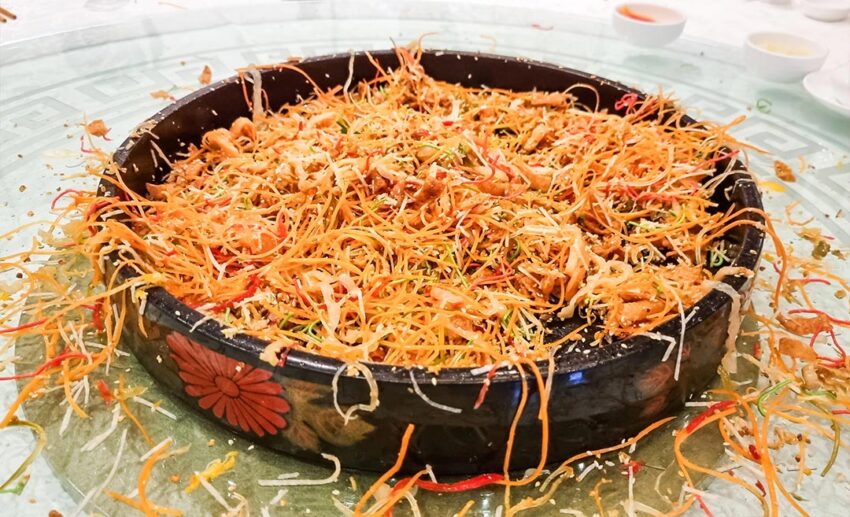
So toss with gusto!
Where once I saw my least favourite salad, I now see beauty, meaning, and human connection. Once I began learning and understanding the thought process behind the things we do, my whole experience and perspective evolved into something truly special. And I can’t wait for this year’s prosperity toss with my loved ones.
Zafigo Tips: Navigating heritage (without the imposter syndrome)
If you grew up as a “banana” or a third-culture kid (TCK), traditions can feel like a performance you haven’t rehearsed for. Here is how to own your seat at the table with confidence:
Release the “right way” anxiety: There is no “perfect” way to do the prosperity toss. Whether you use Mandarin, Cantonese, English, or just a joyous “Huat ah!“, the value is in your presence. Heritage isn’t a test you can fail.
The “vibe” over the verb: If you’re worried about mispronouncing the auspicious phrases, focus on the energy. The Lo Hei is as much about the boisterous, shared laughter as it is about the literal meaning of the words. If you stumble on a tone, just laugh it off and keep tossing.
Embrace the mess (literally): For those of us who like order, the sight of plum sauce and crackers flying across the table can be stressful. In this context, mess = abundance. If the table is clean after the toss, you didn’t do it right! Let the “overflow” of ingredients represent an overflow of luck.
Ask the “auntie” questions: One of the best ways to bridge the gap is to ask. “Auntie, why do we add the crackers last?” It signals respect for the tradition and usually leads to a heartwarming story that makes the next bite taste much better.
Own your “mixed” identity: If you want to add a wish in English like “To a year of self-care and adventure!“, do it. Modern Malaysian heritage is a tapestry; your unique perspective as a TCK is a valid thread in that story.
Chopstick strategy: Hold your chopsticks further back for a higher toss. The higher the toss, the higher your growth in the coming year.