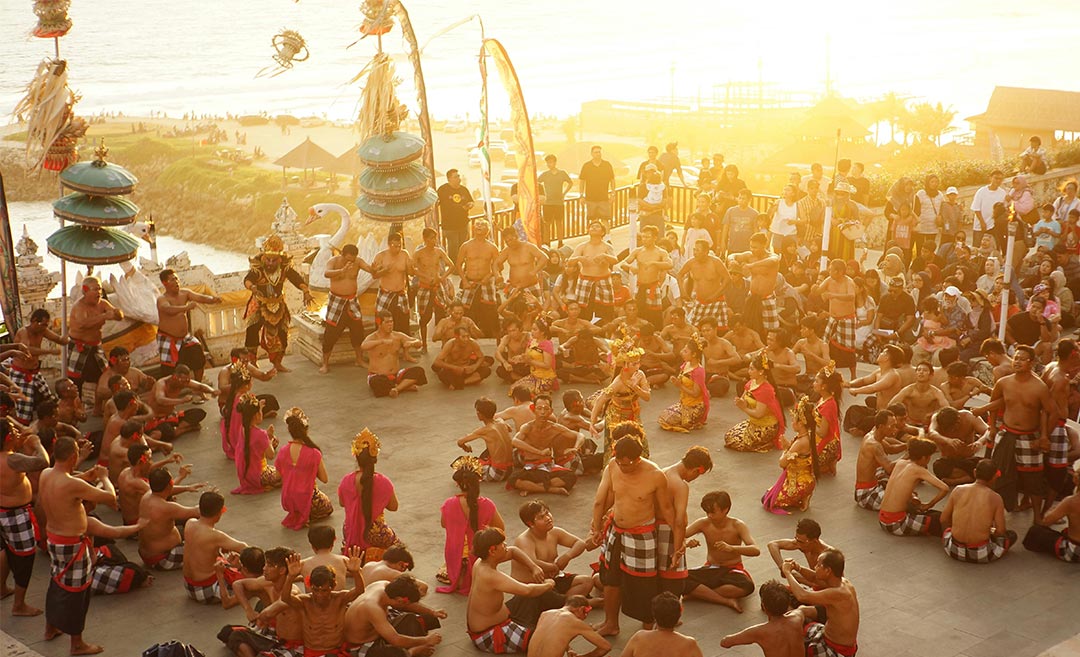
Witnessing a traditional Kecak Dance at sunset in Bali is a reminder that sacredness often thrives in the presence of others, even when we are far from our own familiar rituals. (Image by Vincensius Anggoro)
There’s something quietly disorienting about waking up on a day that matters — like Good Friday, Easter Sunday, a New Year I’ve always observed — and realising I am far from where I usually mark it.
No familiar church hall. No family table. No inherited rhythm to fall into.
Instead, I find myself in places where different cultural traditions and sacred holidays are unfolding, in the humid morning air of Kuala Lumpur, on a quiet street in Hoi An, or in a coastal town in Bali. Somewhere between holding onto my own traditions and witnessing others’, something begins to shift.
Carrying your rituals with you
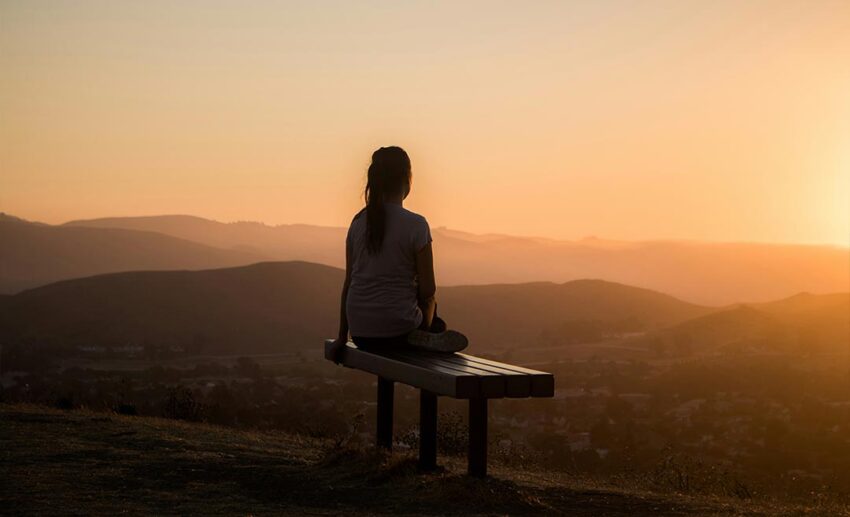
When you travel during days you consider sacred, you become acutely aware of what those rituals actually mean to you. Without the usual structure, you improvise.
Maybe Easter becomes a quiet morning reflection instead of a full church service. Maybe it’s a solo walk somewhere unfamiliar just after sunrise, a whispered prayer, or a message sent home across time zones. The scale changes, but the intention remains.
There’s an intimacy in choosing how to honour something without the scaffolding you’ve always relied on. In that space, traditions become less about routine and more about meaning.
Stepping into someone else’s sacred moment
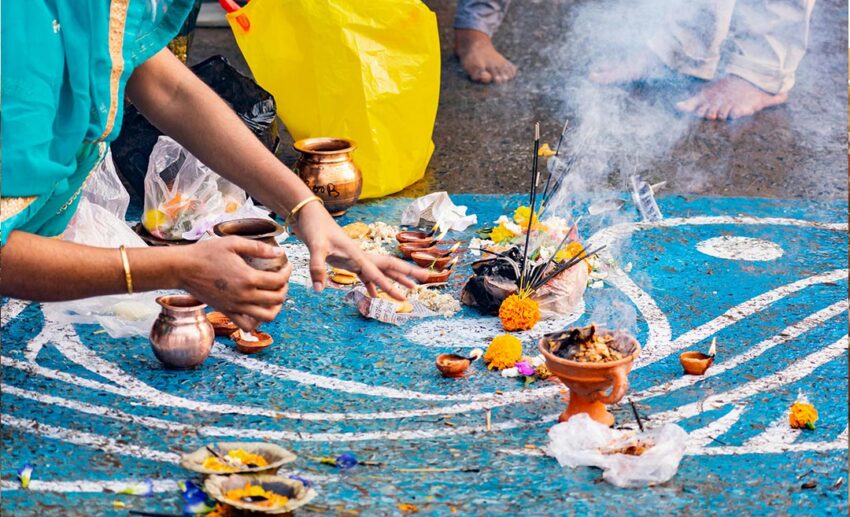
At the same time, the sacred rhythms of the place you’re in begin to surface.
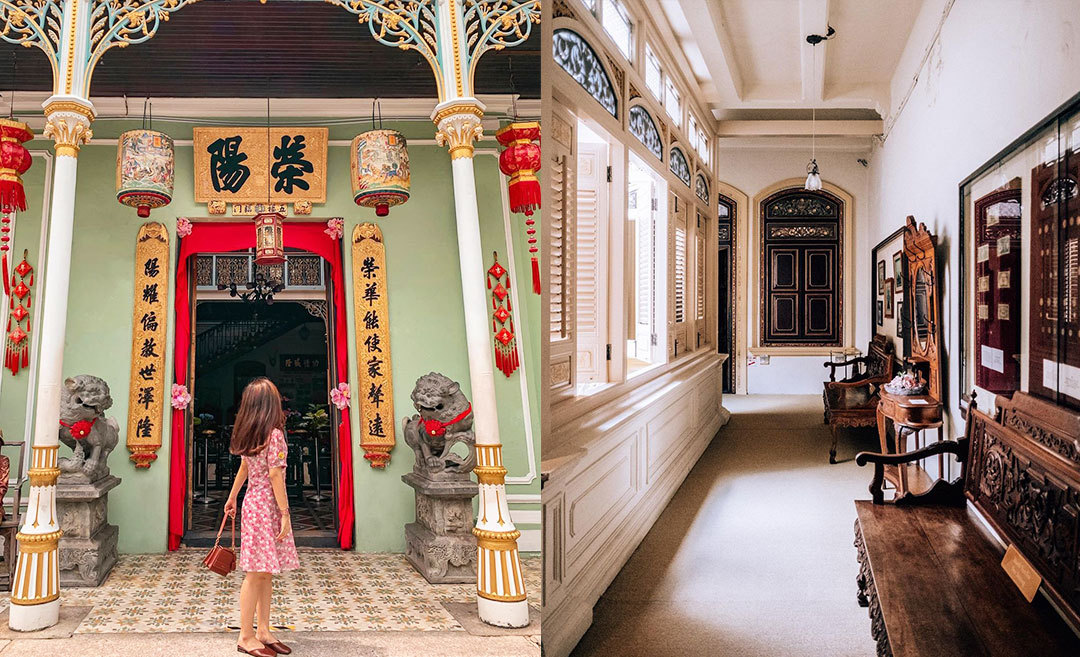
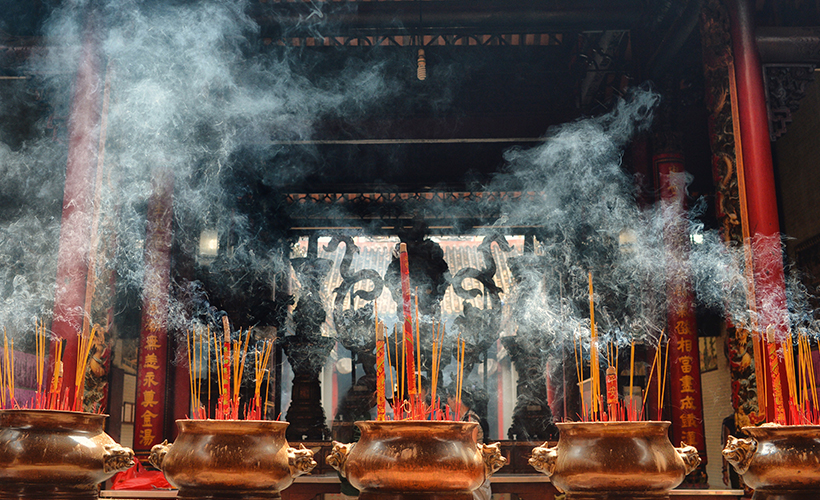
Across Southeast Asia, these moments (as I’ve come to observe) are vivid and deeply rooted in community life. You might arrive during one of the many New Years and see intricate kolam patterns drawn carefully at entrances, their coloured powders bright against the pavement, red lanterns swaying gently above shopfronts, or streets filled with laughter as water splashes through celebrations. You might find yourself near a neighbourhood mosque as preparations for a prayer gathering unfold, the call of the Azan drifting across the air. Or you might step into a church on Easter Sunday, where the celebration feels both familiar and entirely shaped by its setting.
These are not your traditions, but they invite attention and presence. And, if you allow it, your respect.
The space between observing and belonging
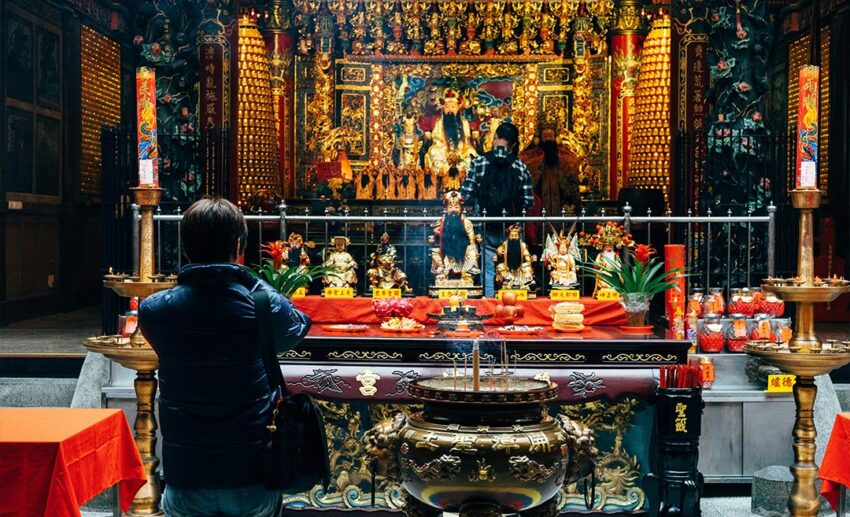
There is also a delicate balance in these moments. You are holding something of your own — a day that matters deeply to you — while standing in the presence of something that matters just as deeply to others.
You may not fully participate, but you are not entirely outside it either. Sometimes, you’re gently welcomed in, offered sweets, tea, explanations, or simply a place to sit and witness.
In those moments, you start to understand that sacredness is not confined to familiarity. It exists in many forms, each shaped by culture, history, and collective memory.
When traditions intersect
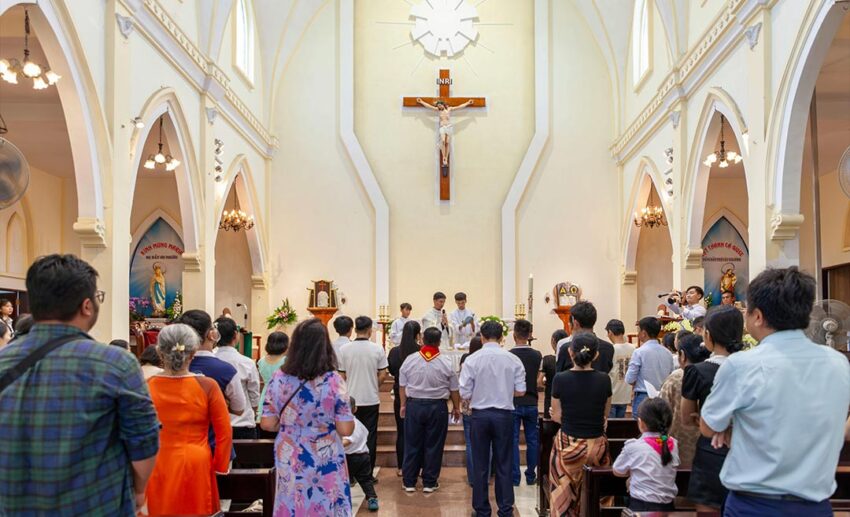
Occasionally, these worlds overlap in unexpected ways.
You may spend the morning marking Christmas in your own quiet way, then later find yourself joining a celebration of a different festival. You move between spaces; from a church service to streets alive with festivities and night markets, within the same day.
Rather than feeling contradictory, these moments feel expansive. Honouring my own beliefs does not require closing myself off from others. The two can exist side by side, each deepening my understanding of the other.
Rethinking what “home” means
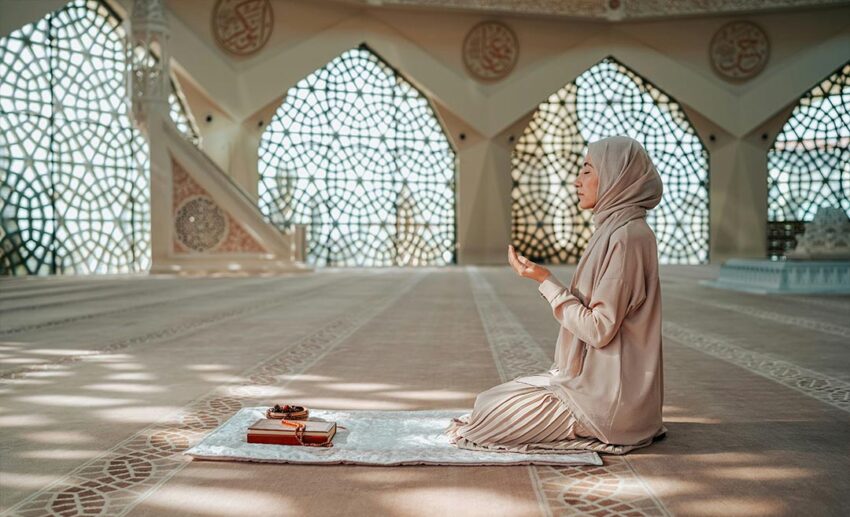
Being away from home during sacred times reveals how much of belonging is tied to shared experience. And also how much of it lives within us.
For me, my rituals travel with me, even if they change shape. At the same time, I become more open to recognising meaning in the rituals of others. In regions like Southeast Asia, where multiple faiths and traditions coexist, this feels especially tangible. I see how people hold space for their own beliefs while living alongside others who do the same.
Gradually, my idea of home begins to stretch.
A shared sense of the sacred
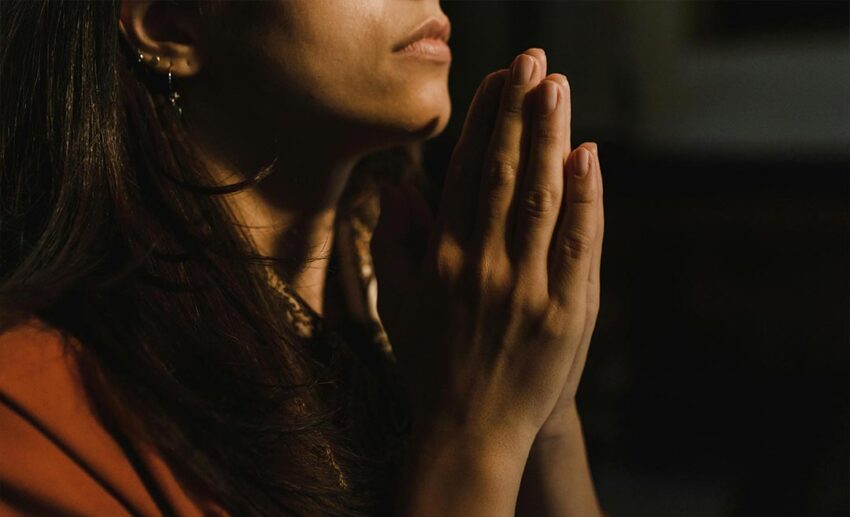
Across cultures, religions, and traditions, there is a thread that runs through sacred days: a pause, a turning inward, a reaching outward toward meaning and something larger than yourself. Even when the forms differ, the feeling is recognisable.
Travelling during these times is not just about witnessing how others celebrate. It’s about learning to hold my own traditions more consciously while making space for those that are not mine.
After years of marking sacred days in unfamiliar places, I’ve realised that belonging isn’t something I leave behind when I travel — it’s something I carry and quietly reshape along the way. My traditions haven’t faded; they’ve expanded, until the world itself has begun to feel a little more like home.