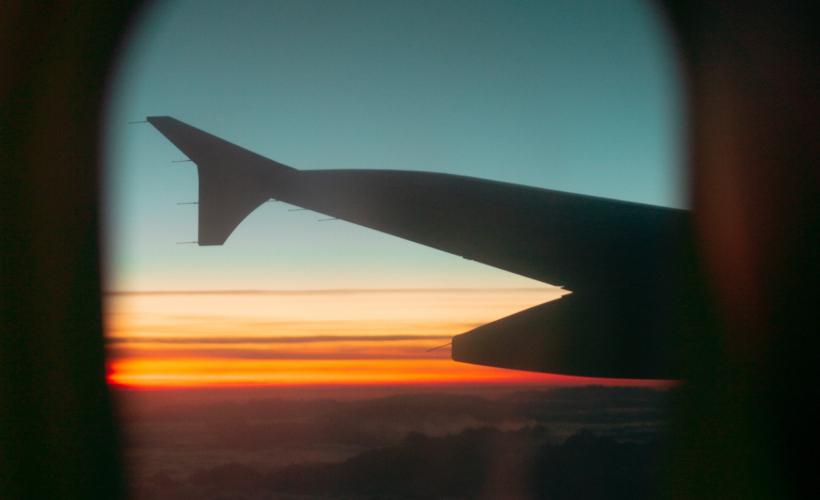
Travel has a funny way of making us care less about how we are perceived, giving us permission to enjoy new experiences simply for what they are. (Image by Jacob Lund)
Modern society and its heightened practice of surveillance culture has made us feel cornered into behaving in certain ways and doing certain things that are considered acceptable to everyone who is watching. Simply put, self-expression is quite literally becoming a cautious subject to approach. Even at home, where nobody is watching, we have pressured ourselves into finding justifications for every activity we do; such is the extent to which this modern culture has become ingrained in us.
We do yoga to improve ourselves and knit a sweater to have something to show for all the knitting lessons we have taken over the weekends. We take up hobbies that could become side hustles and only go somewhere because “it is worth it”. It is like even leisure requires, at the very least, a faint sense of productivity. The biggest downfall to this never-ending loop is that it is becoming hard for us to just enjoy things for the sake of enjoyment itself. But that is where travel comes in as an unsuspecting key to freedom from it all.
Travel as an outlet
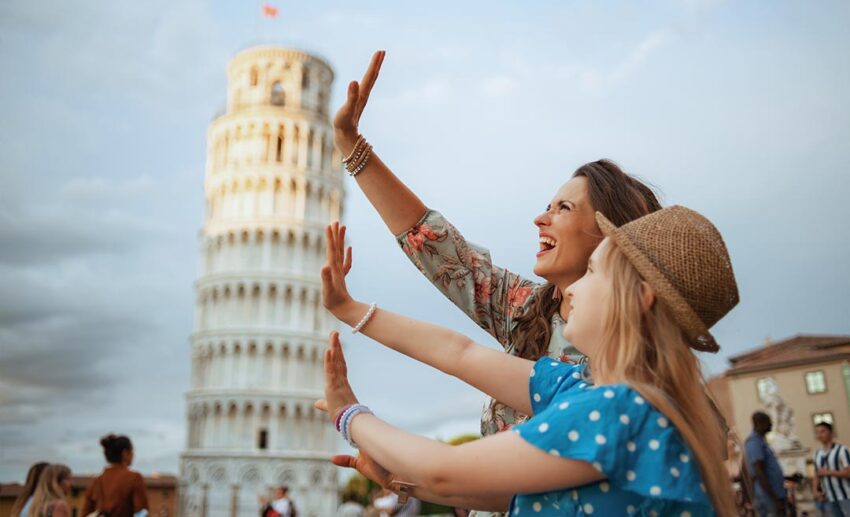
Travel can create this strange suspension of those rules you strongly believe mattered when you were back home in a familiar city. You are aware that you are somewhere where you are not known. You can simply eat things because they looked good on the menu, take the ridiculously cliché tourist photo à la holding up the Leaning Tower of Pisa, and spend an afternoon wandering a quaint town with nowhere particular to be. Basically, travel becomes an outlet where you are allowed to be a person who is just experiencing something.
If this has never crossed your mind before, it might be something you want to remind yourself about the next time you are in a foreign city and catch yourself getting too antsy about joining the dancing crowd at a local festival. Matter of fact, build the anticipation early and pack your suitcase with the intention of wearing all the absurd outfits you have been saving for the “right moment” before you take the flight itself. The excitement of it all kind of makes you wonder: what exactly is the “science” behind it?
Permission to be yourself away from home

When travelling, we become temporarily anonymous. Almost like it is gifted to us. Quite literally, nobody there knows who you are or what you normally do. There is nobody around who knows your reputation, social circle, or remotely anything about your carefully curated identity that is otherwise cultivated back home. Because of this, the stakes of appearing foolish seem lower, which in turn offers you the freedom to behave more authentically.
In a just world, we would all be comfortable being entirely authentic in our self-expression. However, the idea of travel providing that needed permission to be away from a controlled version of ourselves can be a realistic approach for when navigating your authentic self is still a work-in-progress. In fact, you might find it gradually easier to break away from the hesitance you typically allow yourself to hold yourself back at home as you get more comfortable with not having to restrain yourself.
The best way to view it is that, while working as an outlet, travel should not necessarily make you a different person. It should instead provide you with the environment in which you permit a different part of yourself to come out, where the fear of being perceived is less of a worry.
Escaping the “cringe culture”

The pressure, and hence fear, of being perceived ties in well with cringe culture. This modern worry is essentially part of the root cause of the problem in the first place. It has not always been this pervasive, and the integration of the Internet into every single crevice of our daily lives unfortunately plays a big role in the whole phenomenon, as we are constantly attached to the digital world. Cringe culture is also deeply instilled in us, to the point that we are not just fearing it but also perpetuating it upon others.
Because of this, at some point, rediscovering pure enjoyment in things we do becomes a matter of embracing our own cringe moments. It helps towards dismantling the whole obsession with the concept of cringe, and travelling just happens to be the best time to work on it.
Being a tourist is always liberating. You are being overly enthusiastic, but so are fellow travellers around you. The tourist designation provides the perfect excuse for it. The joy of allowing yourself to be impressed can end up being worth forgetting what cringe culture is all about. Processing that feeling may even make it an easier journey towards replicating the same enjoyment as you return home.
Anti-optimisation: Bringing that enjoyment home

Rediscovering enjoyment for the sake of enjoyment does not begin and end at just dismantling the fixation on cringe culture and fear of being perceived. It also extends into resisting the urge to optimise everything we enjoy. After all, what is the point of finally allowing ourselves to have fun if we immediately turn it into another thing to measure?
Take hobbies, for example. Your interest in baking begins with spending one too many evenings watching Kids Baking Championship, admiring their finesse in the kitchen despite their age. Your envy and admiration jump-start your baking journey. From fumbling with doughnut recipes to breezing through a tres leches cake recipe, you are realising that your skills might have grown to be worth more than the confines of your kitchen.
Once that moment hits, it is very easy for the lines between hobby and metric to start to blur. Could you sell your cakes? Write a recipe book? Turn it into a TikTok series? Look, monetising your skills is not a bad thing. In this economy, it is even a smart thing to do, but the problem begins when every interest starts feeling like it needs to become something.
The optimisation of hobbies can bleed into you listening to audiobooks at double speed to beat your personal records from the previous year, and spending thousands on specialised coffee-making equipment in pursuit of the perfect cup of homemade espresso.
The irony is that the pressure to optimise can quietly take away the very thing that made us enjoy something in the first place. Measuring progress replaces curiosity, and chasing outcomes takes over what was once pure interest. Eventually, leisure also feels like an area of life where we need to prove that our time was well-spent.
Maybe that is why life feels refreshing when you are somewhere else and remember what it is like to do something simply because you want to. To be interested without needing to be an expert, to spend an afternoon without making it productive, or to enjoy making mistakes along the way. Travel makes these easier to remember.
And maybe the real trick is to bring that feeling home with us — to let ourselves be a little more enthusiastic, and treat ourselves to simple enjoyment without forcing it to become something more.