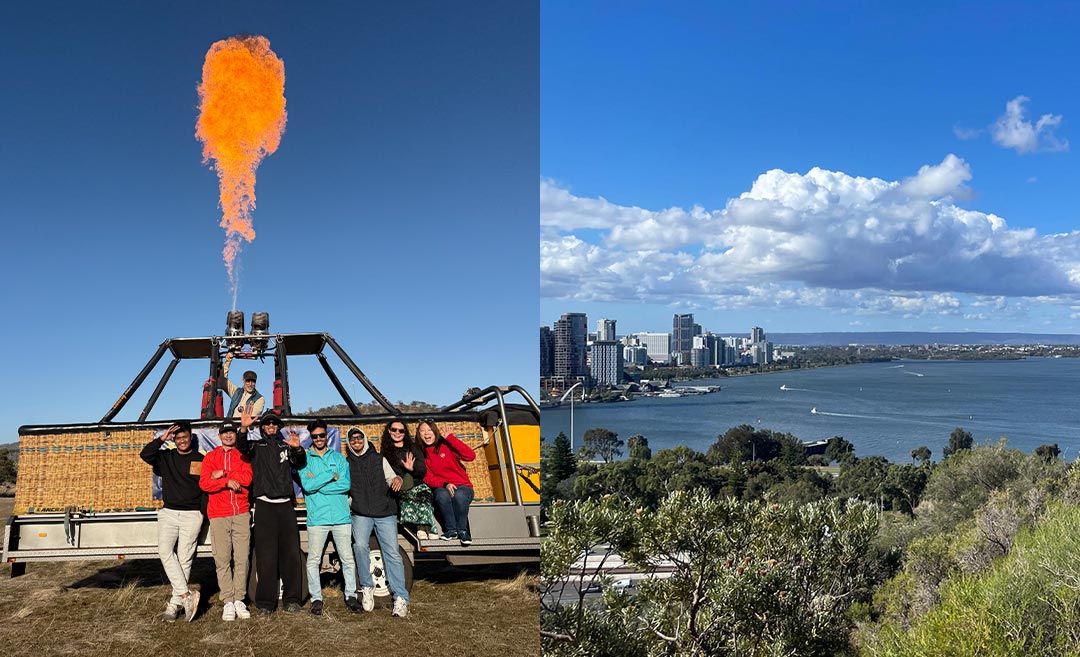
Perth is more than just a city; it’s a place alive with deep-rooted stories. See it anew through its Noongar culture, sacred sites, and powerful art. (Left image by Liberty Balloon Flights. Right image by Maggie De souza.)
Before roads were laid and concrete buildings rose, before Swan River ferries and rickshaw tours, there was Boodja (country). Prior to it being called Western Australia, this land was home to the world’s oldest continuous culture: the First Peoples of Australia. Among them are the Noongar (or Nyungar) people, the Traditional Custodians of the southwest corner of the continent, whose connection to land, water, and sky stretches back over 45,000 years.
While much of modern-day Perth (Boorloo) appears as a busy urban centre, its roots remain firmly embedded in Noongar Country. With a little curiosity and a willingness to pause and listen, visitors can uncover a rich cultural landscape that exists right alongside the city skyline, much like I experienced on a recent trip.
Karrgatup or Kaarta Koomba (Kings Park)
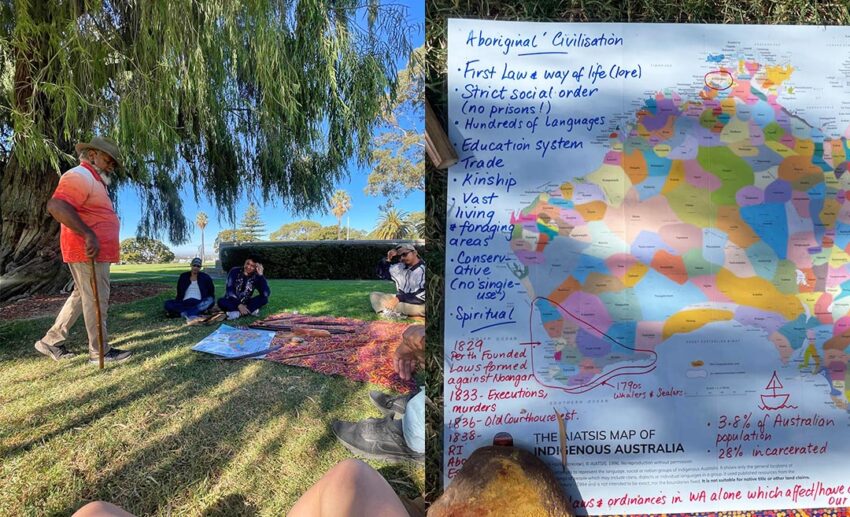
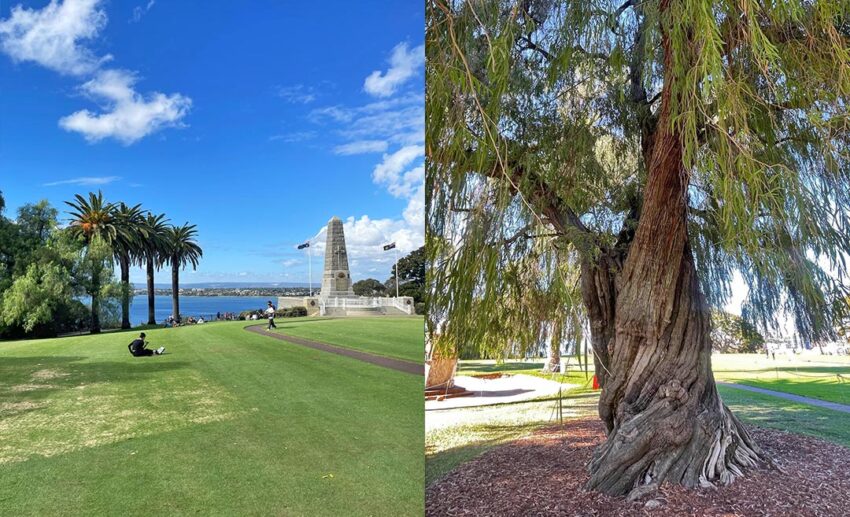
Atop Mount Eliza, overlooking the city and the Swan River, lies Kings Park, known to the Noongar people as Karrgatup or Kaarta Koomba. This isn’t just one of the world’s largest inner-city parks; it is also a place of spiritual significance. For thousands of years, Noongar people gathered here for ceremonies, to share stories, and to connect with ancestors.
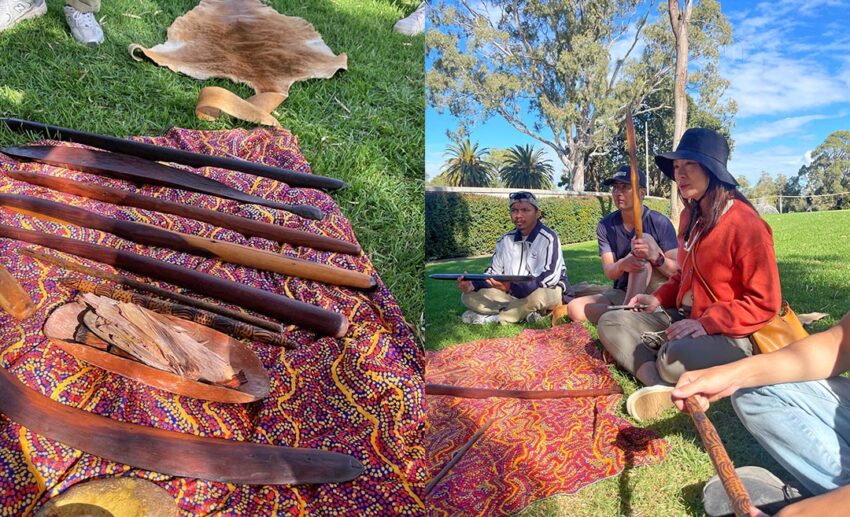
It was during a brief but memorable introductory session here with Walter McGuire, a proud Noongar man and co-founder of Go Cultural Aboriginal Tours & Experiences, that my interest was first piqued. Walter opened with a Welcome to Country spoken in the Noongar language, grounding us in Boodja and reminding us that this place is more than its pretty surroundings; it’s a story. As he spoke of Walkabouts (a traditional journey into the wilderness), Dreaming (creation stories), and showed us ancient tools, I began to see Perth through a different lens.
Derbarl Yerrigan (Swan River)
Right image from depositphotos.
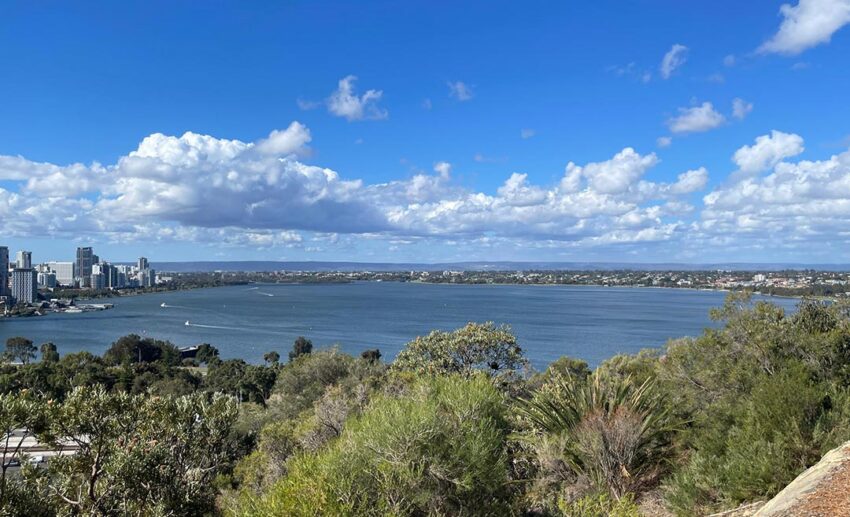
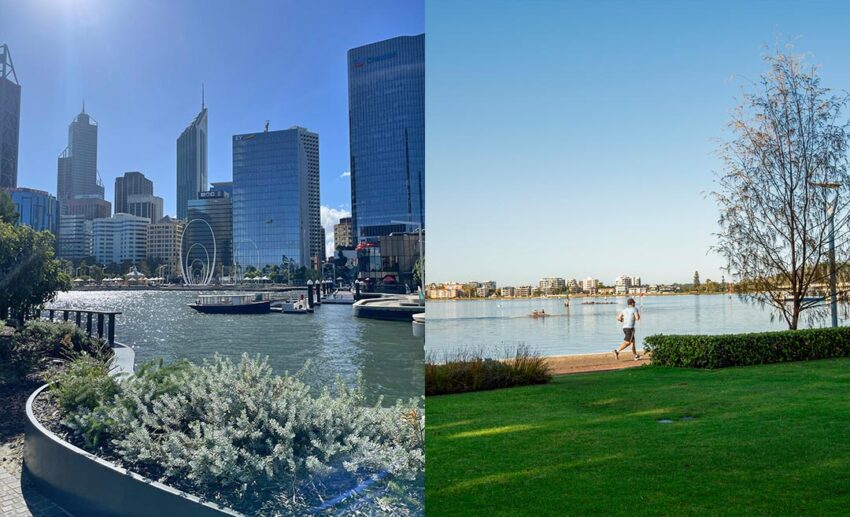
Flowing through the city is the Swan River, or Derbarl Yerrigan to the Noongar people. According to Dreaming stories, this river was carved out by the Waugal, a mighty rainbow serpent-like being, and today, it is still believed to be a living, spiritual entity, not just a waterway for boats and joggers.
When walking along its banks or crossing the bridges that span it, you are treading on sacred ground. Derbarl Yerrigan’s winding path tells stories that aren’t written on plaques, but passed down orally through generations of Noongar Elders.
Yagan Square
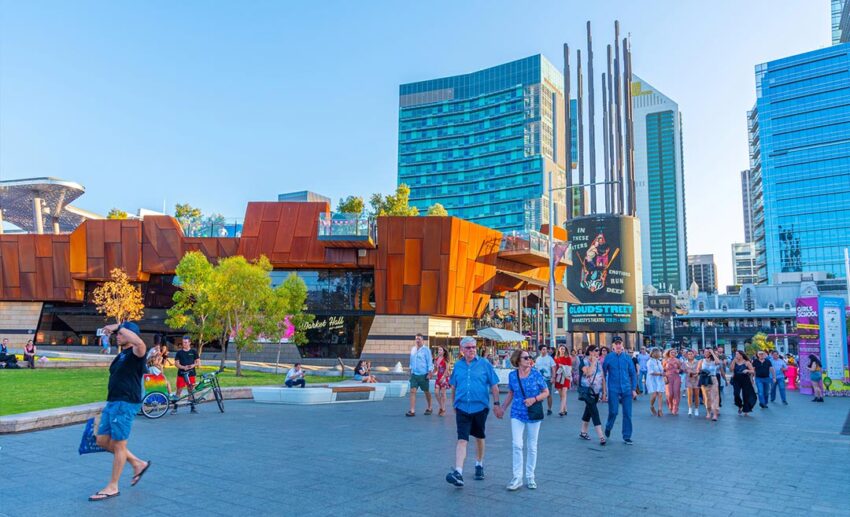
Image from depositphotos. 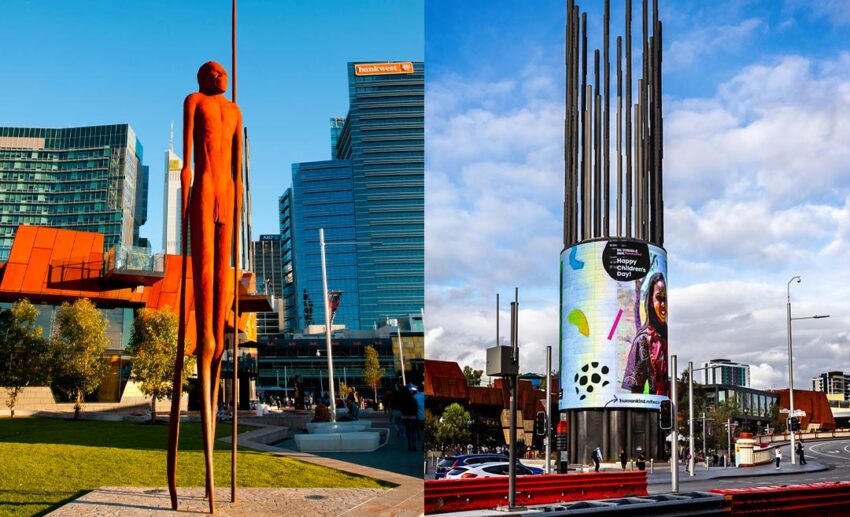
Left and right images from depositphotos.
In the heart of Perth city is Yagan Square, named after Yagan, a Noongar warrior and resistance leader who fought to defend his people during early colonial settlement. Today, this square celebrates his legacy and serves as a place where Aboriginal voices are visible and honoured.
Here, storytelling takes a digital form: large screens and audio-visual installations, like the digital tower, project stories and language from local Elders. It’s a modern tribute to traditional ways of sharing knowledge. You’ll also see Wirin, a tall sculpture by artist Tjyllyungoo, whose work can also be found in the Art Gallery of Western Australia. It’s all a powerful reminder that Noongar culture is not confined to the past.
Koorden and other artistic tributes
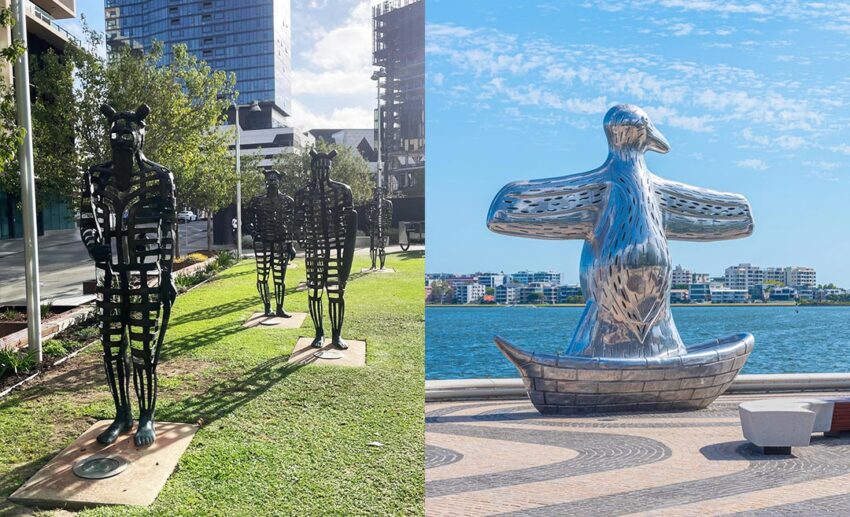
Right image from depositphotos. 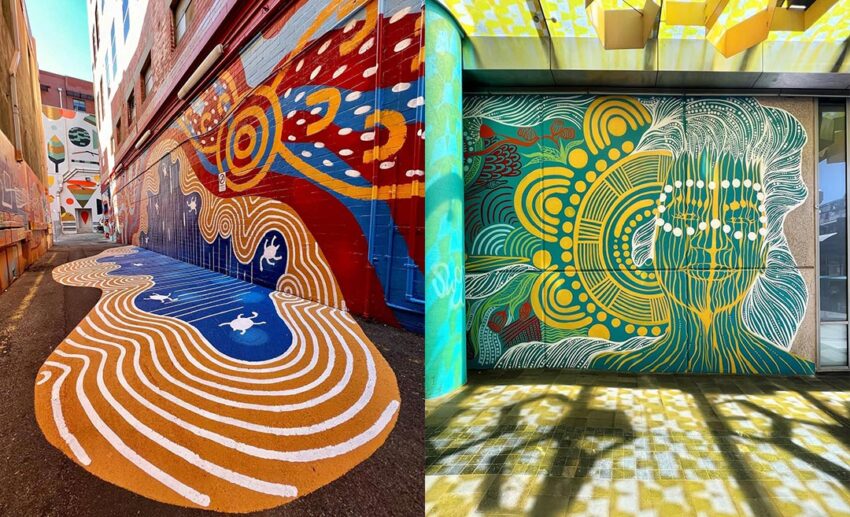
Left: Image by @jdpenangke. Right: Image by @perthstart.
A short ride away on a Peddle Perth rickshaw tour, I visited one of the city’s most striking Aboriginal artworks. Koorden is a large-scale installation comprising six cast bronze sculptures by artist Rod Garlett. The towering figures represent Noongar warriors, standing tall as sentinels of culture, community, and strength. Their placement in the city is a poetic symbolisation of resilience and continuity.
Perth’s public art scene also continues to honour First Nations stories and perspectives. At Elizabeth Quay, you’ll find First Contact, a sculpture by Laurel Nannup that reflects the Noongar experience of early European arrival. Delving deeper into the city, you’ll discover other powerful murals, such as Jade Dolman’s Gooloogoolup (Hay Street Mall), which represents the importance of the ancient lakes and swamps that were once around. Another notable work is Marcia McGuire’s Ngangk kidji Yok Koora Ngaany (140 Perth), an ode to Noongar women.
Beyond Perth’s Noongar heart
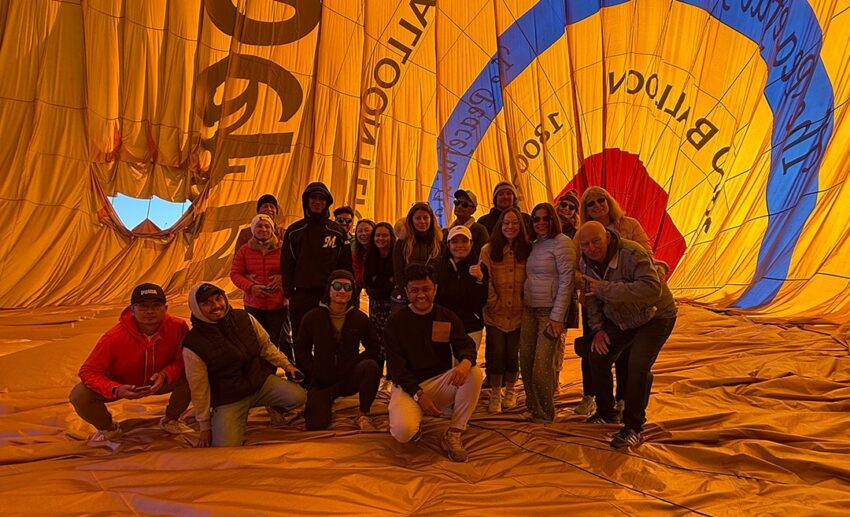
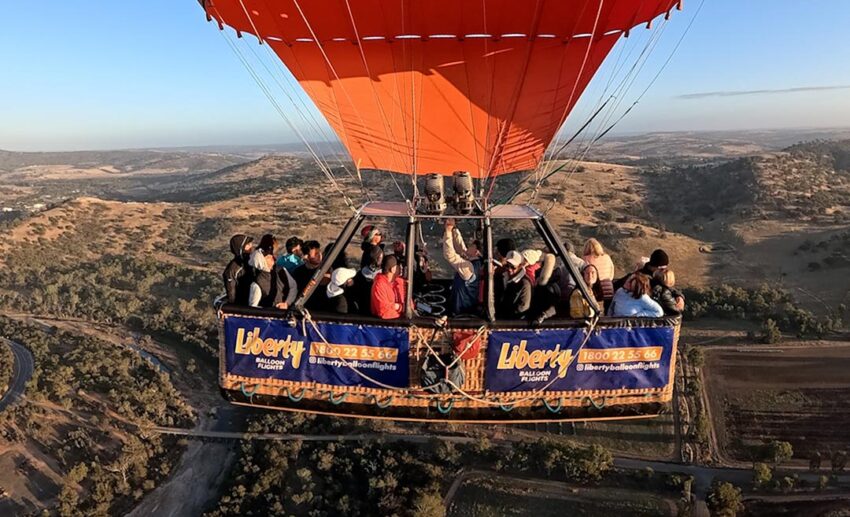
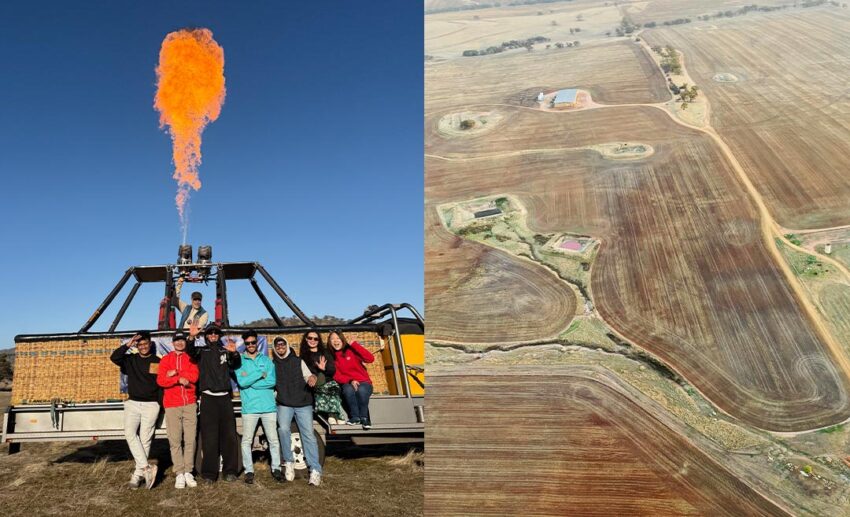
While Perth itself offers a wealth of cultural insight, venturing beyond the city opens even more doors. Nearby regions like the Margaret River area (Wadandi Boodja) and Rottnest Island (Wadjemup) also offer great ways to connect with Noongar heritage. A 90-minute drive northeast brought me to Avon Valley, another region that’s also rich in Aboriginal history. The Ballardong Noongar people have lived in this area for thousands of years, where stone tools and campfire sites have been discovered throughout the valley in the past.
One of the most magical ways to take in the land here is from above, on a hot air balloon flight with Liberty Balloon Flights. At sunrise, as the mist lifts over rolling hills, farmland, and the winding Avon River (Gugulja), I caught glimpses of herds of sheep grazing and kangaroos hopping about the countryside. It was truly a view that gave me a fresh appreciation (even after an eventful week of discoveries) for the land and the lives it has sustained for millennia.
Noongar culture teaches that stories live in the land. You can feel them beneath your feet, hear them in rustling leaves, and see them etched in rock formations and river bends. As visitors, we are not just passing through a place, we’re stepping into a narrative far older than any one of us. Whether it comes through a conversation with a guide like Walter McGuire or an encounter with a piece of art, Perth offers countless ways to connect with these stories. All it asks is that we slow down, open our senses, and listen.
All images are by Maggie De souza unless specified otherwise.