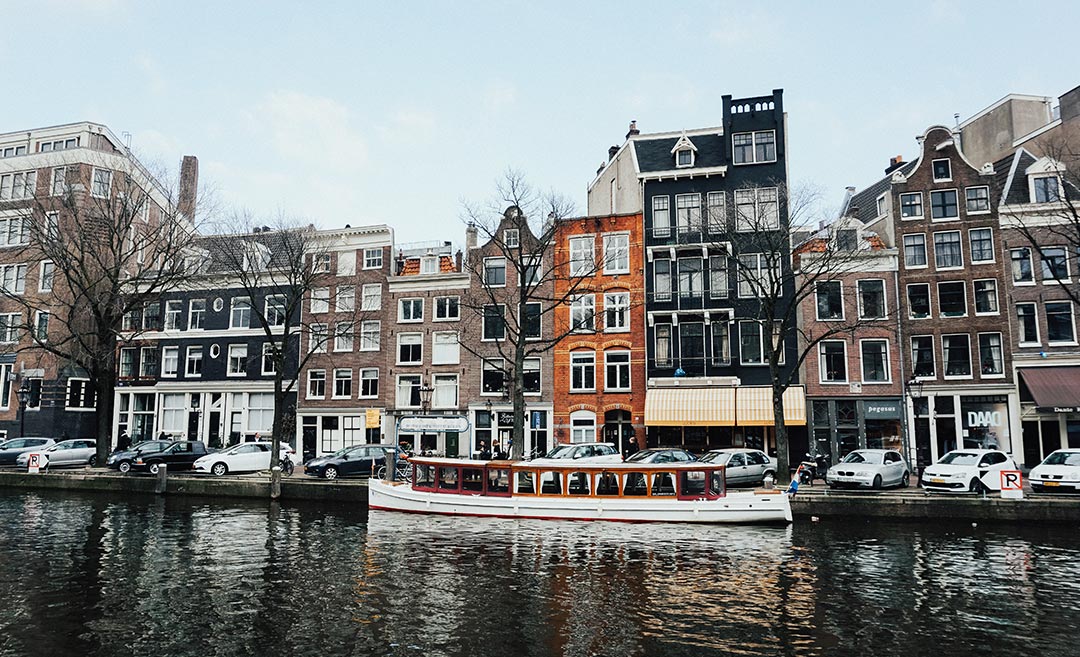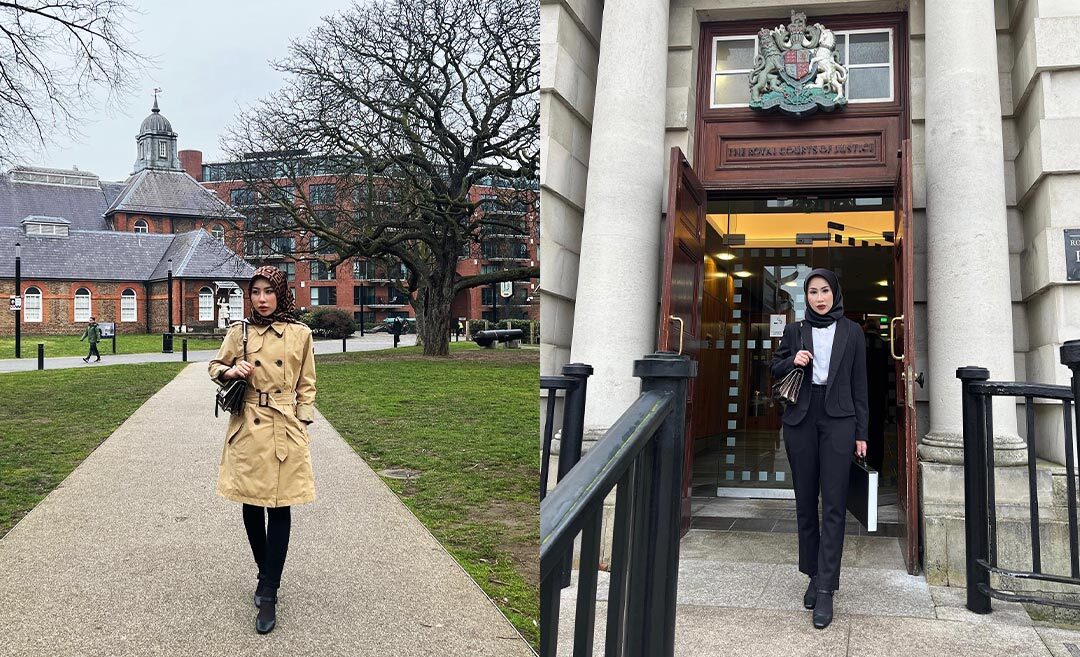
Studying law in the UK transformed my perspective on independence, identity, and ambition. It taught me lessons I’ll carry long after graduation. (Image by Ahmed)
Boarding a flight from Kuala Lumpur to London on a humid July night, I wasn’t just crossing continents, I was stepping into a new chapter of independence, academic challenge, and self-discovery.
As a Malaysian woman studying law in the UK, my journey became more than a legal education—it was a personal transformation shaped by culture, resilience, and unexpected lessons. What began as the pursuit of a prestigious degree evolved into some of the most defining years of my life, unveiling aspects of identity, courage, and global citizenship I hadn’t known were possible.
Navigating a new legal landscape & classroom culture

Coming from Malaysia’s unique hybrid legal system—a tapestry of English common law, Syariah principles, and customary laws—studying in the UK felt both familiar and foreign.
On one hand, many foundational principles echoed what I’d learned at home. On the other hand, everything was amplified. My days brimmed with lectures, moots, and small-group tutorials that demanded not only critical thinking but confidence to share, debate, and occasionally defend my perspective among peers from vastly different backgrounds.
The Socratic method stood in stark contrast to Malaysia’s more deferential, lecture-focused classroom culture. Suddenly, it wasn’t enough to simply absorb information. Discussions around case names like Donoghue v Stevenson (a.k.a. “snail in the bottle” case) or principles such as mens rea and actus reus forced me to analyse and challenge, sometimes in scenarios echoing real British courtrooms.
Every conversation affirmed that law is as much about context and empathy as it is about black-letter rules and statutes. I learned to see law not only as a tool for justice, but as a reflection of cultural, historical, and political evolution.
Identity, representation & confidence

As a visibly Southeast Asian Muslim woman in a hijab, I often stood out. Sometimes becoming a gentle curiosity, other times a symbol of multiculturalism. My classmates were fascinated by Malaysia’s dual judicial system, particularly our Syariah courts running alongside civil courts—a reality unfamiliar to most.
Conversations ranged from light-hearted curiosity to deeply philosophical debates, and they taught me to articulate my perspective with humility and pride.
Representation, I realised, isn’t just about being seen; it’s having the courage and skill to explain, be heard, and sometimes assert boundaries.
When uncertainty or bias surfaced, I found guidance in the university’s equality and diversity resources. The UK’s Equality Act 2010 offered tangible reassurance.
When a landlord once rejected my rental application on questionable grounds, I sought advice from the student legal service and quickly learned about my rights as a tenant. This reminded me that legal recourse is harder to access back home. These experiences showed me that justice is not just a theoretical ideal, but woven into everyday living.
Safety abroad: Freedom and boundaries

In Malaysia, women are often taught vigilance, like avoiding walking alone at night or socialising in certain ways. In the UK, those boundaries shifted. My British peers thought little of late-night study sessions or walks back from the library past midnight.
Their ease with independence was liberating, but I still made conscious safety choices: using licensed taxis, letting friends know my whereabouts, and guarding personal details.
Gendered safety concerns, I realised, exist everywhere but manifest with cultural variation. Rather than feeling restricted, I embraced a balance between the UK’s independence and the caution ingrained from home. Awareness and self-advocacy, it turns out, are empowering, not limiting.
Faith in a foreign land
My faith remained my compass through every challenge. UK universities are increasingly conscious of diversity: most offer prayer rooms, halal dining options, and vibrant faith societies. Making time for prayer between lectures was possible, and joining the Muslim Students’ Association eased homesickness.
But new adjustments arose: fasting during Ramadan in winter, with iftar sometimes after 9pm, tested my stamina and time management. Scheduling group projects and maintaining exam focus became unique challenges, but moments of quiet faith grounded me amid the pace of new experiences.
Visas, work and career aspirations

UK immigration law shaped much of my reality. The Tier 4 Student Visa regulated my work hours, set attendance requirements, and even determined my eligibility for internships and placements. Securing legal work experience like vacation schemes and mini-pupillages was fiercely competitive, with equal opportunity procedures and meticulous compliance.
Interning in British law firms and observing adversarial criminal proceedings deepened my understanding of justice in action. Watching voir dire and sentencing brought textbook principles alive, and reinforced my respect for judicial independence, transparency, and the right to fair process.
Managing money and unexpected costs
An Asia Pacific Regional Scholarship eased tuition, but daily budgeting in pounds was a learning curve. Currency changes, London rent, and care packages for family stretched every pound. Unexpected costs like medical bills or transport strikes forced me to get creative: meal-prepping, buying second-hand, and building an emergency stash became habitual.
Asking for help was initially hard, but vulnerability, I learned, builds community. Reaching out turned expenses into opportunities for connection and mutual support.
Food, homesickness and cultural exchange
Malaysia’s food culture is community late-night mamak stalls, Eid feasts, and family birthdays. In the UK, halal food was pricier, and Malaysian staples are hard to find.
I found home through my own kitchen, sharing homemade nasi lemak, rendang, and kuih with British friends. Food became my bridge. Strangers became friends, and those meals led to sharing stories, traditions, and belonging.
Shifting mindsets and career goals

Back home, my path felt set: seek stability and make your family proud. The UK taught me critical thinking, debate, and self-direction. Supportive mentors and friendships revealed new possibilities: international human rights, cross-border legal aid, or practising in the UK or Singapore. I’ve learned to see my career as more than a profession; as a calling and a way to build cultural bridges.
Conclusion: Growth beyond borders
Studying abroad changed me in ways no degree alone ever could. While I left Malaysia with dreams of gaining an education and international experience, I returned with immeasurably more.
Beyond legal textbooks and case law, I discovered the resilience to adapt in unfamiliar settings, to navigate the everyday challenges of living far from home, and to thrive independently. Every obstacle—a late-night study session in a new city, a difficult conversation about identity, a moment of homesickness—became a lesson in perseverance and self-confidence.
Returning home, I brought with me newfound confidence, adaptability, and a determination to use my voice. I feel more equipped to contribute, not only to Malaysia’s legal community but to broader global conversations. My overseas journey ignited within me a lifelong ambition to learn, to share, and to give back to those around me both at home and abroad.
If I could offer one piece of advice to anyone considering studying abroad, it would be this: take the leap. The thought of leaving everything familiar behind can be daunting, and the journey will almost certainly challenge you in ways you may not expect. Yet, it’s through these challenges that you discover your true strength and character.
So, be brave. Embrace the adventure, and allow yourself to grow in ways you never thought possible. Studying abroad is more than just an educational opportunity; it is a chance to transform your life and broaden your future. I encourage you to take that step. You may be amazed at how much you can achieve.