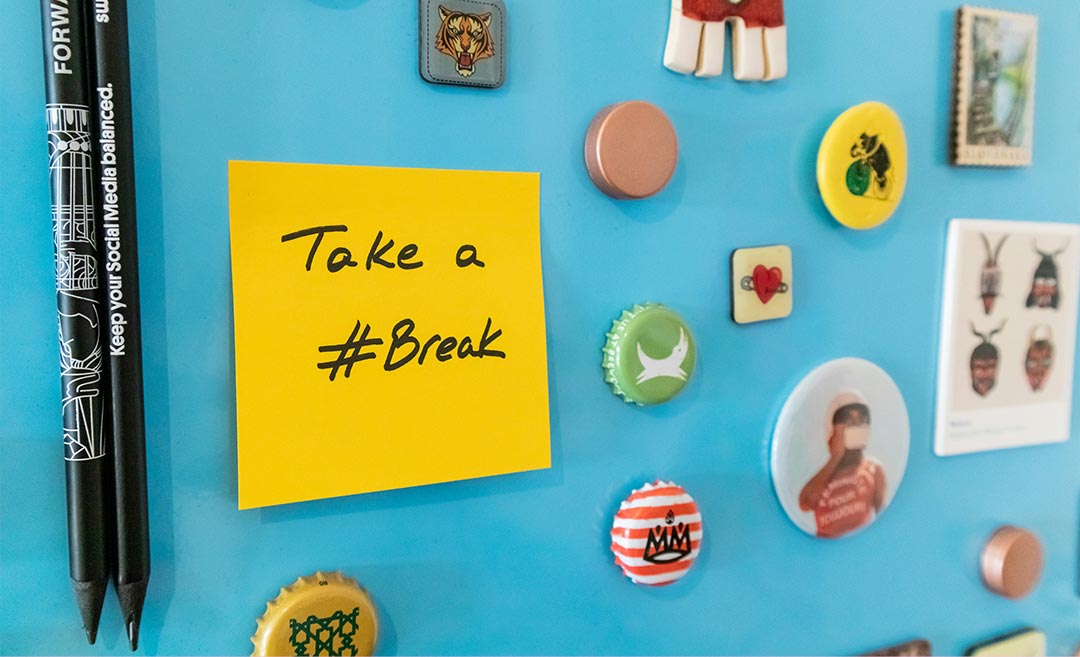
Taking a career break no longer means walking away from ambition. More women are planning structured pauses around travel, using time away to rest, reassess, and return with clearer priorities and a realistic plan for what comes next. (Image by Walls.io)
By the time I reached my 40s, I had become very good at keeping things moving, and I wasn’t sure if this was a thing to be proud of. Work deadlines were met, family appointments were remembered, school forms were signed, and the question of what everyone wanted for dinner somehow remained a responsibility carried, even though I was not running a restaurant. What I had become less skilled at was stopping long enough to ask whether the working life I had carefully built still suited the person I had become.
For many women, this question arrives somewhere between “I need a holiday” and “I need to rethink my entire existence”. The answer does not always need to be a dramatic resignation letter, a suitcase, and a one-way ticket to somewhere with suspiciously beautiful beaches.
Increasingly, midlife career breaks are becoming more intentional. They can be planned periods of rest, travel, retraining, family time, or simply enough distance from everyday routines to make clearer decisions about what comes next.
The key difference is that a career break is not about disappearing from your life. It is about making enough space to examine it — preferably with a realistic budget, a return plan, and at least one spreadsheet.
Not every bad week requires a resignation letter

Before searching for flights, identify what is driving the need to step away. Because while quitting your job and dramatically announcing “I’m finding myself” sounds appealing after a particularly terrible Monday, it is worth understanding whether you are running away from something or moving towards something new.
Are you exhausted by your workplace, or have you lost interest in your entire profession? Do you need proper rest, or are you ready to retrain? Are you craving adventure, more time with your children, or several consecutive mornings in which nobody asks you where their socks are?
The answers matter because different problems require different breaks. Burnout may call for slower travel and fewer expectations, while a career transition might benefit from short courses, volunteering, industry events, or time in a city connected to the field you are considering.
Before you leave, write down what you realistically want this break to achieve. Not “figure out my entire life” — that is far too much pressure to place on one woman and one suitcase, and it may go on forever.
Instead, choose three achievable outcomes. Maybe you want to recover your energy, test whether freelance work is financially viable, complete a creative project, learn a new skill, or decide whether returning to your current industry still makes sense.
Forever, we have not.
The exciting part is booking flights. The reassuring part is knowing you will still be able to pay your rent when you come home.
Your exit strategy should be boring

A career break may look spontaneous from the outside, but the most successful ones are usually supported by considerable planning and at least one spreadsheet. Unfortunately, spreadsheets are not particularly photogenic, so they rarely make it into the dreamy travel montage.
It is not as simple as packing up your bags and going. Your travel budget should include flights, accommodation, insurance, transport, visas, food, activities, phone access, medication, and emergency costs. However, it is equally important to build a separate return-home fund.
Ideally, this fund should cover several months of living expenses after the trip, particularly when you are leaving without another role secured. Returning home with renewed purpose is considerably less romantic when you immediately need to accept the first available job.
Before stepping away, check the less exciting details too: how unpaid leave or resignation may affect retirement contributions, health insurance, taxes, professional memberships, and other employment benefits. A career break is meant to create freedom, not financial panic with better scenery.
Women with children or ageing parents may need an additional contingency fund for unexpected flights home.
Holiday mode wears off surprisingly quickly

When planning a midlife career break, think beyond what you want to visit and consider how you want to live. A destination that is perfect for a seven-day holiday may be exhausting for a three-month stay, for both you and your wallet.
Because somewhere around day 14, even the most beautiful destination becomes less “dream escape” and more “where is the nearest supermarket and why does this washing machine have 47 buttons?”
Research the cost of groceries, public transport, healthcare, neighbourhood safety, internet reliability, visa conditions, and access to suitable long-term accommodation.
Slow travel is usually well suited to a career break, and staying in one place for several weeks reduces transport costs, allows you to build routines, and gives you a more realistic sense of daily life.
An apartment with a kitchen and washing machine may not produce glamorous social media content, but after a certain age, reliable laundry facilities begin to feel like luxury travel.
The goal is not to recreate a two-week holiday for months on end. It is to create a temporary version of everyday life that gives you enough comfort, stability, and space to think.
Women travelling alone should arrange airport transfers in advance, arrive during daylight when possible, share itineraries with someone they trust, and keep copies of important documents in separate locations. Choosing well-reviewed accommodation in a connected neighbourhood can also make it easier to settle in without feeling isolated.
Future you will be glad you didn’t ghost your career

A career break does not need to become a blank space on your CV. However, before you hand in your resignation letter or set your out-of-office message permanently, take some time to protect the professional life you are temporarily stepping away from.
Update your professional profile, save examples of your work, request references, and exchange personal contact details with colleagues you value. Company email addresses have a habit of becoming inaccessible at precisely the moment you remember that the document, recommendation, or contact you need is sitting somewhere inside them.
Depending on your goals, you might complete a short course, volunteer, work on a creative project, or take on a limited amount of freelance work. None of these activities is compulsory, particularly when the purpose of the break is recovery, but they can help you explain the experience confidently when you return.
The important thing is not to turn your break into another performance review. You do not need to spend six months proving you were productive enough to deserve time away. The value of the experience may simply be that you returned rested, clearer, and more certain about what you want.
Describe the break for what it was: a planned sabbatical used for travel, professional reassessment, skills development, family time, or personal renewal. There is no need to apologise for stepping away from a timeline that no longer worked for you.
Coming home deserves a plan too

Re-entry often requires more planning than women expect because after months of greater freedom, returning to the same schedule, role, and expectations may feel surprisingly difficult.
The first challenge is often not finding work. It is deciding what kind of work you actually want to return to.
During the final part of the break, begin reconnecting with your network, reviewing opportunities, and clarifying what you want from your next role. Consider not only salary and title, but flexibility, workload, purpose, location, and the amount of energy you are prepared to give to work.
The career you return to does not need to look exactly like the one you left. A break may confirm that you love your industry but need better boundaries. It may reveal that you want more flexibility, a different role, or an entirely new direction.
Not every career break ends with a dramatic reinvention. Some women return to the same industry with stronger boundaries, while others reduce their hours, retrain, freelance, or move into entirely different work.
You don’t have to earn a career break

Women are often remarkably good at convincing themselves they need to reach one more promotion, finish one more project, or wait until the children are older before taking a break.
There is always another deadline, another responsibility, another reason why next year might be a more convenient time.
Unfortunately, life has a habit of replacing one reason to wait with another.
A career break does not need to arrive only after burnout, redundancy, or some dramatic life event. Wanting time to pause, reassess, and experience something beyond your usual routine is a valid reason too.
Sometimes wanting one is reason enough.
In our 40s, we are not starting from nothing. We are travelling with years of experience, capability, responsibility, and a clearer understanding of what we value — and what we are no longer willing to sacrifice.
A career break is not about abandoning ambition or pressing pause forever. It is about creating enough space to make thoughtful decisions about what comes next.
And if that space happens to include a new city, excellent public transport, and a cafe where nobody asks for a meeting agenda, that is simply a very sensible bonus.