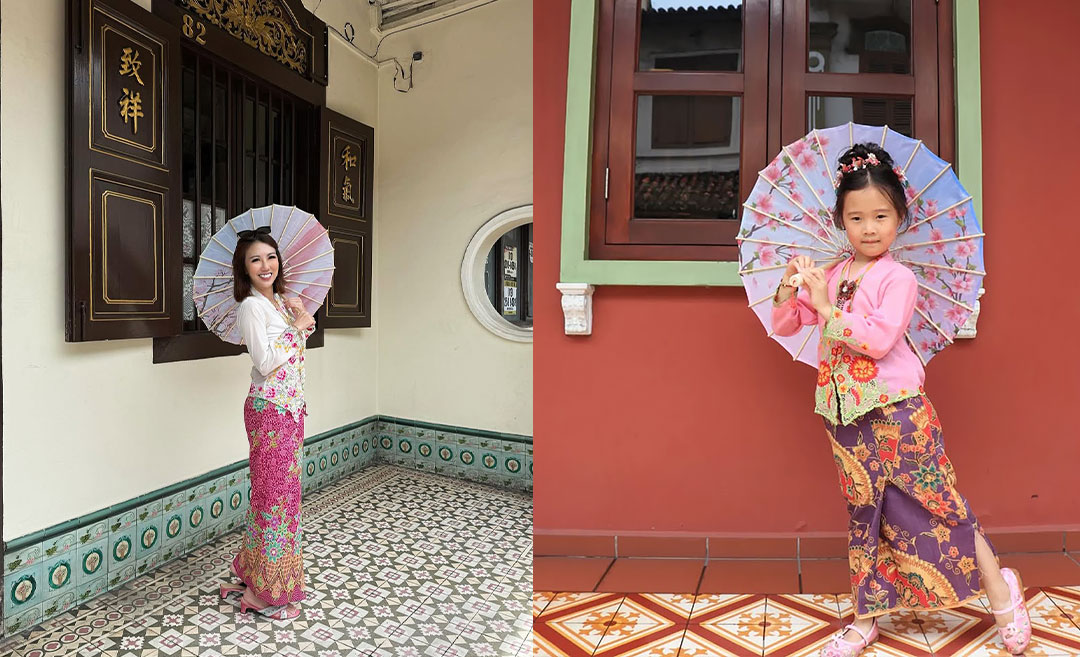
Melaka will soon reward visitors who wear the traditional Nyonya kebaya with free entry to attractions, celebrating Peranakan heritage and promoting Malaysia’s growing heritage-based tourism movement. (Left image by @heyyjoyce. Right image by @melakakebayanyonya.)
Visitors to Melaka will soon have one more reason to slip into the iconic Nyonya kebaya. Starting in 2026, tourists dressed in the traditional attire will enjoy free entry to several of the city’s top attractions, including the Melaka Zoo and the Melaka River Cruise.
The initiative, announced by Melaka Chief Minister Datuk Seri Ab Rauf Yusoh, is part of the state government’s efforts to celebrate and preserve Peranakan heritage. More than a tourism gimmick, it’s an opportunity for visitors to experience Melaka’s living traditions, not just observe them.
The kebaya: a living symbol of Peranakan grace
The Nyonya kebaya isn’t just a fashion statement; it’s a legacy. Worn by Peranakan women (known as Nyonyas), this traditional blouse-dress ensemble embodies centuries of cross-cultural fusion. With roots in both Malay and Chinese craftsmanship, the kebaya tells a story stitched in silk thread and embroidered motifs.
Supporting local artisans and small businesses
This initiative is also about empowering local craftsmanship. With the anticipated rise in demand for kebayas, the programme is expected to boost local artisans, tailors, and batik makers who specialise in traditional attire. For those eager to take part, several Malaysian brands and boutiques are already championing the kebaya revival:
- NyoNya Kebaya Rental – Perfect for travellers who want to experience the look without the long-term commitment.
- Kebaya Nyonya Melaka – A local favourite for handcrafted kebayas made in the heart of Melaka.
Beyond clothing sales, this initiative is also expected to spur a broader creative economy—from textile workshops and embroidery classes to boutique tourism experiences that highlight Melaka’s Peranakan and Chetti heritage.
Honouring Melaka’s multicultural roots
The move honours two of Melaka’s most culturally rich communities—the Peranakan Chinese (Baba-Nyonya) and the Chetti. The Peranakan Chinese trace their roots to early Chinese settlers who intermarried with local Malay women, giving rise to a unique culture that blends Chinese, Malay, and European influences. Similarly, the Chetti community, descendants of Tamil traders who married local women, represents another vital strand in Melaka’s diverse heritage. By recognising both groups, the initiative reinforces the message that Melaka’s strength lies in its multicultural harmony.
It also aligns seamlessly with Malaysia’s broader push toward heritage-based tourism, a growing trend that connects visitors more deeply with local stories, crafts, and communities.
So, the next time you’re planning a trip to Melaka, pack a kebaya or rent one when you arrive.