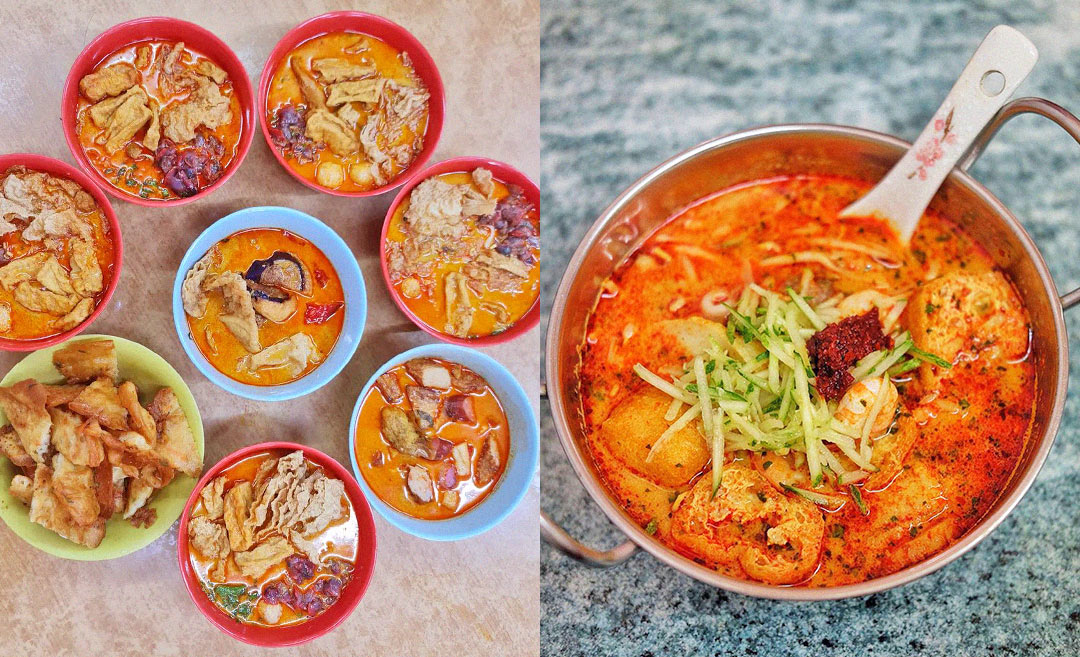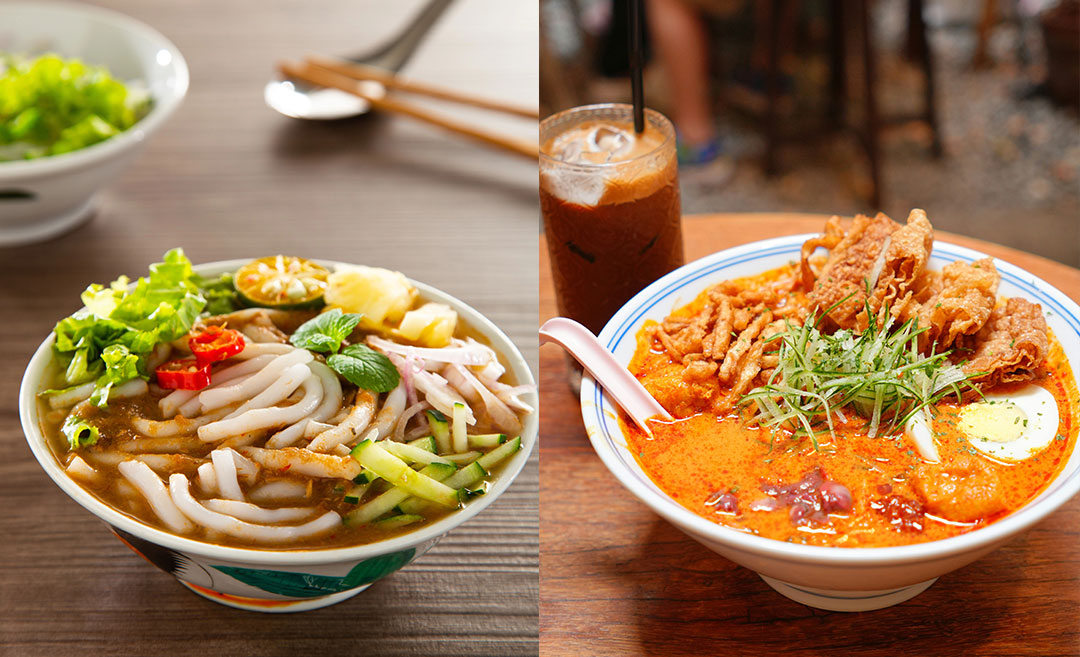
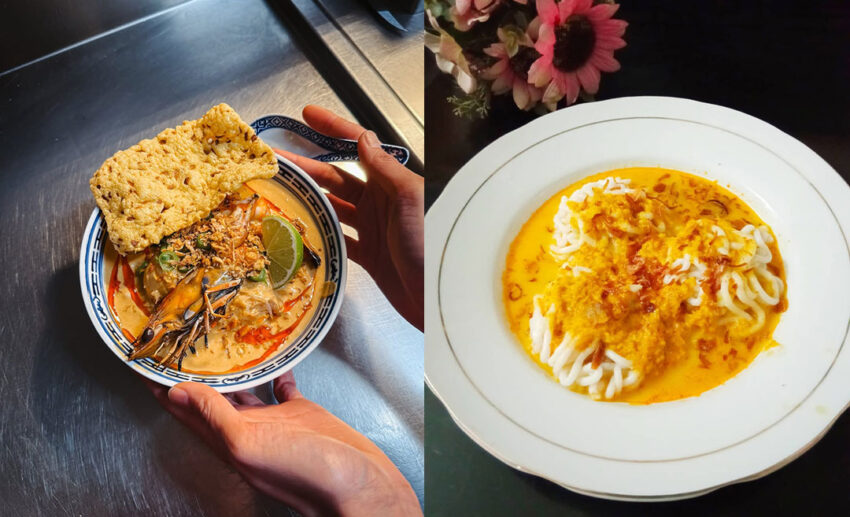
A side-by-side look at how the same culinary roots branch into entirely different profiles, from the fish-infused, tamarind broth of Penang’s world-renowned Asam Laksa to the velvety, spice-laden curry base of Melaka’s Laksa Lemak. (Left image by tehcheesiong; Right image by Kent Chin)
There is no dish more representative of the Malay Peninsula than laksa. The spicy bowl of noodle soup bursting with flavour can be found in many iterations across four countries, from Thailand and Malaysia to Singapore and Indonesia. Each regional variation reflects a unique cross-pollination of cultures and ingredients, making laksa one of Southeast Asia’s most recognisable noodle soups.
Because there are so many variants of laksa, it’s difficult to pinpoint a specific point of origin. Given Southeast Asia’s history of trade with China, the origins of laksa could possibly be attributed to migrant Chinese traders marrying into local communities, forming the Peranakan community. In this way, laksa emerged as a dish shaped by cultural exchange and migration.
Even the origin of the dish’s name is debated. Some etymologists believe it comes from the ancient Persian word for noodles, while another theory suggests it comes from the Sanskrit word “lakh,” meaning 100,000. Within the Chinese community, it’s believed the word derives from Hokkien “luak sua”, meaning “spicy sand”, alluding to its taste and texture.
Whatever the case may be, you cannot go wrong with a hot bowl of laksa anywhere on the map. All you have to know as you embark on a culinary quest to sample the many different variants is that laksa falls into two categories, based on the key ingredients of the soup: asam and curry.
The tart and tangy asam laksa
Taking its name from the Malay word for “tamarind”, asam laksa is characterised by a tart and spicy broth made of tamarind and fish stock, infused with a blend of spices. It is served with rice noodles and garnished with shredded cucumber, shallots, mint leaves, torch ginger flower buds, and Vietnamese coriander for added aroma.
Asam laksa is found mostly in the northern region. The popular variants are:
Penang Laksa
Perhaps what often comes to mind when one thinks of asam laksa, this version is usually served with mackerel flakes, pineapple chunks for extra garnish, and a spoonful of black prawn paste. The Penang Asam Laksa is also known for putting Malaysia on the culinary world map when it came in at number 7 on CNN’s list of The World’s Best Food in 2011.
Kedah Laksa
The Kedah laksa shares a lot of similarities with that of its neighbouring state. The difference is that its broth is made thicker with blended or pounded fish, and it’s served with a hard-boiled egg.
Perlis Laksa
Very similar to the Penang and Kedah variants, the laksa from the northernmost state sets itself apart with a rather concentrated broth made from blending the fish, ginger flower, and coriander together. The quantity of fish used is also more than in other states, resulting in a brighter broth instead of the reddish ones like Kedah laksa.
The rich and spicy curry laksa
Known as curry mee to the northern states, this variety of laksa features a rich broth made with chicken or fish stock, with the addition of coconut milk (santan) and a curry paste made from a blend of spices that often include chillies, shallots, garlic, lemongrass, turmeric, and galangal. Instead of thick rice noodles, it is often served with yellow noodles (mee) or rice vermicelli (mee hoon). Common garnishes include fried tofu puffs, shrimp, cockles, fish cake, boiled eggs, bean sprouts, and basil leaves, while sambal paste or chilli sauce can be added for the extra fiery “kick”.
The popular varieties of curry laksa to look out for are:
Melaka Nyonya Laksa
Also known as laksa lemak (fatty laksa), Melaka‘s variant is characterised by a thick coconut milk broth. It’s often served with chicken strips, hard-boiled egg, bean sprouts, and a variety of seafood.
Katong Laksa
This is Singapore’s version of the Nyonya laksa, known for its rich shrimp broth with a dominant coconut flavour and thick vermicelli noodles cut into bite-sized chunks. It’s best enjoyed with a spoon rather than chopsticks or a fork.
Thai Laksa
Popular in southern Thailand and northern Malaysia, this variant is reminiscent of tom yam with its curry broth infused with aromatic Thai-inspired spices such as ginger, lemongrass, and galangal.
Other unique variants
As a dish so beloved across the region, laksa cannot be confined to just two categories. Beyond the familiar asam and curry laksa, many lesser-known regional forms reflect local ingredients, cooking traditions, cultural influences, and innovations.
Here are a few more unique variants of laksa to look out for on your food hunt:
Johor Laksa
This variant from the southernmost state of Peninsula Malaysia blurs the line between asam and curry laksa when it comes to ingredients. Like the northern asam laksa, the gravy is made using items like tamarind, dried prawns, lemongrass, and galangal, with curry and coconut milk added. Unlike most soup-based laksa served with rice noodles or vermicelli, Johor laksa is traditionally eaten with spaghetti drenched in its thick gravy.
Laksam
Sometimes called White Laksa because of its milky broth, this variant is popular in the east coast of Malaysia. Its milky white broth is similar to curry laksa, except it is made without curry paste.
Sarawak Laksa
This laksa has a slightly lighter but spicier broth. Though similar in preparation to curry laksa, sambal belacan is used in place of curry paste.
Indonesian Laksa
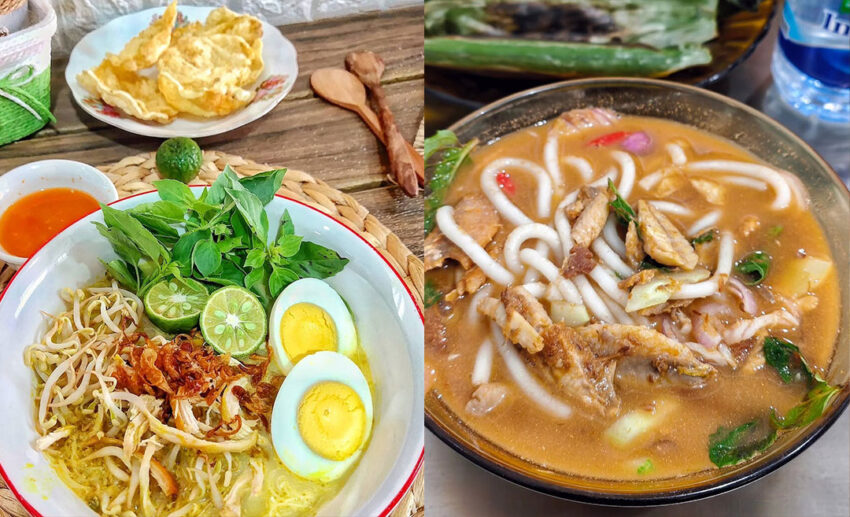
The variety of laksas to be found across Indonesia deserves its own guide. Most of them feature coconut milk-based soups similar to Malaysia’s curry laksa, but with added regional intricacies. Among the famous ones are Laksa Bogor, known for its turmeric-flavoured coconut-milk broth with the addition of oncom, an orange fermented soybean cake; Laksa Betawi that omits oncom but is seasoned with grounded shrimp; Laksa Medan, with a spicier orangey curry, and Laksa Banjar that is served with rice noodle balls instead of noodle strands.
This guide is by no means comprehensive, as it cannot account for all the many region-specific variants of laksas out there, but it should equip you with sufficient knowledge on your culinary trail to better appreciate Southeast Asia’s most beloved noodle soup.