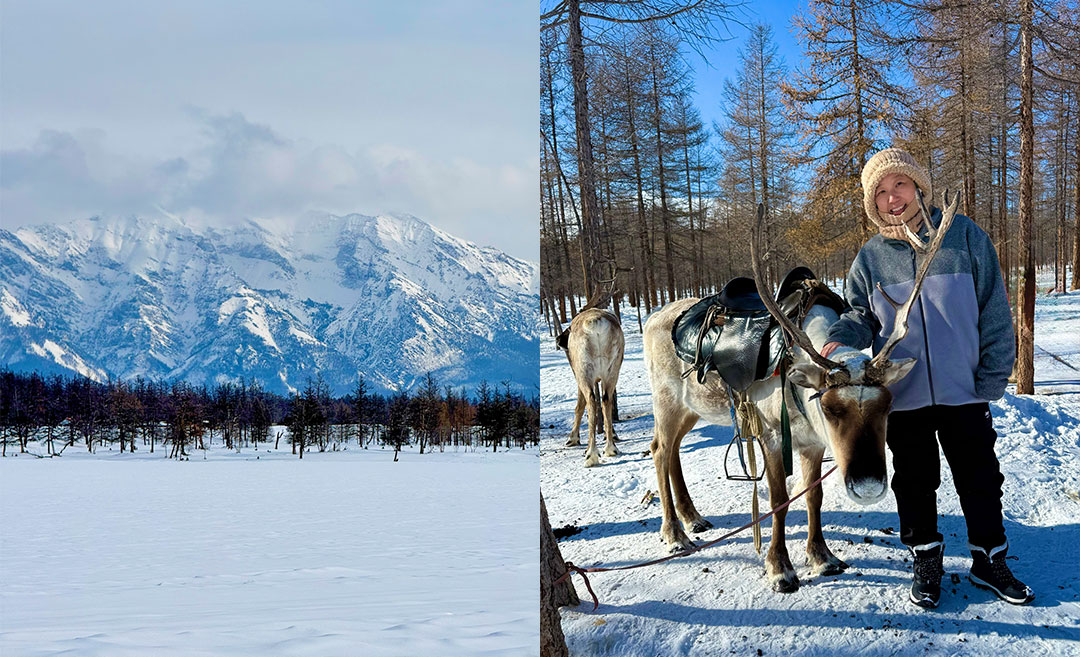
In the heart of the taiga, the silence is almost sacred. My journey to Northern Mongolia was a recalibration—a chance to move from the endless white expanse to a quiet, profound partnership with the Tsataan reindeer herders.
In the heart of Mongolia’s far north, on the edge of the Arctic Circle, lies the taiga — a remote wilderness of snow-dusted pines, immense silence, and a stillness that feels almost sacred. It was there, living with the Tsaatan reindeer herders of northern Mongolia (also known as the Dukha), that I encountered not just a different nomadic way of life, but a different way of being — one that has stayed with me long after I left.
The journey to reach the remote Khövsgöl province was long and demanding. By the time I arrived at the Tsaatan’s winter camp, exhaustion had peeled away every layer of comfort. What remained was humility and a deep sense of awe. In that stripped-back state, I found a kind of clarity I had not expected; lessons in resilience that only the taiga can teach.
The Pulse of the Taiga
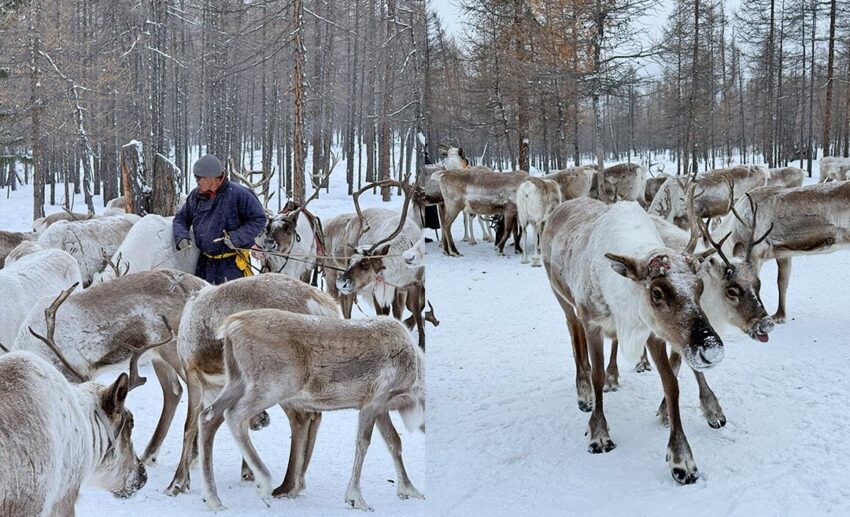
The Tsaatan (Dukha) live in quiet partnership with the land, herding reindeer and holding fast to traditions that have endured for generations. To understand their world, you must first understand the rhythm of the herd. 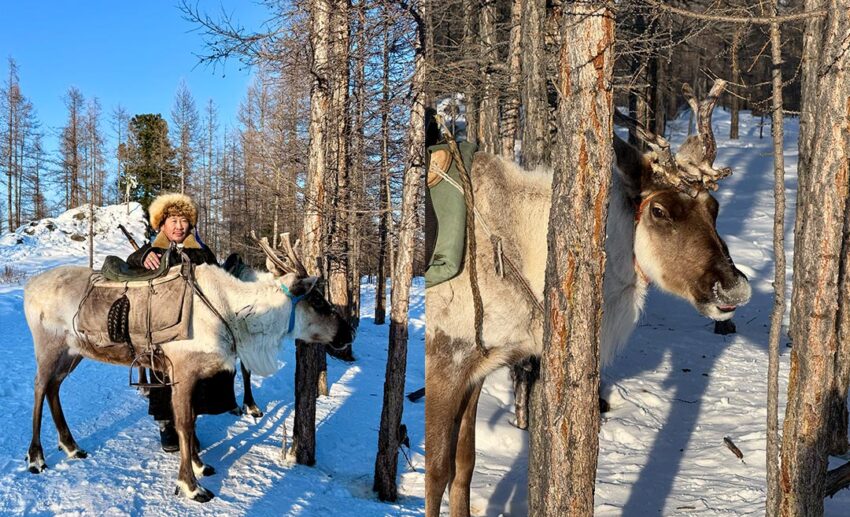
Nothing felt hurried, not even the saddling of a reindeer. Their lives are shaped by attentiveness—to the weather, to their animals, to the immediate needs of the day.
What struck me most was not only the remoteness of their world, but the rhythm of it. The Tsaatan live in quiet partnership with the land, migrating with the seasons, herding reindeer, and holding fast to traditions that have endured for generations. Nothing felt hurried. Nothing felt excessive. Their lives seemed shaped not by the constant pursuit of more, but by attentiveness — to the weather, to their animals, to one another, to the needs of the day.
That way of living altered something in me and quietly challenged how I understood what it means to live well.
The Architecture of Enough
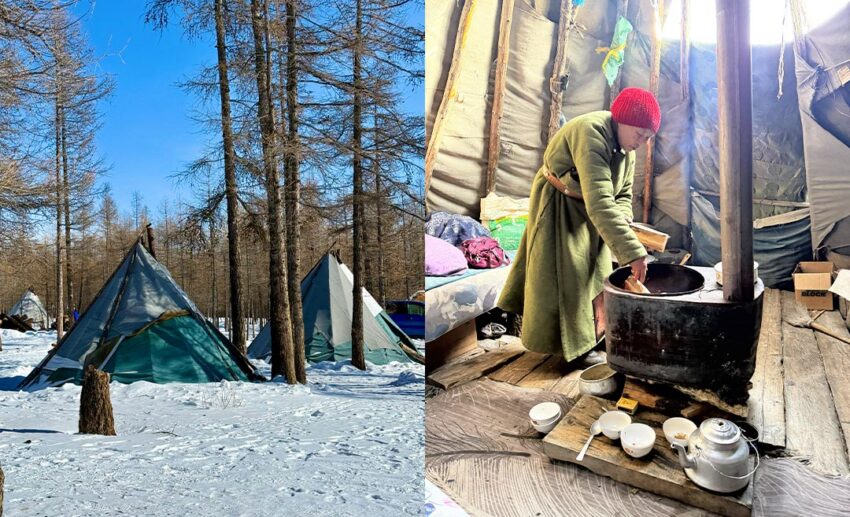
I used to associate comfort with ease, convenience, and abundance. But among the Tsaatan, in the simple security of a traditional ortz (teepee) warmed by shared milk tea, I began to understand comfort as something quieter and far more profound: the deep peace of enough. 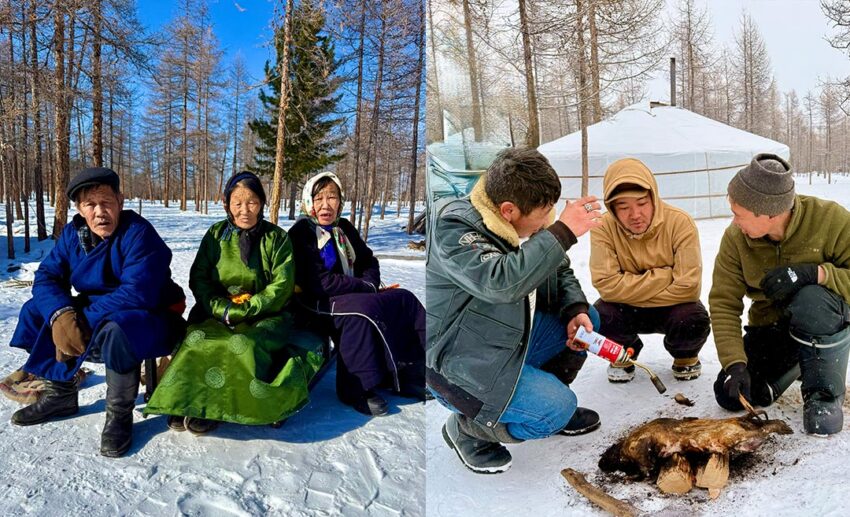
Out here, life was reduced to essentials: warmth, food, shelter, and companionship. It carries a greater reverence now for the natural world and for the people whose lives remain in respectful alignment with it.
Since returning home, I have found myself moving through the world differently. I rush less. I notice more. I have become more conscious of how much of modern life is clutter, not only physical, but mental and emotional too. The Tsaatan reminded me that so much of what we call necessity is often just empty noise. Out there, life was reduced to essentials: warmth, food, shelter, companionship, care. Yet it never once felt lacking. If anything, it felt fuller than many of the more crowded, overstimulated versions of life I am accustomed to.
Their world reshaped my perspective on comfort, too. I used to associate comfort with ease, convenience, and abundance. But among the Tsaatan, I began to understand comfort as something quieter and far more profound: the warmth of a wood fire stove in subzero temperatures, the familiarity of shared milk tea, the presence of reindeer just beyond the teepee, the simple security of belonging fully to a place and a people. It made me realise how often we chase luxury and excess — the latest gadget, the next designer bag — completely overlooking the deep peace of enough.
Even my habits have changed in small but meaningful ways. I have become more intentional with what I consume, more grateful for rest, and less impatient with silence. I find myself seeking moments of stillness instead of trying to fill every gap. I carry a greater reverence now for the natural world and for the people whose lives remain in respectful alignment with it. Without ever trying to, the Tsaatan taught me that survival is not about conquering the environment around us. Often, it is about learning how to live in harmony with it. “I belong to the land” rather than “the land belongs to me”. One mindset nurtures. The other consumes.
Stillness as Strength
I also left with a sharpened awareness of resilience. The Tsaatans endure long, harsh winters that plunge to unimaginable temperatures, dropping below -50°C in the heart of the season, yet there is nothing performative about their strength. It is quiet, steady, woven into daily life. That stayed with me deeply. They showed me that endurance does not always look dramatic. Sometimes it looks like calmness. Like tenderness. Like doing what must be done without complaint, and still making room for laughter, for children’s play, for gentleness.
What I witnessed there has redefined how I measure a meaningful life. In so much of the modern world, meaning is tied to speed, productivity, visibility, and accumulation. But with the Tsaatan, meaning seemed to come from something else entirely: relationship — to land, to animals, to ancestry, to community. Their lives felt anchored in a way that made me question how often we drift aimlessly through our own, distracted by things that neither nourish nor last.
The Quiet Recalibration
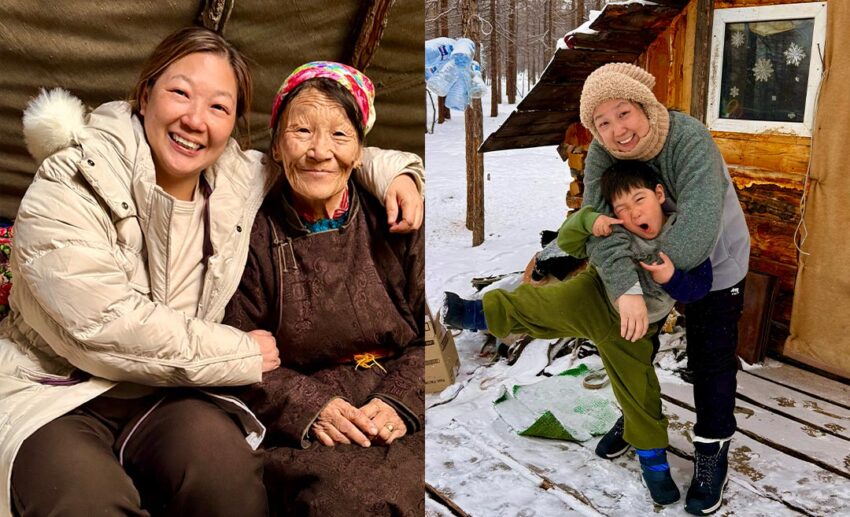
And so this journey did not end when I came home. In many ways, that is when its real work began.
The Tsaatan have remained with me in the choices I make, in the pace I try to keep, and in the questions I now ask myself about what matters. They reminded me to value simplicity without romanticising hardship, to respect silence instead of fearing it, and to understand that a full life is not necessarily a loud one.
What I brought back from the taiga cannot be packed into a suitcase or summed up simply as a travel memory. It is softer than that, deeper than that. It is a recalibration. A letting go of old assumptions. A quieter way of paying attention. A renewed understanding that there are still ways of living in this world that honour slowness, interdependence, and grace.
More than a travel story, this has become a marker in my life — a quiet before and after. My time with the Tsaatan did not simply show me another world. It changed the way I returned to my own. And for that, I will be eternally grateful.
Travel often promises new places. Sometimes, if we are lucky, it gives us a new lens through which to see the life we return to.
All photos are by and courtesy of the writer, Lynette Yee.
Zafigo Pro Tips: A Respectful Journey to the Taiga
Venturing into Northern Mongolia to meet the Tsaatan is a deep commitment. Here is how to ensure your journey is as intentional as the destination:
- Mindful logistics: The Tsaatan are one of the last groups of nomadic reindeer herders in the world. Accessing the taiga usually involves a flight to Mörön, followed by several days of off-road driving and horseback trekking. This is a slow and deep journey by necessity, not just by choice.
- The seasonal reality: Winter temperatures can drop significantly. If you are travelling in the colder months, your kit is your lifeline. Prioritise high-quality down and traditional Mongolian deels (wool-lined coats) for warmth.
- Respectful community engagement: Ensure you travel with an ethical operator that prioritises the Tsaatan’s privacy and autonomy. Remember: you are a guest in a home, not a spectator at a site.
- Empowerment through simplicity: The taiga offers a rare chance to shed the “performance” of modern life. There are no mirrors, no “visibility,” and no signal. Use this as a tool to reconnect with your internal voice.
- The language of tea: Much of the belonging mentioned by Lynette happens around the stove. Accept the offered Suutei Tsai (milky tea) with both hands as a gesture of respect and connection.