My journey into the heart of western Mongolia began here, where the ancient bond between hunter and bird meets the breathtaking, untouched stillness of Lake Tolbo.
There are journeys you plan, and there are journeys that change you. Travelling through Mongolia as a solo female traveller felt surprisingly natural. People were curious, kind, and welcoming. I never once felt unsafe; only gently nudged out of my comfort zone, which is arguably the best place for the soul to grow.
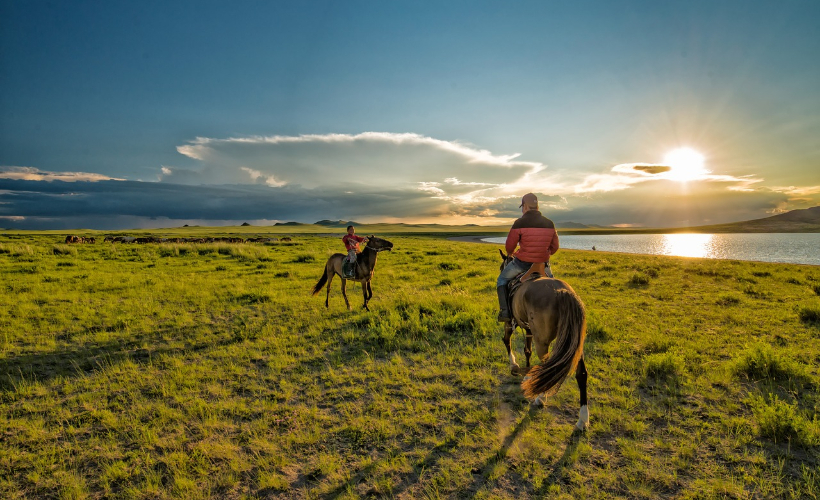
Mongolia didn’t whisper its presence; it arrived with the sharp bite of wind across the Altai, the rhythmic gait of horses across endless plains, and the flicker of fires under constellations that felt impossibly close. Stepping off the plane in Khovd, in western Mongolia, the air was thinner, colder, and somehow quieter. I felt a strange mix of anticipation and humility. It’s one thing to see Mongolia on a map; it’s another to begin tracing its contours with my own footsteps.
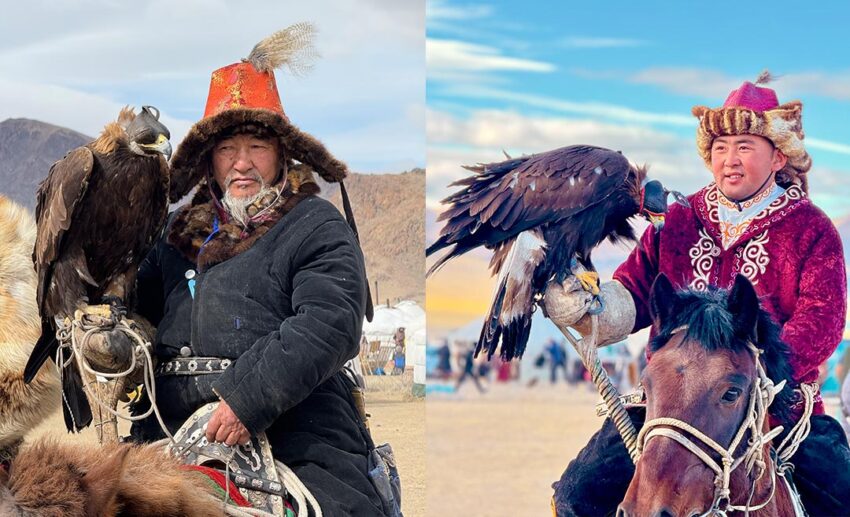
The whole reason I was in Mongolia was to attend the Golden Eagle Festival. Even before I reached the grounds, I could feel the energy of the crisp, autumn air: chilled but buzzing with something older, stronger, and deeply alive.
Among Mongolia’s eagle hunters
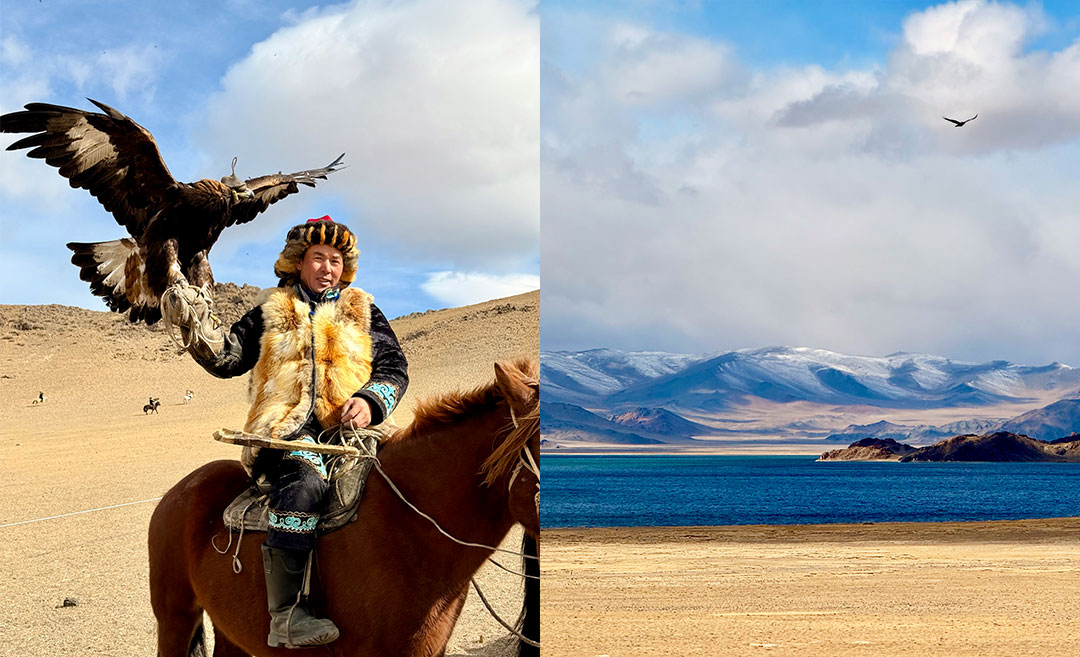
The festival was a riot of colour, motion, and majestic chaos. Held in the Bayan-Olgii province, this is a gathering of Kazakh eagle hunters, who journey here from across the rugged expanse of western Mongolia, dressed in traditional fur-trimmed coats and embroidered hats, with their eagles perched proudly on their arms. These birds aren’t pets; they’re revered members of the family, and it shows in every glance, every caress, every careful gesture.
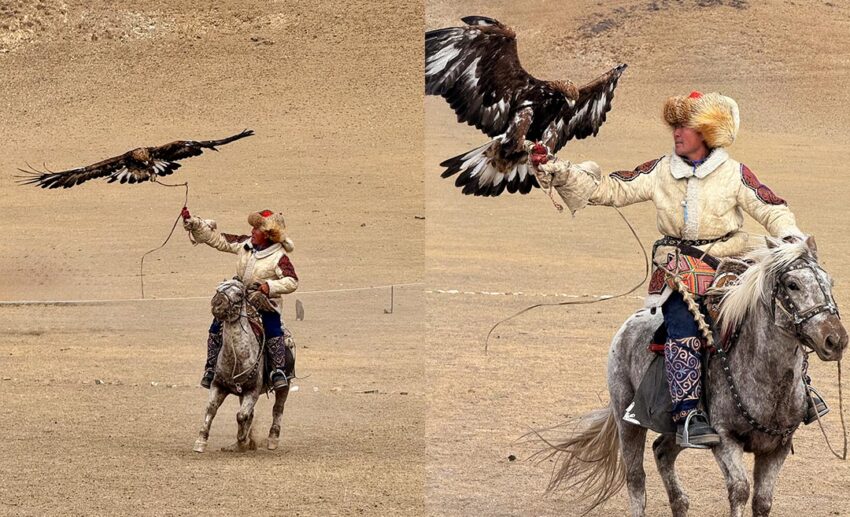
The eagle calling competition was the main event. There’s a surreal quality to watching eagles swoop through clear blue skies against the rugged Altai mountains. Hunters rode to a distant point and released their eagles from atop the hills. With a single call — sharp and brief — the eagles would plunge downwards in a blur of feathers and fury. Watching those massive birds slice through the air was nothing short of exhilarating. There’s a pause in those moments when everyone is watching the sky, holding their breath, waiting for the eagle to descend.
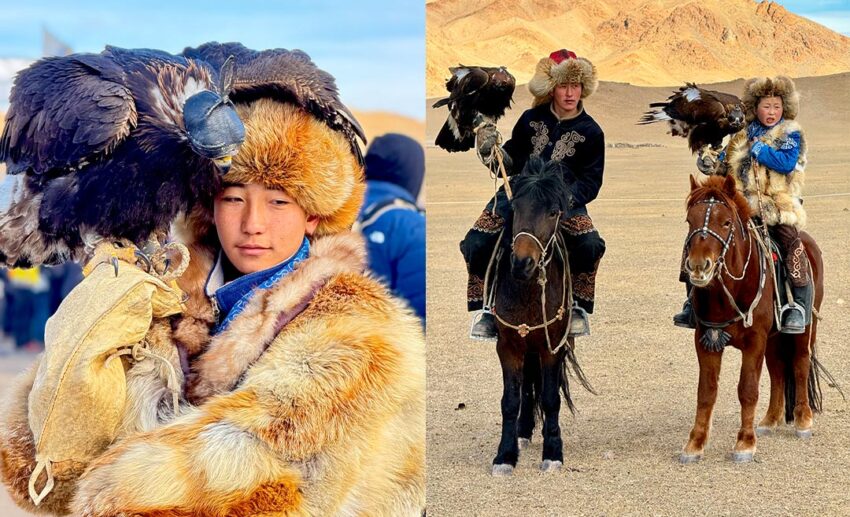
Each descent was unique. Some birds soared in wide, confident arcs before diving. Others came like arrows: fast, direct, unwavering. Yet others veered off course, distracted perhaps by the crowd or the wind; a reminder that wildness doesn’t always perform on cue, nor should it. But when it worked, when bird and hunter were in sync, it was like witnessing a prayer in motion. And when the eagle landed, powerful talons locking gently onto gloved hands, there was always applause and cheers from the crowd, but also something quieter in the response: awe, admiration, maybe even a touch of envy.
Beyond the Golden Eagle Festival
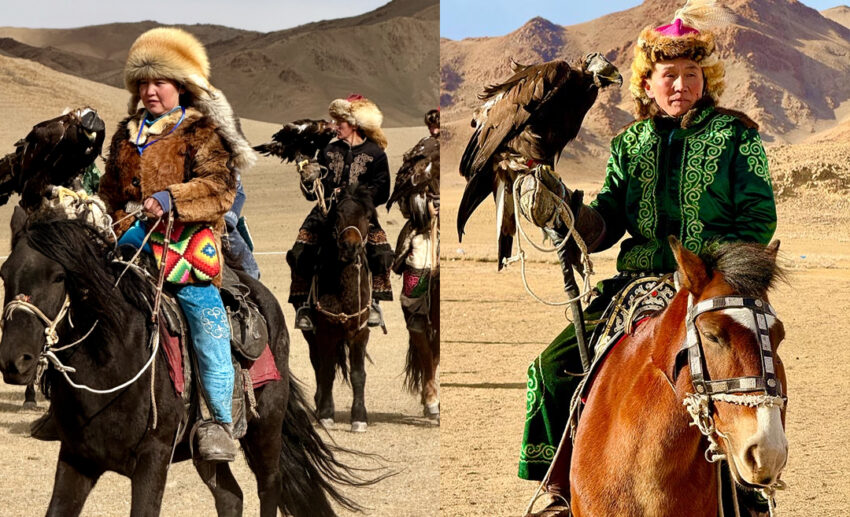
The two-day festival was a vivid celebration of heritage and skill, where tradition lives in motion. Watching the eagle hunters on their horses was unforgettable. But beyond the spectacle, what stayed with me were the details: the quiet focus in a hunter’s eyes, the pride in a child holding his first bow and arrow, the sound of wings before they touched down.
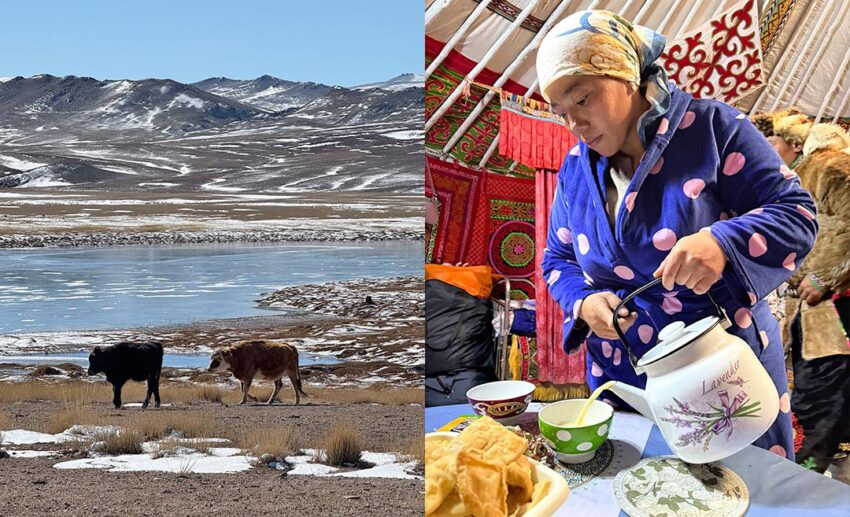
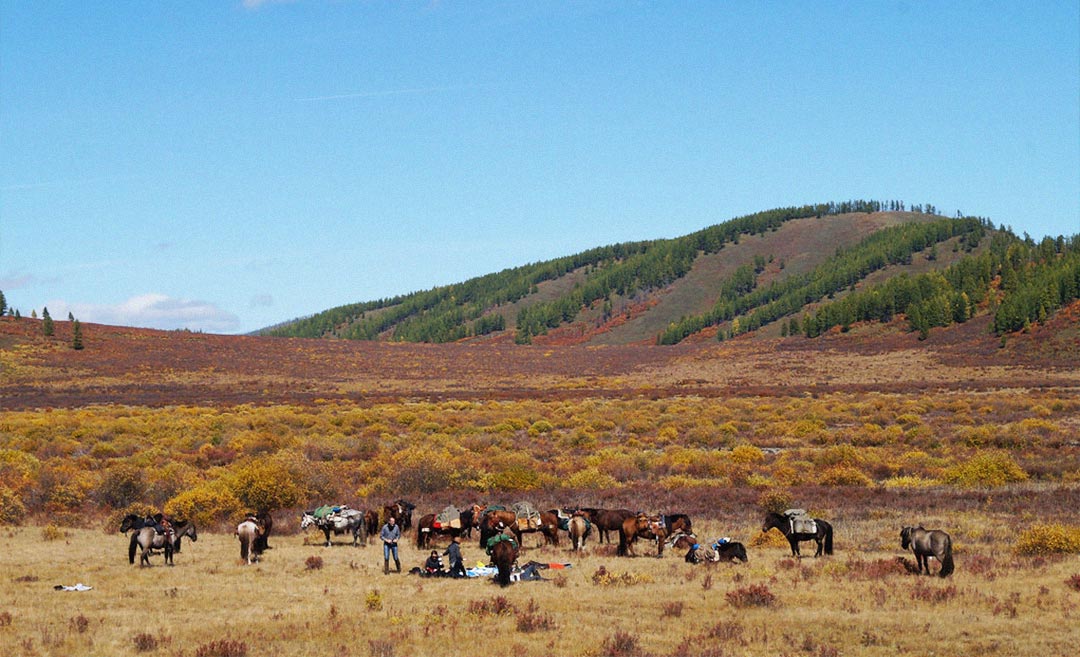
As I left the echoes of the festival behind for the quiet solitude of the steppe, the energy of the festival transitioned to something much more intimate. I arrived at a small homestead nestled in a valley surrounded by rolling slopes and open sky, where an eagle hunter and his family welcomed me with genuine warmth. Their ger (a yurt) stood firm against the wind, a low and rounded shape blending into the earth. Inside, the air smelled of woodsmoke and milk tea. Everything was simple, but nothing was lacking.
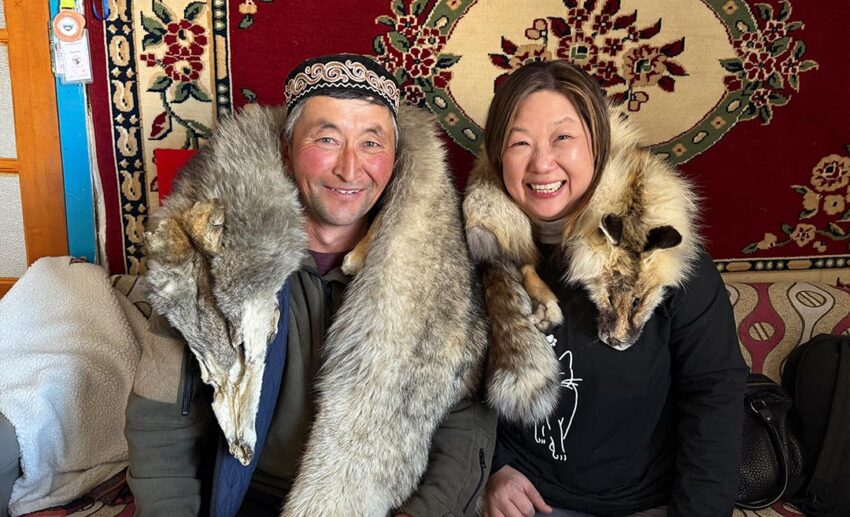
Meeting the eagle hunter in person was unexpectedly emotional. He greeted me with quiet dignity, his fur-lined coat and traditional hat as much a part of him as the confident bird perched at the entrance to his ger. The eagle was massive, alert, and impossibly regal. I’ll admit I was simultaneously awe-struck and mildly nervous. That beak does not mess around!
Finding courage in Mongolia
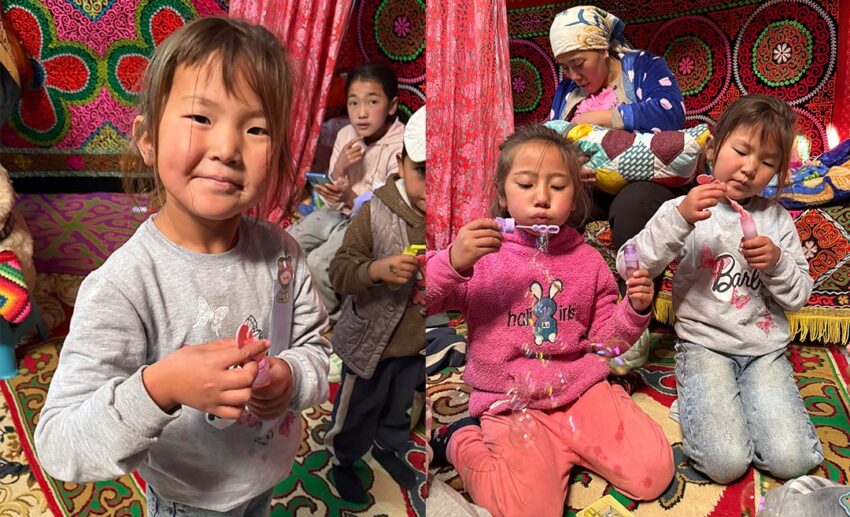
I sat in their home, surrounded by their children, and was offered milk tea. The hospitality was simple, but sincere. I had brought bubble solution with me for the children, and we played together, their delight palpable and their laughter contagious. There’s something sacred about being with people in their own space, especially when that space holds so much history and meaning.
Later, we went outdoors, and I’m not sure I’ve ever been more inspired. The hunter stood against the wind, eagle poised, mountains creating a perfect backdrop. I thought about how real strength is often silent. How freedom can sit calmly on a gloved hand. How some of the most powerful stories need no translation.
While I thoroughly enjoyed the Golden Eagle Festival, meeting the eagle hunter and his family brought the most profound moments of the trip. Sitting on thick carpets, sipping salty milk tea, I felt something I hadn’t expected: belonging. We communicated not with words, but with generosity, warmth, and the unspoken bond of shared presence. In the gentle chaos of their home, I found peace. Not the peace you get from spa days and scented candles, but the kind that comes from being deeply connected to something ancient and raw.
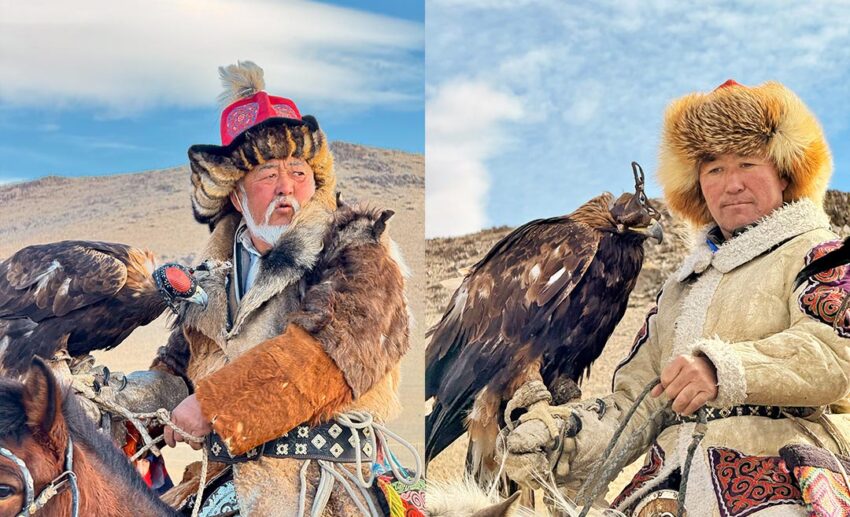
Alone but never lonely, I found Mongolia to be a place where solitude doesn’t isolate but rather, connects. To the land. To its people. And, ultimately, to myself. I came seeking adventure, and instead found depth. What I carry now are not just memories, but a way of seeing, shaped by the eloquent pulse of the steppes, the untamed elegance of the eagles, and the enduring spirit of those who call this wild, sacred place home.
The most transformative journeys don’t stretch across maps; they guide you inwards. And in the hush of stillness, far from all I thought I needed, I arrived at something lasting: a quiet clarity, a grounded strength, and the kind of peace that doesn’t need words.
Sometimes, all a girl really needs is a sturdy backpack, a pair of shoes built for dust and distance, and a heart open to being changed.
All images were taken and provided by the author.