From cinema and music to medicine, comics, journalism, sport, and folklore, these Malaysian icons have shaped how we see, tell, and carry our country’s story. (Left image from @paprikapeprica; Right image from @michelleyeoh_official)
Every country has people whose names become shorthand for something bigger — a film, a song, a sporting triumph, a way of telling stories, or even a particular kind of nostalgia. Some are globally famous, while others are beloved because what they created feels unmistakably Malaysian.
Whether they are real-world heroes, fictional icons, or figures from legend, what matters is the mark they have left on the country and the people who call it home. And while some of these names belong to generations past, their influence continues to find its way into our lives today.
So, as we celebrate Merdeka and Malaysia Day, here are eight Malaysians whose stories, achievements, and legacies are worth remembering and celebrating.
1. Yasmin Ahmad
Yasmin Ahmad’s impact on the Malaysian cinematic world will be forever etched in history, in the memorable works she captured throughout her life. Her evergreen directorial pieces, such as Sepet (2005) and Mukhsin (2007), as well as the many iconic Petronas commercials she created for festive seasons, continue to touch hearts and inspire audiences to this day.
A personal testament to this is how Syafie Naswip, who played the titular character in Mukhsin, continues to be referred to by many (including my parents) by his character’s name.
But perhaps Yasmin’s greatest legacy lies in how naturally she captured the complicated, funny, tender, and sometimes messy ways Malaysians relate to one another. Her stories made room for different cultures, languages, religions, and generations without turning them into talking points. They simply existed, as they do in everyday Malaysian life.
Yasmin’s filmography remains timeless precisely because it feels so human. More than a decade after her passing, her work continues to remind us of the Malaysia she saw — one worth loving for all its imperfections.
2. Saloma
This iconic national songbird is no foreign name to locals. Think of her buluh perindu-like voice, her signature glamorous cinched-waist outfits, and even the famous bridge named in her honour — the Saloma Link.
Saloma’s career spanned singing, acting, and fashion, with her unmistakable voice and glamorous image making her one of the defining stars of Malaysia’s golden age of entertainment. Her popularity endures, as people still find her movies easy to watch on leisurely evenings with family, while her songs continue to introduce new generations to one of Malaysia’s most celebrated voices.
Her legacy is also tied closely to her partnership with fellow national icon P. Ramlee, but Saloma deserves to be remembered in her own right. She was a star whose voice, style, and screen presence became part of the country’s cultural memory.
Decades later, Saloma remains more than a nostalgic name. She is a reminder of a time when Malaysian entertainment had its own distinct glamour, and of how some voices simply never go out of style.
3. Lat
For many Malaysians, Kampung Boy is inseparable from childhood. The adventures of Mat and his friends in their kampung may have been captured in just 26 episodes for the television adaptation, but the world created by cartoonist Datuk Mohammad Nor Khalid — better known as Lat — has lasted far longer.
Lat’s contribution to Malaysian culture goes well beyond Kampung Boy. Through his cartoons, he chronicled everyday Malaysian life with an affectionate eye, capturing everything from family dynamics and kampung life to the quirks of growing up in Malaysia.
One look at his distinctive art style and there’s little argument over who the artist behind it is. Lat’s easy and sincere artistic style still spurs longing for the inner kampung child in each and every one of us.
For anyone who wants to see more of the world behind the cartoons, the Lat House Gallery in Perak offers a glimpse into his life and work. It is a fitting place to appreciate an artist whose work helped generations of Malaysians recognise themselves on the page.
4. Erica Eng
If Lat helped generations of Malaysians see themselves in cartoons, Erica Eng is showing how Malaysian stories can travel through a new generation of comics.
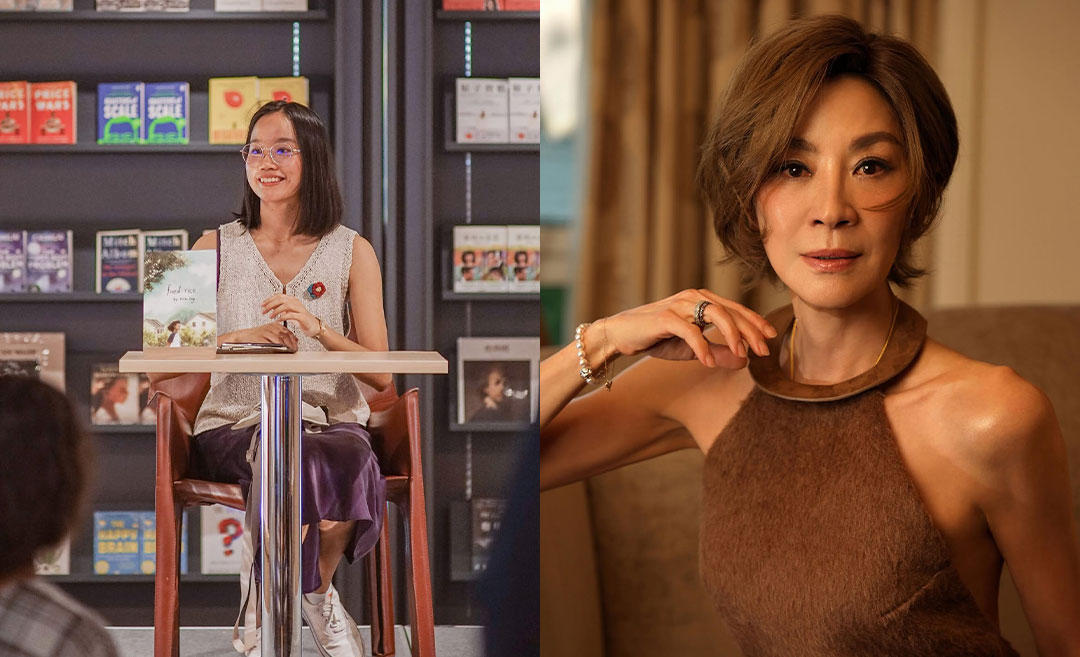
The Batu Pahat-born illustrator and animator became the first Malaysian to win an Eisner Award in 2020 for her webcomic Fried Rice. Often described as the comics industry’s equivalent of the Oscars, the Eisner Awards recognise some of the most notable work in the medium.
What makes Fried Rice particularly special is how unmistakably Malaysian it is. The story follows Min, a young woman from Batu Pahat who visits her relatives in Kuala Lumpur while dreaming of studying art in New York. Along the way, readers encounter familiar Malaysian food, family dynamics, colloquialisms, and the everyday details that make the setting feel lived-in.
Eng’s work is a reminder that Malaysian stories do not have to be grand or historical to travel. Sometimes, a story about a young woman figuring out what she wants from life, surrounded by food, family, and the particular chaos of being Malaysian — is enough.
5. Karam Singh Walia
Datuk Karam Singh Walia championed environmental journalism with a style unlike anyone else. He became known for weaving melodic pantun and proverbs into his reporting, giving his environmental stories a memorable rhythm that made them instantly recognisable.
For many Malaysians who grew up watching television news, his delivery was almost a genre of its own. His reports could make an environmental issue feel urgent while also making audiences remember a proverb or phrase they might otherwise have forgotten.
Having retired, his decades-long service at TV3’s Buletin Utama remains admired by Malaysians all over the country. His distinctive delivery style also continues to make occasional rounds on social media, where clips of his reports introduce his unique brand of environmental journalism to younger audiences.
His career also began with a desire to address a problem close to home. After a dengue outbreak in his residential area and what he felt was insufficient action from the local council, he moved from education into journalism to highlight issues affecting his community.
That combination of environmental advocacy, memorable storytelling, and a deep connection to the public is what makes Karam Singh Walia such a distinctly Malaysian media icon.
6. Datuk Dr Adeeba Kamarulzaman
Not every Malaysian icon is someone we see on a cinema screen or television. Some make their mark through work that quietly changes — and saves — lives.
Datuk Dr Adeeba Kamarulzaman is one such figure. An infectious disease specialist and academic, she has spent decades working in HIV medicine, public health, infectious diseases, and health policy, while advocating for evidence-based approaches to some of Malaysia’s most challenging health issues.
Her work has taken her beyond the clinic and classroom. She has held leadership roles in research, academia, and the Malaysian AIDS Foundation, while contributing to international discussions around HIV, drug policy, and public health.
She was also part of the Universiti Malaya team recognised with the Merdeka Award for Health, Science and Technology in 2022, recognising her contributions to the field.
What makes Dr Adeeba an icon is not a single achievement, but the breadth and longevity of her contribution. She represents the Malaysians whose work may not always make headlines, but whose expertise, advocacy, and persistence help shape a healthier country.
7. Che Siti Wan Kembang
This Kelantanese warrior princess is an undoubted legend and a feminine force to be reckoned with. While many recognise her as Che Siti Wan Kembang, she is also associated in local history and folklore with the name Puteri Adruja Wijayamala Singa.
Her story sits somewhere between documented history and Kelantanese legend, which is part of what makes her such a fascinating figure to remember.
She is traditionally associated with a reign over Kelantan beginning in the early 17th century and is often portrayed as a formidable ruler who was skilled in warfare and leadership. Stories of her also describe a female cavalry and a thriving trading centre that attracted merchants from across Asia and beyond.
Che Siti Wan Kembang never married and is said to have adopted Puteri Saadong, another well-known figure in Kelantanese history and folklore, as her heir. Over time, her story grew into something larger than the historical record, with legends surrounding her disappearance and spiritual legacy adding to her mystique.
Whether every detail of the stories surrounding her can be separated from folklore is difficult to say. But that is precisely why Che Siti Wan Kembang remains so compelling: her name has survived for centuries as a symbol of female power, independence, and leadership in Malaysian history.
8. Michelle Yeoh
Michelle Yeoh’s Oscar win at the 95th Academy Awards in 2023 was a moment Malaysians around the world watched with immense pride. She became the first Asian woman to win the Academy Award for Best Actress, capping a career that had already taken her from Malaysian cinema to some of the biggest productions in Hollywood and beyond.
But Michelle Yeoh’s icon status was never dependent on one award.
Long before her Oscar win, she had established herself internationally through films such as Crouching Tiger, Hidden Dragon, Tomorrow Never Dies, and Crazy Rich Asians. Her performances helped challenge the idea of what an Asian woman could look like in a global action film, a prestige drama, or a major Hollywood production.
Her Oscar was therefore not simply a Malaysian victory. It was the latest milestone in a career built over decades, one that began in Malaysia and eventually placed a Malaysian woman at the very top of the global film industry.
And perhaps that is why her story continues to resonate so strongly at home. Michelle Yeoh represents what can happen when talent, determination, and the willingness to keep taking on unfamiliar challenges come together — and when someone from Malaysia refuses to see the world stage as somewhere she does not belong.