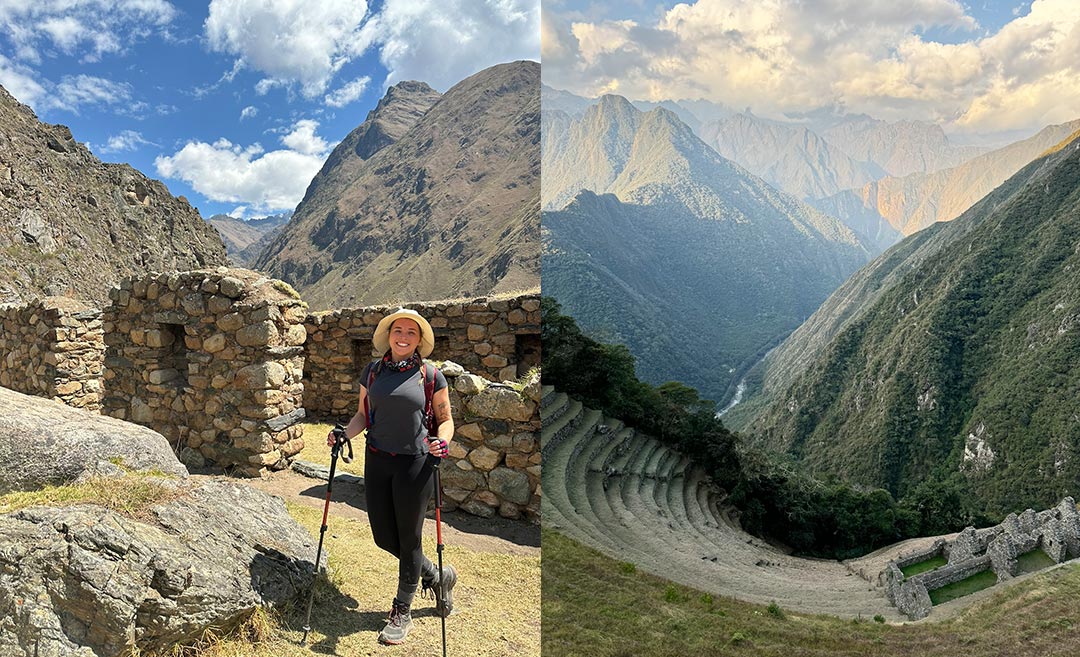
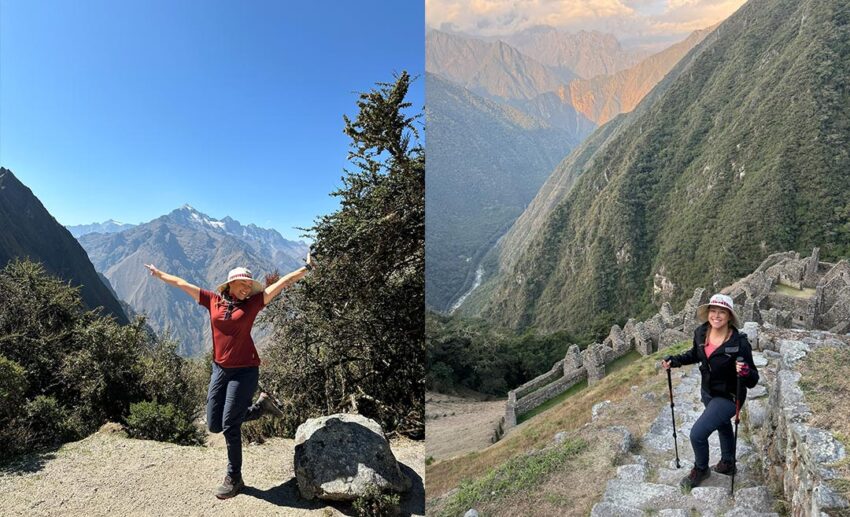
Left: Walking through Incan Ruins. | Right: Wiñay Wayna during golden hour. (Images by Annabelle Christie.)
Have you ever wanted something so much, it scared you? For me, that was hiking the Inca Trail to Machu Picchu.
It had lived in my imagination since I was a kid—a dream sparked by a dusty primary school history project. But when it came time to actually go, I was terrified. Not of snakes or getting lost (though those are fair worries), but of failing. What if I wasn’t fit enough? What if the altitude knocked me out? What if I let down the younger version of me who had held onto this dream for so long?
If you’re here, maybe you’re feeling that same nervous flutter, standing on the edge of a big decision, wondering if you’ve got what it takes. I’m here to tell you: you absolutely do. I’m no seasoned hiker. I bought my hiking boots the same day I booked the trip. I wasn’t sure I could do it, but I did. And it was one of the most rewarding, emotional experiences of my life.
The Inca Trail is more than just a hike. It’s walking in the footsteps of an ancient civilisation, surrounded by soaring Andean peaks and misty cloud forests. Machu Picchu is the incredible finale, but along the way are moments that took my breath away—like Wiñay Wayna, a stunning set of ruins that felt like a private amphitheatre for the sky.
It’s not easy, but that’s kind of the point. Here’s how I prepared for one of the biggest challenges (and greatest joys) of my life.
Permits & tours
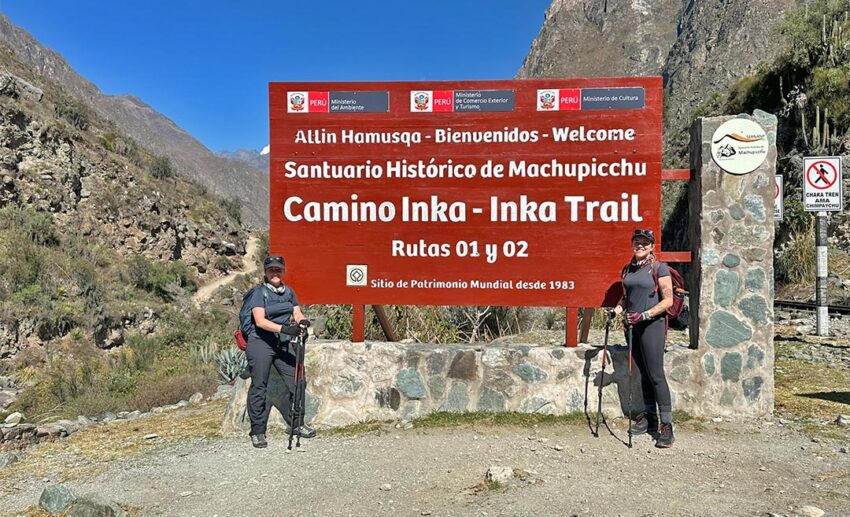
Before you lace up your boots, know this: the Peruvian government caps Inca Trail access at 500 people per day—including travellers, porters, and guides. This isn’t just red tape; it’s a deeply considered effort to protect a fragile ecosystem and preserve the trail’s cultural heritage. As someone who tries to travel responsibly, I really respected this.
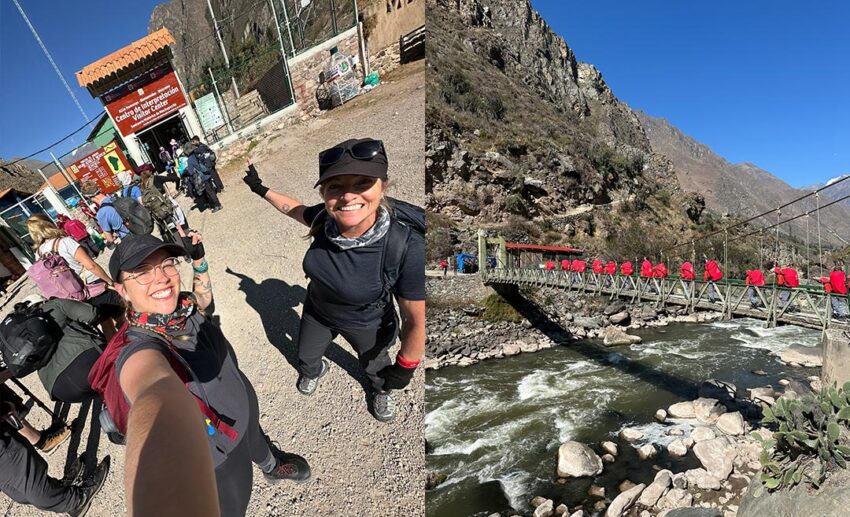
Permits sell out fast, especially from June to August, during peak season. I was lucky to be able to hike in late August and found sunny skies, cool mornings, and something unexpected: community. The trail felt spacious and peaceful, but familiar faces popped up at rest stops, forming a kind of trail family. The friendly banter, shared snacks, and quiet nods made the journey richer.
It’s important to note that you can’t hike the Inca Trail solo; it’s mandatory to go with a licensed operator. I went with Intrepid Travel. They handled permits and logistics flawlessly and showed genuine commitment to sustainability and porter welfare. Once you book and send in your passport details, the countdown begins.
Training for the hike
Booking your permit kicks off the nerves, but here’s the truth: I’m no natural hiker, yet I made it to Machu Picchu strong, proud, and (mostly) smiling. If I can do it, you can too. Of course, always check with a trainer or doctor if you need personalised advice.
Home workouts: Without a gym membership, I leaned on YouTube workouts from Lilly Sabri and Grow with Jo to build full-body strength slowly—critical for the trail. The Dead Woman’s Pass wasn’t just leg day; it wrecked my arms. My burning, shaking arms barely holding onto the hiking poles made me realise how important upper-body strength is.
My weekly workout routine looked like this:
- Upper body (push-ups, planks, resistance bands)
- Legs (lunges, squats)
- Core (planks, crunches)
- Cardio (jogs, brisk walks, or dance sessions)
Cardio: Even if you’re not a runner, cardio is key. I mixed jogging, walking with a backpack, and swimming—laps in the pool boosted lung capacity, essential for high altitude. Swimming also gave me confidence and a refreshing break from land workouts.
Practice hikes: This is a non-negotiable. I found local trails with uneven, steep terrain to mimic the Inca Trail. I used this as an opportunity to build endurance and as a dress rehearsal to wear my gear, carry my backpack, and troubleshoot blisters. There’s no outdoor gear store on top of Dead Woman’s Pass, so get your kit right before you go.
Mental preparation
Yes, the Inca Trail is a physical challenge, but it’s mental, too. Spending hours on the trail often means walking alone with your thoughts. I saved my phone battery for photos and emergencies, so no podcasts or music for me—silence became my constant companion.
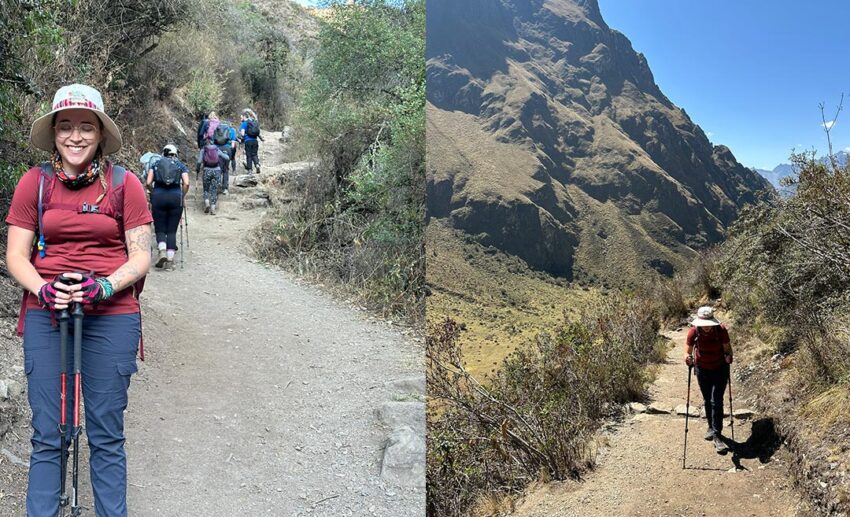
Getting comfortable with being alone: Practice hikes without headphones helped me build mental presence. No distractions, just nature’s sights, sounds, and smells. This mental muscle was invaluable on the trail.
Meditation and yoga: In the months leading up, I added ten minutes of meditation or gentle yoga daily. This helped slow my busy mind and, on the trail, gave me a steady calm when altitude tightened my chest or when my legs screamed.
Conserving energy: High altitude drains your energy fast. Deep conversations were rare, but small gestures mattered: a smile from a fellow hiker, a quick nod, or sharing a moment of awe. These simple connections became surprisingly powerful.
Packing list & tips
Your duffel bag (max 5kg, including sleeping bag) will be carried by porters, so every item counts. You’ll carry a small daypack yourself.
Clothing: Layers are life. Temperatures swing wildly.
- Rain jacket (windbreaker + outer layer) (here’s the one I have)
- Lightweight fleece jumper
- Long-sleeve tops x2
- T-shirts x2
- Singlet
- Hiking pants
- Tights x2
- Thermal PJs (UNIQLO is a good option for these!)
- Underwear x4
- Sports bras x3
- Hiking socks x4
- Footwear: well-broken-in hiking boots + slippers for camp
- Hat & buff (for sun protection)
- Beanie & gloves (for cold mornings and nights)
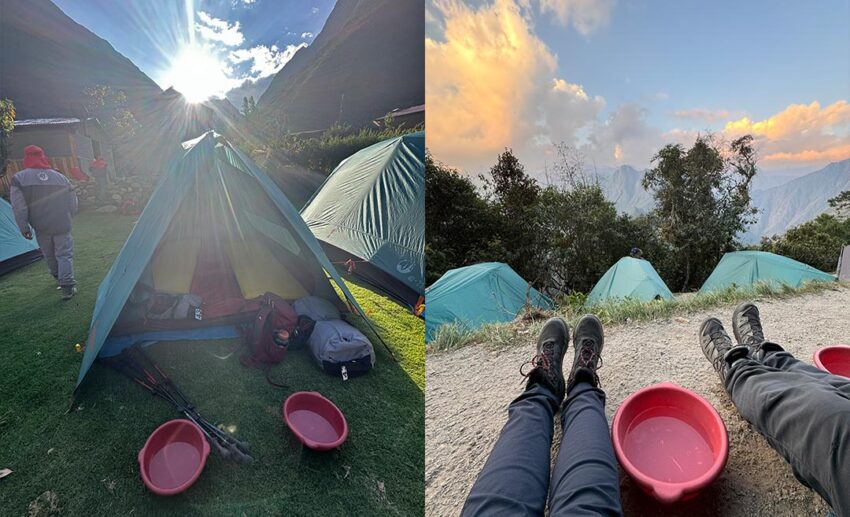
Toiletries: There are no showers on the trail—warm water buckets are given for freshening up.
- Toothbrush & toothpaste
- Face and body wash wipes (full wipe-downs every night saved me)
- Moisturiser
- Deodorant
- Hairbrush & hairbands
- Toilet paper (pack extra)
- Mini first aid kit (anti-diarrhoeal meds, pain relief meds, antihistamine, topical antiseptic, band-aids)
Hair hack: I have thin, quick-to-grease hair, so no hair-washing for four days sounded awful. My secret? Two braids under hats and beanies all trek long. That kept hair out of my face, and when the braids were released at the end of the trail, I felt surprisingly fresh for cute photos at Machu Picchu.
Gear:
- Small microfiber towel (quick-dry)
- Portable charger (there are no outlets on the trail)
- Head torch (for 3am bathroom runs!)
- Sunglasses (at 4,200m, the sun is intense)
- Bug repellent
- Reusable water bottle (porters refill them at mealtimes)
- Sleeping bag liner (for a cosy, clean, and bug-free experience)
- Plastic bags (to pack rubbish, separate dirty clothes—leave no trace!)
Pre-hike health
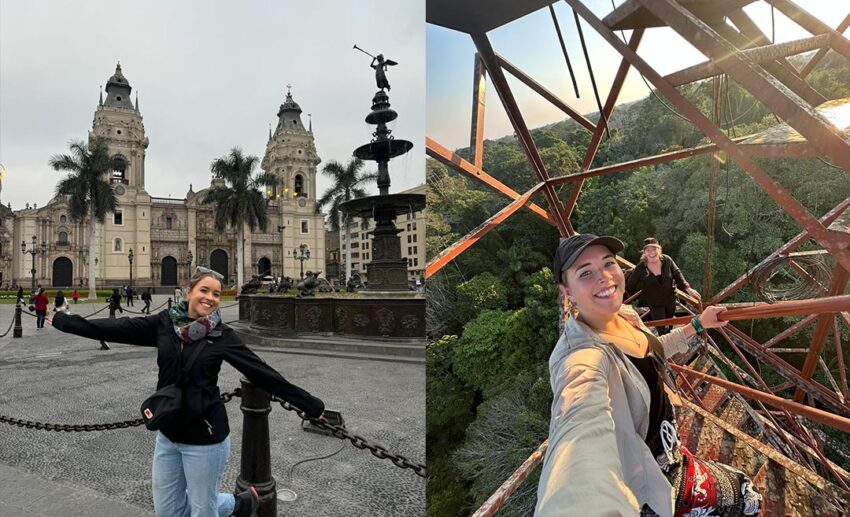
Before taking on the trail, I packed in a lot—jungle adventures in the Amazon, city nights in Lima. But I also learned fast: the Inca Trail isn’t the place to experiment with dodgy food, new sports, or tequila shots.
Peruvian cuisine is world-class and worth savouring, but your stomach might not be ready for every thrill. Trust me: have some anti-diarrhoeal medication handy. From Pisco Sours to ceviche, traveller’s diarrhoea is the worst souvenir before your planned-six-month-ahead hike. Play it safe leading up to the trek; eat in well-established restaurants, such as La Mar in Lima, and save street food culinary adventures for after.
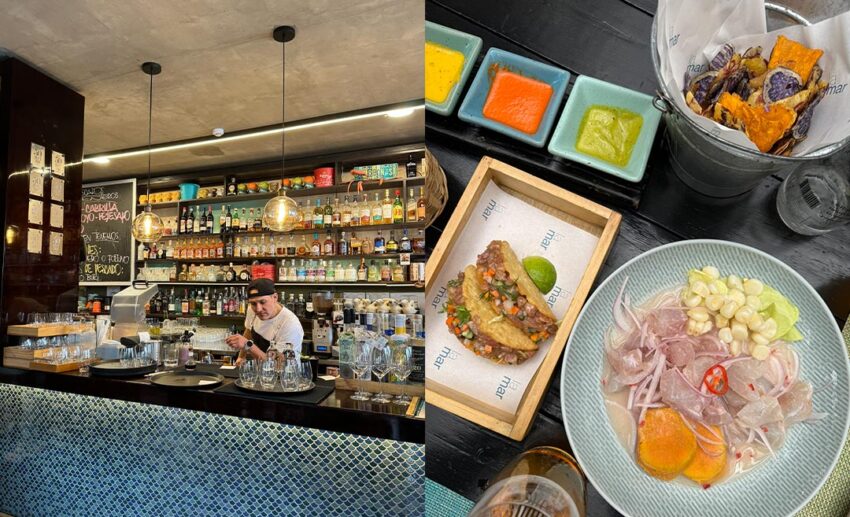
La Mar Cevichería Peruana
Address: Av. Mariscal La Mar 770, Miraflores 15074, Peru
Peru’s a playground for adventure like white-water rafting in the Sacred Valley and sandboarding in Huacachina. I wouldn’t hold you back, but if possible, postpone those high-risk thrills until after the Inca Trail. There’s nothing worse than an injury that cancels your hike.
For those who enjoy a tipple: altitude and alcohol don’t mix well. Drinking at high elevation can zap energy, increase dehydration, and wreck sleep—increasing the risk of altitude sickness. Hydrate like your life depends on it (spoiler: it kind of does), know your limits, and save the celebratory pints for Machu Picchu.
Not gonna lie, after finishing the trek, we raised a glass at Peru’s highest Irish pub in Cusco—one of the best pints I’ve ever had. Cheers to that!
Acclimatisation
Before tackling the Inca Trail, please give yourself a few days in Cusco to acclimatise. Altitude hits hard, and you will feel it. But with some time and TLC, you can reduce your risk of altitude sickness and set yourself up for success.
Most longer tours, like the one with Intrepid Tours, include this crucial buffer, and for good reason.
Take it slow, sip coca tea, and soak in Cusco’s charm. It’s honestly not a bad place to just be for a few days.
Some of my favourite low-key ways to pass the time:
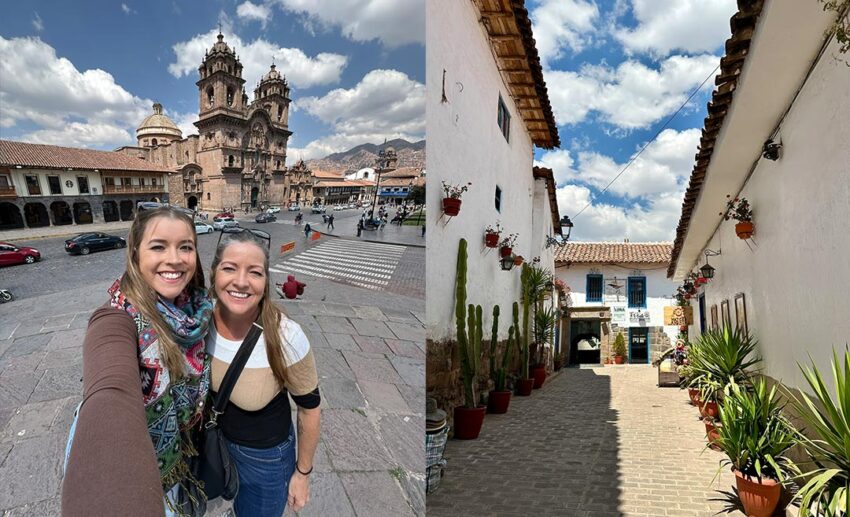
1. Plaza Mayor de Cusco: The city’s beating heart, framed by mountains and an iconic cathedral. Wander the cobblestone alleys and you might catch colourful parades with traditional dances—we were lucky enough to see one.
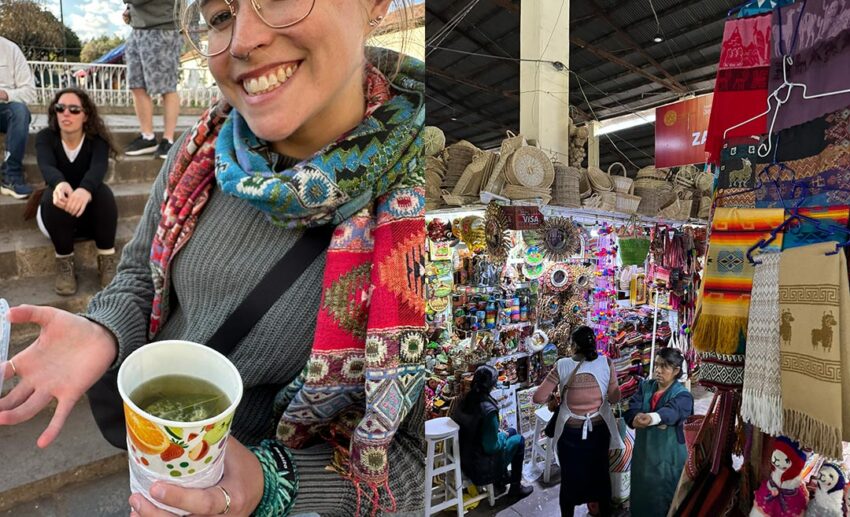
2. Mercado Central de San Pedro: A vibrant market bursting with life and souvenirs. My top tip? Grab some coca leaf lollies—their sweet toffee flavour helped me when dizziness crept in. Also, if you forget gloves (like me), you might bring home cute llama-patterned mittens!
3. Green Point: A hidden vegan gem with fairytale decor and flavour-packed twists on Peruvian classics, including a vegan Pisco Sour! It’s a warm spot to recharge, plus the neighbourhood is great for wandering.
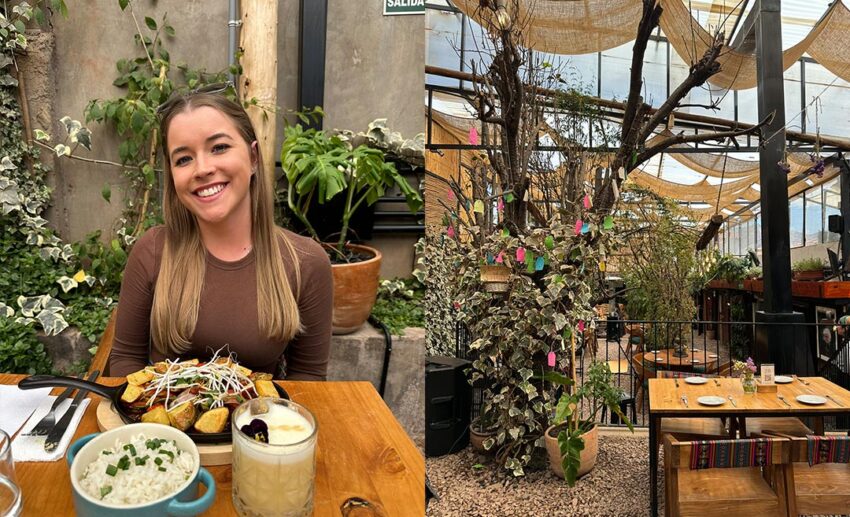
Green Point Vegan Restaurant
Address: Carmen Bajo 235, Cusco 08003, Peru
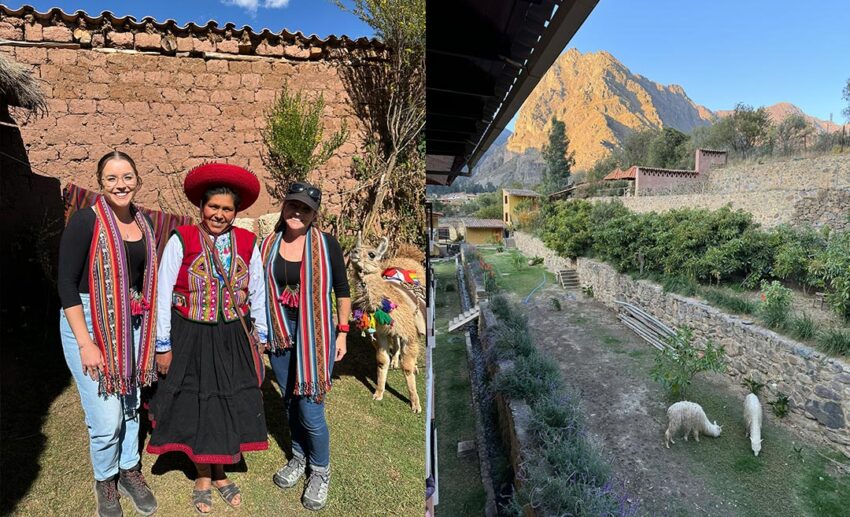
If you have extra time, a Sacred Valley tour is unforgettable—towering mountains, locals in vibrant traditional dress selling handicrafts, and the ancient streets of Ollantaytambo. It’s truly breathtaking.
On the medication front, I talked to my doctor and brought prescribed altitude meds as a precaution. I took them while adjusting in Cusco and felt some side effects—dizziness, headaches, numb fingers, and tingling lips. After a few days, I stopped taking them and listened to my body. I still felt the altitude but avoided sickness. Work with your healthcare provider and tune into what feels right.
The Intrepid guides checked our oxygen levels daily and monitored how we slept and felt. Knowing they had our backs made all the difference.
My final words to you
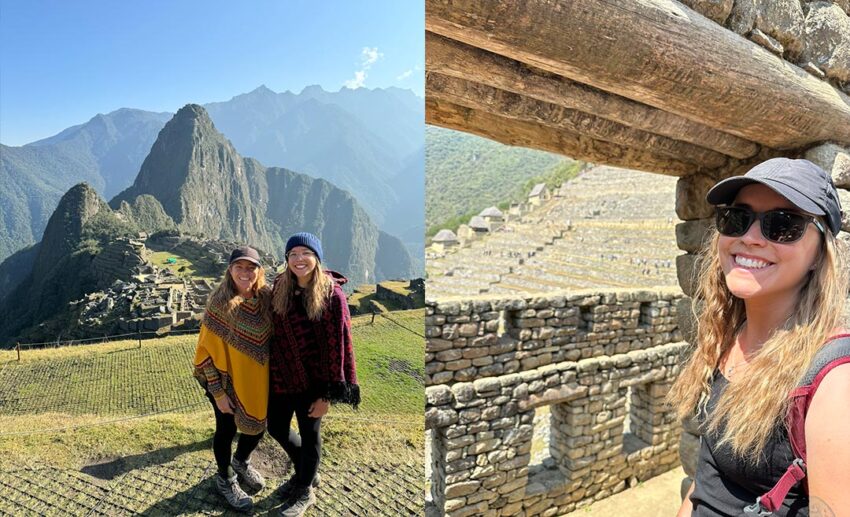
I’d dreamed of visiting Machu Picchu since a primary school history project, but when the time came to hike the Inca Trail, I seriously thought about backing out. It felt huge. Scary. I wasn’t sure I could do it—physically or mentally.
But you know what? I pushed through, and standing at the Sun Gate, looking out over Machu Picchu… was one of the most incredible, emotional moments of my life.
I’m not a super athlete or adventure pro—just a regular person who did their homework, got ready, and leaned on the people around me. So, if you’re feeling nervous or unsure, trust me, you’re not alone.
This journey is about being brave even when you’re scared. If you want to do it, you can. Take it one step at a time, and remember, I’m cheering for you all the way.
You’ve got this x
All images are provided by Annabelle Christie.