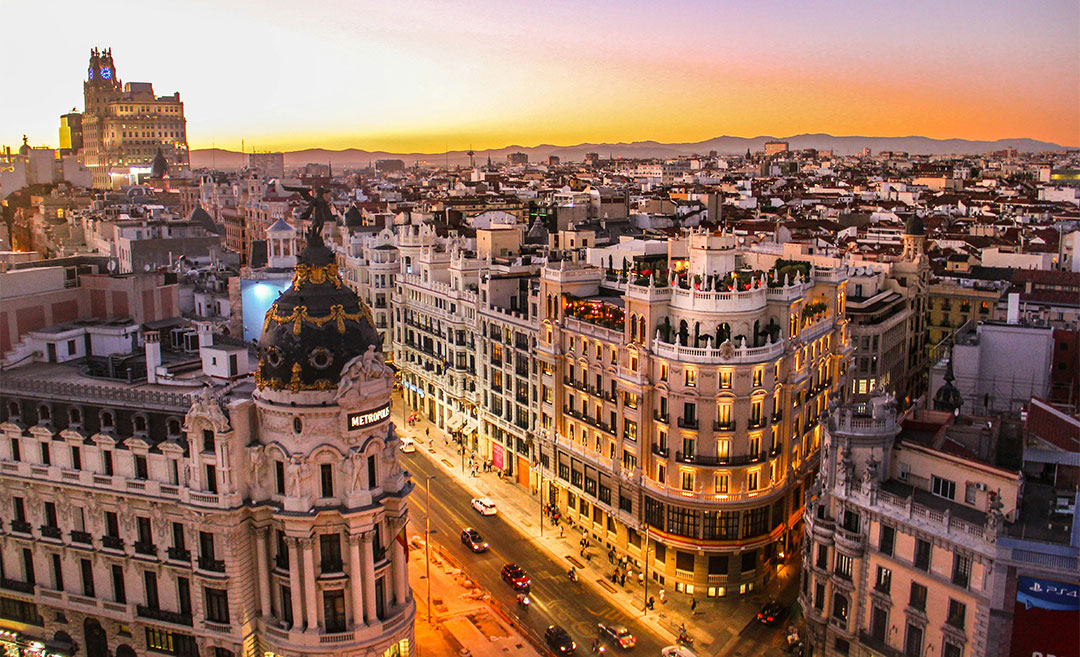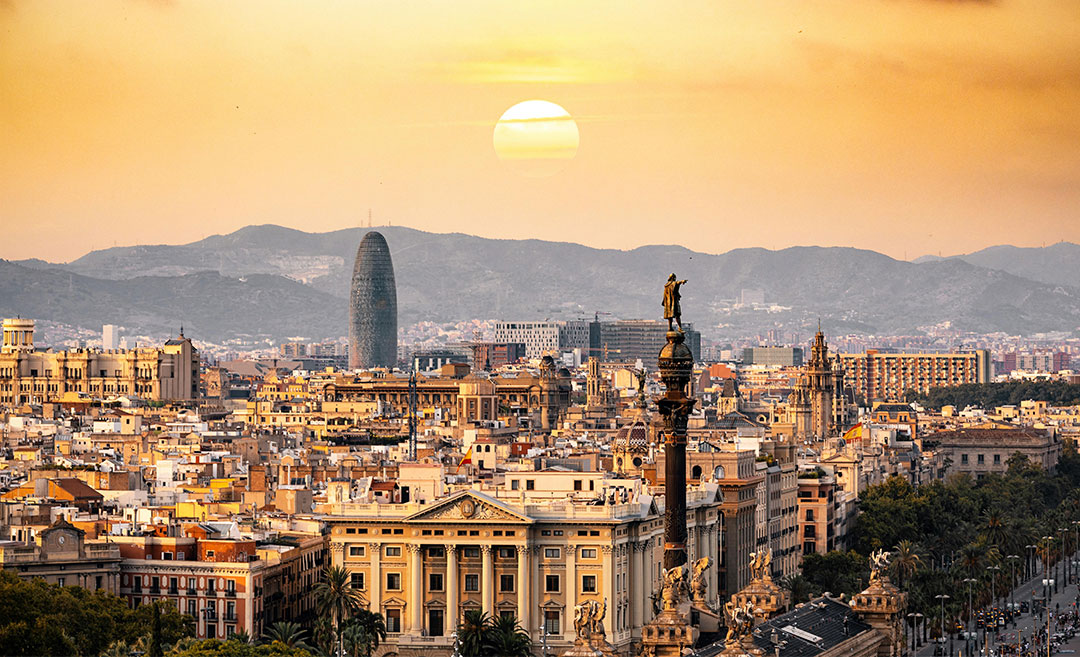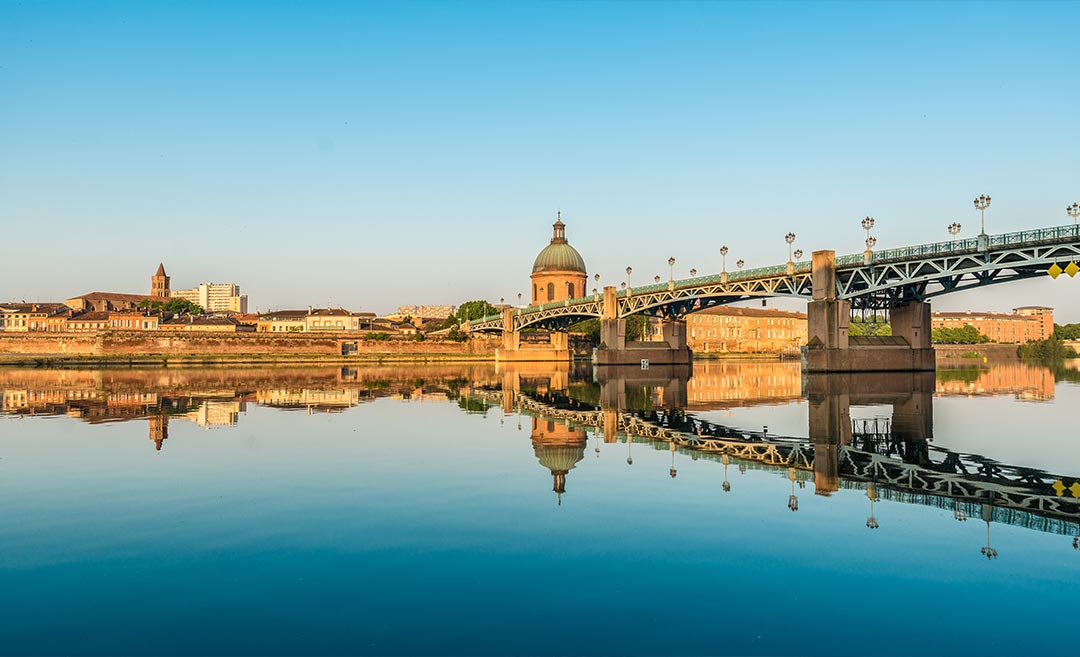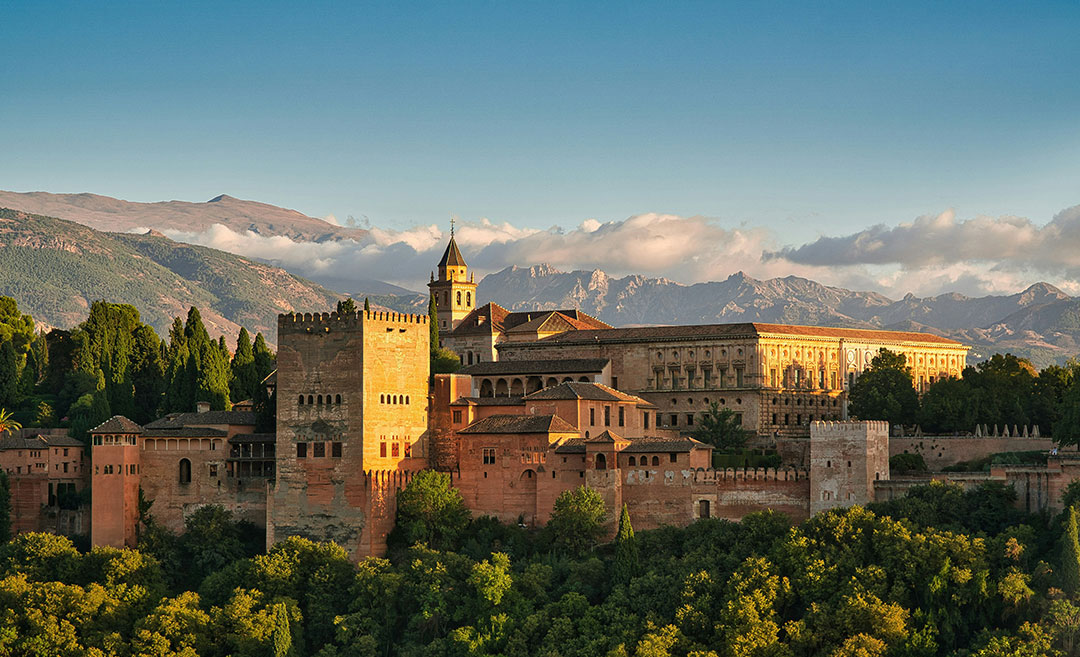
Granada rests against the rugged Sierra Nevada, where Europe’s last Islamic kingdom built beautiful palaces before everything changed in 1492. Here’s what remains. (Image by Alexander Psiuk)
The author is writing a series of articles under the theme ‘Exploring Spanish Culture, Cuisine, and Character’, as she makes her way through Spain. This article is the third part in the series, focusing on Granada. Find the other parts of the series here: Madrid, Barcelona.
Granada moves slower than Madrid’s hustle and Barcelona’s coastal bustle. On a clear day, the Sierra Nevada ridges feel like they’re visible from every POV. Cobbled lanes and intricate architecture remain telltale signs of the city’s Islamic past. The Christian Reconquista may have ended 800 years of Moorish rule in 1492, but one stroll through Albaicín’s winding streets or a sip of mint tea at a tetería (teahouse), and you’ll feel the centuries implode.
I went armed with some really helpful local tips and zero expectations. Here’s what I learned:
Book your Alhambra tickets wayyy in advance
The Alhambra is one of Spain’s most visited monuments, and is a UNESCO World Heritage Site, so it comes as no surprise that tickets sell out in the blink of an eye. The 13th-century Nasrid palace complex represents Islamic architecture at its pinnacle, and was built when Granada served as the last Muslim kingdom in Western Europe.
Inside, you’ll find one of the best-preserved palaces of the historic Islamic world, intricately carved stucco, geometric tiles and all, that will make you gasp out loud. Allow at least four to six hours to explore, especially if you’re planning on seeing the Generalife Gardens and Alcazaba fortress as well.
Tip: Check out the different packages and ticketing prices here, and be sure to purchase your tickets directly from their official site.
Wind your way through Albaicín’s whitewashed labyrinth and absorb the miradores
A hillside maze, Albaicín is Spain’s oldest Arab quarter and a neighbourhood that maintains its character despite gentrification’s creep. Elderly women sweep doorsteps each morning like clockwork, artists are parked on charming terraces, and locals defend their barrio (neighbourhood) against mass tourism with banners and spray-painted fury.
Here, you’ll stumble upon little squares where locals and visitors alike are taking in the views. You’ll wander uphill through narrow cobbled streets, past whitewashed houses hiding private gardens behind thick walls. And you’ll come across entire plazas hypnotised by Flamenco buskers (e.g. Mirador de San Nicolás at sunset, with the Alhambra framed by Sierra Nevada, a.k.a the money shot).
Once you’re done taking a gazillion postcard-worthy pictures, and the wandering has left your tummy grumbling, head to Restaurante El Ladrillo II for some delish traditional plates and paella.
Tip: Try exploring without too much help from a map. I glanced at Google Maps for a general feel, and then got wonderfully lost in the quaint alleys, only knowing to ascend.
Eat your way through history, tradition, and local pride
Forget the tourist trap nonsense. Here’s the real deal:
El Rincón de Julio serves generous portions of traditional Andalusian dishes.
Taberna La Espera is known for their seafood dishes, particularly their ‘frito’ fare. (The dogfish, spiced and fried to perfection, was my personal fave.)
Bodegas La Mancha pours clarete and vermut alongside traditional tapas, raciones, pintxos, and bocadillos in possibly the most beautiful old-school timber bar I’ve ever seen, surrounded by hanging legs of jamón.
Ultramarinos San Agustín offers a tasting menu that is, quote unquote, “out of this mundo,” showcasing local ingredients in modern ways that absolutely justifies the hype.
Perromedio Taberna serves ham sandwiches, cheese boards, and more, using locally-sourced ingredients.
Om Kalsum is a vibey spot dishing up Moroccan and Middle Eastern tapas; a sweet reminder that Granada sits just across the Mediterranean from North Africa.
What’s a trip to Granada without a bit of the Sierra Nevada?
With just a few days planned in Granada, I was a little tight for time for a trip deep into the Sierra Nevada. BUT, I did a little digging and found Ruta de Los Cahorros, an exciting hiking trail that promises suspension bridges, waterfalls, crawls and clambers through narrow gorges and canyons, swimming holes, and a stunning elevated view that smells like rosemary.
But first things first—you’ll want to stop by Berlanga hambre de quesos for sandwiches that are small in cost but big in taste, then eat them at Crater Trece before boarding the hour-long 0183 bus ride to Monachil. When you get to the village, Google Maps your way to the start of the trail and follow the dirt path along the river. It’s not technically difficult, but be prepared with some decent shoes, expect some heights, and to get on all fours.
When you’re done, you’re gonna want to stop by El Callejón Monachil for a well-deserved sangria (or two), which also happens to be the perfect spot to wait for the bus back to Granada.