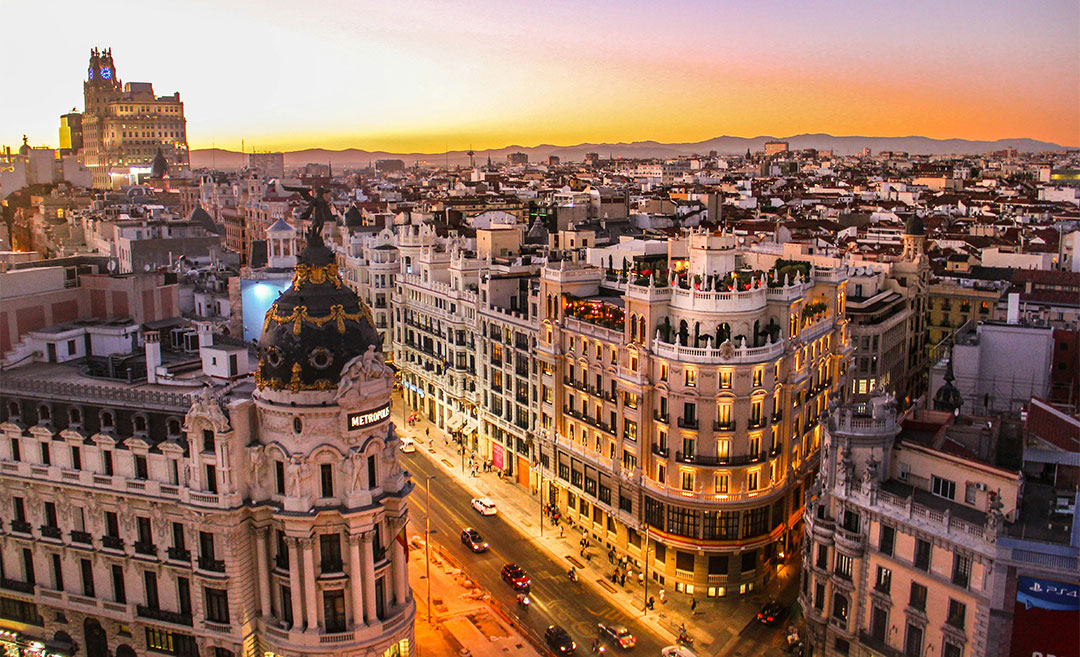
Madrid houses Europe’s most impressive art collections alongside sprawling plazas pulsing with life, so get those comfy shoes ready, ‘cos you’re in for a treat. (Image by Florian Wehde)
The author is writing a series of articles under the theme ‘Exploring Spanish Culture, Cuisine, and Character’, as she makes her way through Spain. This article is the first part in the series, focusing on Madrid. Find the other parts of the series here: Barcelona.
Grand avenues, world-class museums, and a dining schedule that laughs in the face of convention, Madrid is a far cry from Spain’s coastal image of beach resorts and Paella. Instead, it sits in the geographical heart of the country, surrounded by mountains, keeping it classy with Habsburg-era architecture and art masterpieces to stumble upon between your morning coffee and afternoon Vermut.
Do the art walk
When in Madrid, you must hit the art trifecta: Museo Nacional del Prado, Reina Sofia, and Thyssen-Bornemisza. Prado’s collection of Spanish masters, from Velázquez’s commanding portraits and Goya’s haunting pieces to El Greco’s towering figures, requires at least three hours, though you could easily spend three days here. Reina Sofia houses one of Picasso’s best-known works, Guernica, which is regarded by many as the most moving and powerful anti-war painting in history. And then you’ve got Thyssen (my personal favourite), where you’ll find the likes of Dalí, Lichtenstein, Picasso, Monet, Van Gogh, and Kandinsky.
Lose yourself in the imperial grandeur
Plaza Mayor unfolds like a stage set from the 1600s: symmetrical arcades wrapping a vast rectangular space where everything from bullfights to executions once entertained crowds. Alas, today it’s a vision of overpriced alfresco restaurants and tourist hordes, but arrive early morning when delivery trucks unload and cafe workers set up tables, and you’ll catch something closer to its working essence.
The Royal Palace of Madrid stands dominant on the edge of old Madrid, where its 3,418 rooms make it Western Europe’s largest royal residence…and one of the largest in the world. It is also one of the few official Head of State residences that is actually open to the public. (The royal kitchen is an absolute dream.)
Looking for a green space? El Retiro Park stretches across 125 hectares, smack dab in the city centre. Go on a weekend to see rowboats circling the park’s central monument and street performers dotted around the park. Check out Palacio de Cristal (currently closed for renovation), and definitely grab a bite and/or an ice cream from Vivaz La Rosaleda.
Watch flamenco…but not the tourist-trappy type
Too many flamenco shows in Madrid cater to tourists in large venues, serve mid tidbits at best, with a side of choreographed passion. Tablao La Manuela is quite the opposite. A small, intimate venue that breaks down the barriers between audience and artists, this is where you’ll hear every heel strike and every sharp inhale. The EUR28 entry includes a drink and tapas. And though Madrid isn’t quite a flamenco city, you’ll find a beautifully authentic Andalusian experience here.
Eat your way through the city
My Google Maps for Madrid is just a sea of stars, and sadly impossible to eat through, but here were a handful of my highlights:
- La Casa del Bacalao in Mercado de San Miguel for fresh fish tapas at a standing bar
- Taberna LA CONCHA or La Perejila for tapas and homemade Vermut—a Madrileño tradition a.k.a. ‘la hora del vermut’ (‘the vermouth hour’) typically between noon and 2pm
- El Cisne Azul for regional Spanish cuisine and speciality mushroom dishes
- Restaurante de cocido Madrileño for Cocido Madrileño, Madrid’s signature stew (must be pre-ordered)
- MARCELLE for an intimate Basque ‘fine dining’ experience
- Churreria Santa Ana for traditional Spanish churros
- CARACOLA for pistachio basque cheesecake
- La Negra Tomasa for live Cuban music, cocktails, and Cuban food
Tip: Madrid operates on its own clock. Lunch service runs from 2–4pm, dinner reservations before 9:30pm mark you as painfully foreign, and nightlife doesn’t peak until 1am. (DO make reservations well in advance…for whatever you want to experience in Spain.)
Navigate the neighbourhood vibes
La Latina owns Sunday mornings with the Rastro flea market winding through narrow streets. This is swiftly followed by Vermut and tapas in Cava Baja that stretches through the afternoon. Malasaña keeps its 1980s counterculture spirit alive through vintage stores, art studios, and lively bars. Chueca radiates pride with excellent restaurants and nightlife catering to LGBTQ+ crowds but welcoming everyone. Salamanca brings designer shopping and fine-dining restaurants. This is the neighbourhood where Madrid money lives and breathes. The metro connects everything efficiently and runs until 1:30am. Buses are really convenient too, but walking works just as well, since the central districts are closer to each other than maps suggest.
Tip: Get the contactless, rechargeable Multicard for EUR2.50 and load it with 10 trips for EUR7.30.