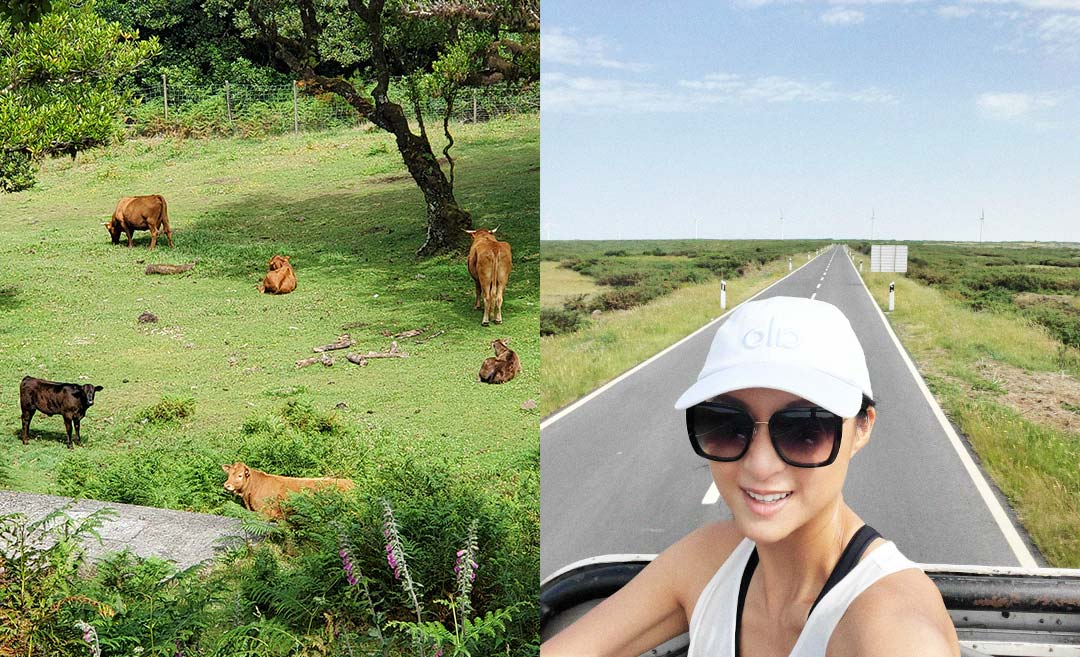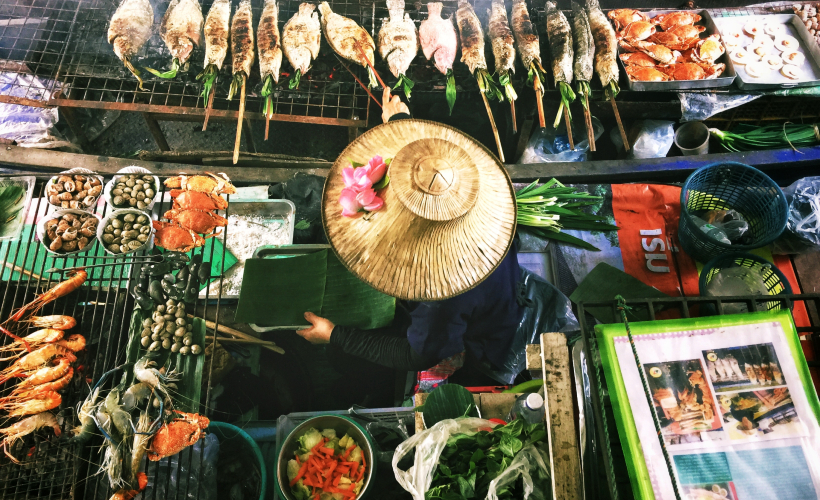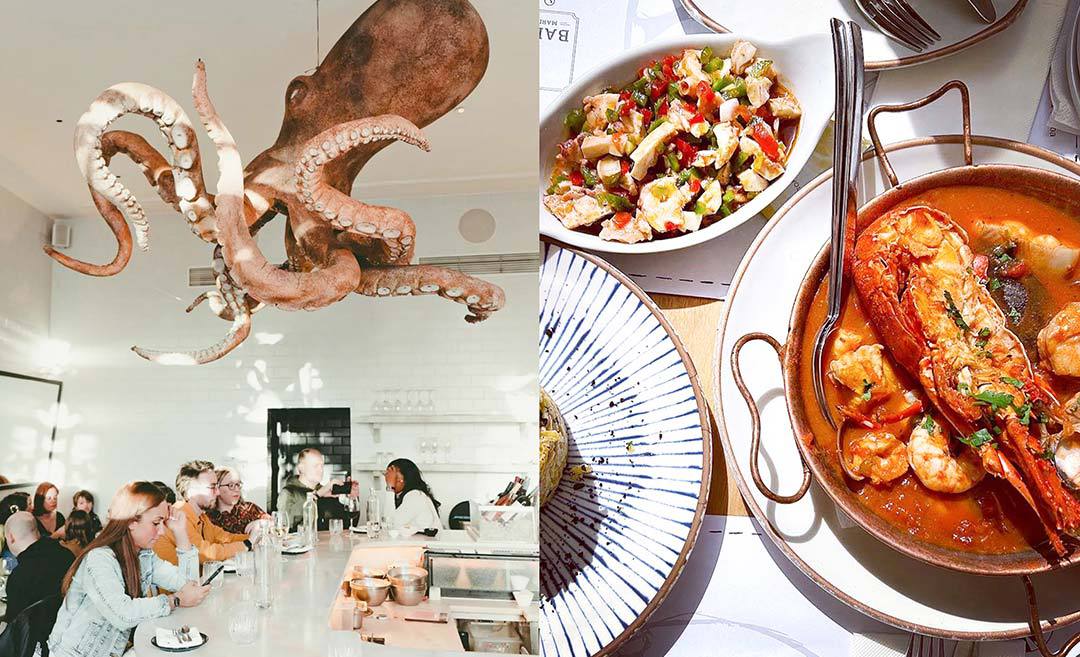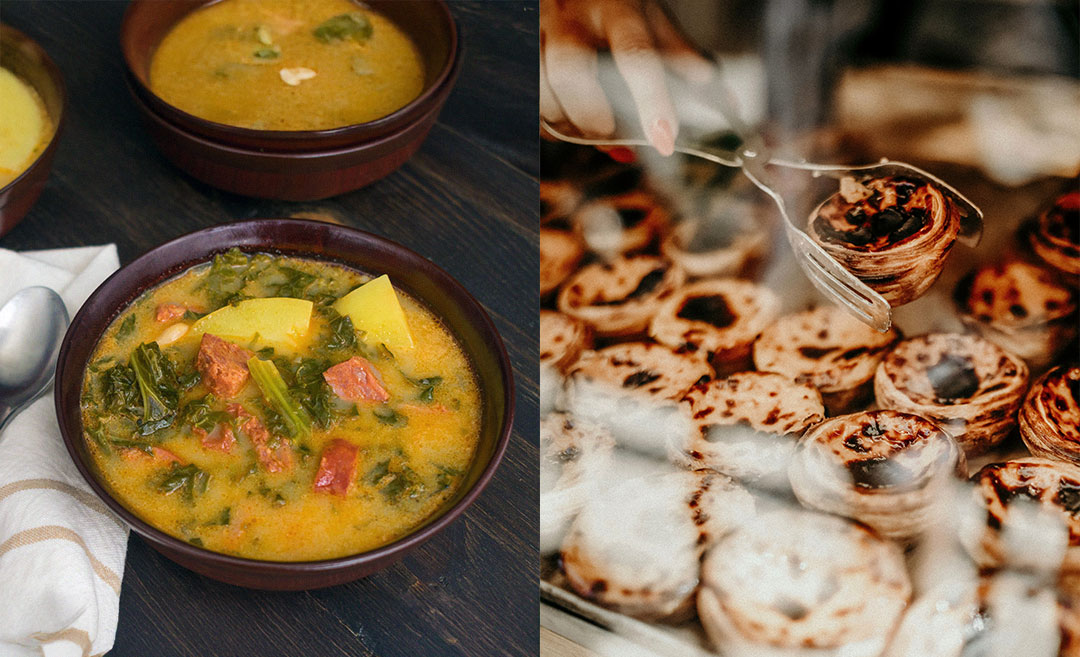
Explore Portugal’s seasonal festivals through traditional dishes that reveal how food, culture and celebration shape each time of year. (Left image by Candice Bell. Right image by Agnieszka Stankiewicz.)
Portugal’s festivals are not just marked on calendars; they’re tasted at long communal tables and remembered through recipes passed down through generations. Food is often the first language of celebration here, and one of the most meaningful ways to experience Portuguese culture as a traveller.
Whether you’re grilling sardines by the river in Lisbon, roasting chestnuts in the mountains, or eating freshly roasted pork in one of the traditional villages that dot the interior, you’ll soon realise the food is just as important as the rituals and festivals themselves.
Many classic Portuguese dishes trace their roots to seasonal availability, religious observances and agricultural cycles, making them a natural guide for planning a food-led journey through the country. Visiting traditional festivals is not only a great chance to taste local cuisine, it also gives visitors a feel for the changing seasons in Portugal and how the natural rhythm of the year influences how people eat and how they celebrate.
How food brings Portuguese festivals to life
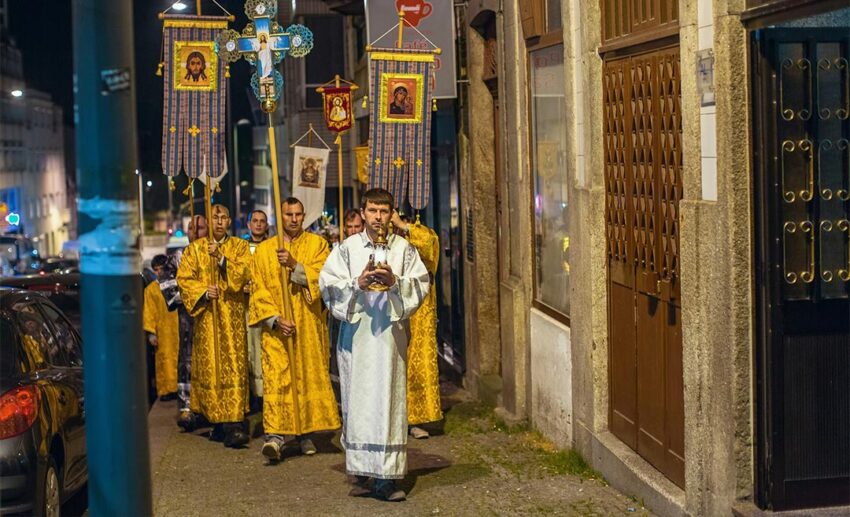
Food is the emotional centre of Portuguese festivals, turning public squares into shared dining rooms and strangers into temporary neighbours. Recipes are rarely written down; instead, they’re learned through repetition, observation and family memory.
Festive dishes tend to prioritise simplicity and seasonality, relying on fresh fish, local meats, olive oil, and time-honoured techniques rather than elaborate presentation. During this time, cooking often happens outdoors, making the act of preparing food as visible as eating it. This openness reinforces food’s social role in Portugal, where it’s seen not just as nourishment, but as a living expression of place, history and community.
Spring celebrations: religious feasts & fresh regional dishes
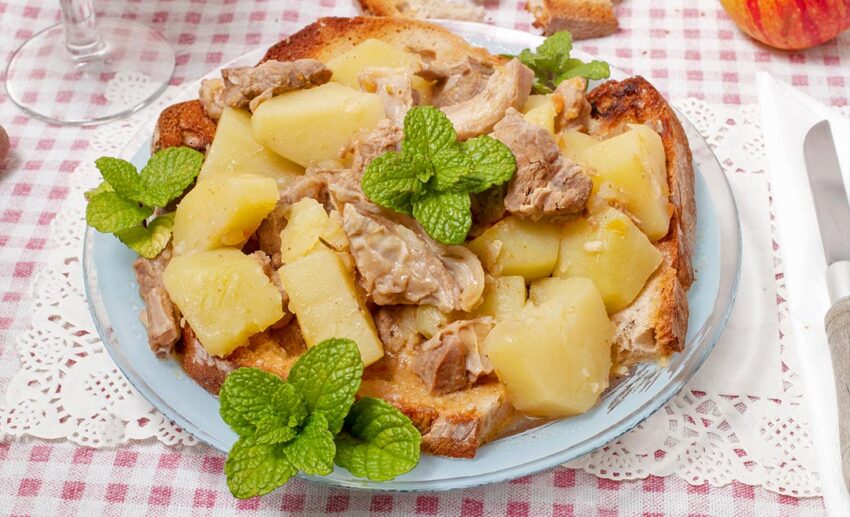
Spring in Portugal is shaped by religious observance and renewal. Easter (Páscoa), typically falling between March and April, is one of the most important celebrations nationwide. While customs vary from region to region, lamb (borrego) is the undisputed star of the Easter table, often roasted with garlic, olive oil, and herbs.
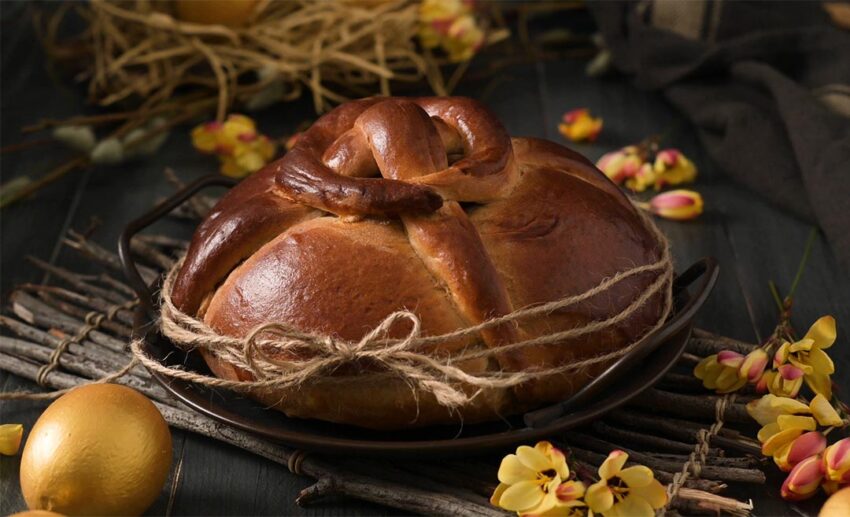
In the north and interior regions, Easter breads take centre stage. Folar da Páscoa, a rich Easter bread sometimes baked with a whole egg nestled on top, symbolises rebirth and prosperity. In Trás-os-Montes, savoury versions may include cured meats, reflecting the end of Lenten restraint.
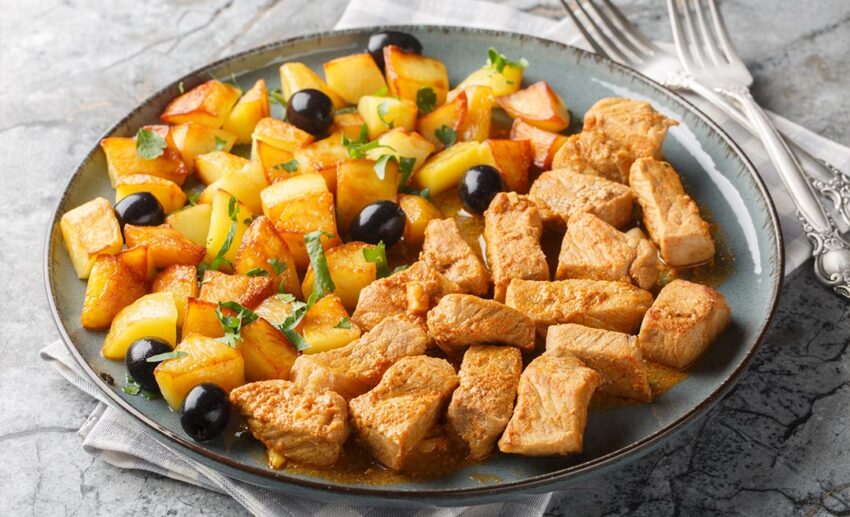
Another spring highlight is Festa das Cruzes in Barcelos (late April to early May), blending religious processions with food stalls selling rojões (crispy fried pork), papas de sarrabulho (a rich pork-and-blood porridge traditionally served with rice), and regional sweets.
Summer festivals: sardines, street food & communal grilling
Summer is Portugal at its most exuberant. Warm nights bring neighbourhood festivals, outdoor music, and the unmistakable smell of charcoal grills. June is peak season, especially during the Festas dos Santos Populares, which honour Saints Anthony (13 June), John (24 June), and Peter (29 June).
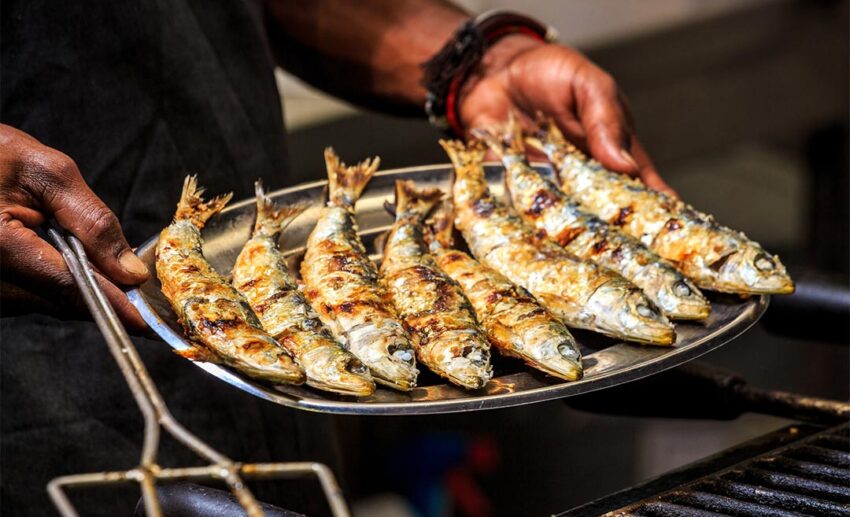
In Lisbon, the Festas de Santo António transform historic districts like Alfama and Mouraria into open-air parties. Grilled sardines, served simply on bread, are everywhere. Their affordability and abundance once made them working-class staples; today, they’re icons of the Portuguese summer.
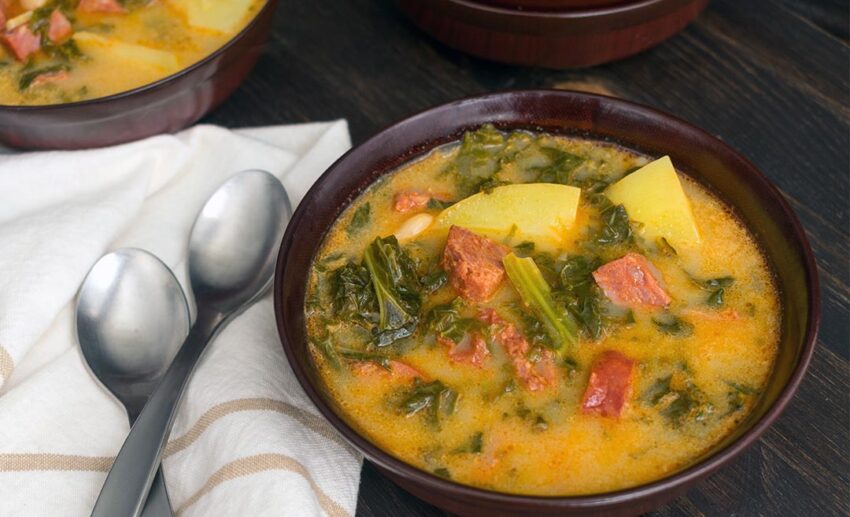
Porto’s São João Festival on 23 June rivals Lisbon’s celebrations. Along the Douro River, locals grill sardines and pork belly, accompanied by caldo verde, a comforting kale and potato soup flavoured with garlic and slices of chouriço sausage that somehow feels right even in warm weather.
Autumn harvest traditions: wine, chestnuts & rural cuisine
As temperatures begin to cool, festivals shift toward the harvest. Autumn is wine season, particularly in the Douro Valley, where vindimas (grape harvests, often accompanied by communal meals and traditional foot-treading of grapes) take place in September. Some vineyards open their doors to visitors keen to learn and experience this tradition.
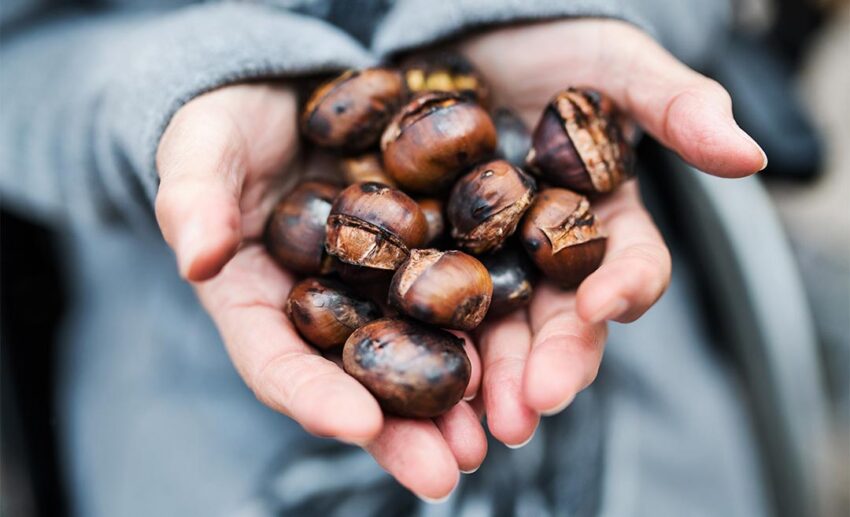
Food during this time is hearty and grounded. Slow-cooked stews, sausages and corn-based dishes reflect rural life, particularly in mountain regions shaped by landscapes rich with autumn colour. One of the most charming celebrations is the Magusto (St Martin’s Day), held on or around 11 November in villages across the centre and north of the country. People gather around fires to roast chestnuts, drink jeropiga (a young fortified wine made from grape must and brandy), and share stories.
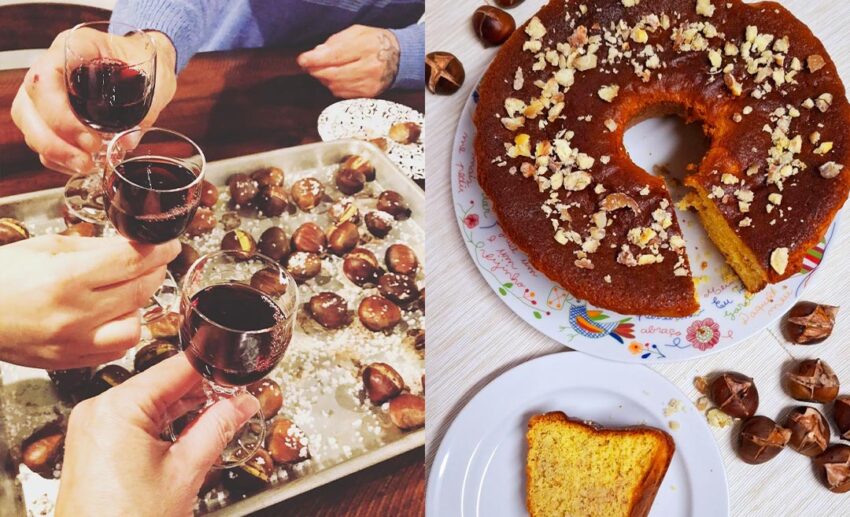
Chestnuts appear everywhere during this season, from street stalls to desserts like bolo de castanha (chestnut cake). Their prominence speaks to Portugal’s agricultural past, when chestnuts were a vital source of food during the winter.
Winter festivities: Christmas foods & cold-weather comfort dishes
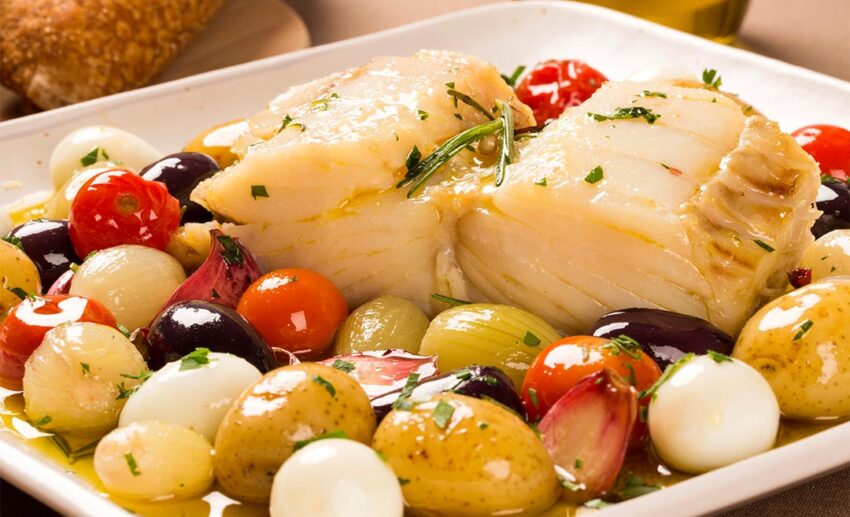
Winter festivals are intimate and family-oriented, centred on Christmas and New Year. Christmas Eve dinner traditionally features bacalhau (dried salted cod that has been soaked and rehydrated) prepared in countless ways. Bacalhau com todos (“cod with everything”), served with boiled vegetables and olive oil, is common in the north, while octopus (polvo) appears more frequently in the Minho and Trás-os-Montes regions.
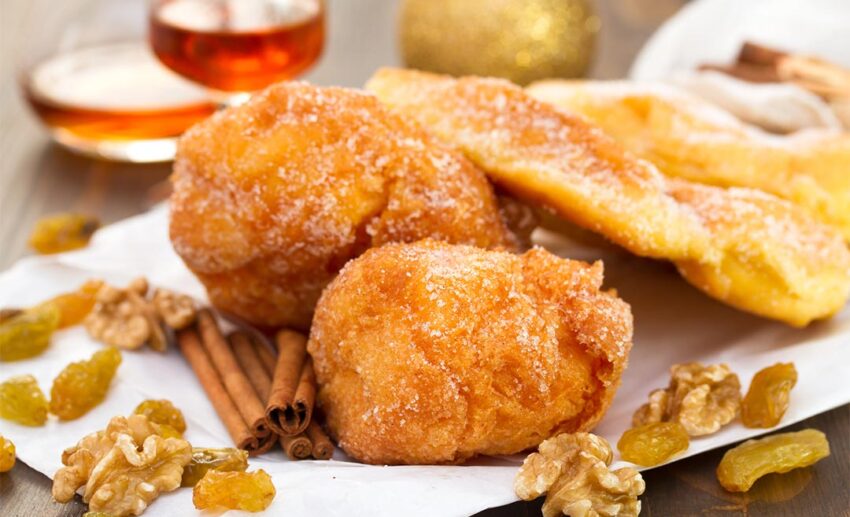
Desserts dominate Christmas tables. Rabanadas (Portuguese-style French toast), sonhos (fried dough balls), and filhós crispy fried pastries) are prepared in generous quantities, often over several days. Making these sweets is a communal effort, bringing families together in the kitchen.
In January, Janeiras celebrations mark the new year with door-to-door singing, a folk tradition where neighbours exchange songs for homemade treats and drinks. Though quieter than summer festivals, winter traditions offer travellers a rare glimpse into domestic Portuguese life.
Practical tips for navigating festivals as a visitor
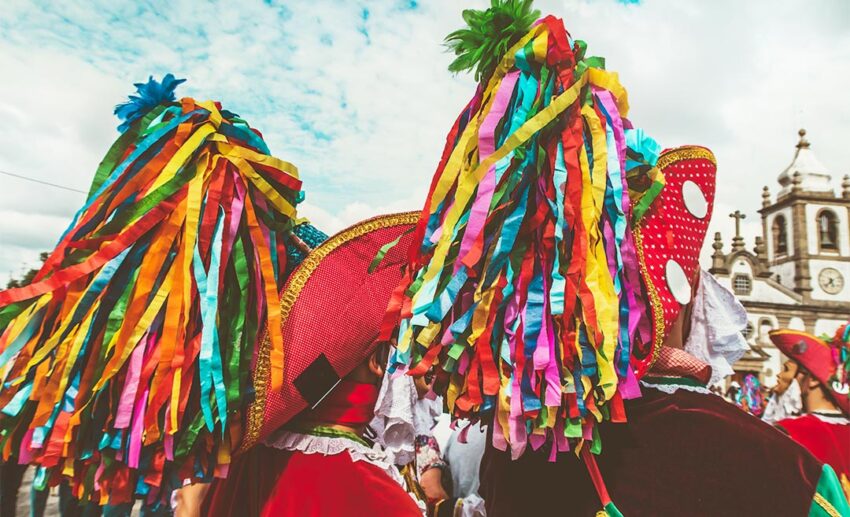
While Portuguese festivals are welcoming by nature, a little cultural awareness goes a long way. Arrive hungry but patient. Queues are part of the experience, especially at popular food stalls where locals know which grills are worth waiting for.
Cash is still widely preferred at neighbourhood festas, particularly outside major cities. Dress comfortably and modestly for religious events, even if food and music follow later in the day. Most importantly, don’t rush. Portuguese festival food is designed to be eaten slowly, standing with strangers who may soon feel like friends.
Why seasonal festivals matter to travellers
Experiencing Portugal through its festivals means engaging with its rhythms rather than just its landmarks. Food grounds each celebration in place and time, reminding us that cuisine isn’t static; it evolves with the seasons, beliefs, and communities that sustain it.
Whether you’re sipping wine at a harvest table or standing shoulder-to-shoulder grilling sardines, these moments linger long after the festival lights dim.