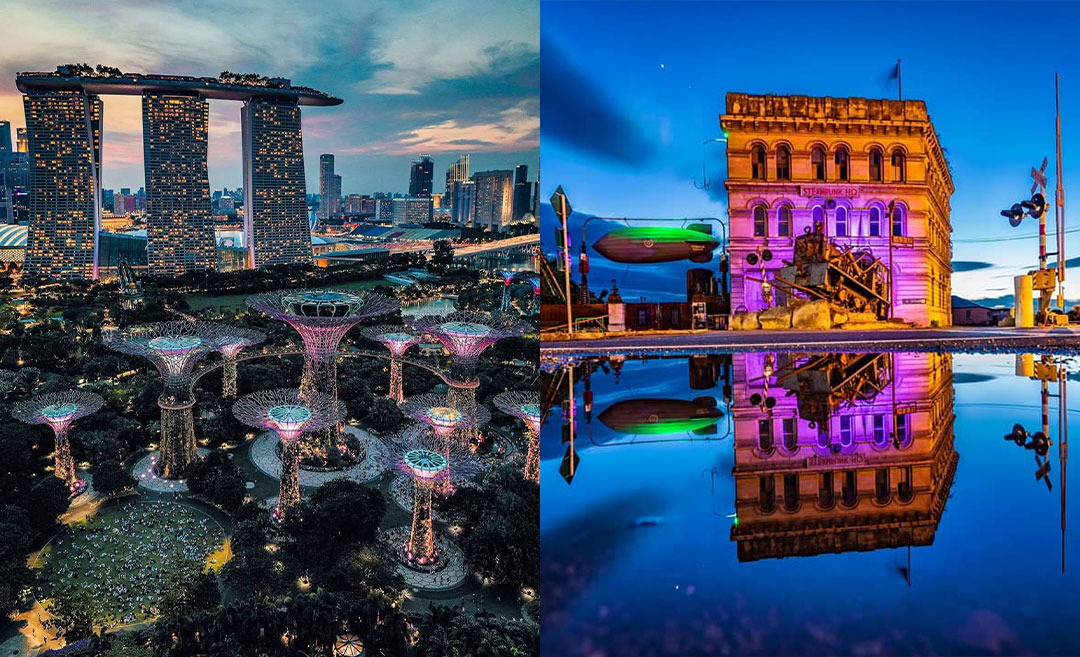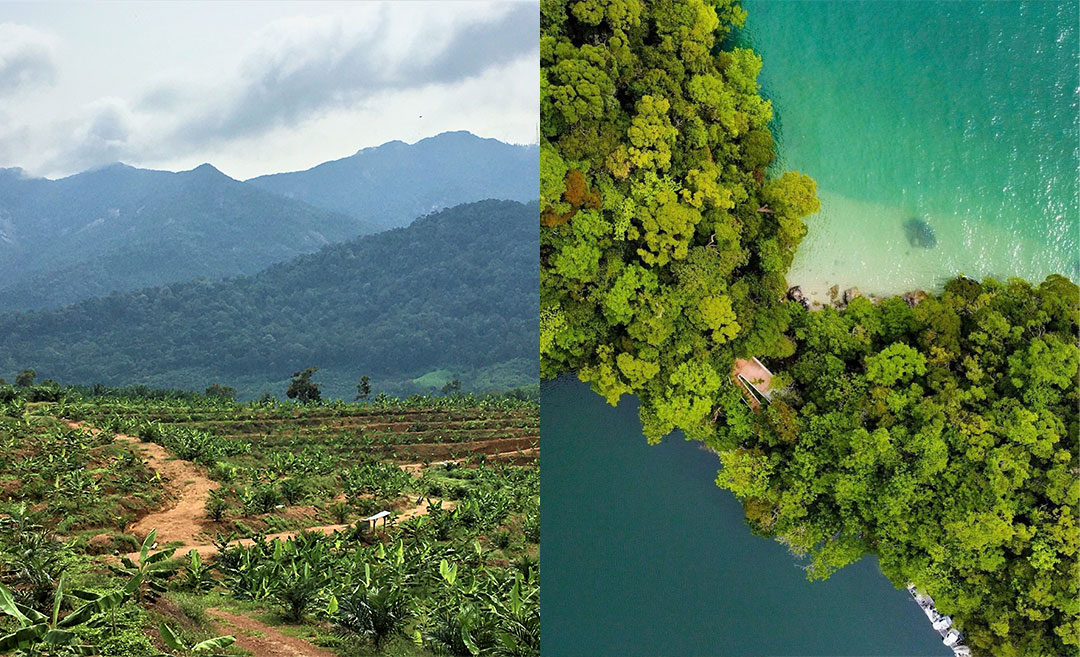
If it were up to our elders, they’d ask us to ditch our travel plans altogether. But who can resist the temptation of these gorgeous, mythical locations? (Image by Gabe.)
Anyone in their rambunctious teen years would have heard memorable tales spun by their elders about mythical creatures. We either grew to love or were haunted by these mysterious beings, depending on whether our elders used them to tame our wild antics or to pass down age-old folklores.
Either way, the thirst for the unknown can never quite be quenched (we reckon it’s the mystery of it all). Like all stories, these alluring creatures have their own tales of origin, and at times, they include precise real-world locations. Who would pass up on trips to destinations wrapped in wisps of mystery and intriguing stories?
1. Naga Seri Gumum – Chini Lake, Pahang, Malaysia
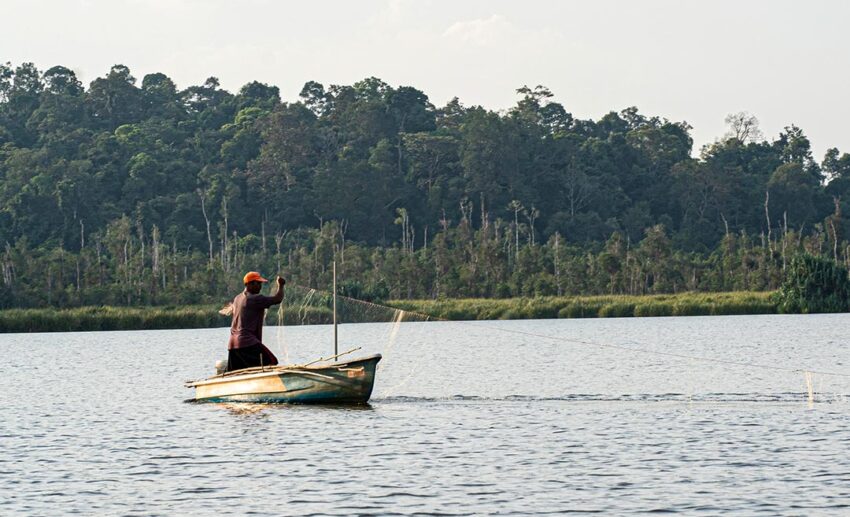
Dubbed as the Malaysian Loch Ness Monster, Naga Seri Gumum is also fondly known as Naga Tasik Chini. Its origin story goes beyond the famed grainy photograph of a supposed cryptic sighting. Among other versions of its tale, one has endured the test of time.
The story talks of an encounter between a community of indigenous Jakun people and a cane-bearing old lady. The encounter ended in the cane being planted into the ground of the site, along with a strict warning given by the old woman forbidding its removal.
Years later, a commotion caused the wooden cane to topple, and water started spurting out from the ground in an endless stream, eventually flooding the area, thus becoming Chini Lake.
Whether or not your visit involves an enchanting encounter with the enigmatic iron-scaled dragon of Chini Lake, this richly endowed ecological wonder remains an inviting travel destination for nature lovers. From canoeing to bird watching, this lake in Pahang attracts tourists from all over in all its misty glory.
2. Bigfoot – Mount Rainier, Washington, USA

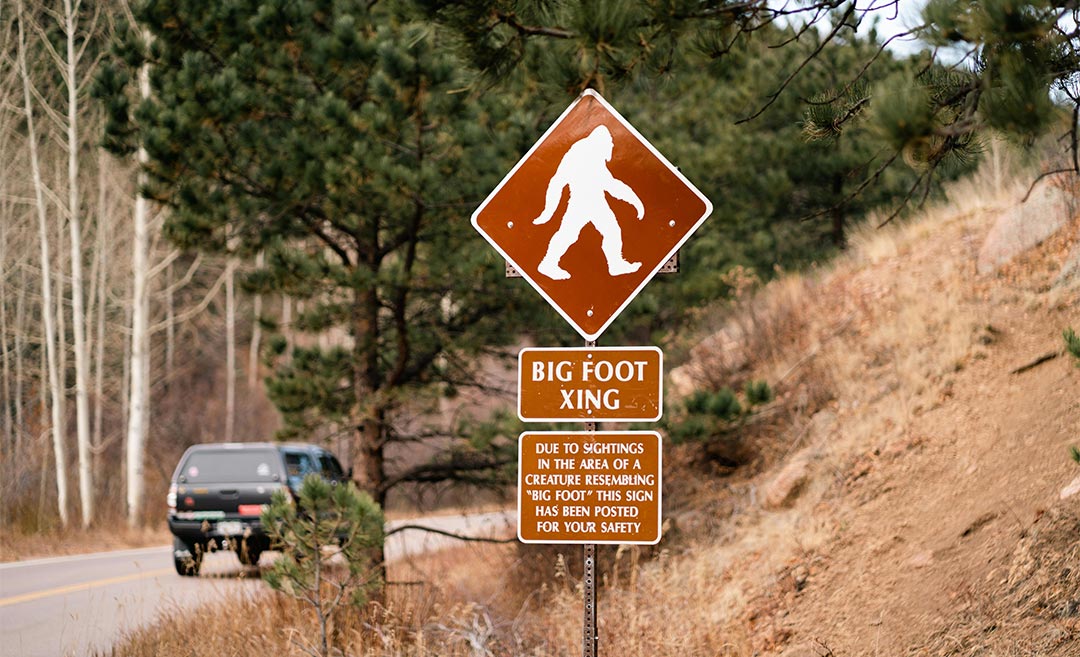
If there is a fame chart dedicated to mythical creatures, Bigfoot would surely be ruling the top spot. Popularity unmatched, it has earned different names across different parts of the world—from Sasquatch to Yeti, and even a local Malaysian name, Orang Mawas.
There is also a virtual community, Bigfoot Field Researchers Organisation (BFRO), which further lends credence to the creature’s fame. Perhaps what makes Bigfoot so sensational is the constant reports of encounters, making the clout earned from these reports worthy enough to be promotional material for many locations.
In terms of sighting frequency, Washington, USA currently holds the record for the biggest number of sightings, which is great for attracting more visitors to locations such as Mount Rainier. A sight for sore eyes and a dream destination for nature lovers, Mount Rainier even offers Bigfoot-approved destinations to explore.
3. Suku Mante – Mount Leuser, Sumatra, Indonesia
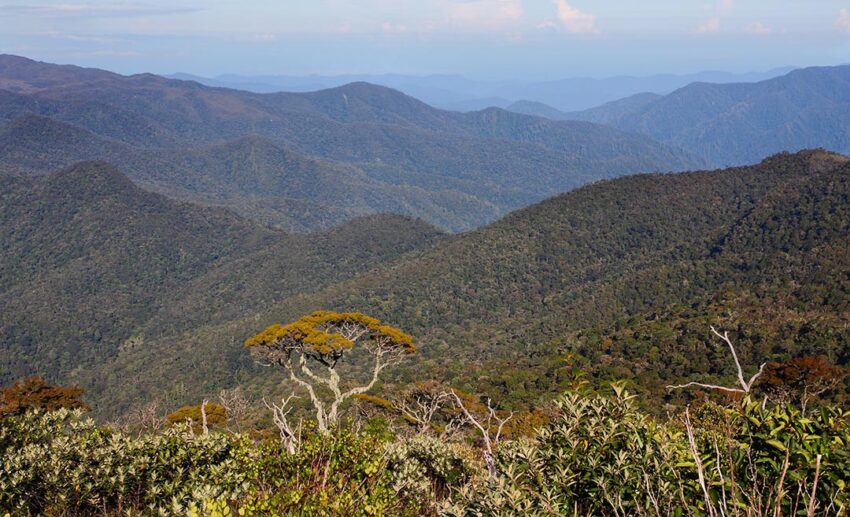
Said to be one of the earliest ethnic groups to have existed in Aceh, Indonesia, the Suku Mante are famously distinct for having a small stature. The presence of these mythical people remains shrouded in mystery, intriguing historians, anthropologists, and locals alike. Regarded as a part of the Proto-Malay people, they almost sound too legit to be considered mythical.
Despite some findings, no strong scientific evidence has been found to prove their definite existence. This contributes largely to their influence on legendary folklore among communities in Indonesia, as speculations of their presence in the deep forests of Aceh continue to thread the fine line between folklore and reality.
One of the locations rumoured to be a place of their dwelling also happens to be as beautiful as it is mysterious. Mount Leuser, which straddles the border of Aceh and Northern Sumatra, offers wonderful trekking opportunities.
Gunung Leuser National Park is one of the two remaining natural habitats for Sumatran Orangutans in Indonesia. This offers visitors likely encounters with the great apes, for when encounters with the Suku Mante are not quite in the cards.
4. Gumiho – Changdeokgung Palace, Seoul, South Korea

Gumiho is a creature that’s no stranger to most people, even outside of Korea, perhaps due to the enticing South Korean dramas involving Gumiho spun by the entertainment industry over the years. Dare I say, most people might even imagine a Gumiho resembling the likes of Shin Min Ah from My Girlfriend Is a Gumiho or Lee Dong Wook from Tale of the Nine Tailed.
Despite its fame in Korea, this creature also appears in folktales across other Asian countries like China (九尾狐, jiǔwěihú), Japan (九尾の狐, kyūbi no kitsune), and Vietnam (hồ ly tinh). At its core, the creature is a fox spirit said to have lived a thousand years to become a nine-tailed fox with shapeshifting ability, usually under the guise of a beautiful woman.
Similar to Naga Tasik Chini, Gumiho’s legendary tale is largely passed down through word of mouth, in addition to old Korean scriptures.
While there is no exact location for Gumihos to appear, the closest place one could get an essence of the tale is the historic Changdeokgung Palace in Seoul. This UNESCO World Heritage Site is lauded for its harmonious integration with the surrounding natural landscape. Under the enchanting effect of its historic architectural beauty, it’s not hard to envision encountering the ancient mythical being, Gumiho.
5. Selkie – Orkney Islands, Scotland
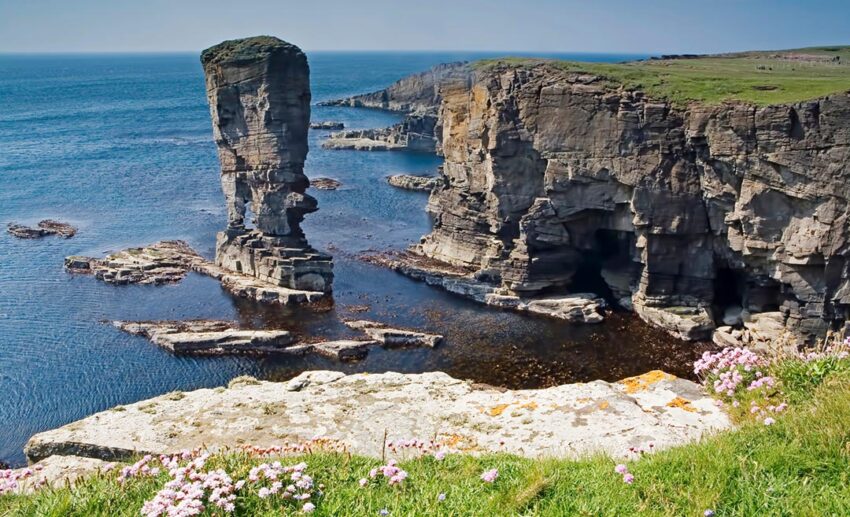
Selkies are often incorrectly classified as similar to the popular fellow mythical sea folk, mermaids. Despite both finding residence in bodies of water, this particular mythical creature belonging to Scottish folklore differs in both its form and tale.
While mermaids are described to be half-girl, half-fish, Selkies are creatures that can change between seal and human form by shedding their seal skin. Mermaids are also often described in tales as benevolent. Selkies, on the other hand, are gentle and have far sadder tales.
Many old tales of Selkies often involve a human man who tricks a seal woman into marrying him by stealing her seal skin. Due to their unique nature, Selkies can only return to sea with their seal skin, and so a Selkie stuck on land often longs for the sea. Tricked Selkies that procreate with humans produce offspring that have seal-like features, such as webbed feet.
Some families on the Hebrides and Orkney Islands apparently traced their family trees back to past unions between Selkies and humans, making the Orkney Islands an interesting place to visit beyond the breathtaking sights it has to offer. Who knows, you might meet a local or two who’d be happy to pass down tales about a Selkie ancestor.
6. El Chupacabra – Old San Juan, Puerto Rico
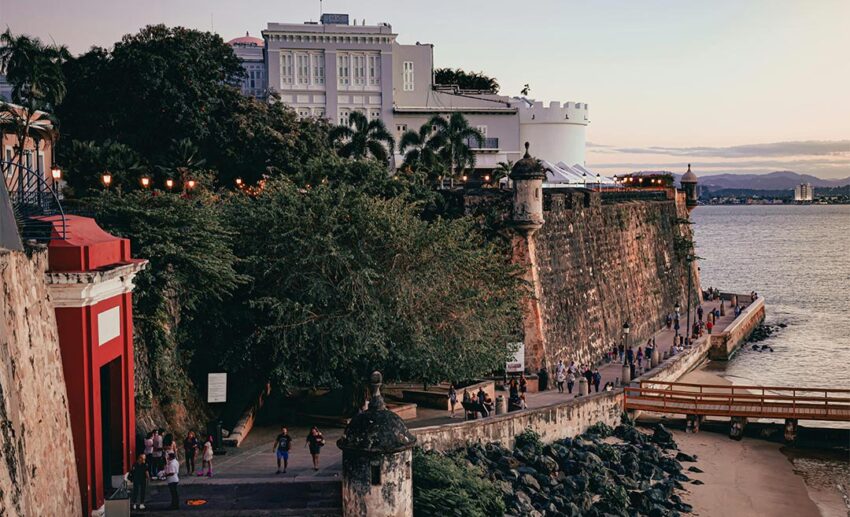
El Chupacabra, or directly translated as ‘goat-sucker’, earned its name from the series of attacks it apparently committed on livestock in Puerto Rico in the 1990s. The attacks were uniquely identifiable by three puncture wounds on the uneaten carcasses, which were all drained of blood.
Said to be ranging in size from a small dog to a bear, El Chupacabra’s appearance is described as reptile-like with greenish to greyish hued skin and spikes along its back. Personally, I find reports of them hopping in a similar manner to kangaroos to be terrifying, especially coupled with visuals. Major shivers! If it brings you any comfort, there haven’t been recent sightings, with the last report being from 2022.
So, we reckon a visit to charming Old San Juan could be on your travel bucket list, especially if you’re looking for a vibrant blend of Caribbean history and culture.
The pulsing tourist destination does not necessarily scream cryptid dwelling, as it is not where the sightings took place. However, being the second oldest city in the Americas, Old San Juan is a worthy destination when you pay a visit to Puerto Rico.
Alternatively, El Yunque National Forest, which is nearby to where most sightings of El Chupacabra were reported, is less than an hour away from Old San Juan. Do pack outdoor gear if El Yunque is going to be on your itinerary.