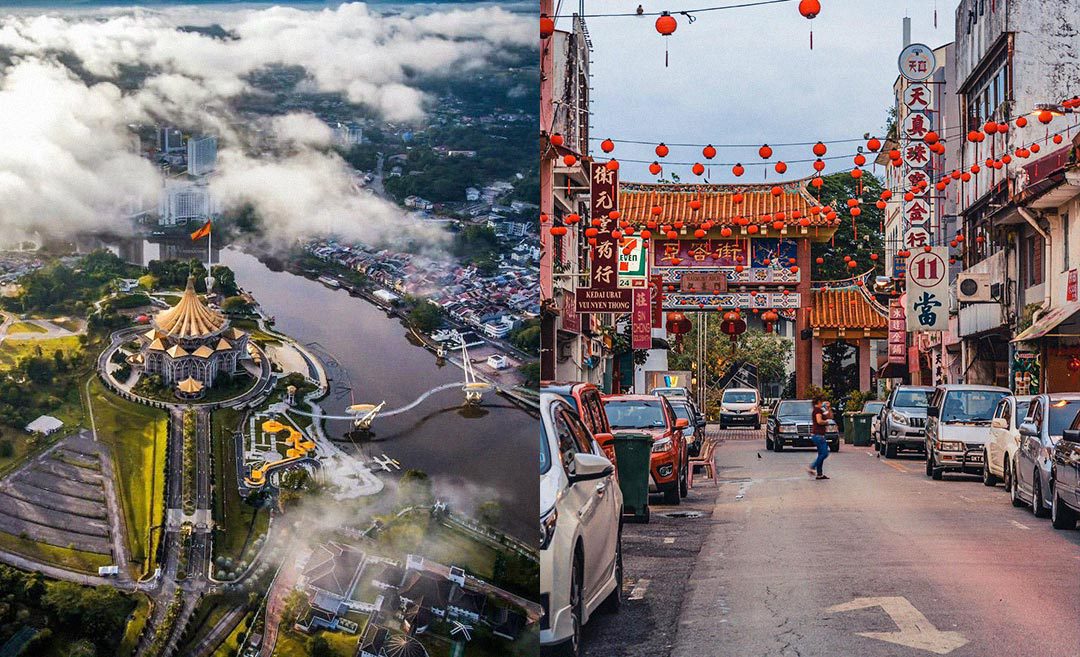
Our contributor, David Bowden, journeys through northern Sarawak to discover the need to cross an international border between the towns of Limbang and Lawas. (Image by David Bowden)
Immigration and customs procedures are a necessity of travel that usually require a passport, paperwork, QR codes, electronic visas, passport-sized photos, and, in some cases, cash or online payment for a visa.
I remember travelling through Europe before the European Community (now replaced by the European Union) became a reality. Then, each nation operated its own border procedures, and passengers asleep on a night train were often woken by officials to inspect their passports.
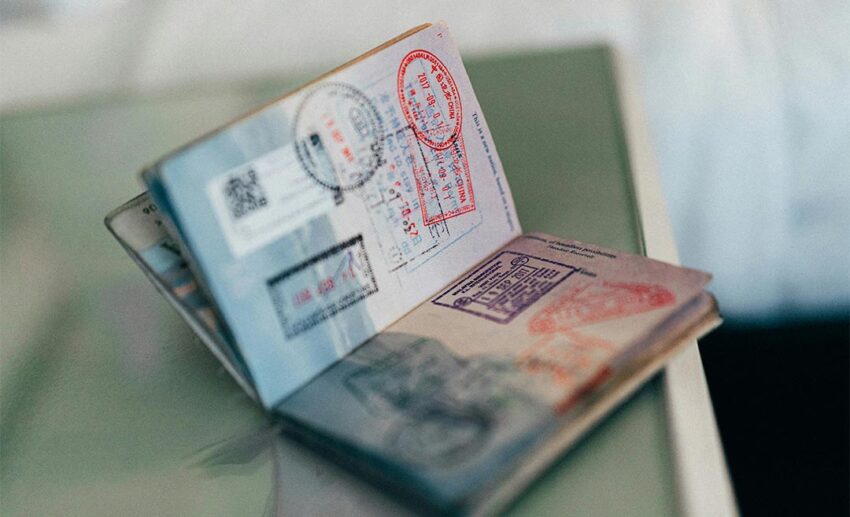
Malaysians can now travel within ASEAN without a visa. However, even Malaysians must complete immigration procedures for travel between Peninsular Malaysia and the East Malaysian states of Sarawak and Sabah.
Passport required
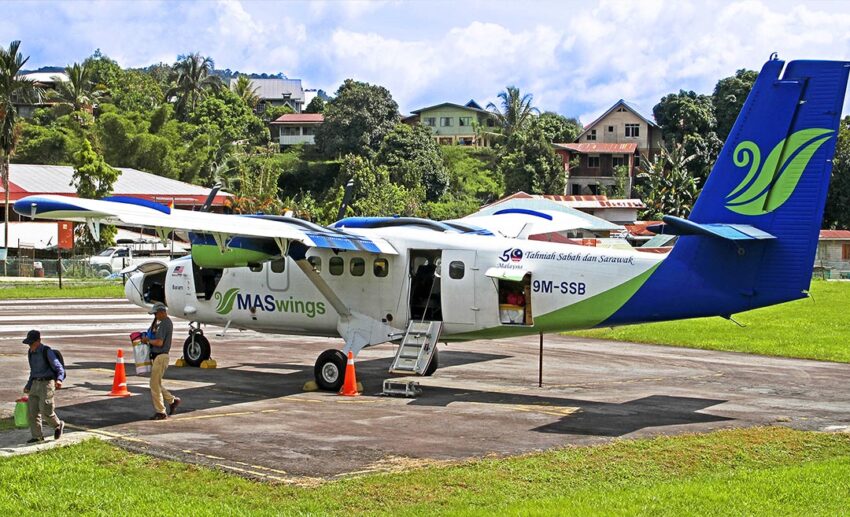
Recently, on a journey of discovery in Sarawak, I flew from Miri to Limbang and then drove from there to Lawas, where I joined a flight to the remote highland community of Ba’kelalan before flying back to Miri.
While travelling by road, I discovered that an international border crossing is required for travel between the towns of Limbang and Lawas in northern Sarawak. The road connecting Kompleks Kawalan dan Pemeriksaan Ujung Jalan (Sarawak) and the Labu Brunei Customs and Immigration Complex (Brunei) passes through Brunei, and all travellers are required to complete immigration and customs procedures upon entry and exit.
Lines on a map
Alighting from my vehicle, I queued up to gain access to a country that I was going to travel through for just 25 km. While waiting my turn, I contemplated the geographical anomaly that necessitated my queuing.
When you have time, check out other anomalies such as the Caprivi Strip in Namibia and the Spanish enclave of Llívia in France. You might then ask yourself, how did these situations come about? Your curiosity may then be piqued by the two separate parts of Brunei, which are almost entirely surrounded by the Malaysian state of Sarawak.
I wasn’t aware that Brunei was divided into two parts until I contemplated the map on the wall in the immigration hall. Brunei’s main eastern division is separated from the western division by a thin strip of Sarawak, where the Malaysian town of Limbang is located.
Brunei’s eastern area is almost entirely surrounded by Sarawak, except for a small stretch of South China Sea coastline. The Sungai Tujuh Immigration is the main border crossing point for those travelling between Miri and Brunei.
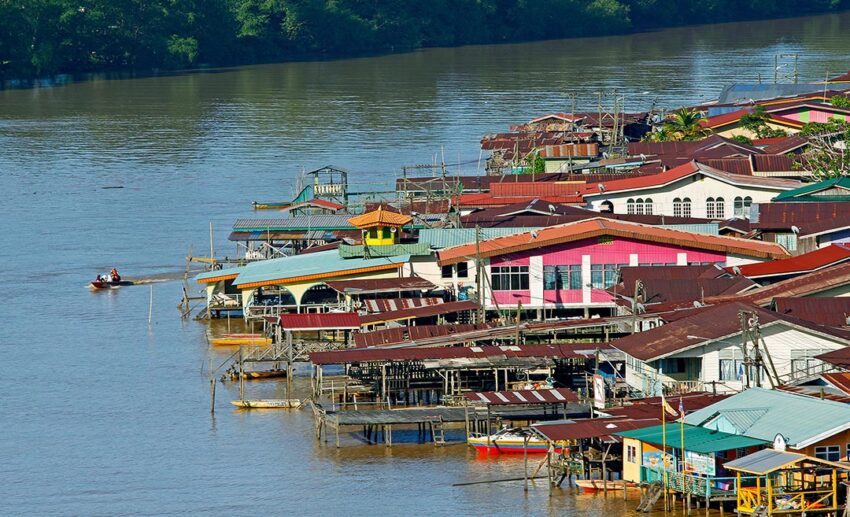
Riverside Limbang
Rice and sago from the district are exported to Brunei, and Rajah of Sarawak, Charles Brooke (1868–1917), recognised Limbang’s strategic location. In 1890, he annexed the territory for Sarawak from the Sultan of Brunei. Limbang is located on the banks of the Limbang River, which serves as the main route for its residents to travel downriver.
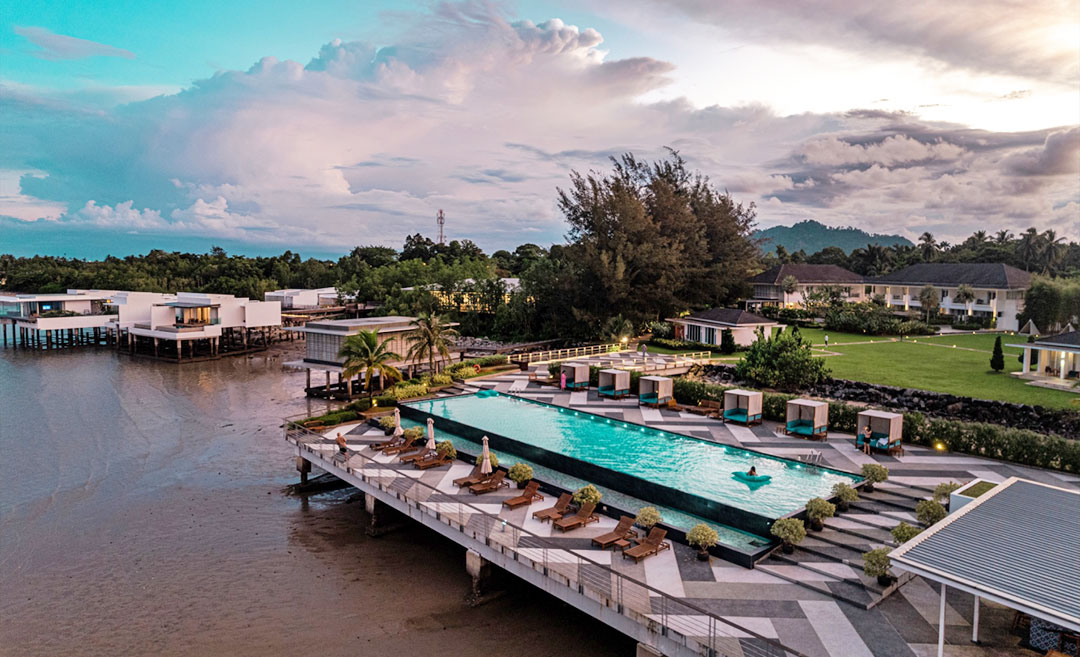
Limbang has several tourist attractions, such as the Limbang Regional Museum, which was previously a fort built by the White Rajahs, and a farmers’ market held every Friday. The town is large enough to warrant comfortable hotels and a shopping centre.
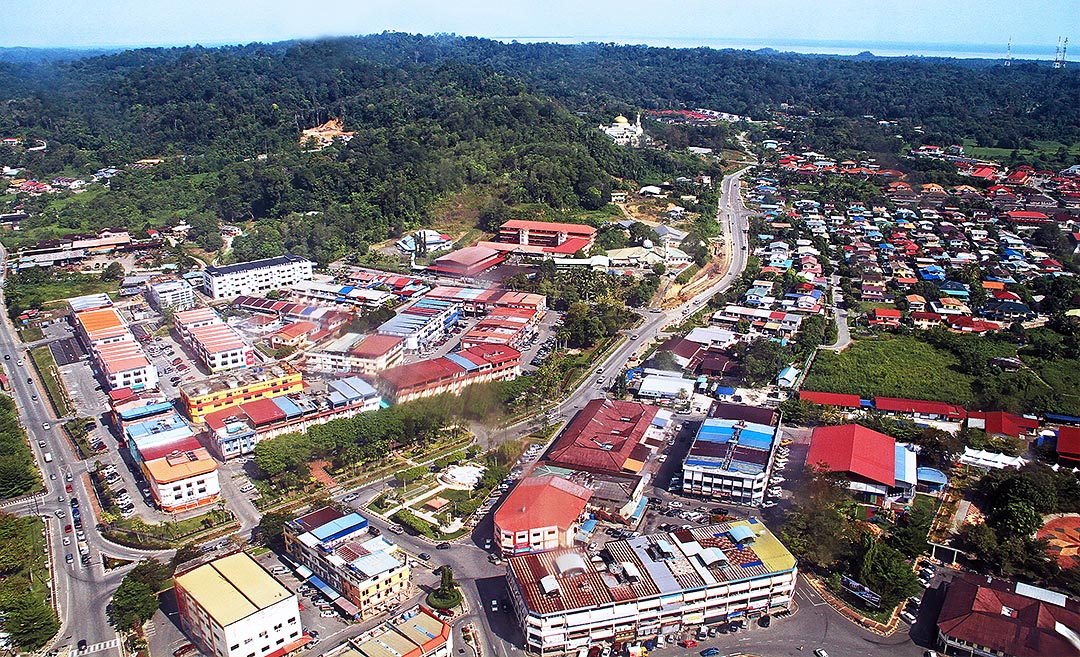
My road trip began here as I drove eastward towards Lawas via the immigration and customs checkpoint near Puni, on the road to Bangar. After completing the immigration paperwork, I drove to Bangar, the main town in this part of Brunei.
Rainforest retreat
I was aware that Brunei has the most intact rainforests in the world, as very few trees have been logged. My reason for driving here was to visit the Ulu Temburong National Park, which meant leaving the car in Bangar and taking a boat upriver into the park.
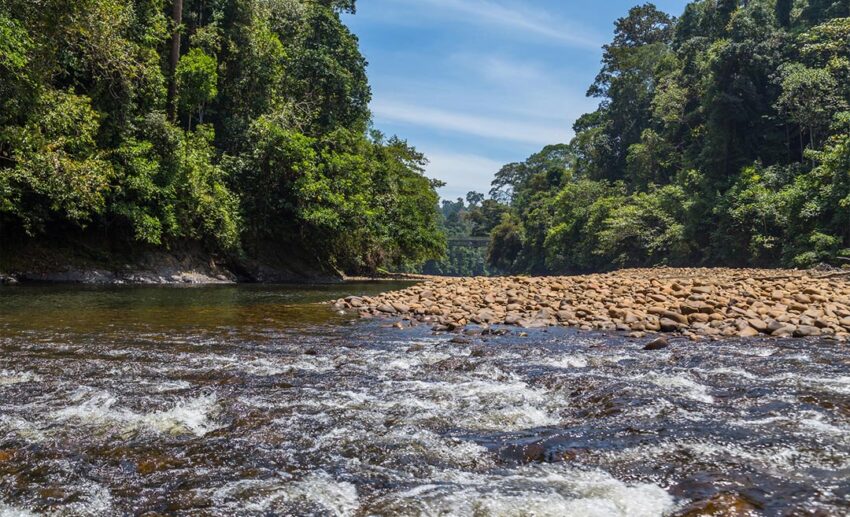
Guides and small boats can be hired in Bangar, but I drove along the Temburong River to Sumbiling Eco Village. This is the end of the road, and from here, access to the park is along the river in a small boat.
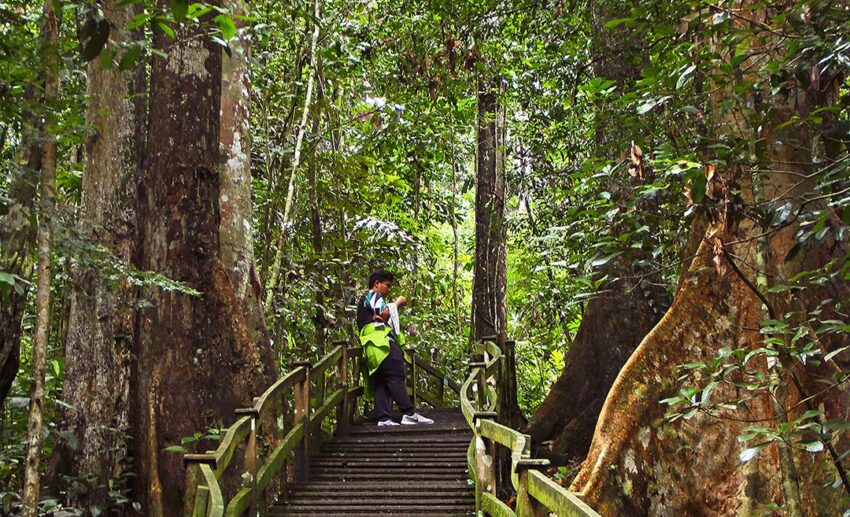
Passing through Brunei
Returning from the park, I spent time in Bangar to take in the ever-lively market.
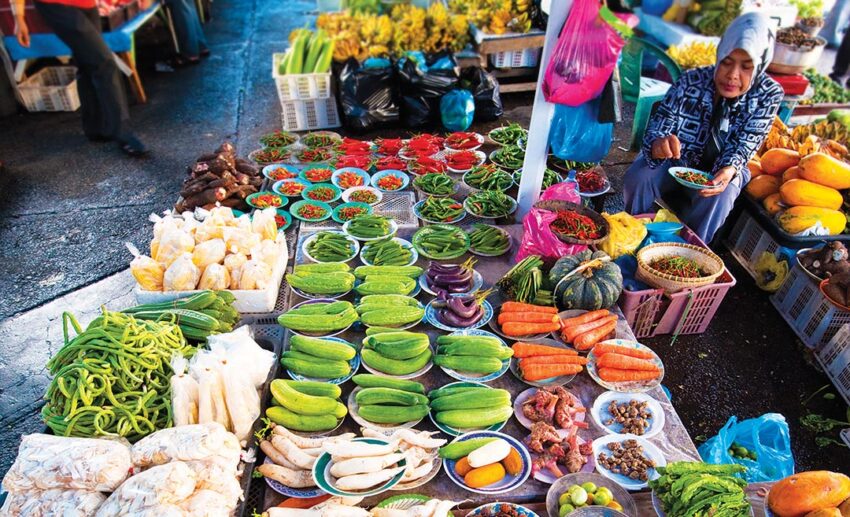
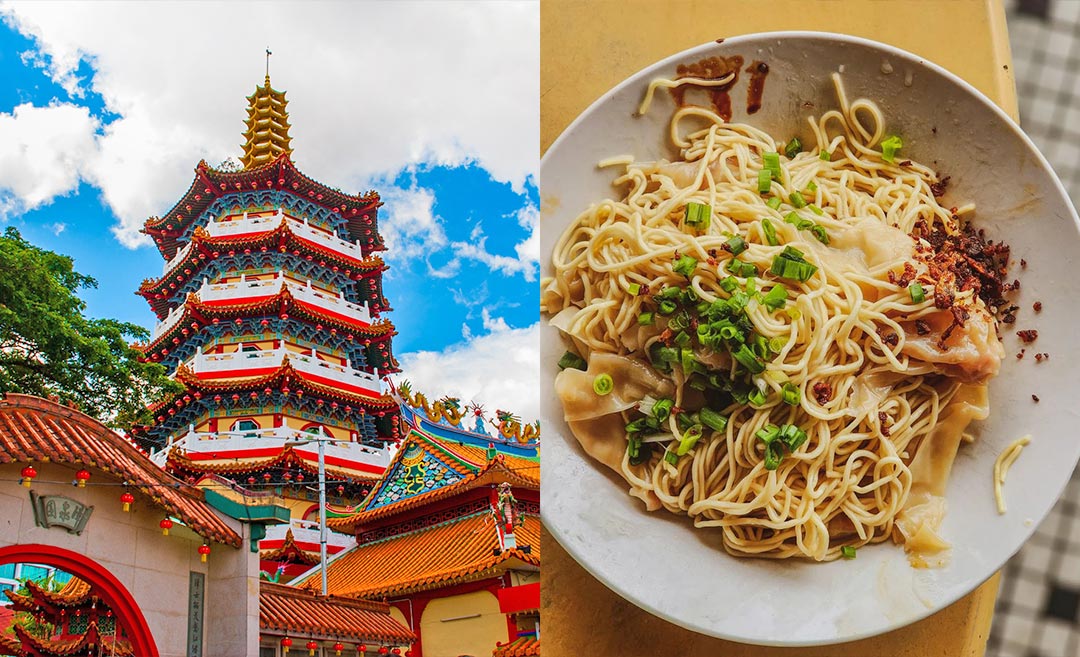
One of the most unusual fruits available here was that of the Kembayau tree. These small, black, pellet-shaped fruits only grow in Borneo. Even when ripe, the fruit is hard and inedible until cooked. In Brunei, they are boiled until the exterior becomes soft enough to eat.

My relaxed and leisurely road trip continued eastward near the impressive 30-km-long Sultan Haji Omar Ali Saifuddien Bridge, which opened in 2020 to provide a better connection from Bandar Seri Begawan to Temburong, Lawas, and Sabah. The road to the Brunei capital heads northward from Labu Estate, crossing the Labu Forest Reserve and Brunei Bay.
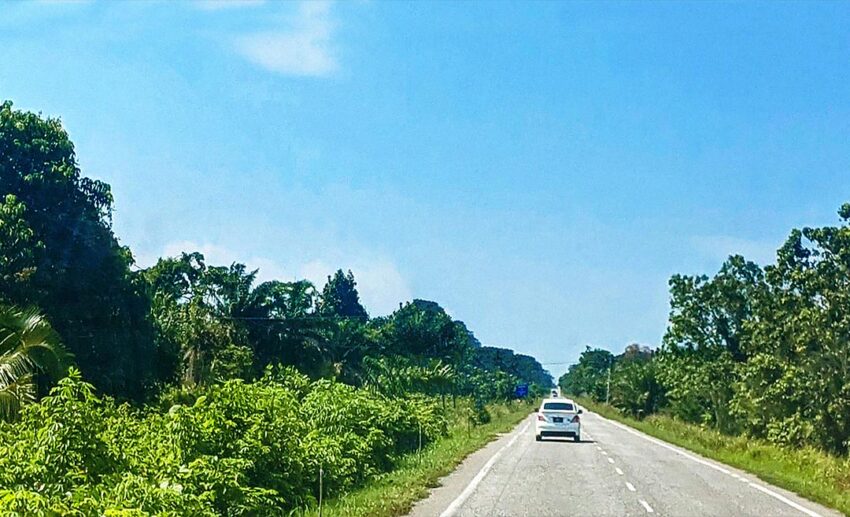
I continued driving across Brunei, through the border checkpoint, and towards Lawas in Sarawak.
Laidback Lawas
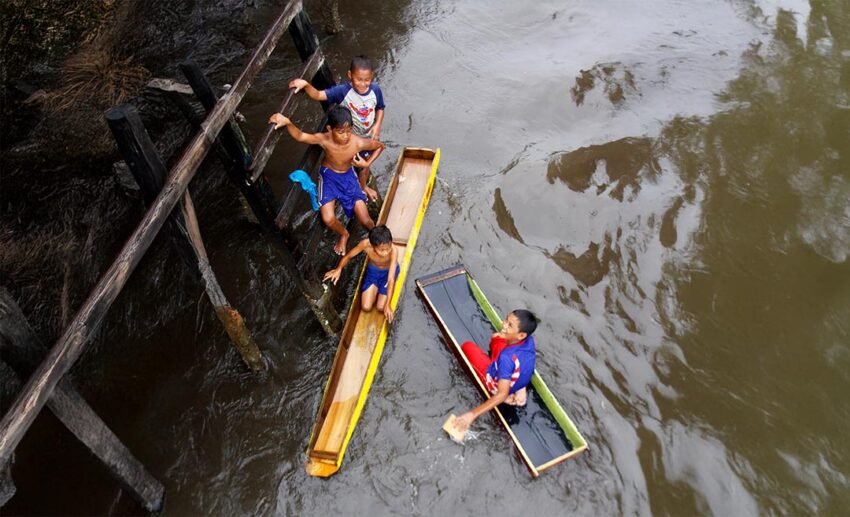
Unlike Limbang, Charles Brooke purchased the Lawas District from the Sultan of Brunei. Located several kilometres inland by the Lawas River, it is a bustling market town that became wealthy mostly through logging.
Market days in town are lively, on Friday nights through to Saturday afternoons. The market is a good place to buy upriver products such as handicrafts, Ba’kelalan salt, and adang (Bario rice), as well as fresh fruit and vegetables.
From Lawas, I flew to the small and remote highland farming community of Ba’kelalan, a destination that commands its own story.
Tips for travellers attempting a similar road trip
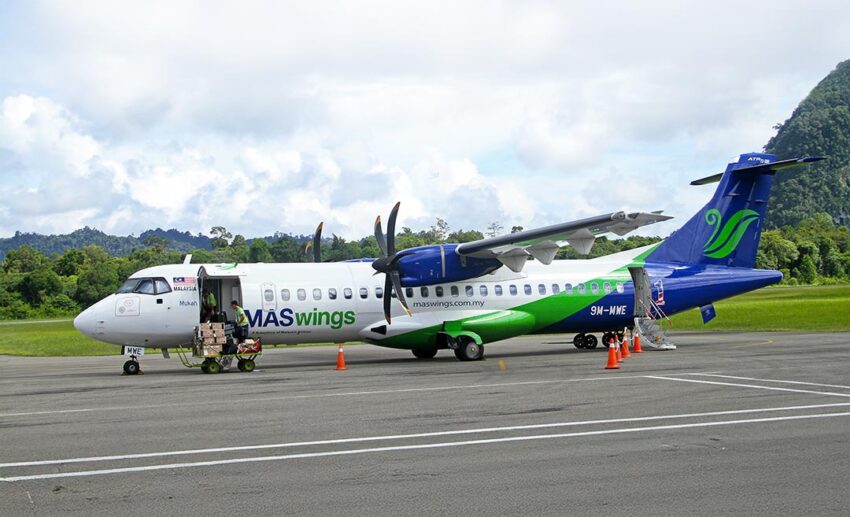
Getting there: Limbang, Lawas, and Ba’kelalan all have airports that are serviced by flights on MASwings, which will soon become AirBorneo.
Passport validity & arrival card: Travellers passing through Brunei will need a passport with six months’ validity and at least two blank pages. Travellers entering Brunei are required to register for an E-Arrival Card before arrival.
Exit and Entry System (EES): Travellers driving their vehicle into Brunei are required to pay BND3 for a Caj Perkhidmatan (Service Charge) and obtain an EES QR code before entering the country.
Border opening times: Sarawak-Brunei border checkpoints typically open from 6am to midnight; confirm current hours before you travel.
Visa for Malaysians: Malaysian citizens don’t need a visa to enter Brunei for social visits and are allowed to stay for up to 30 days.
All images are provided by David Bowden unless specified otherwise.