From hidden wadis to golden dunes, discover four unforgettable Omani experiences through the eyes of a local-at-heart traveller.
Oman is my second home, a place that holds a large part of my heart. I grew up in this Middle Eastern country as a child, and as an adult, I continue to visit its stunning coastline and diverse landscapes.
Whenever I return, I can’t help but be in awe of Oman’s natural colour palette: the dramatic, rugged browns of its mountains complementing the vibrant turquoise of the Gulf of Oman, and the smooth golden glow of the sand dunes.
The country is full of warmth, from the generous and welcoming Omanis to the cuisine of freshly made kunafas, mezze platters, and — of course — the temperature of a summer day. However, hands down, one of the highlights of my Omani trips is the wildlife that thrives across its Arabian landscapes.
For many, the winter months from October to February are the best time to visit Oman, when temperatures average a pleasant 26°C.
If you’re planning a trip to Oman, here are four unforgettable experiences I highly recommend to get a real taste of the country’s diversity.
1. Take a boat trip to the Dimaniyat Islands and snorkel
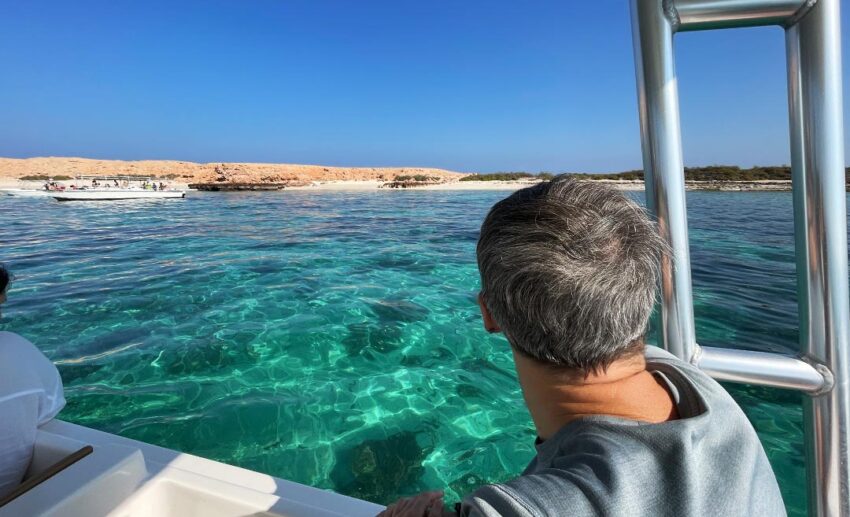
The Dimaniyat Islands are a protected chain of islands off Muscat’s coast. The islands are home to coral reefs, white sand beaches, and unbelievably turquoise water.
On my last trip to Oman (which was just last month), I took a tour to the Dimaniyat Islands. Thinking about that experience still makes my heart swell with gratitude for a country I feel remains a hidden gem beyond the usual tourist destinations.
I took the tour with Sidab Sea Tours, a company my family has taken several trips with.
The six-hour tour started with dolphin watching. In the past, I have seen a pod of hundreds of dolphins swimming around my boat and even witnessed a baby dolphin frolicking alongside its family. Some days, like my last trip, you may not see as many dolphins, but even spotting one creature, for me, is remarkable.
For the rest of the tour, you travel to the Dimaniyat Islands to snorkel and explore the sandstone rock island. When I went, the water was an unbelievably clear turquoise, and I could spot colourful fish from the top of a cliff.
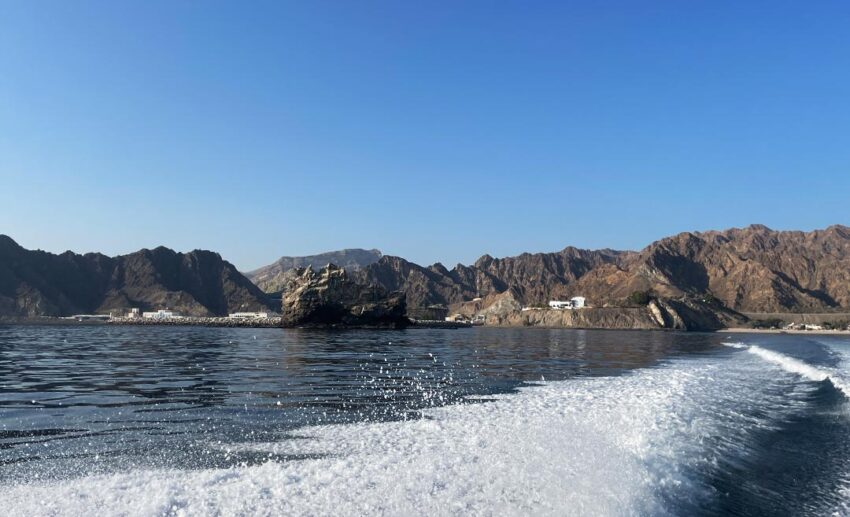
On one visit, I had the honour of seeing a group of 25 turtles amongst parrotfish and other scintillating marine creatures.
When trekking up the rock island, we watched an osprey guard its precariously placed nest on a rock tower by the sea, its eggs fully in sight.
Lying down on the cliff to continue watching the bird more discreetly, I jumped up abruptly, realising there was an adorable snake next to me. I was in awe of how the island was home to so much wildlife.
After a morning of sunshine and sea, our boat ride back to Muscat follows the city’s coastline and stops at notable sites like the Sultan’s Palace, which sits by the sea.
My trip to the Dimaniyat Islands was one I will never forget.
2. Explore the dunes of Wahiba Sands

Wahiba Sands is a vast desert with golden dunes, around a 4-hour drive from Muscat.
I have been going to Wahiba Sands countless times since I was a kid, and each visit does not lose its charm.
Since my first visit, resorts in the desert have grown. I usually stay at Desert Nights, where you stay in a glamorous and cosy Bedouin-style tent, equipped with a living room, bathroom and local arts and woven rugs.
The number of activities you can do in Wahiba seems to grow each year. Usually, my family and I spend our first evening in the desert watching the sunset from the dunes, transported there by a 4×4 wheel drive that’s equipped for dune bashing.
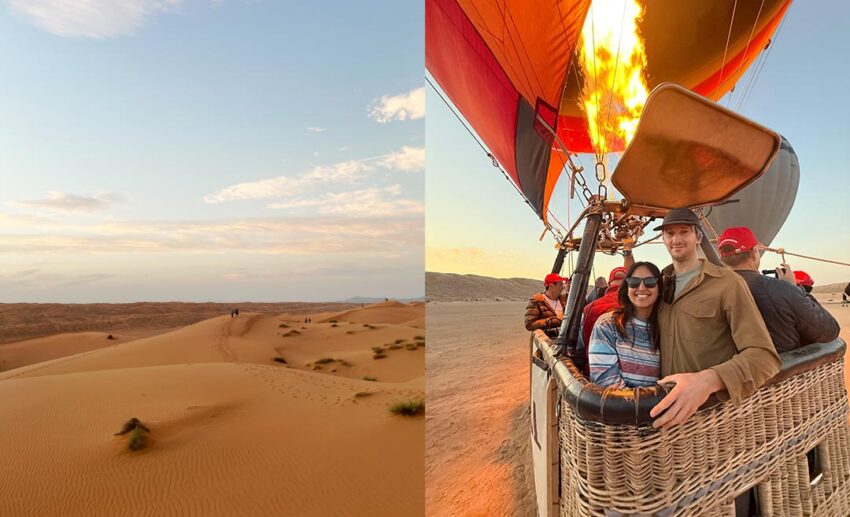
In Wahiba, I have done one of Oman’s favourite hobbies: dune bashing. For those who don’t know what that is, it is basically an equivalent of an Arabian rollercoaster, where you ride up, down and even backwards on steep dunes with 4-wheeled drives.
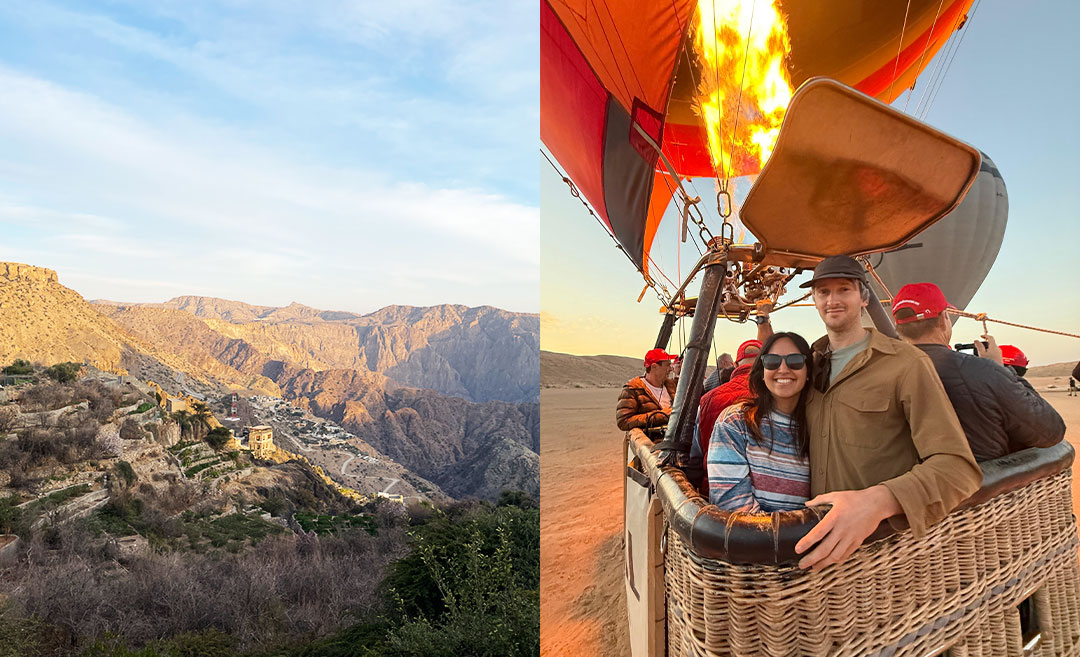
At Wahiba, one can also do quad-biking, sand snowboarding, camel rides, meet Bedouin folk, and a recent highlight I just experienced was hot air ballooning.
It’s quite the experience, silently rising above the dunes with the balloon at the break of dawn, taking in the landscapes of waves of sand dunes, camels, and the homes of the desert-habitants.
3. Hike through villages in Jebel Akhdar
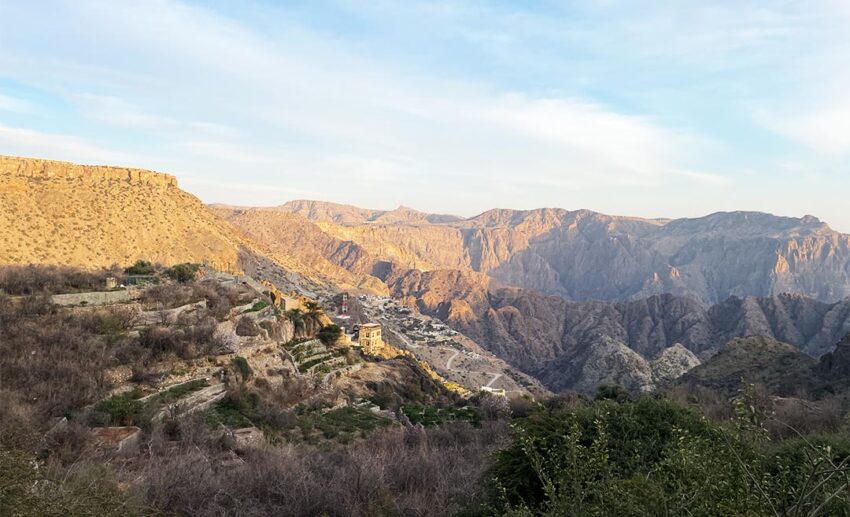
Jebel Akhdar, which translates to ‘Green Mountain’, is a two-and-a-half-hour drive from Muscat. It was my family’s usual weekend getaway from the city, and it can also be visited as a day trip if you’re willing to make the drive.
Jebel Akhdar gets its name from its cooler temperatures and stunning terraced gardens, which are watered by the Omani falaj system. A falaj is an ancient irrigation system, where water comes from springs, wells, and rainwater, and travels with the help of gravity along a surface channel. The sound of water rushing through the falaj is soothing as you hike alongside it in Jebel Akhdar.
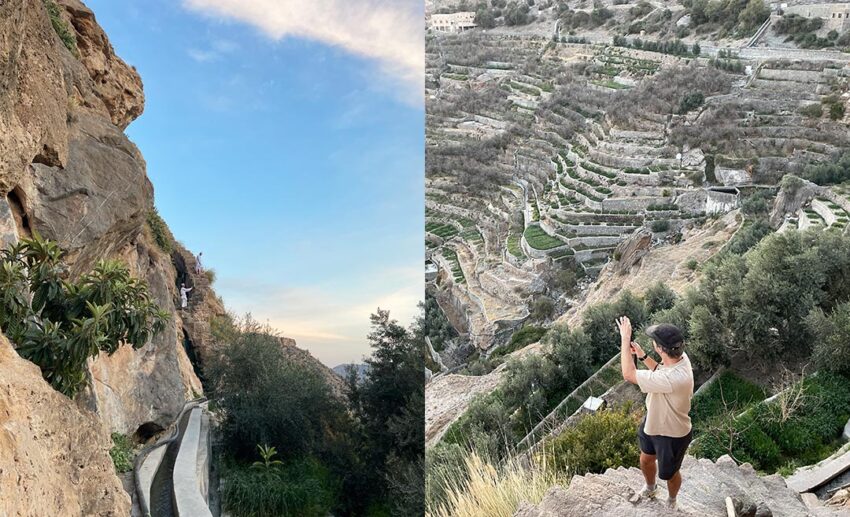
A popular walk is the Three Village Walk, where you trek to the villages of Al Aqr, Al Ayn, and Al Sharega — communities built around 2,000 metres high on the mountain.
The walk takes you through terraced farms of roses and pomegranates, charming mountain village heritage homes and mosques, steep cobbled alleyways, cliffside paths, and sometimes along the falaj system itself. It’s normal to see nimble goats trotting up the mountain as well.
There are homestays and hotels in Jebel Akhdar. Just a heads up: when driving up the 3,000-metre-high mountain, you’ll have to get your vehicle checked at the base to ensure it’s suitable for the steep roads. You can be turned away if your car is not a four-wheel drive.
4. Swim through a cave in Wadi Shab
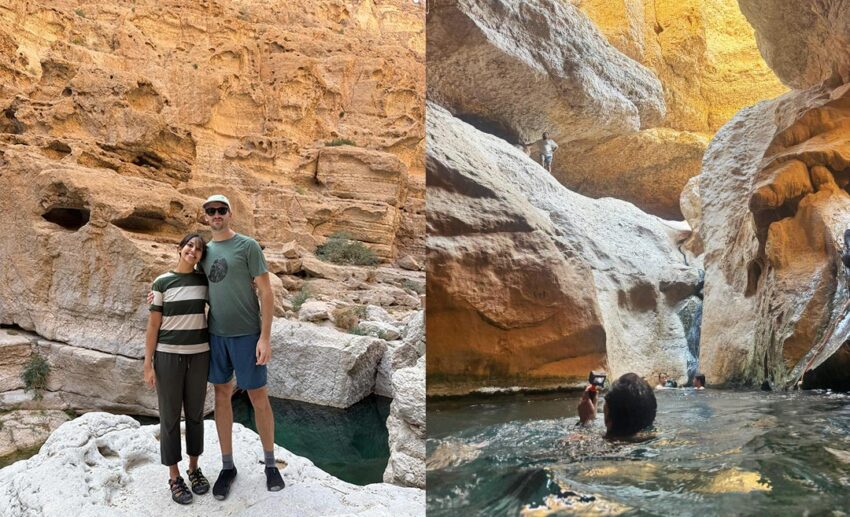
Wadi Shab has been on my bucket list for years, and on my trip last week, I finally managed to do it — and it was worth the wait.
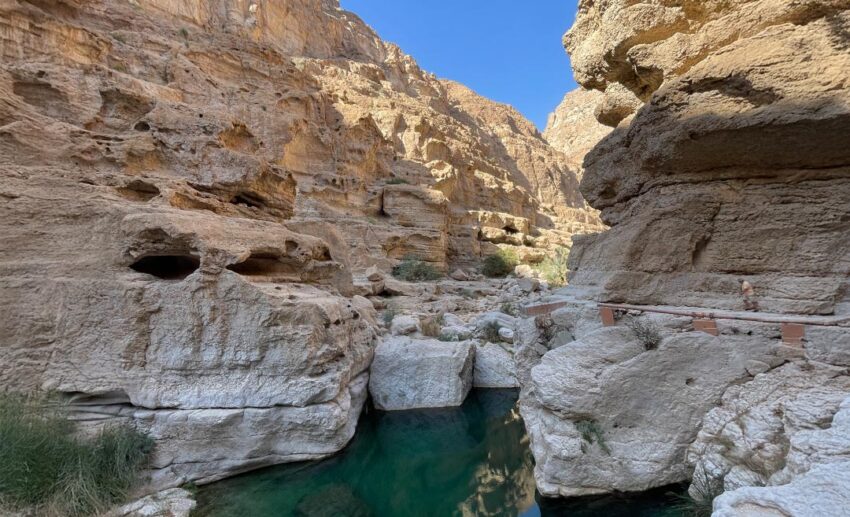
A wadi is a river valley that is usually dry until the rainy season. In Oman, after the rain, wadis can turn into beautiful emerald oases framed by stark cliffs or blossom with green plants.
To experience Wadi Shab, you take a small boat across the water (for a small fee) and then begin a roughly 2.5-kilometre hike through stunning terrain, passing mini waterfalls, clear pools, and palm trees.
Towards the end of the hike, it’s time to get into the water. You wade and swim through the narrow valley to reach a cave. My water journey took around half an hour. Depending on the water level that day, the cave entrance can be barely bigger than your head, or even completely submerged. Sliding into the cave leads you into a picturesque chamber with a waterfall.
If you’re feeling more adventurous (I wasn’t), you can climb up the waterfall and take a route that allows for some cliff jumps into the water. However, watch out: the surface you climb is very slippery, and the chamber can get quite crowded.
As the years go by, Wadi Shab is becoming more developed. At the entrance to the wadi, there’s a shop where you can hire a guide, rent a dry bag, and pick up other gear you may need. There’s also a restaurant, and it looks like more eateries will open up near the entrance.
Writing this piece reminds me of the deep love and appreciation I have for Oman. These places hold some of my most meaningful travel memories — experiences I haven’t found anywhere else yet.
Oman still preserves its culture and landscapes with quiet dignity, untouched by mass tourism despite its extraordinary natural beauty. I share these moments in the hope that women travelling to Oman will experience the same sense of wonder, and continue to respect and protect the environment that makes this country so special.
Zafigo Tips: Safety & etiquette in Oman for women
Oman is known as one of the safest and friendliest countries in the Middle East. However, when exploring the rugged wadis and villages on our list, a bit of cultural awareness can make your experience as smooth as the dunes of Wahiba:
Dress the part (cultural respect): Although Oman is modern, it remains conservative. When visiting mountain villages like Jebel Akhdar, make sure to cover your shoulders and knees. For the Wadi Shab swim, wear a quick-dry t-shirt and leggings over your swimwear instead of just a bikini. This shows respect for the local families who also enjoy the area.
Wadi wisdom & flash floods: Always check the weather forecast before heading into a wadi. If it’s raining in the mountains, wadis can fill up very quickly. Even as an experienced solo traveller, avoid entering a cave or deep water alone in deserted areas. Nature is beautiful but unpredictable.
The power of a greeting: Omanis are very warm and welcoming. A simple greeting of Assalamu Alaikum (Peace be upon you) when passing locals in the Three Village Walk can lead to genuine hospitality. If an Omani woman offers you dates or coffee, accepting with your right hand is the polite way to say “thank you.”
Navigating solo vs. group: While driving to Wahiba Sands or Jebel Akhdar is safe, these routes require a 4WD and confidence on steep, unpaved terrain. If you aren’t comfortable with off-road driving, consider joining a women-led tour or hiring a local guide. This keeps you safe and supports the local economy.
Digital discretion & photos: Oman is a great place for photography, but always ask for permission before taking photos of people, especially Omani women and children. Most people will happily agree, but the act of asking shows respect and reflects well on the travel community.
All media are courtesy of the author unless stated otherwise.