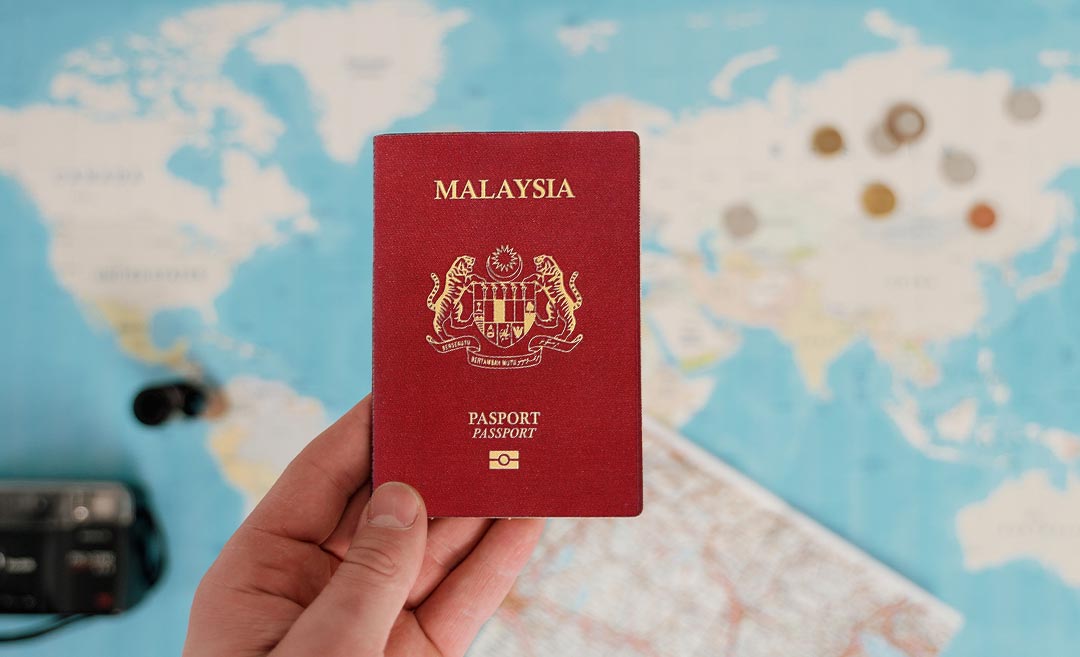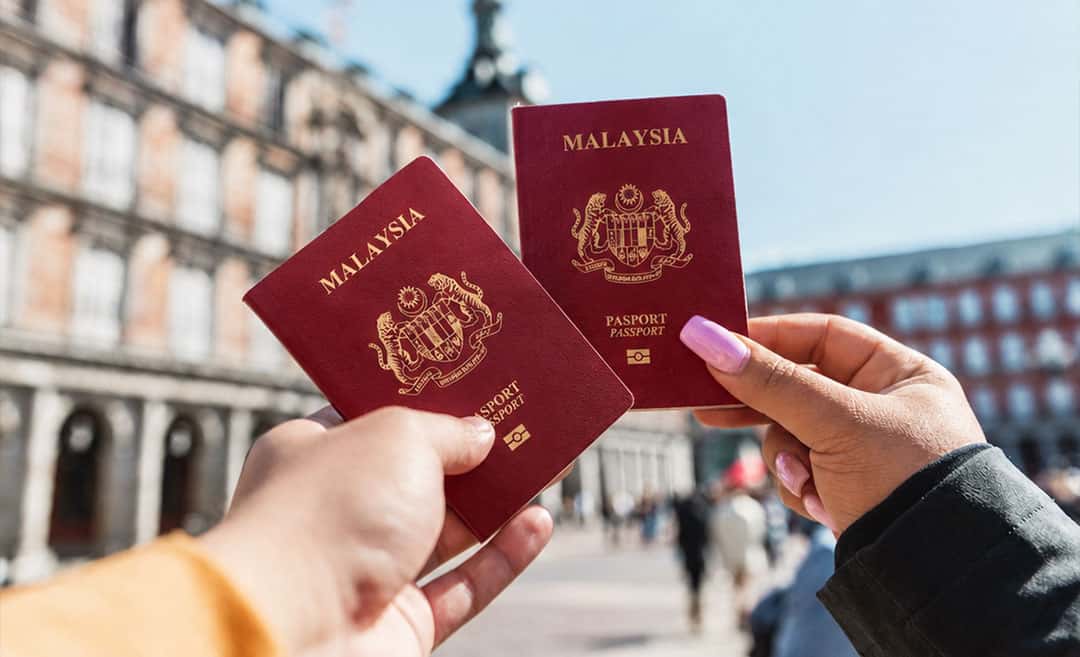
Malaysia’s passport climbs to joint second place in the 2026 Passport Index, making it easier to navigate international borders. (Image by Spencer Davis)
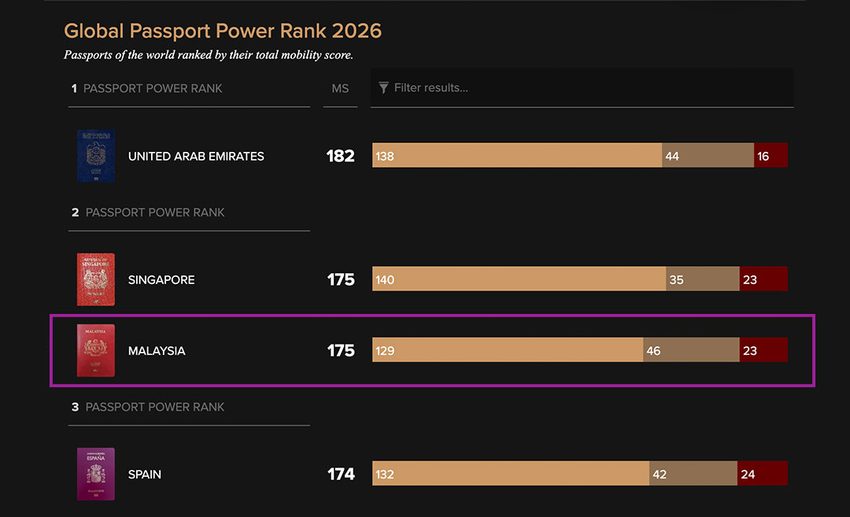
Malaysia’s passport has climbed from third place in 2025 to joint second in the 2026 Passport Index, sharing the position with Singapore. Its Mobility Score increased from 174 to 175, placing both countries behind the United Arab Emirates, which has a score of 182.
But a Mobility Score of 175 does not mean Malaysian passport holders can travel visa-free to 175 countries.
What the Mobility Score actually counts
Passport Index calculates its Mobility Score by counting destinations that can be accessed visa-free, with a visa on arrival, through an Electronic Travel Authorisation (eTA), or through certain simplified eVisas issued within three days. The score therefore measures destinations that can be accessed without obtaining a conventional visa in advance, rather than destinations that are all completely visa-free.
For Malaysia, the current Passport Index dashboard lists 121 visa-free destinations, 46 with visa on arrival, and eight requiring an eTA. Together, these categories make up Malaysia’s Mobility Score of 175.
That distinction matters because each category comes with different requirements. Visa-free entry may require only a valid passport, while an eTA normally involves an online application before departure. A visa on arrival, meanwhile, is obtained after reaching the destination.
Paraguay appears to be the change behind Malaysia’s extra point
The clearest verified change behind Malaysia’s one-point increase is Paraguay.
Under Decree No. 5,220, dated 29 December 2025, Paraguay removed its entry-visa requirement for Malaysian passport holders, allowing them to enter and stay for up to 30 days per entry. Passport Index now classifies Paraguay as visa-free for Malaysians.
Passport Index records Malaysia as gaining one point in its 2026 Mobility Score changes, bringing the score from 174 to 175.
Canada also eased travel requirements for some Malaysians in May 2026. Eligible Malaysian citizens who have held a Canadian temporary resident visa within the past 10 years, or who hold a valid US non-immigrant visa, may apply for an eTA instead of a visitor visa when travelling to Canada by air. However, Passport Index continues to classify Canada as visa-required for Malaysian passport holders, so this change does not appear to account for the additional point.
Malaysia and Singapore both score 175, but the breakdown is different
Malaysia and Singapore have the same Mobility Score, but their access is made up differently.
| MALAYSIA | SINGAPORE | |
| MOBILITY SCORE | 175 | 175 |
| Visa-free | 121 | 129 |
| Visa on arrival | 46 | 35 |
| eTA | 8 | 11 |
| Visa required | 23 | 23 |
Malaysia has more visa-on-arrival destinations, while Singapore has more destinations offering visa-free entry and eTA access. The different combinations add up to the same Mobility Score of 175.
This means a score of 175 does not translate into exactly the same travel experience for Malaysian and Singaporean passport holders. The practical requirements can differ depending on how a destination is classified.
Why Malaysia’s passport ranking differs across indexes
Passport rankings can also produce different results because they use different methodologies.
The July 2026 Henley Passport Index placed Malaysia seventh, with access to 183 destinations, while Singapore ranked first with access to 192. Henley’s index is based on exclusive Timatic data from the International Air Transport Association (IATA), while Passport Index uses its own methodology and categories.
The two rankings therefore should not be treated as directly comparable. A passport can receive a different ranking depending on the index being used and which types of travel access are counted.
The fine print still matters
A score of 175 does not mean Malaysians can simply turn up at 175 borders without preparation. Visa-free entry, visa on arrival, and eTA access all come with different requirements, from length-of-stay limits to applications before departure.
The ranking is useful as a snapshot of passport mobility, but travellers should still check the latest entry requirements for their destination before booking or departing.