This starchy sago dish is known by different names in different regions of Southeast Asia, but one thing is certain—it’s a traditional delicacy worth trying. (Left and right image by @qinnrestaurant.)
If you’re a foodie looking to step off the beaten path in Southeast Asia, try a sago delicacy so obscure that, in some places, even the locals haven’t eaten it.
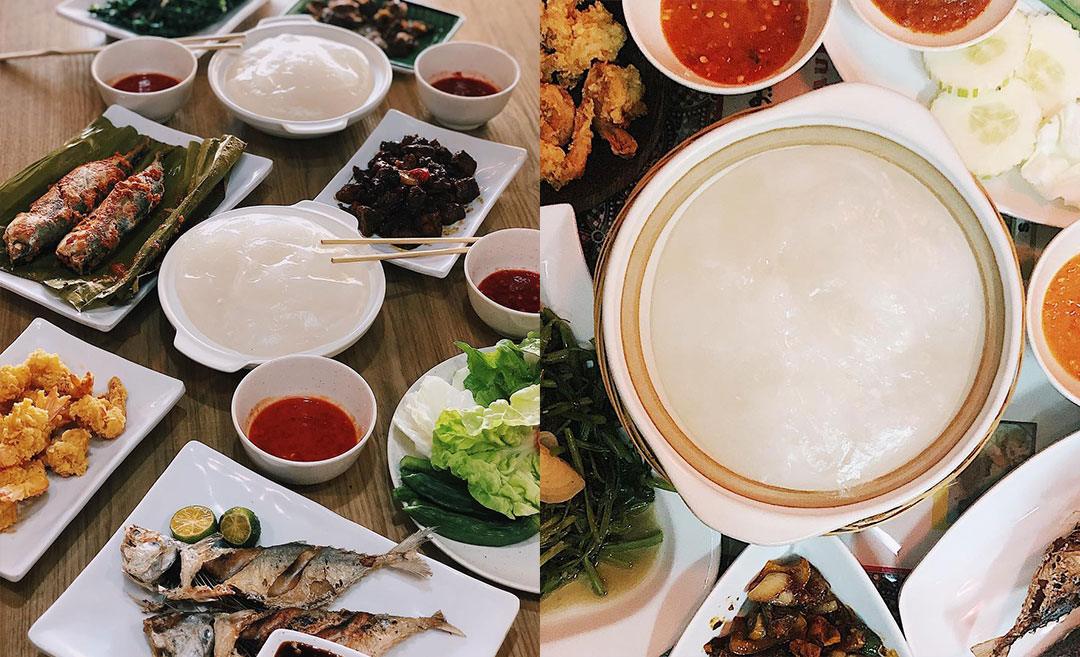
Known as linut in East Malaysia, ambuyat in Brunei, and papeda in Indonesia, this unusual starchy treat is made by dissolving sago flour in room temperature water and then whisking it with hot water for the perfect chewy consistency.
Some also believe in taboos during its preparation, and practices like remaining quiet and refraining from laughter and vulgarities are closely observed so that the sago dish turns out thick, gooey, and translucent.
Funnily, this viscous carb is often compared to glue paste – minus the fumes.
Taste-wise, this delicacy is bland, and it is always paired with sides.
Sides & viands
In East Malaysia, this staple of the Melanau, Penan, and Orang Ulu communities is eaten with sambal belacan (chilli and shrimp paste), jungle ferns called midin, grilled fish, as well as sour soups and dips made with a yellow eggplant known as terung Dayak.
Brunei’s ambuyat is paired with grilled fish, a spiced beef sausage called belutak, and condiments like sambal belacan, sambal cencaluk (chilli and fermented shrimp paste), sambal tempoyak (chilli and fermented durian paste), and sambal binjai, featuring a type of wild mango.
Meanwhile, Indonesian papeda, long enjoyed by the indigenous peoples of Maluku and Papua, is savoured with water spinach stir-fried with papaya flower buds and a turmeric-tinged fish curry called kuah ikan kuning flavoured with green chillies, lemongrass, and bay leaves.
The art of twirling, winding, or slurping
There’s even an art to eating this starchy sago dish. In Brunei and Malaysia, it is customarily twirled around bamboo utensils called candas – which resemble a pair of chopsticks fused at one end – and dipped into the various sides.
In Indonesia, however, they serve papeda by winding it around two forks or pronged utensils called gata-gata and plopping gooey blobs into individual bowls filled with gravy. Typically, papeda is slurped straight from the bowl.
To make it even trickier, some advocate swallowing the stuff without chewing.
This story by Beverly Rodrigues was originally published on AirAsia. Zafigo republished this story in full with permission from the publisher, simply because good stories should be read by as many people as possible! If you have stories that will be of interest and useful to women travellers, especially in Asia, please get in touch with us at [email protected].