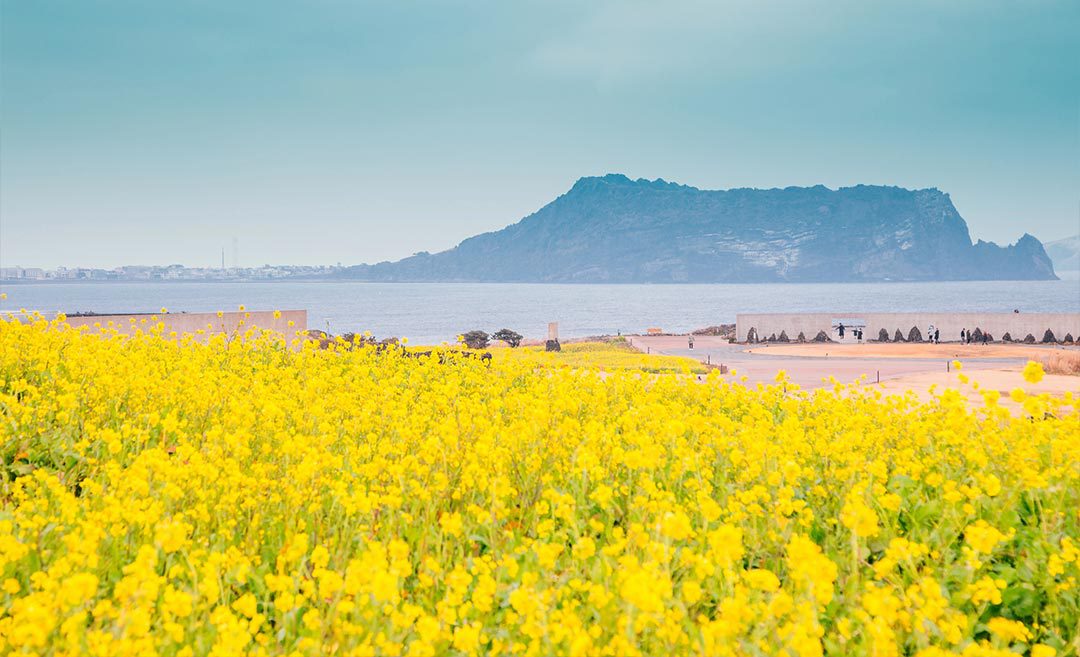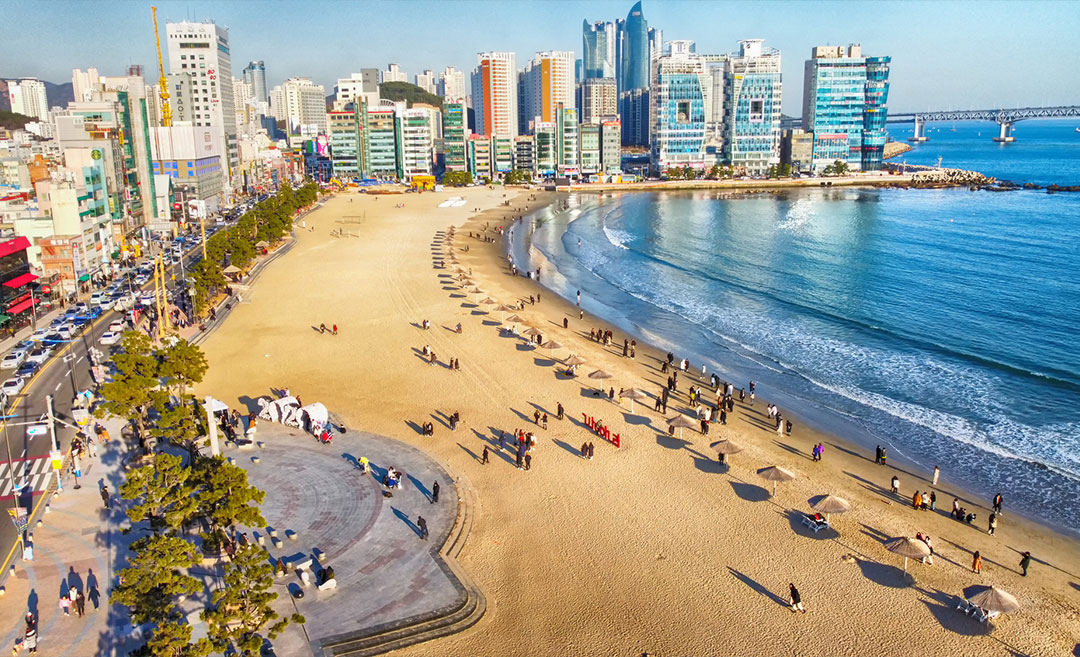
Jeju Island invites travellers to slow down through local food, nature, and traditions that encourage deeper appreciation of place. (Image by Johnny Adams)
Picture this: black lava rock coastlines meet crystal-clear turquoise waters, pods of dolphins leap offshore, and citrus orchards stretch across the landscape. The haenyeo, legendary Korean free-diving women, swim in with baskets of freshly caught abalone and seaweed. Horses graze beneath volcanic cones that seem to appear around every bend.
There’s something quietly ethereal about Jeju Island, South Korea’s southern volcanic island, that encourages you to notice what you’d normally rush past.
Whenever I’m in Jeju, I can’t help but find myself slowing down, almost without realising it. Perhaps it’s the abundance of the island — tangerine orchards, vegetable fields, volcanic landscapes, and seafood caught just offshore — but everything seems to invite a little more attention.
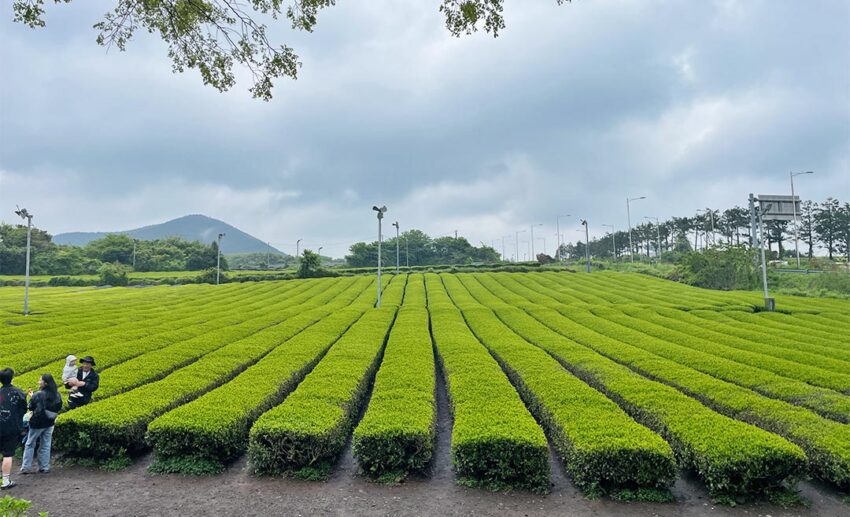
Stepping into a sanctuary of green: the endless, rolling rows of the Osulloc tea plantation where Jeju’s organic matcha begins. (Image by Sofia Shamsunahar) 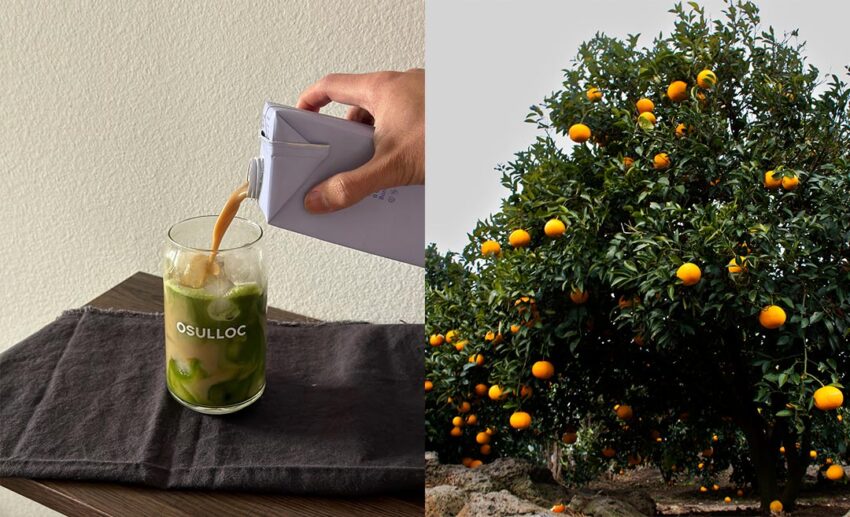
A sensory study of the island’s harvest, from creamy matcha sips to heavy, sweet Hallabong citrus fruits ripening on the branch. (Left image by @domsayswhaaat; Right image by anirut) 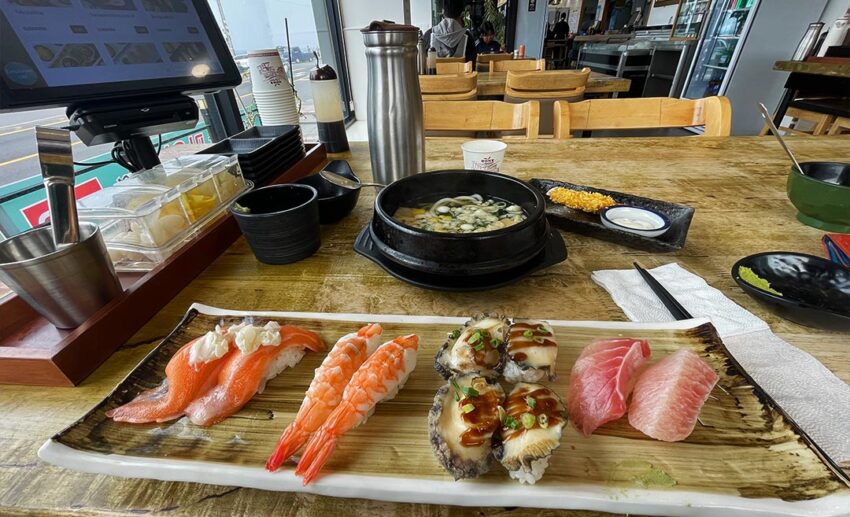
A quiet, solitary lunch of locally caught abalone sushi—flavours that demand you take your time with every bite. (Image by Sofia Shamsunahar) 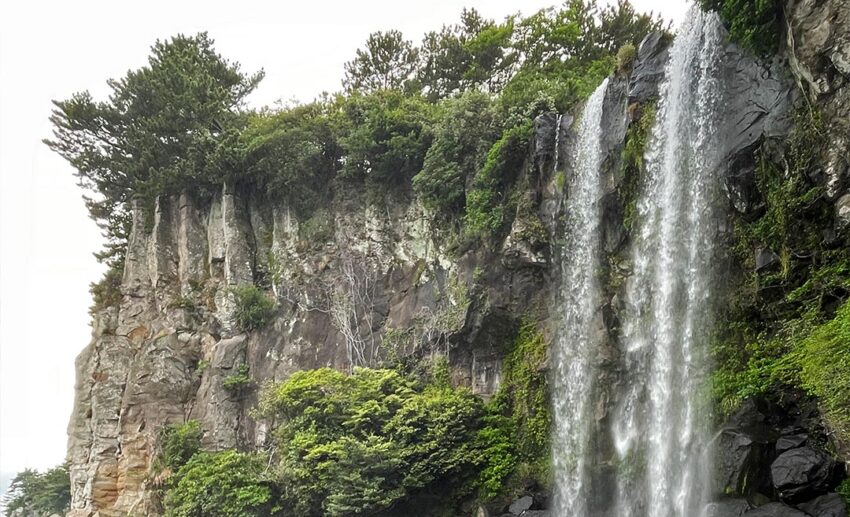
Jeongbang Falls, where the cool mountain waters cascade directly into the sea, right beside where the haenyeo prepare their fresh catch. (Image by Sofia Shamsunahar)
There are plenty of ways to experience the locally grown flavours in Jeju. I’ve sipped on freshly ground Jeju-grown matcha leaves at the Osulloc Tea Museum and stopped while cycling through Seogwipo to buy a basket of juicy, plump hallabong (large-sized seedless citrus fruit). One lunch in western Jeju was locally caught abalone sushi, while another stop at Jeongbang Falls (Jeongbangpokp) brought freshly caught seafood prepared by the haenyeo, with the waterfall cascading directly into the sea beside us.
Experiences like these reward travellers who take their time rather than rushing between attractions.
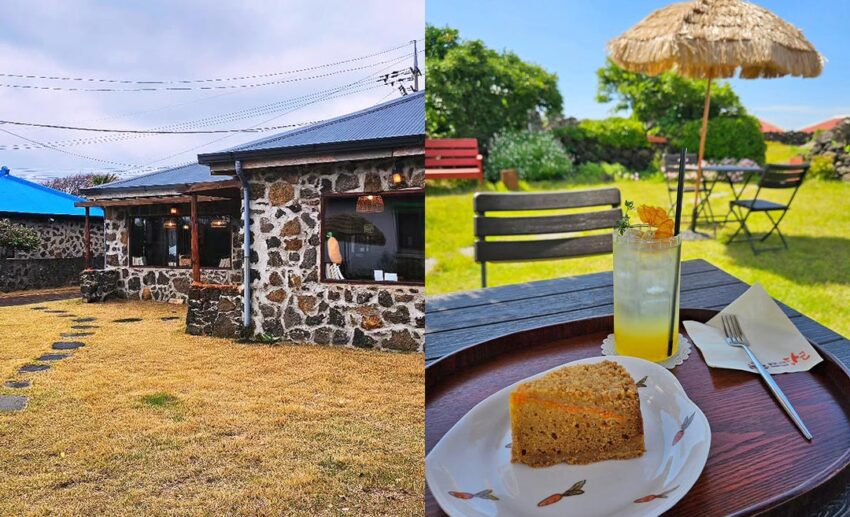
Celebrating the humble local harvest at a cosy carrot-themed cafe, where even the soda and cake pay homage to Jeju’s rich volcanic soil. (Left image by @doldam_carrot; Right image by @doldam_carrot) 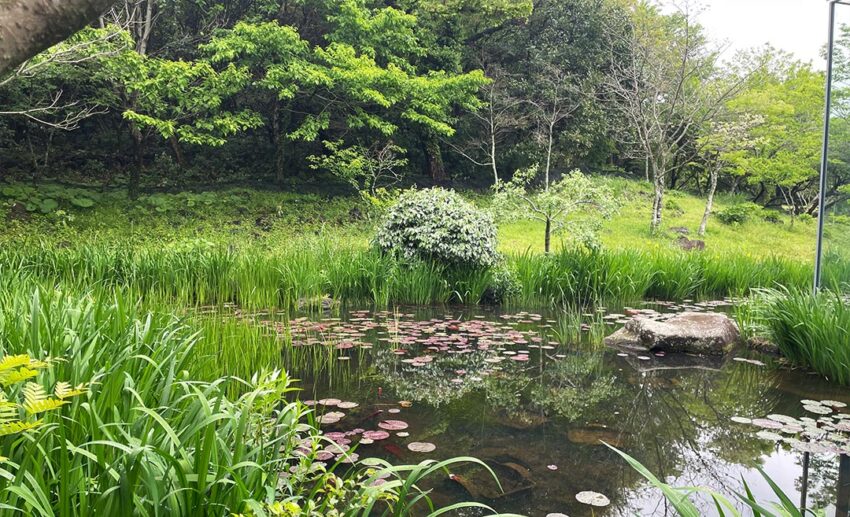
Taking a mindful moment by the quiet ponds at Innisfree Jeju House, where the local skincare philosophy is deeply rooted in the island’s natural botanicals. (Image by Sofia Shamsunahar) 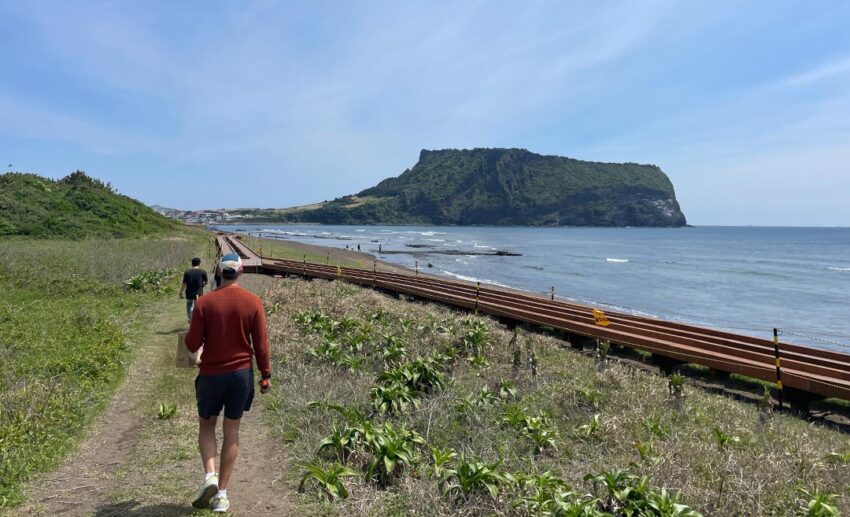
Walking parallel to the tide, with the striking outline of a volcanic crater drawing us forward on our coastal ramble. (Image by Sofia Shamsunahar)
Local flavours worth slowing down for
Part of that slower pace comes from how deeply Jeju celebrates its local produce. Whether it’s K-beauty products made with volcanic clay or cafes serving hallabong juice and tangerine ade, Jeju’s ingredients are celebrated instead of simply consumed.
Visitors can sample carrot cakes, cookies, and even carrot jam at cafes dedicated entirely to Jeju’s carrots. A short ferry ride away, Udo Island has become famous for its peanut ice cream, while Innisfree Jeju House invites visitors to experience skincare inspired by locally grown orchids.
Even these attractions encourage visitors to slow down by connecting them with the island’s harvest instead of passing through it.
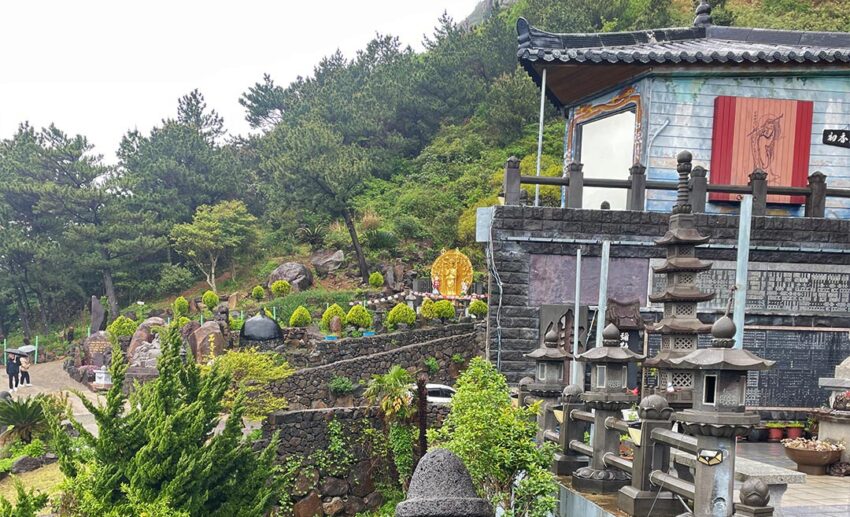
Stone grandfathers standing guard among the orange leaves at Sanbanggulsa Temple, merging the island’s ancient folklore with spiritual devotion. 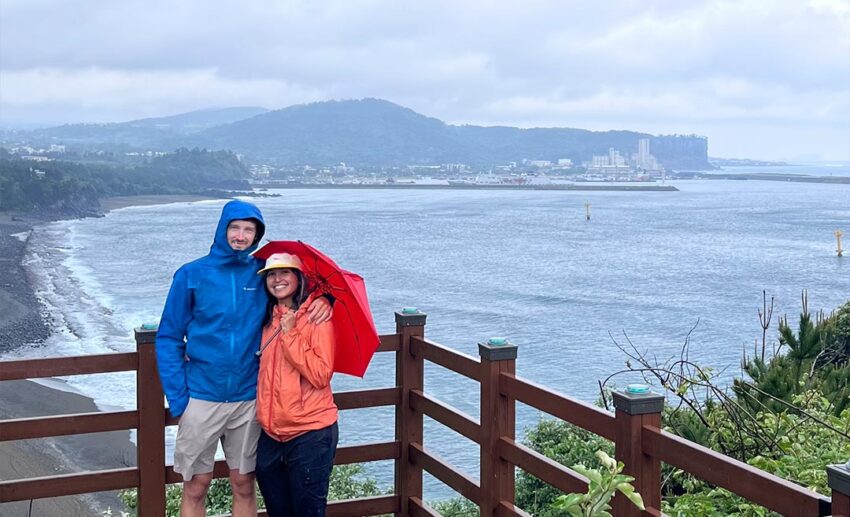
Navigating the dramatic, layered rock shelves of the Yeongmeori coast on our pilgrimage up to the cave temple. (Image by Irina Manneråk) 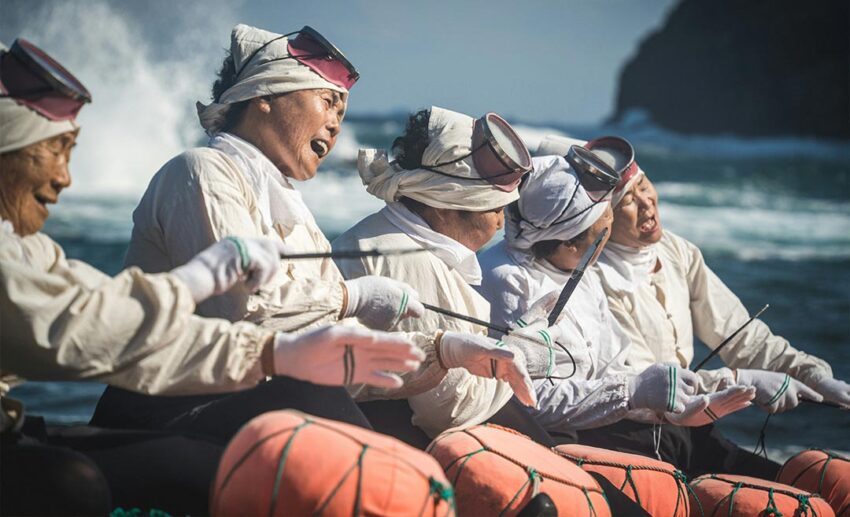
The inspiring Haenyeo women performing their ancestral songs before a dive—a powerful celebration of sisterhood, resilience, and survival. (Image by jon ko) 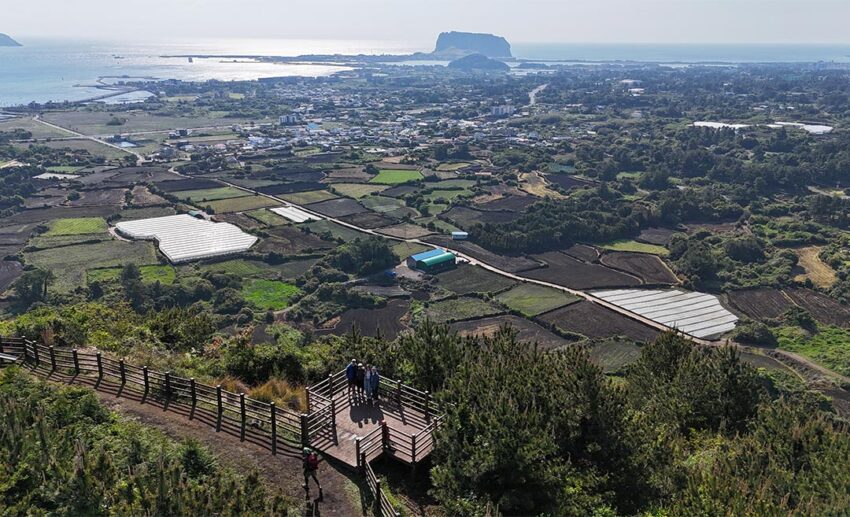
The untamed beauty of Jeju’s east coast, where the sheer volcanic cliffs stand firm against the relentless push of the sea. (Image by Johnny Adams)
Where everyday experiences reflect Jeju’s character
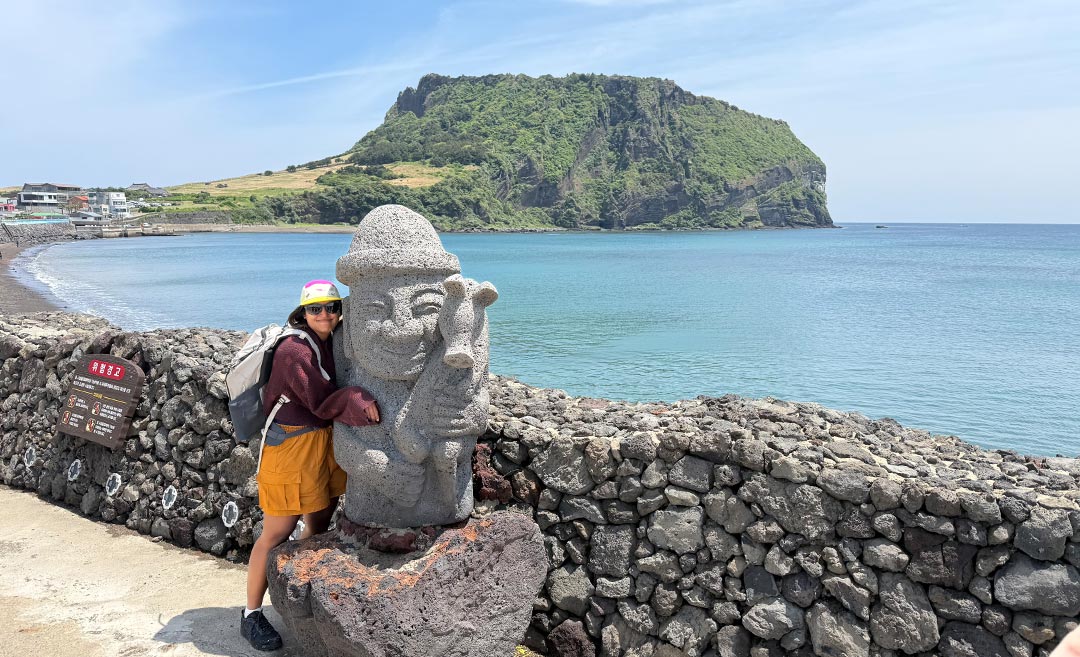
Jeju’s slower rhythm also comes from the care its people take in preserving the island’s identity. One of the first things I notice are the dol hareubang, native volcanic rock statues of stone grandfathers. These carved statues are historically placed around the island as guardians of fortresses and villages.
That same connection to place can be felt at Sanbanggulsa Temple, which sits in a rock cave on a sea-facing cliffside. When I visited the temple, I hiked a picturesque coastal path from Yeongmeori coast to reach it. The Buddhist temple has Jeju’s culture infused into it, where dol hareubang stand among citrus trees overlooking the sea.
Nowhere is Jeju’s connection to its traditions more evident than in the haenyeo. These island women free-dive well into their 80s, often spending up to seven hours a day harvesting seafood. Their knowledge has been passed down through generations and continues to be preserved through associations, dedicated schools, and the Haenyeo Museum. It makes sense why UNESCO has recognised the culture of the Haenyeo as a UN Intangible Cultural Heritage of Humanity.
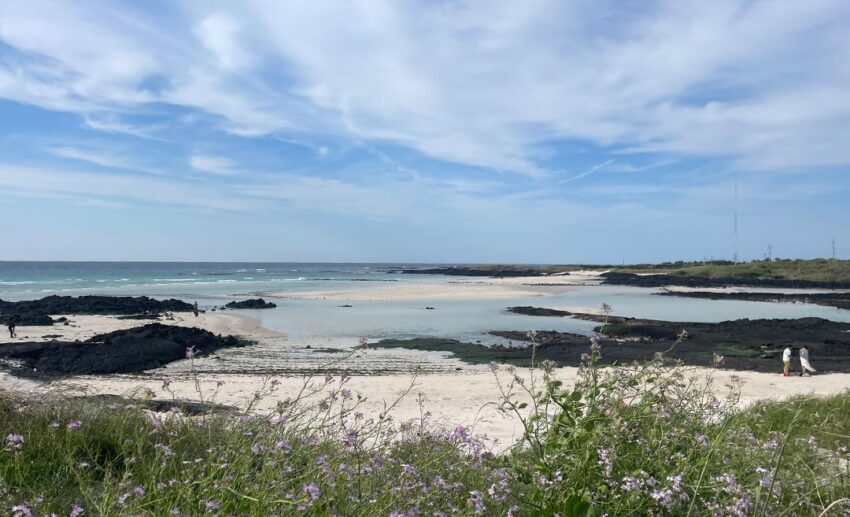
The quiet grandeur of Jeju’s shorelines, where dark volcanic boundaries give way to brilliant, shifting hues of blue. (Image by Sofia Shamsunahar) 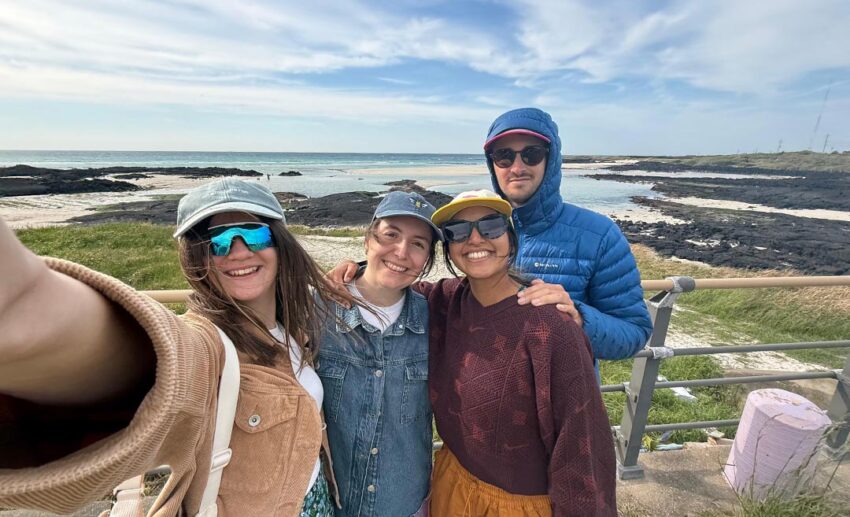
The best journeys are those shared with friends who appreciate the value of stopping to notice the little things along the way. (Image by Irina Mannerak) 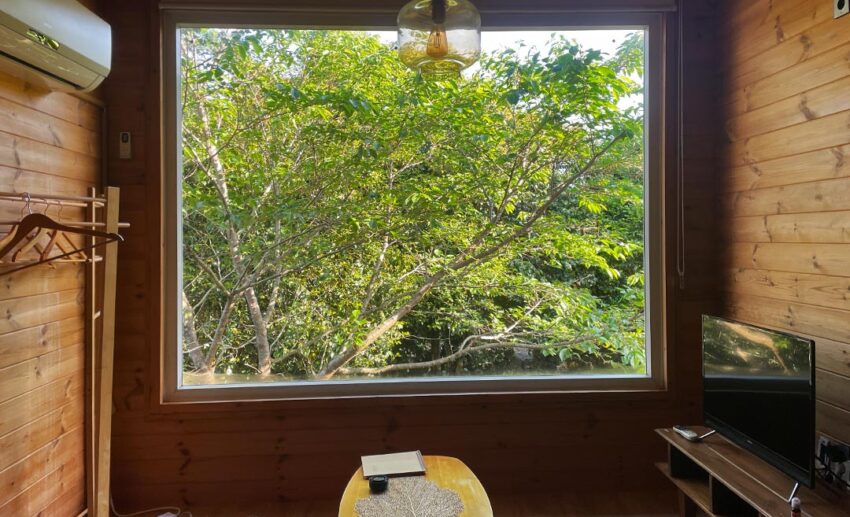
Resting our feet at our local pension, finding a home away from home where we could swap stories and let the day’s experiences settle. (Image by Sofia Shamsunahar)
Traditions that encourage you to pause
Maybe I’m influenced by all the souvenir shops that sell adorable and artful souvenirs which celebrate the island’s icons, such as the famous yellow canola flowers, horses, and oranges. I rarely leave empty-handed, usually with cutesy stickers, tote bags, Croc Jibbitz, or miniature dol hareubang tucked into my bag. Small reminders of a place that captures Jeju’s identity with genuine affection.
Jeju awakens every sense. Whether it’s tasting fresh seafood, feeling warm sand beneath your feet, hearing the waves crash against volcanic cliffs, or spotting black-faced spoonbills along the shoreline, the island gently pulls you into the present. Its landscapes don’t demand attention; they quietly earn it. And perhaps that’s what Jeju gets right about slowing down: it reminds us that travel becomes richer when we stop trying to see everything and start noticing what’s already in front of us.