Negros Island is leading a new kind of food travel that slows things down, connects travellers with producers, and shows why local ingredients and traditions matter.
Food travel is changing. The rush from one restaurant to the next is losing its appeal, and a new way of exploring a place is stepping in. Slow Food Travel invites you to eat with purpose, meet the people behind the plate, and understand how landscapes, traditions, and ingredients shape local identity. The Philippines has joined this global movement, and it is starting where it makes the most sense: Negros Island.
What Slow Food Travel actually is
Most food tours show you what to eat. Slow Food Travel shows you why it matters. Instead of being guided from one bite to the next, travellers build their own path based on what they care about. You can spend a morning on a farm, join a fisherfolk community at sea, learn a recipe from someone whose family has kept it alive for generations, or taste ingredients that exist nowhere else in the world. The idea is simple: Meet the producers. Learn their stories. See where food comes from.
Why Negros Island was chosen
Negros Island is known as the Organic Capital of the Philippines. Its volcanic soil, thriving reefs, and strong culture of farming and fishing make it a natural home for food traditions that have stayed local, seasonal, and rooted in community.
It is also a place where biodiversity and daily life are closely tied. Heirloom crops grow beside small family farms. Marine sanctuaries help shape the coastal kitchen. Ingredients like batuan, Criollo cacao, and heritage river eel appeared in homes long before they showed up on menus.
What Slow Food Travel looks like in Negros
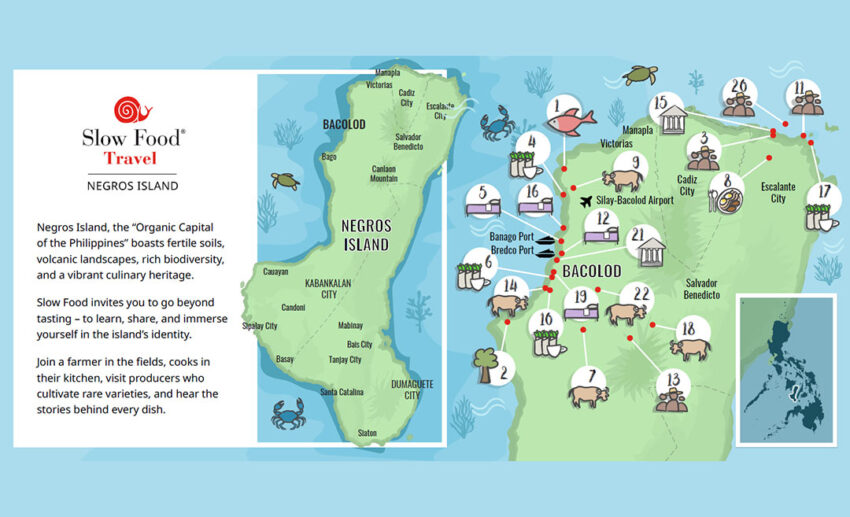
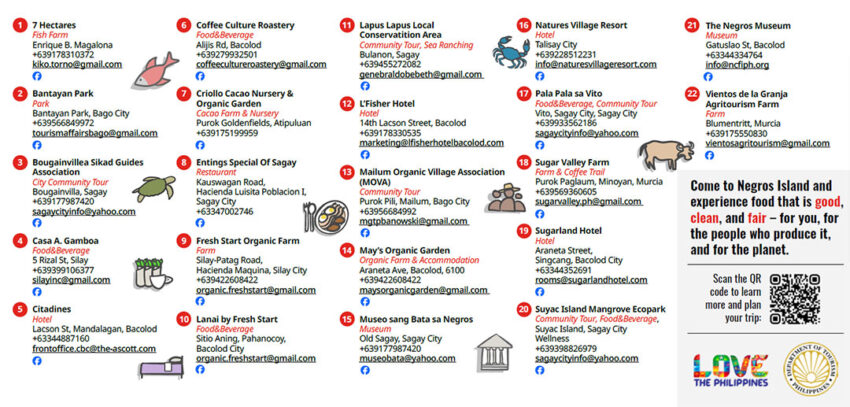
Visitors can design itineraries around what they want to learn or taste, such as:
- Taste tradition at Vientos: Try cassava dishes like alupi cooked with fresh coconut milk and local sugar. These recipes are simple, grounded, and passed down through families.
- Walk through Minoyan’s coffee farms: Join the Slow Food Coffee Coalition, share a farmer’s lunch, and learn how to cup coffee at Coffee Culture Roastery. It is a full journey from bean to brew.
- Enjoy a Slow Food dinner at Lanai: Meals here spotlight Ark of Taste ingredients such as batuan and kadyos, along with adlai and Criollo cacao. Each dish is tied to a story of preservation and biodiversity.
- Explore Suyac Island Eco Park and the waters of Carbin Reef: Understand how mangroves support both marine life and local livelihoods before snorkelling in some of the clearest waters in the region.
- Meet young culture keepers at Museo Sang Bata Sa Negros: Taste kinilaw prepared by second-generation master Mark Lobaton and learn how coastal traditions are being passed down.
- Craft your own tablea: At Christopher Fadriga’s Criollo cacao nursery, shape cacao tablets by hand, hear how this rare variety is grown, and see why protecting it matters.
As more destinations across the Philippines prepare their own Slow Food Travel routes, Negros stands as the first chapter, grounded in the people who make food worth travelling for.