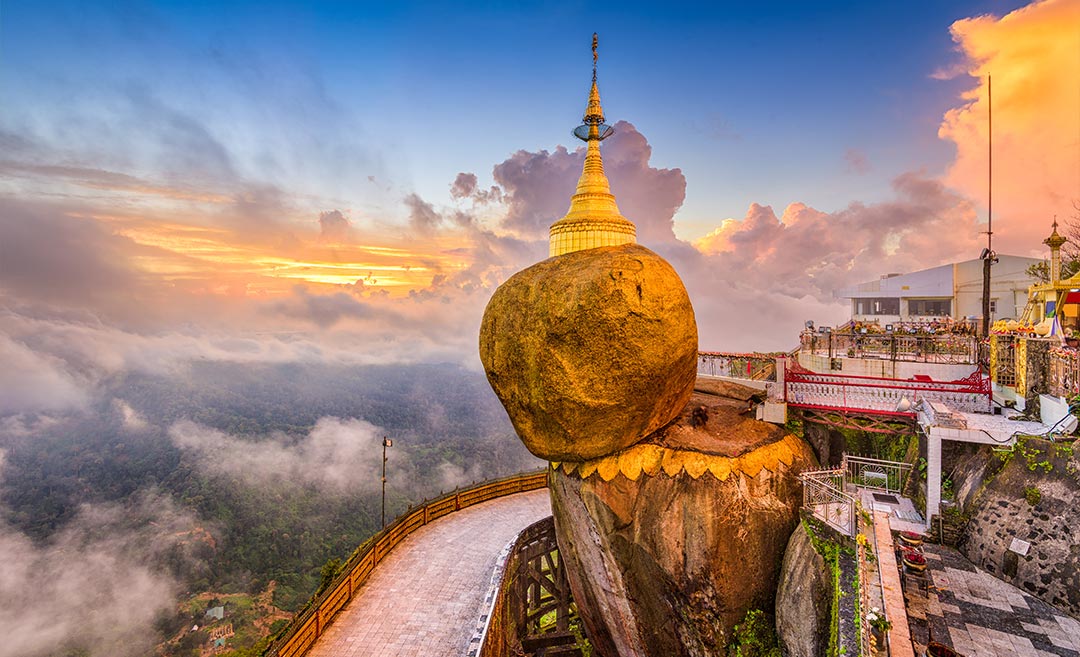
The pagoda is believed to be held in place by a strand of the Buddha’s hair, a heavenly intervention that attracts thousands of pilgrims every year. (Image by SeanPavonePhoto.)
Dotted with hundreds of Buddhist monuments, Myanmar is often called the Land of Pagodas for good reason.
Among these dazzling sanctuaries, one temple stands out for an extraordinary feature—its ability to defy gravity.
Perched 1,100 metres above sea level, this hallowed pagoda rests atop a cliff-edge boulder on Mount Kyaiktiyo in Mon State, approximately 190 kilometres northeast of Yangon.
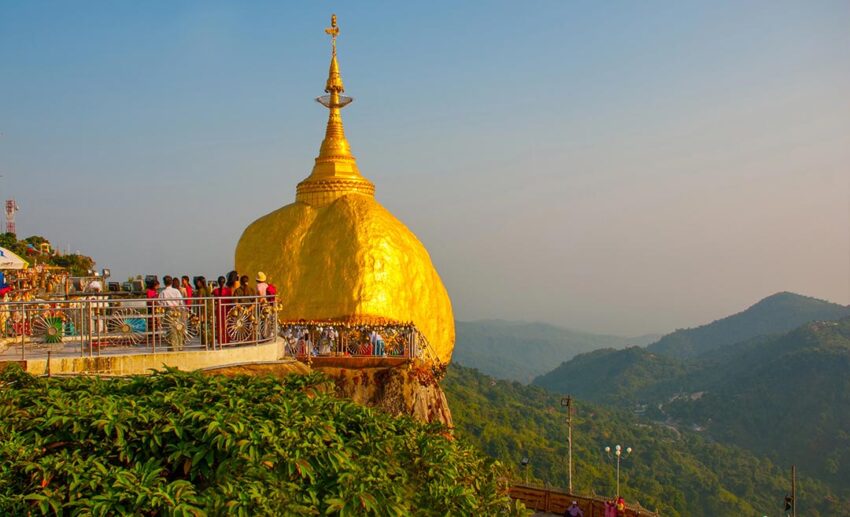
Also known as the Golden Rock Pagoda, this Buddhist shrine was built in 574 CE by a Mon king who reputedly possessed supernatural powers.
For tourists, the pagoda’s biggest pull is undoubtedly its massive gilded boulder. Despite appearing as if it might roll off the cliff at any moment, the rock has stayed put for centuries.
Covered in squares of gold leaf pasted by devotees, this impressive eight-metre-high boulder weighs a hefty 612 tonnes and measures 15 metres in circumference.
Meaning “pagoda atop a hermit’s head” in Mon, Kyaiktiyo is steeped in myth and mystique. If legend is to be believed, the precariously perched granite rock is held in place by a strand of the Buddha’s hair.
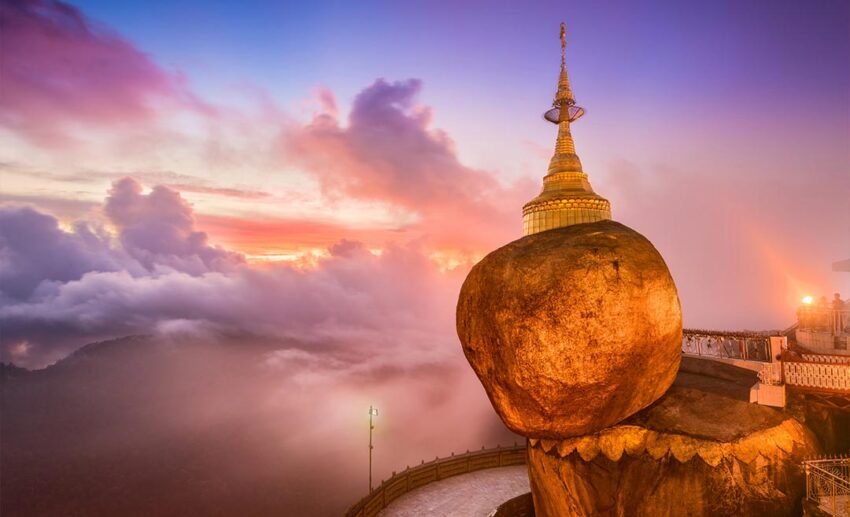
According to the most popular account, this tendril of hair was gifted by the Buddha himself to a local hermit, who later presented it to the king.
Before parting with the treasure, the hermit requested it be enshrined within a pagoda. Not just any pagoda, but one erected on a boulder shaped like his head.
Finding a suitable rock proved a divine task, but with heavenly intervention, a matching one was finally located at the bottom of the sea.
The rock was transported to the mountaintop and a pagoda was duly built above it as the hermit wished.
Every year, thousands of pilgrims and tourists from Myanmar and beyond visit Kyaiktiyo to pay their respects and take in its stunning beauty.

Pilgrims make offerings of flowers, candles and golden prayer bells inscribed with Buddhist scripture. The chiming of the bells symbolises the Buddha’s voice and is said to dispel ignorance and lead devotees to enlightenment.
On foot, the 12-kilometre ascent from the village of Kinpun, the base camp for Kyaiktiyo tours, can take up to five hours. The same journey via car, bus or lorry takes under an hour.
One of the best times to visit the pagoda is during the Tabaung Full Moon Festival in March, when pilgrims light candles to pay homage and seek blessings.
Illuminated by the light of the full moon and the flickering of thousands of candles on this day, the revered monument transforms into an ethereal venue that only the gods could dream up.
Note: At the time of publishing, we advise against non-essential travel to Myanmar due to ongoing violence and civil unrest. Please refer to official travel advisories before making any plans.
This story by Chitra Santhinathan was originally published on AirAsia. Zafigo republished this story in full with permission from the publisher, simply because good stories should be read by as many people as possible! If you have stories that will be of interest and useful to women travellers, especially in Asia, please get in touch with us at [email protected].