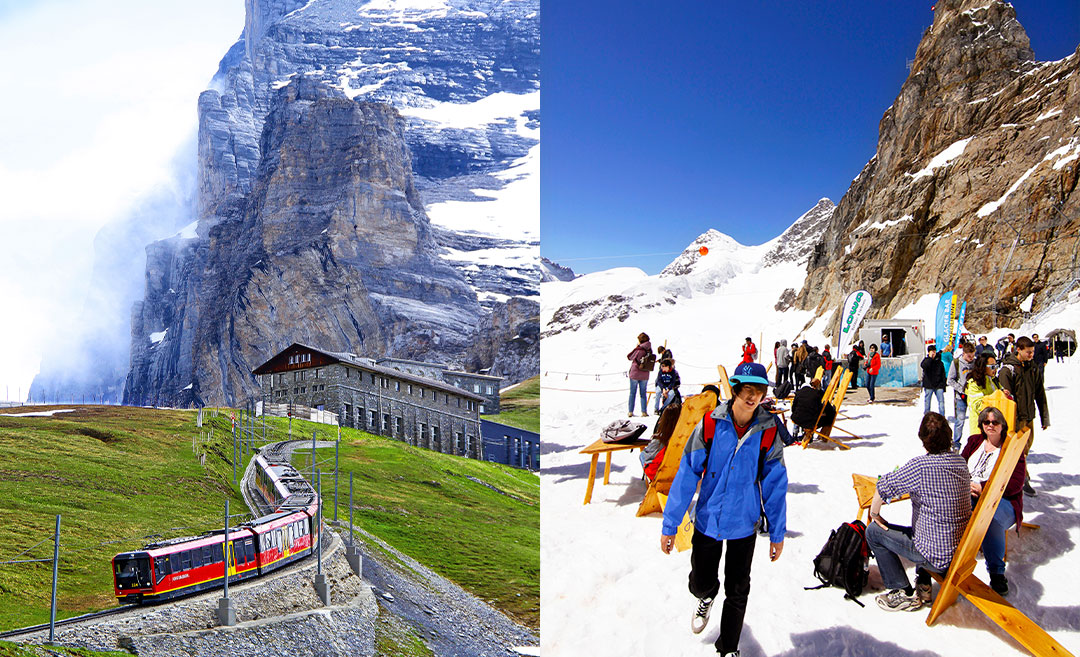
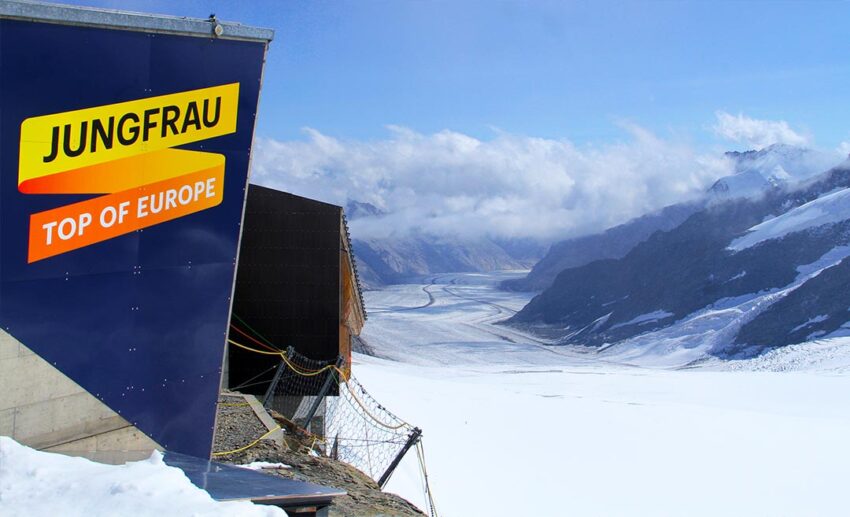
Left: The train from Kleine Scheidegg passes Eigergletscher Station at the base of the Eiger North Face. | Right: Visitors to the ‘Top of Europe’ have immediate access to the snow. (Images by David Bowden)
Interlaken, the town between Brienz (Brienzersee) and Thun (Thunersee) Lakes, is one of Switzerland’s busiest year-round holiday destinations. It is also where exhilarating rail journeys begin, including one that terminates at Europe’s highest railway station.
The ‘Top of Europe’, Switzerland’s most popular alpine destination, is located at Jungfraujoch, the saddle separating the Eiger, Mönch, and Jungfrau alpine peaks. Located above Interlaken at an altitude of 3,454m, visitors can travel on the train directly to the mountains to admire Switzerland’s highest peaks, glaciers, and other alpine features.
Travelling to the Alps is a must, and the best way to do this is by train, but there are several approaches, so read on. My suggestion for a day’s excursion would be to catch a train from Interlaken Ost (East) to Grindelwald Terminal, alight for the Eiger Express cable car to Eigergletscher Station, then take the Jungfraubahn (Jungfrau Railway) to explore the Jungfraujoch summit and have lunch there. Return to Kleine Scheidegg, alight, and catch the train to Lauterbrunnen via Wengen, before returning to Interlaken Ost. My other recommended journeys on other days are to travel to Mürren as well as to take the heritage train to Schynige Platte for another day in the mountains.
Engineering marvel
The Jungfraujoch railway, conceived by Adolf Guyer-Zeller, opened in 1912. Tourism for affluent Europeans was well established in Switzerland by then. The biggest challenge was to carve a tunnel through the Alps to Jungfraujoch, just below the summits of Mounts Eiger and Mönch. The work was challenging and dangerous due to avalanches and accidents. Construction began in 1896, and 16 years later, the first train travelled from Kleine Scheidegg to Jungfraujoch despite Guyer-Zeller’s passing.
The journey to Jungfraujoch
Trains depart from Interlaken East for Lauterbrunnen and then onto Kleine Scheidegg for Jungfraujoch. The train is divided at Zweilütschinen, with one section going to Lauterbrunnen and the other to Grindelwald.
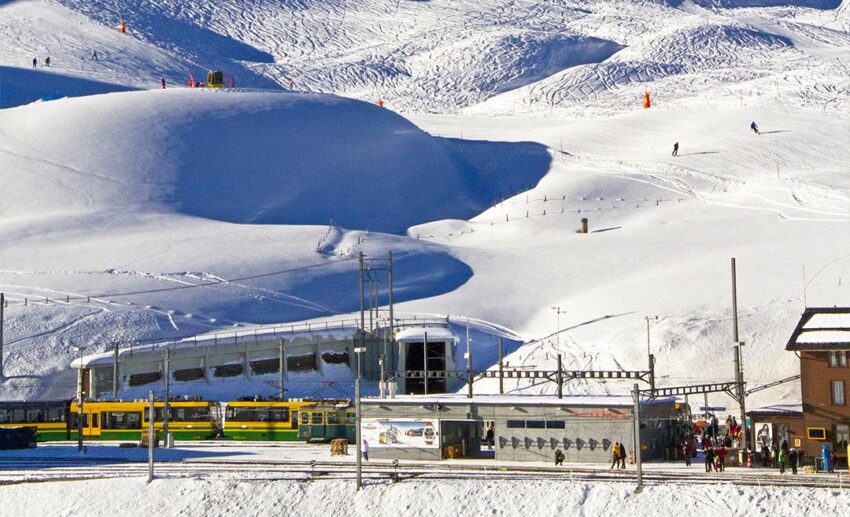
Trains between Lauterbrunnen, Kleine Scheidegg, and Grindelwald operate in the distinctive green and yellow colours of the Wengernalp Railway. The train ascends slowly from Lauterbrunnen to Kleine Scheidegg at 2,061m altitude and serves as a feeder train to the Jungfraubahn. Accommodation, restaurants, and bars make Kleine Scheidegg a popular ski field.
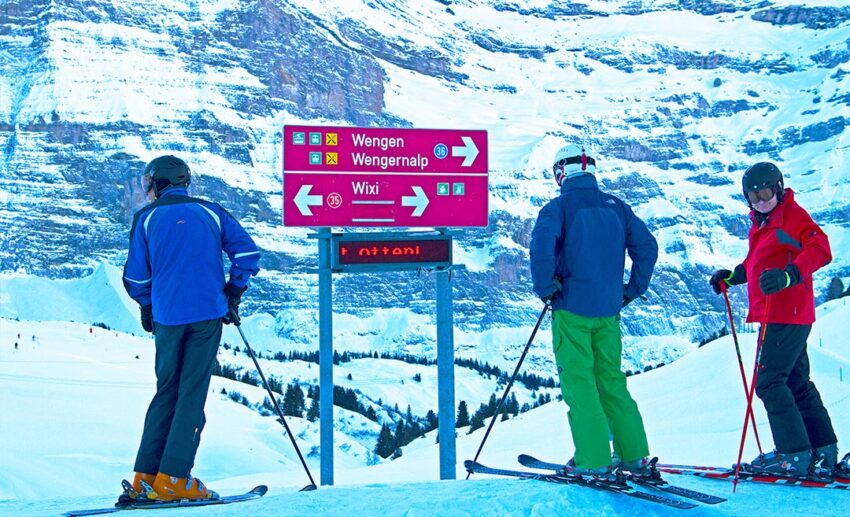
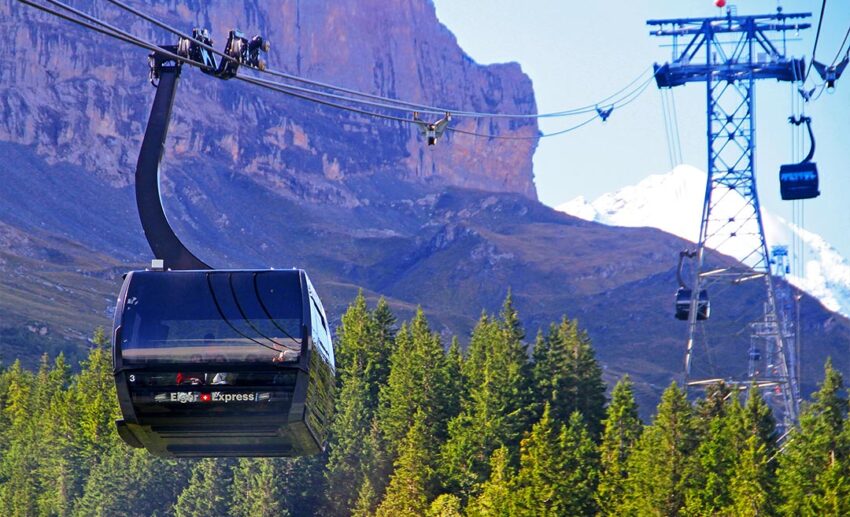
Travellers need to change trains at Kleine Scheidegg to reach Jungfraujoch. Most of this route goes through tunnels, but there is a stop at Eismeer where passengers can get off and enjoy the scenery. Another possibility is to ride the Eiger Express cable car from Grindelwald Terminal to Eigergletscher Station.
On top of the world
Jungfraujoch, Europe’s highest railway station, is located beneath a glacial saddle between the Jungfrau and Mönch peaks. From the underground station, visitors reach the surface via an elevator to facilities like restaurants, shops (Lindt Chocolate Heaven offers an excellent selection of chocolates), and observatories. Visitors can walk through the Ice Palace, with carvings made from glacial ice. There is an extensive selection of outdoor activities too, including sledding, tubing, skiing, snowboarding, zip-lining, and glacial walks.
On the return journey, passengers seeking exercise can alight at Eigergletscher and walk one hour down the well-formed trail to Kleine Scheidegg. Then, take the train to either Grindelwald or Lauterbrunnen, then back to Interlaken.
Railway sideshows
The Interlaken region is full of other adventures, with three of my favourite regional destinations being First, Mürren, and Schynige Platte.
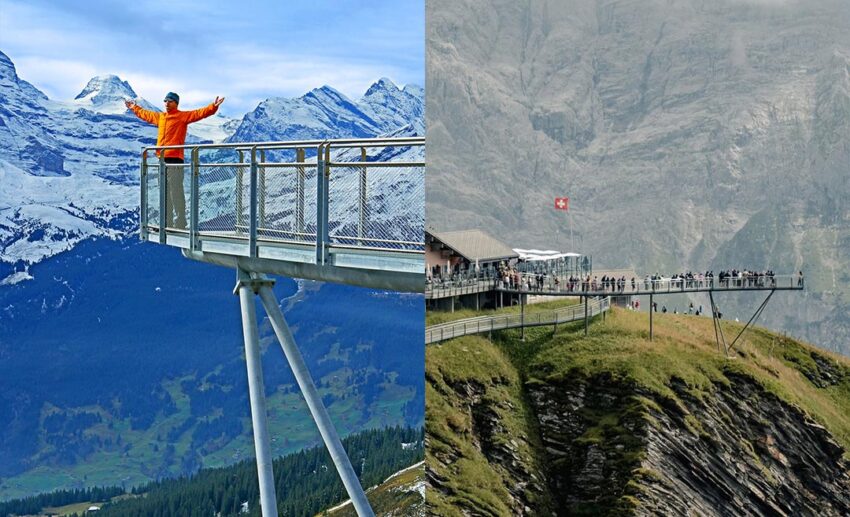
Grindelwald is a wonderful alpine village with excellent tourism infrastructure, including hotels for those seeking alternative accommodation to Interlaken. From here, ride the gondola to First for activities like the First Flyer, First Glider, First Cliff Walk, skiing, hiking, and riding a Trottibike downhill back to Grindelwald.
Compact Mürren fascinates because it is car-free and offers amazing views of Mount Eiger and the Schilthorn. Passengers depart from Interlaken East and alight at Lauterbrunnen, where a cable car travels up to Grütschalp for the train to Mürren. The 4.3km railway is the region’s shortest but one of the most scenic. It is a short walk through the village to the Gimmelwald cable car station, which offers an alternate descent back to Stechelberg and onto Lauterbrunnen.
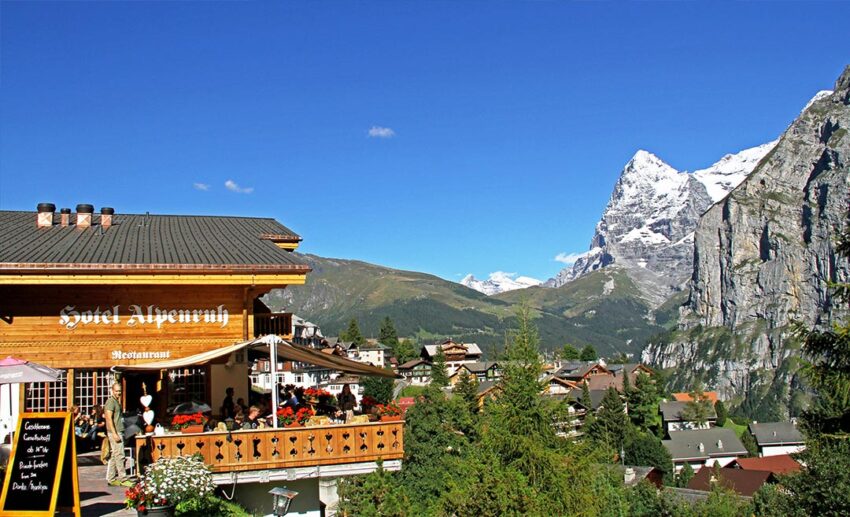
A major draw of Mürren is taking the cable car up to Schilthorn’s 2,970-metre peak, famous as the filming location for the James Bond movie, On Her Majesty’s Secret Service. Visit the exhibition on the movie and take in the informative signs on the ‘Walk of Fame’. Mürren provides a tranquil alternative to Interlaken’s liveliness and appeals for its village atmosphere, boutique hotels like Alpenruh, and atmospheric restaurants.
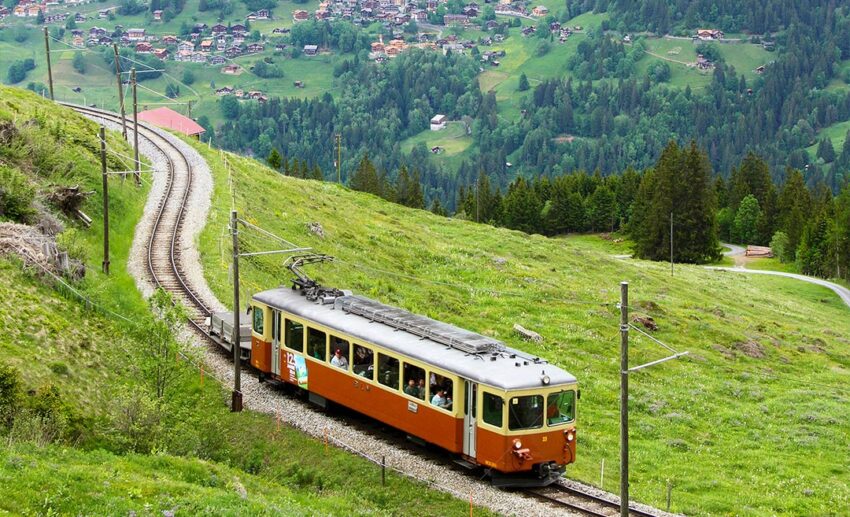
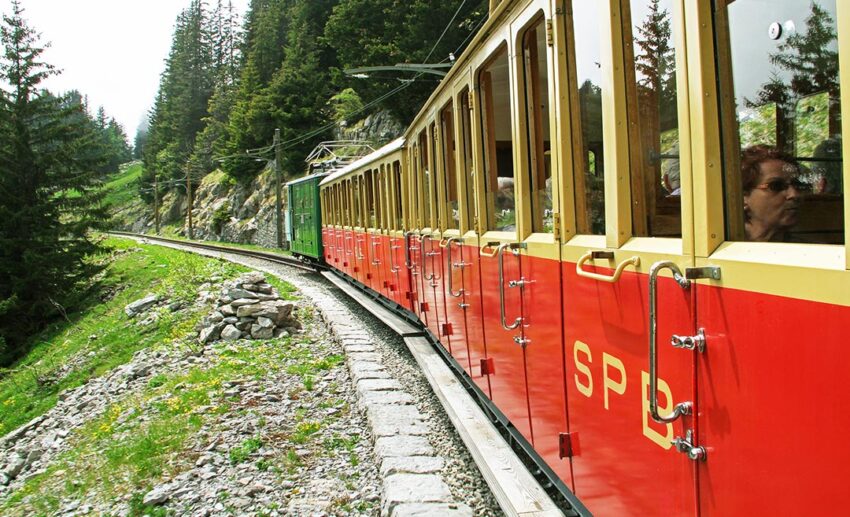
The Schynige Platte Railway operates from Wilderswil with connections to Interlaken. Schynige Platte is a small mountain ridge offering uninterrupted views of the Alps and lakes from its terminus at an altitude of 1,967m. This mountain cogwheel railway opened in 1893 and remains one of Switzerland’s highest. The train takes 52 minutes to cover the 7.3km cogwheel ascent to the summit, where accommodation and meals are available. Take a moment to admire 800 alpine plant species at Schynige Platte Botanical Alpine Garden.
Resort town
Visitors travel to Interlaken to venture up into the Alps, with the only way to reach Jungfraujoch being the historic Jungfraubahn railway.
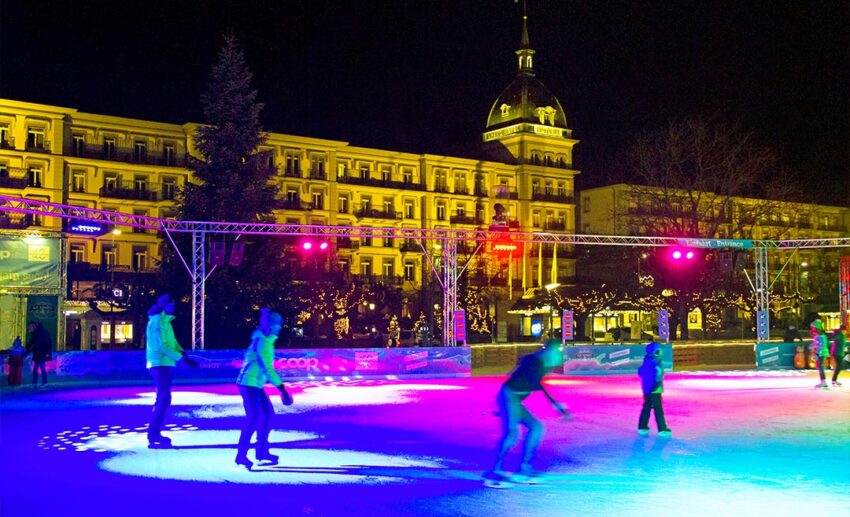
There was once a stretch of hotels between Interlaken West and Interlaken Ost (East), with the classic heritage property being the Victoria-Jungfrau Grand Hotel and Spa. It has extensive indoor sports facilities, a wellness centre, and Kirchhofer’s Casino Gallery, which features the world’s largest selection of duty-free Swiss watches as well as designer fashions.
Getting there & around
SWISS has direct daily flights from Singapore to Zürich with convenient connections from Kuala Lumpur. Interlaken is two hours away by train. A Swiss Travel Pass is the best way to independently explore Switzerland, as this pass enables unlimited travel on most forms of Swiss public transportation. Discounts to Jungfraujoch are offered for passholders, and advanced online bookings are recommended.
Accommodation & dining
Interlaken has been a health resort town for well over a century, so there are many hotels in which to stay. Grand Belle Époque hotels like the Victoria-Jungfrau Grand Hotel and Spa and the Lindner Grand Hotel Beau-Rivage provide an insight into the golden era of travel when Switzerland first welcomed holidaymakers. Stay away from the crowds at the Hotel Alpenruh in Mürren or the Mountain Hotel Schynige Platte.
Interlaken offers a smorgasbord of global cuisines, including Asian. Dine at WineArt or at Restaurant Des Alpes overlooking the Höheweg, where tandem paragliders land after their aerial descent.
For more tourism information, visit Interlaken Tourism and Switzerland Tourism.