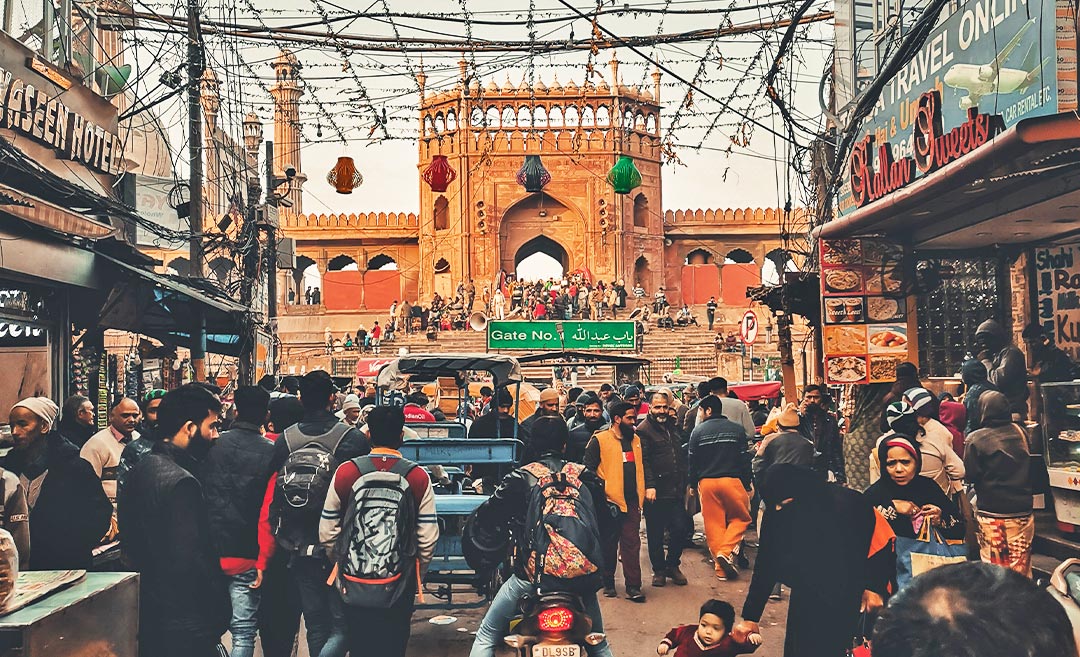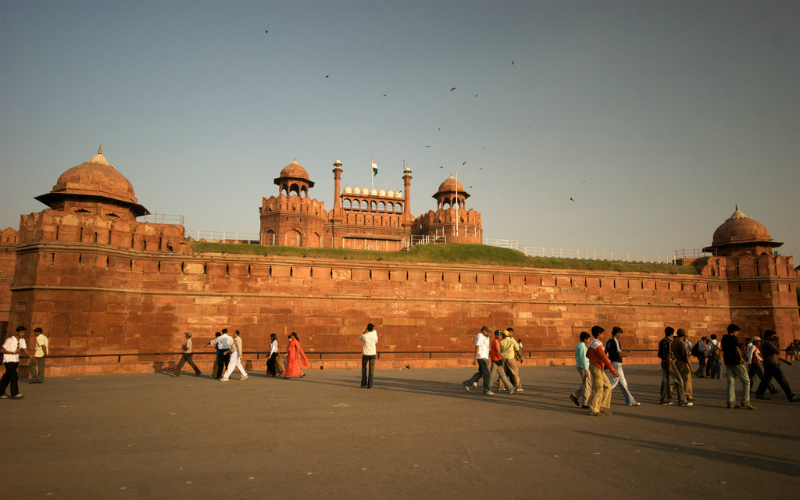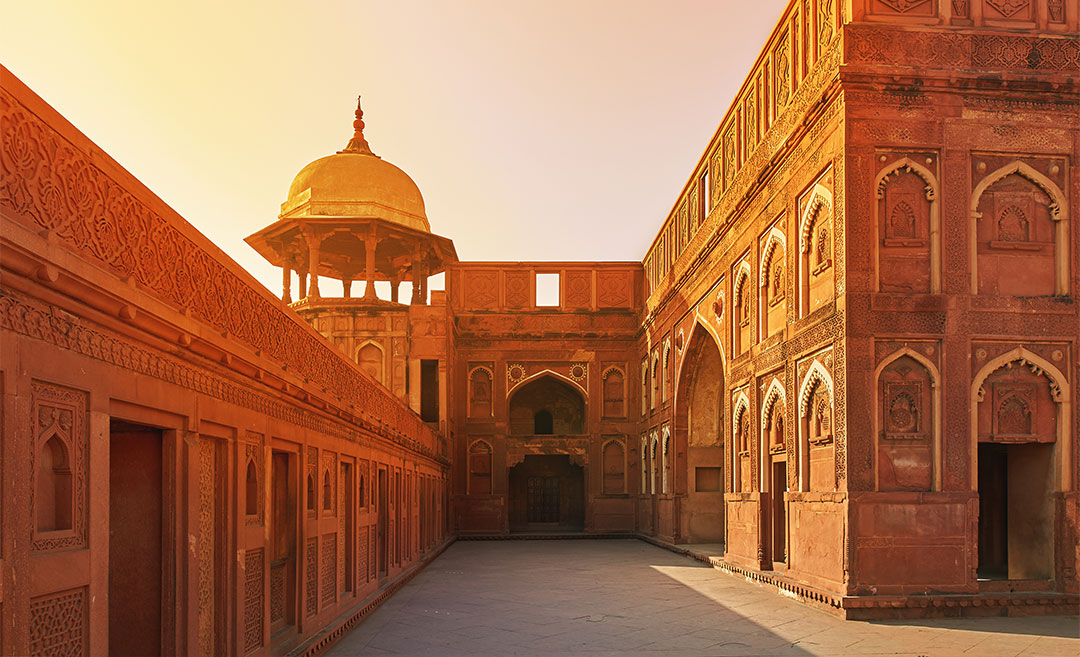
Whether you’re a history buff or not, Delhi’s impressive ancient structures will certainly leave you in awe. (Image by jura_taranik)
Delhi is dotted with ancient marvels that echo the grandeur of its storied past. These architectural wonders reflect a blend of diverse influences, showcasing styles ranging from Mughal opulence to British colonial pomp.
They draw visitors from across the globe who seek to learn about the history that makes the Indian capital a city like no other.
Red Fort
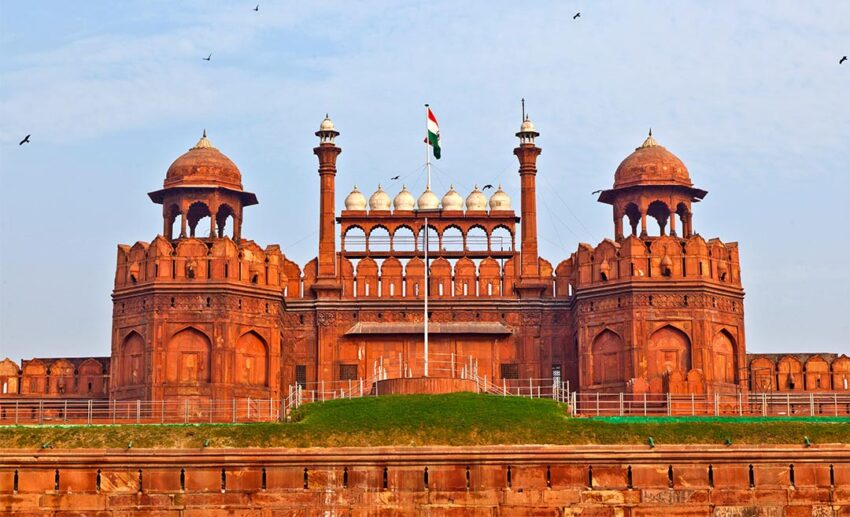
The Red Fort or Lal Qila is a fortress built in 1639 by Mughal emperor Shah Jahan to mark the shift of the capital from Agra to Delhi.
Designed by Ustad Ahmad Lahori, the visionary behind the Taj Mahal, this UNESCO World Heritage Site boasts Mughal grandeur with its red sandstone walls and intricate detailing.
As Delhi’s largest monument, the Red Fort gained even more historical significance on 15 August 1947, when India’s first premier Jawaharlal Nehru raised the Indian flag above the main entrance to the fort, marking the country’s independence.
This tradition continues every Independence Day, with the prime minister delivering a nationally broadcast speech from its ramparts.
Qutub Minar
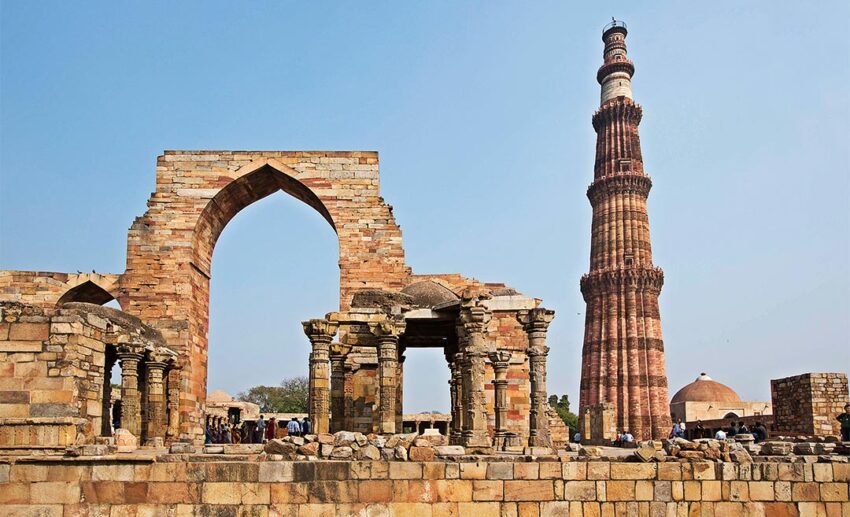
A striking minaret, Qutub Minar marks the site of Delhi’s oldest city, Lal Kot, established by the Tomar Rajputs (a historical Chandravanshi clan who ruled over parts of North India).
Standing 72.5 metres tall, the construction of the red sandstone minaret was initiated in the early 13th century by Qutab-ud-din Aibak, the first sultan of the Delhi Sultanate, though he only managed to complete the first level.
His successors carried on the work, and in 1368, Firuz Shah Tughlaq, the 19th sultan of Delhi, added the final touches, including a cupola at the top.
The surrounding site includes funerary buildings, the Alai Darwaza gate, and two ancient mosques, notably the Quwwatu’l-Islam, northern India’s oldest.
Humayun’s Tomb
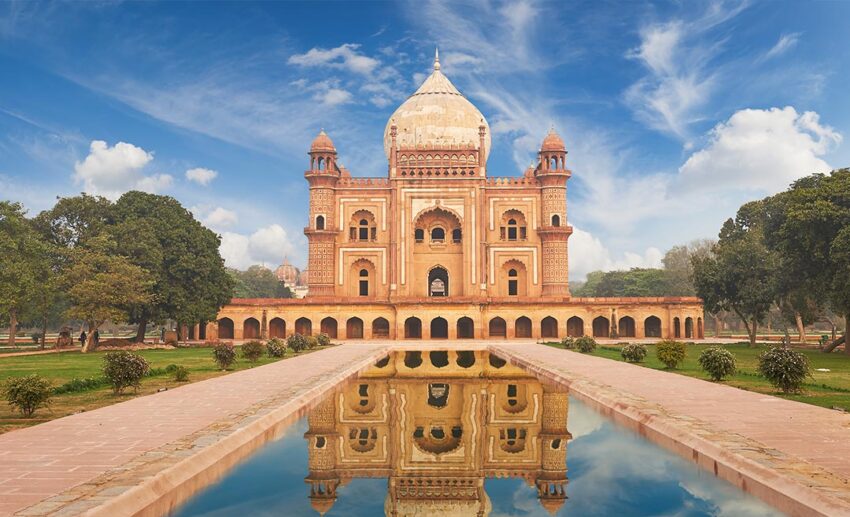
Located in the leafy Nizamuddin East neighbourhood, this tomb was built in memory of the Mughal emperor Humayun by his first wife, Bega Begum.
The construction of the tomb, surrounded by lush symmetrical gardens inspired by Persian charbagh designs, began in 1565 and was completed in 1572 at an estimated cost of 1.5 million rupees—entirely funded by the empress consort.
This garden-tomb, the first of its kind in India, is often referred to as the ‘dormitory of the Mughals’ as over 150 Mughal family members are buried in the surrounding cells.
Jama Masjid
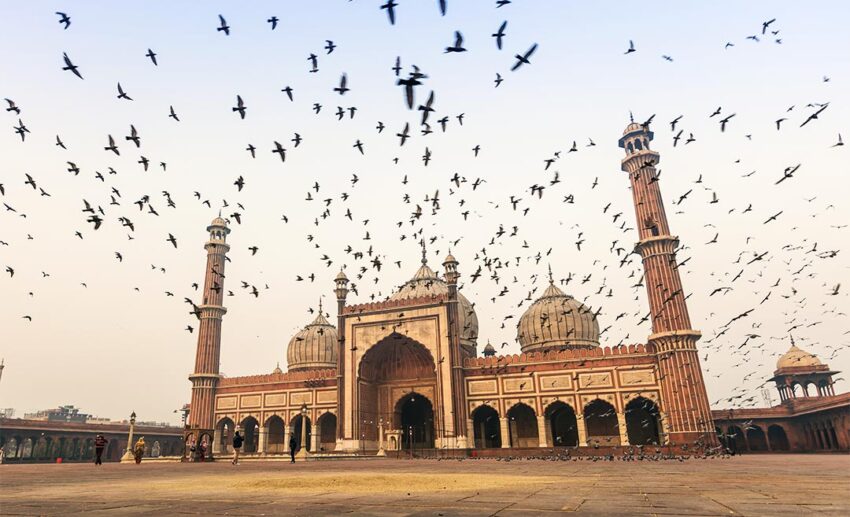
One of the largest mosques in India, Jama Masjid was built between 1650 and 1656 by Shah Jahan.
He also bestowed the mosque with the name Masjid-i-Jehan-Numa, meaning ‘the mosque that reflects the whole world’.
In 1656, its first imam, Syed Abdul Ghafoor Shah Bukhari from Uzbekistan, inaugurated the mosque, once the largest in the Indian subcontinent.
For over two centuries, Jama Masjid served as the imperial mosque for the Mughal emperors until the fall of the empire in 1857. Today, it continues to serve as one of Delhi’s main mosques.
Purana Qila
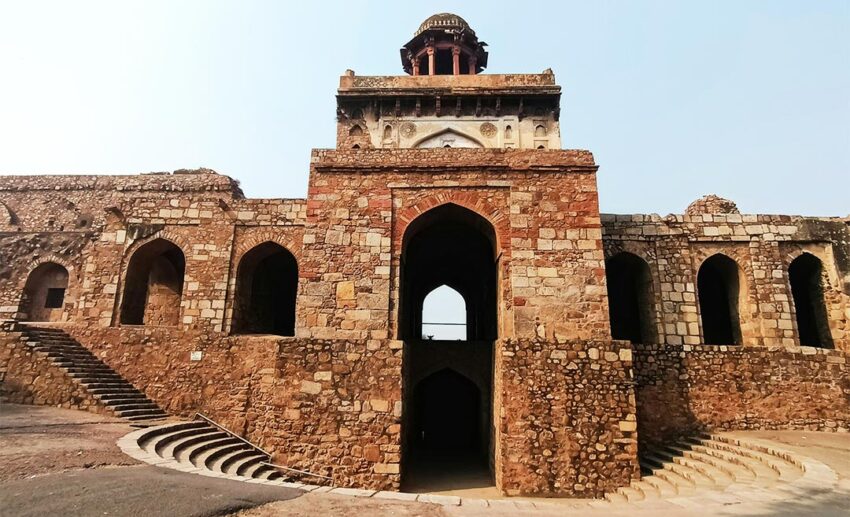
Purana Qila (literally, ‘old fort’) was built in the 16th century by Mughal emperor Humayun and later strengthened by his rival, Afghan ruler Sher Shah Suri.
The fort is famous as the location where Humayun met his untimely death in 1556 after tumbling down the steps of the Sher Mandal, a two-storey tower that served as his library and observatory.
The significance of Purana Qila goes far beyond the Mughal era. The site is believed to be the location of Indraprastha, the legendary capital of the Pandavas from the Mahabharata.
Archaeological excavations have unearthed artefacts, including pottery fragments dating back to 1000 BCE, suggesting continuous habitation here for over 2,000 years.
Tughlaqabad Fort
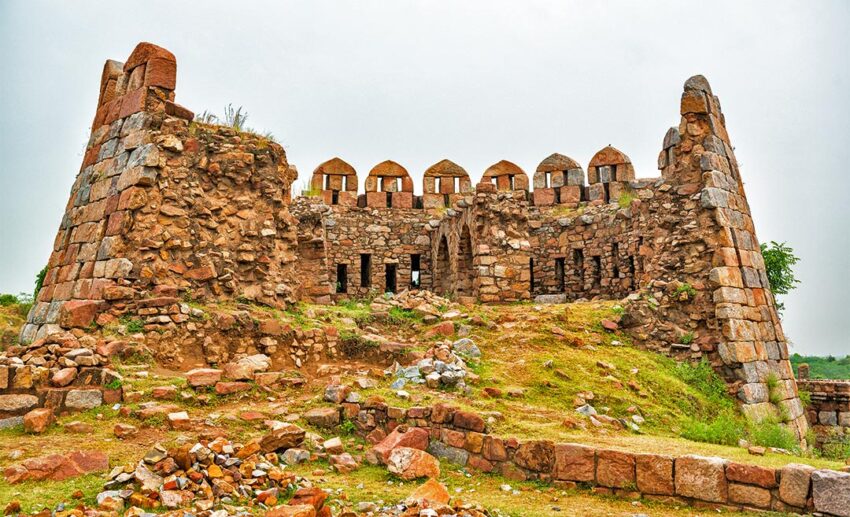
On the southern edge of Delhi lies the majestic ruins of Tughluqabad Fort, built in the 14th century by Ghazi Malik, founder of the Tughlaq dynasty.
Before his rise to power, Ghazi Malik served as a feudatory of the Khalji dynasty. As the story goes, he once suggested to the Khalji ruler that a fort be built in the south, to which the latter joked that Ghazi Malik could build the fort himself when he became king.
In 1320, Ghazi Malik overthrew the Khaljis and ascended the throne as Ghiyath al-Din Tughluq. The year after, he started construction on the fort, turning his idea into reality.
Despite its grandeur, Tughluqabad Fort was abandoned just six years later in 1327, following Ghazi Malik’s sudden death after a wooden pavilion erected in Kara-Manikpur to receive him collapsed.
India Gate
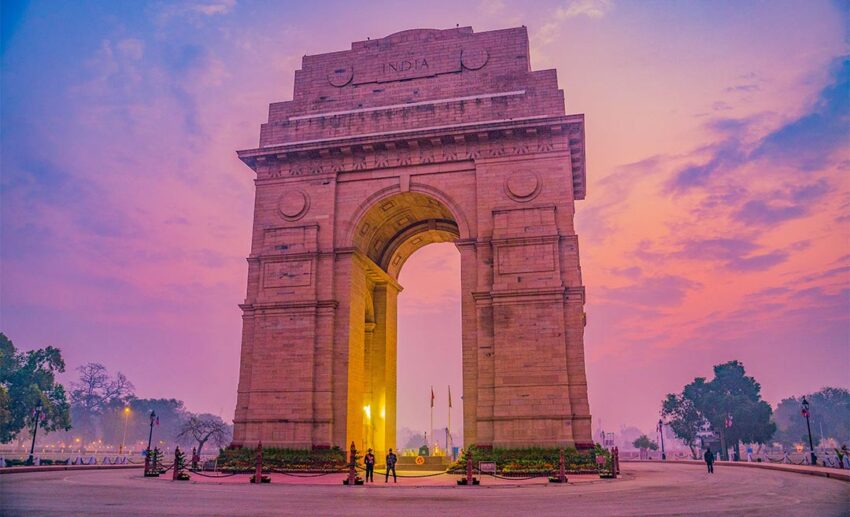
The imposing, 42-metre-tall India Gate was designed by English architect Edwin Lutyens, who designed some of Delhi’s most iconic colonial buildings.
Straddling the Rajpath ceremonial boulevard, the grand sandstone archway serves as a war memorial, honouring the 74,187 Indian Army soldiers who sacrificed their lives during World War I and the Third Anglo-Afghan War.
Engraved on the structure are the names of 13,300 servicemen, including soldiers and officers from India and the UK.
The foundation stone of India Gate was laid in 1921 by the Duke of Connaught, and the monument was officially dedicated to the nation a decade later by Lord Irwin, the then-viceroy of India.
Rashtrapati Bhavan
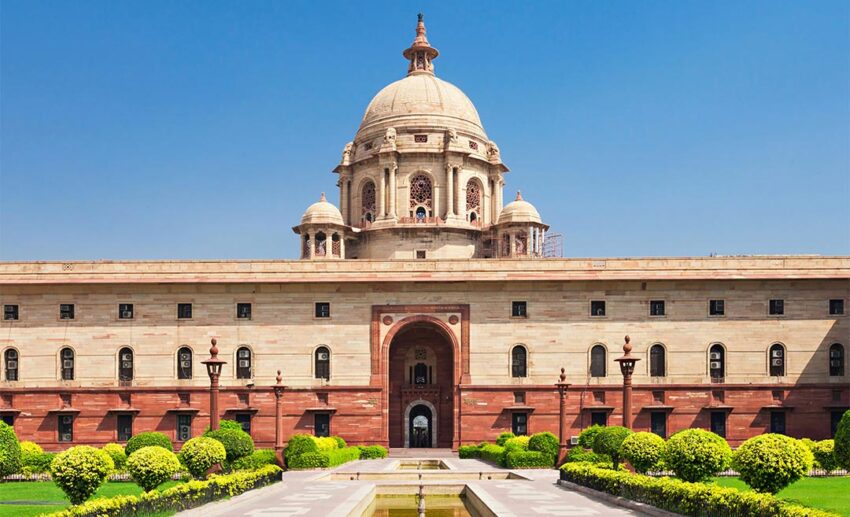
Perched on Raisina Hill at the western end of the Rajpath, Rashtrapati Bhavan is the official residence of the president of India.
Initially constructed as the Viceroy’s House to host the British viceroy of India, the building was renamed Government House following India’s independence.
During Dr Rajendra Prasad’s presidency from 1950 to 1962, it was renamed Rashtrapati Bhavan, reflecting its new status as the official residence of the Indian head of state.
The structure consists of four floors, 340 rooms, and spans an impressive 18,580 square metres.
This story by Gregory Basil was originally published on AirAsia. Zafigo republished this story in full with permission from the publisher, simply because good stories should be read by as many people as possible! If you have stories that will be of interest and useful to women travellers, especially in Asia, please get in touch with us at [email protected].