
When life feels uncertain, travel can create the space, perspective and clarity needed to navigate major life transitions. (Image by Yunus Tuğ)
Major life decisions have a habit of arriving at the worst possible time, and they rarely appear when you’re sipping coffee on a quiet morning with a clear calendar and an open mind. More often than not, they show up in the middle of school runs (for those with kids), overflowing inboxes, looming deadlines and the kind of mental load that has you walking into a room and immediately forgetting why you’re there.
Perhaps you’re wondering whether it’s time to leave a job you’ve outgrown. Maybe a relationship has reached a crossroads. Or perhaps you’ve simply arrived at one of those moments when you find yourself questioning whether the path you’re on is still the right one, and whether it continues to bring you fulfilment.
During periods of uncertainty, it’s not unusual to crave a change of scenery. While travel may not provide immediate answers, it can offer something equally valuable: the perspective and clarity that are often difficult to find in the middle of everyday life.
When life feels too noisy

The problem is that clarity can be difficult to find when you’re living inside a situation. When every day follows a familiar routine, it’s easy to become trapped in a cycle of overthinking. We replay conversations, we weigh up endless scenarios, ask friends for advice, and then seek second opinions from other friends who tell us something completely different.
Before long, we’re three hours deep into a Google search that began with “Should I change careers?” and somehow ended with an article about buying a vineyard in rural France.
At moments like these, it’s not unusual to feel the urge to get away.
And it’s not because travel will magically solve the problem, but because stepping outside your daily routine can create something that’s often missing at home: perspective.
Sometimes, distance changes the questions

Many of us travel hoping we’ll return with answers, but what usually happens instead is that we come back with better questions. This is a subtle but important difference.
A week away won’t necessarily tell you whether to quit your job and move cities, or make a significant life change. But what it can do is help uncover what’s really driving the uncertainty in the first place.
A career dilemma may turn out to have less to do with the role itself and more to do with burnout. A desire to relocate might actually be a longing for a slower pace of life, while what feels like dissatisfaction with a relationship could be exhaustion from trying to meet everyone else’s expectations. Travel creates enough distance to see those distinctions more clearly.
Part of this comes from the simple act of disrupting routine. When your mind is occupied with navigating a new place, noticing unfamiliar details and adapting to a different environment, it often stops circling the same thoughts quite so aggressively.
Some of the most useful moments of reflection don’t happen while actively searching for answers. They happen while wandering through a market, sitting on a train or staring out at a landscape with nowhere particular to be. It’s pretty cool how often solutions appear when we stop interrogating ourselves and start paying attention to the world around us.
The things you miss matter

One of the most revealing things about travel is not what you discover while you’re away; it’s what you find yourself thinking about when you’re gone. We often assume we’ll miss everything about home, but in reality, we’re usually much more selective.
You may miss your morning walks but not your commute. Certain people may occupy your thoughts constantly, while aspects of your daily routine that once seemed non-negotiable barely cross your mind. You may even realise that what you loved about a job wasn’t the work itself, but the colleagues who made difficult days bearable, and if you’re really lucky, enjoyable.
These observations can be surprisingly illuminating, and the next time you’re travelling during a period of uncertainty, pay attention to what occupies your thoughts naturally. Not the things you think you should miss, but the things you genuinely do.
Keeping track with a small note in your phone can be useful for this. Nothing elaborate, merely a running list of observations. You’ll be surprised by what keeps appearing.
Leave space for boredom

This may be controversial advice in an era of meticulously planned itineraries, but not every minute of a trip needs to be optimised. Some of the most meaningful travel experiences happen in the gaps, whether during an unscheduled afternoon or an extra hour lingering in a restaurant. It can also happen during the long walk taken simply because the weather is pleasant and there’s nowhere you urgently need to be.
There is a reason so many writers, artists, and thinkers throughout history have retreated from their everyday lives when grappling with important questions. Believe it or not, the human brain occasionally needs room to wander.
Seeing your life from the outside
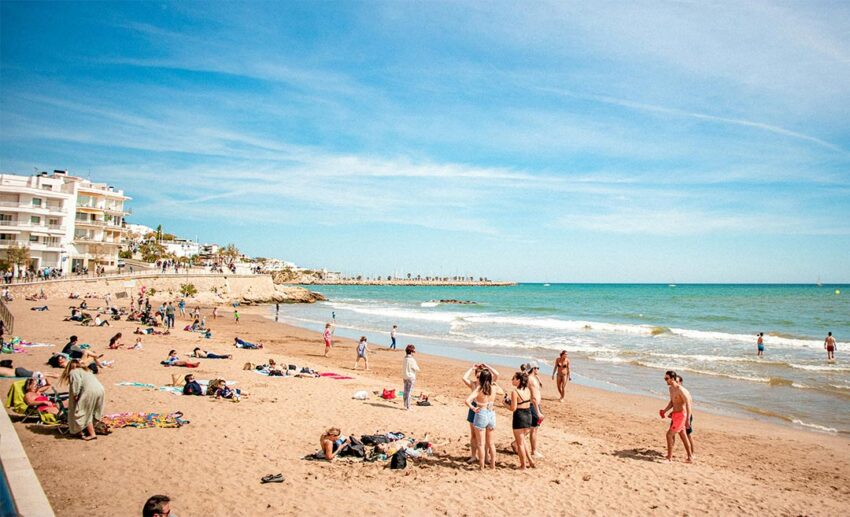
Travel also offers something increasingly rare: exposure to different ways of living. A few days in another city can challenge assumptions you’ve carried for years. You might notice people spending more time outdoors, or that work appears less central to daily life.
Perhaps success seems to be measured differently.
These observations aren’t necessarily instructions to change your own life but reminders that there is more than one way to live it. When we’re immersed in our own routines, it’s easy to mistake familiarity for inevitability. Travel can help gently challenge that notion.
The answer may not arrive straight away

One of the biggest mistakes we make is expecting travel to deliver immediate clarity. That’s really not the case. Somewhere between airport security and hotel check-in, it’s unfair to expect the universe to finally reveal exactly what we’re supposed to do next.
Life rarely works that way, and perspective often arrives gradually. You return home and notice things differently, conversations land differently, decisions that once felt impossible begin to feel manageable, and the answer may not suddenly appear, but the path forward becomes easier to recognise.
Perhaps that’s the real value of stepping away, not because travel changes who we are, but because it temporarily removes us from the noise surrounding our lives. But every so often, putting a little distance between yourself and the everyday life you’ve always known is exactly what allows the answer to find you.