A mother-daughter trip through Yunnan revealed how travel can reshape relationships, patience, and the way we see our parents.
I’ve always envied mother-daughter relationships that look effortless. The kind where mothers and daughters seem more like best friends than family.
Mine was never quite like that.
It wasn’t bad, just distant. We didn’t really do affection, and even simple things like spending time together for too long could feel awkward. More often than not, conversations with my mum ended in disagreement, so over time, distance became our way of keeping the peace.
So when my planned solo trip to Yunnan during jacaranda season unexpectedly turned into a mother-daughter trip for just the two of us, it felt equal parts meaningful and mildly reckless.
Part of it came from guilt. My mum had mentioned wanting to visit China before, and I realised I had never actually taken her on a trip. Part of it was timing, with Mother’s Day approaching. And part of it was impulse, the same impulse that made me book the trip in the first place.
I told myself that travelling together might bring us closer. Yunnan, with its slower pace, cooler weather, and scenic towns, felt like the perfect setting for that.
In reality, travel didn’t magically change who we were. It simply gave me a clearer view of my mum — and of myself alongside her.
A trip that changed our roles
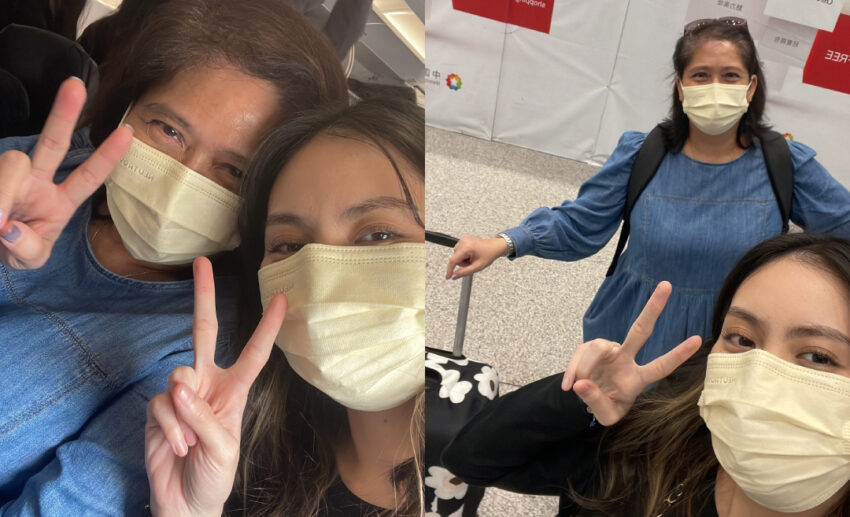
Leading up to the trip, I’d be lying if I said I wasn’t anxious. This was our first time travelling to China and our first time travelling together, just the two of us. I kept wondering if I had planned everything properly, and whether I’d be able to handle things if something went wrong.
The overthinking didn’t stop until we boarded the plane.
Then, during take-off, it hit me: a sudden wave of anxiety. I thought I hid it well, but my mum noticed. Without saying a word, she reached for my hand and held it until we were in the air.
It felt awkward, but also grounding.
In that quiet moment, I realised she was just as nervous and excited as I was, only her maternal instinct kicked in first.
Before landing at Kunming Changshui International Airport, we were handed arrival cards. Instinctively, I took both forms and filled them in. It was a small task, but it marked an unexpected shift. The roles had quietly reversed.
What used to be her responsibility was now mine.
I felt slightly lost, but I masked it, not wanting to make her anxious, too. Neither of us had travelled to a foreign country without someone else taking the lead before, and suddenly I was the one making decisions, figuring things out, and pretending to be calmer than I actually felt.
Meanwhile, my mum couldn’t contain her excitement. “I’m so excited! We’re going to China,” she said, beaming.
Seeing her express herself so openly felt unfamiliar, almost strange, but also strangely endearing.
Expectations vs reality on the road
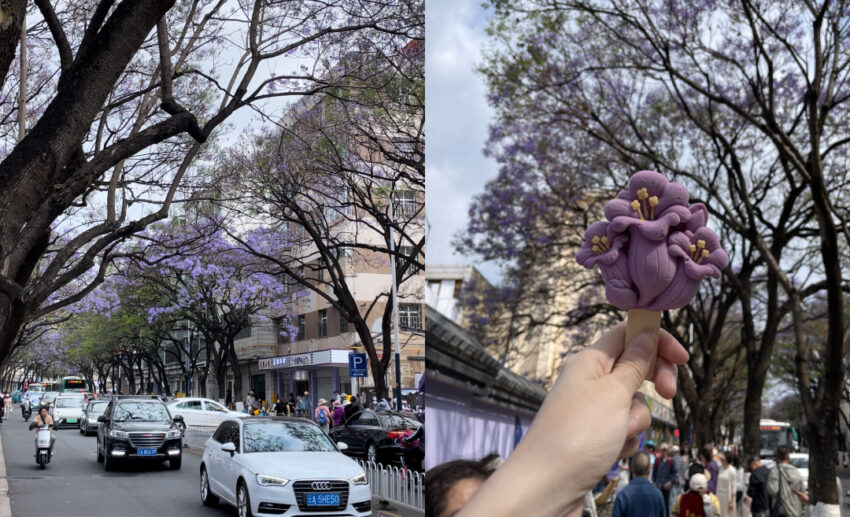
There’s a certain optimism that comes with travel. I imagined that being away from our usual routines would make space for something new between us. In my head, we’d admire jacaranda blooms together, take photos for each other without impatience, and ease naturally into conversations we never quite managed to have at home.
Reality, of course, unfolded differently.
We moved at different paces, had different thresholds for fatigue, and even simple decisions like where to eat, when to rest, and how long to stay somewhere required more negotiation than I expected.
The friction I’d spent years avoiding at home showed up just as easily on the road.
And yet, in between those moments were quieter ones that felt unexpectedly meaningful. Sitting side by side during long journeys, sharing meals after tiring days, or simply experiencing somewhere new together without needing to fill every silence.
Travelling together didn’t transform our relationship into something entirely different. It simply revealed it more clearly.
Then came one of the moments I had looked forward to most: the jacarandas in Kunming.
Jacaranda season typically runs from mid-April to the end of May, and we arrived expecting to catch them in full bloom. But nature had other plans. While there were blooms, they hadn’t quite reached their peak, likely due to shifting weather patterns.
It was a small disappointment, but also a reminder that so much of travel sits outside your control.
And perhaps that was part of the lesson, too.
Why Yunnan felt right for us
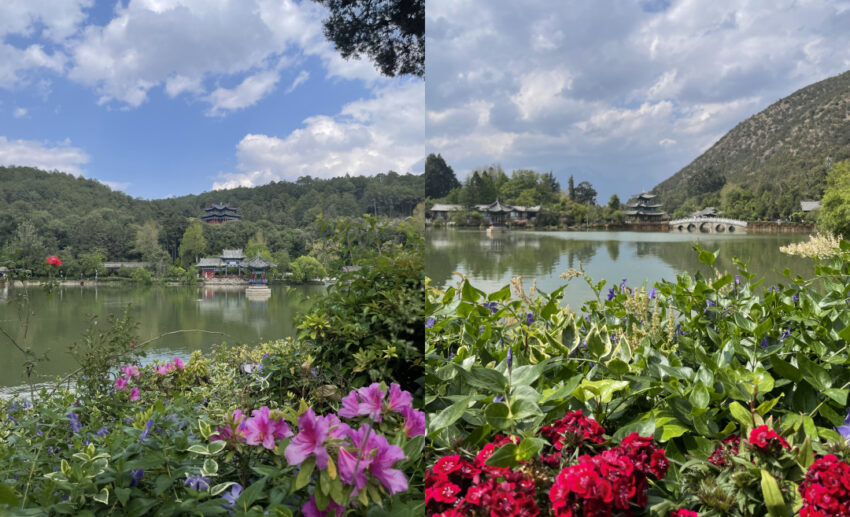
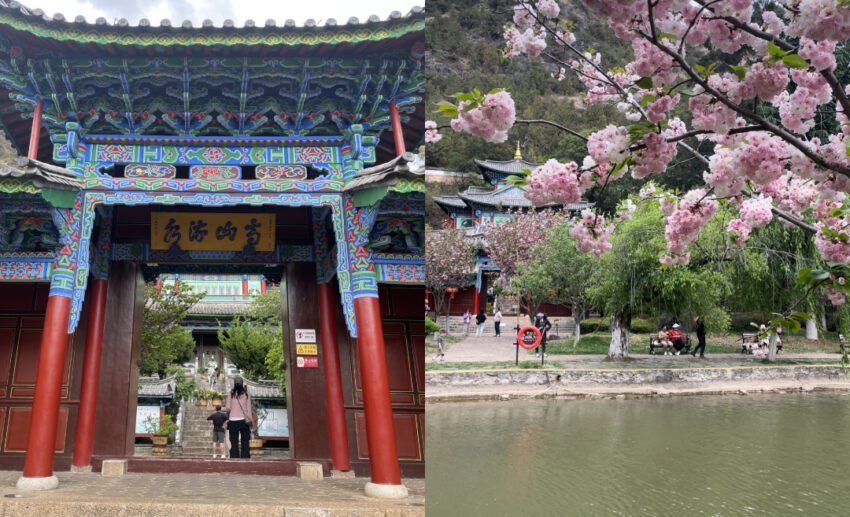
Part of what drew me to Yunnan was the idea that it would naturally slow things down for us.
After the pace of everyday life in Malaysia, I wanted somewhere scenic but gentler; somewhere with cooler weather, slower rhythms, and enough space for both my mum and me to move without constantly rushing.
On paper, Yunnan felt like that balance.
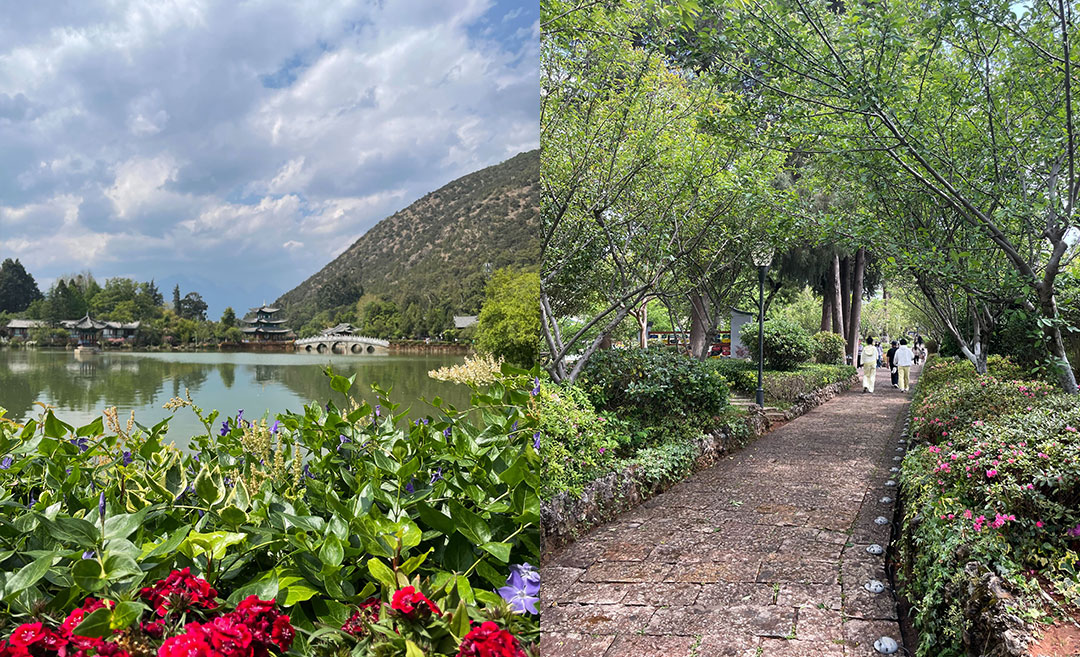
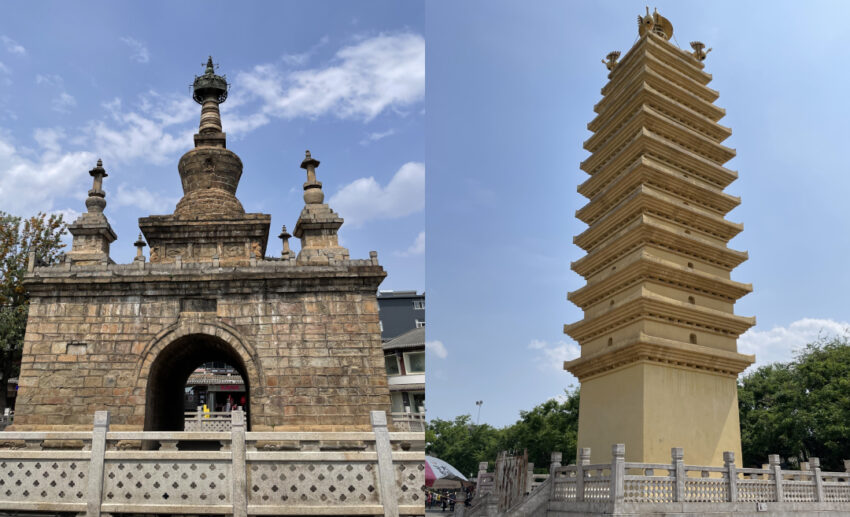
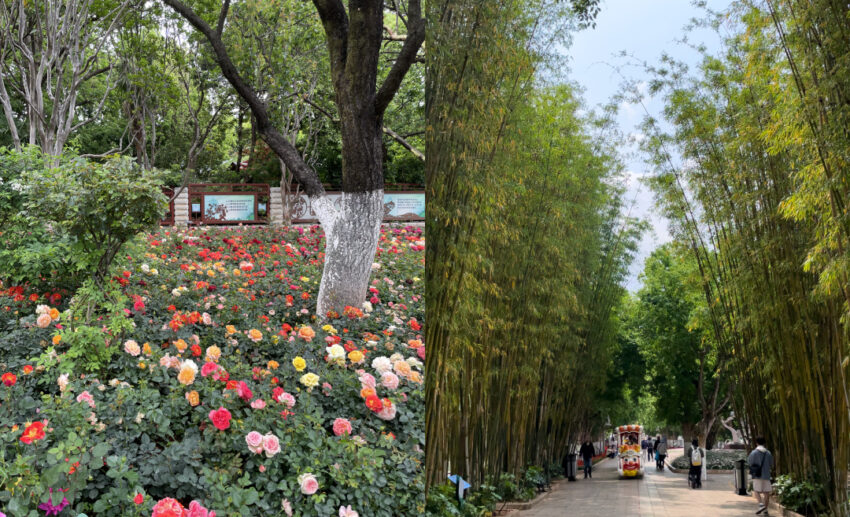
Our first stop was Kunming, where our days were relatively light. We wandered through parks, old streets, and local markets, easing ourselves into the pace of the trip. At that point, my mum was still enthusiastically walking everywhere, taking everything in with curiosity.
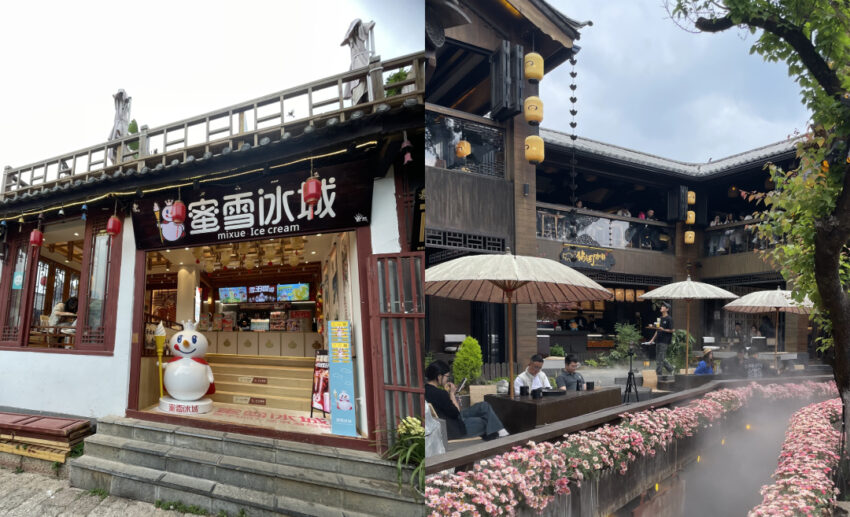
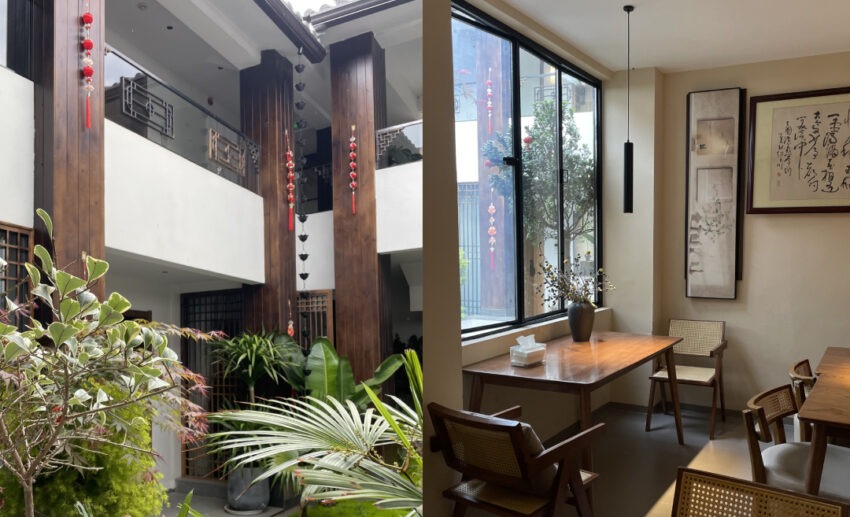
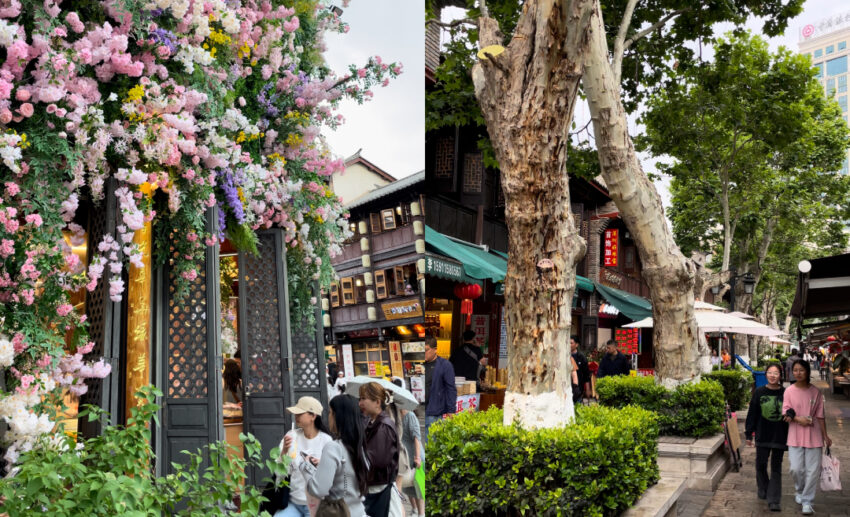
From there, we continued to Lijiang, where the atmosphere felt entirely different. The cobblestone lanes, wooden buildings, and mountain air made it feel like stepping into another era. It quickly became one of my favourite parts of the trip, not because of any major itinerary item, but because wandering around together felt surprisingly easy there.
This was also where I made one of the more stressful decisions of the trip — booking a tour through WeChat after seeing it recommended online.
As someone who likes structure and certainty, it felt risky. There was no polished booking platform or detailed confirmation page, just messages back and forth and a lot of trust. And because I wasn’t only responsible for myself, the pressure felt heavier.
Still, I went ahead with it. And surprisingly, it turned out to be one of the best parts of the trip.
Seeing snow — and seeing my mum differently
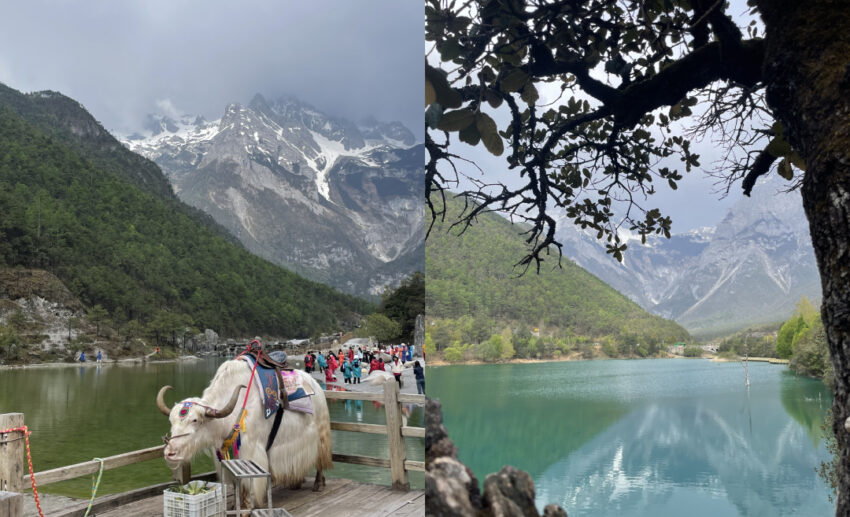
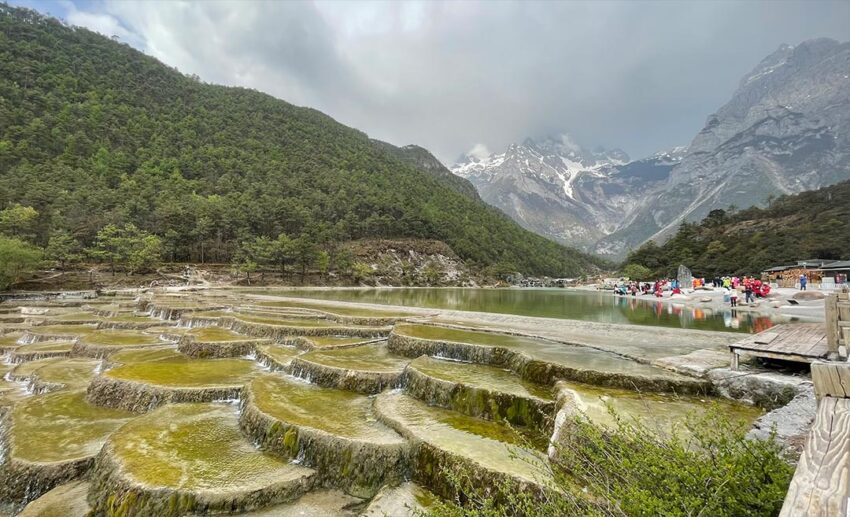
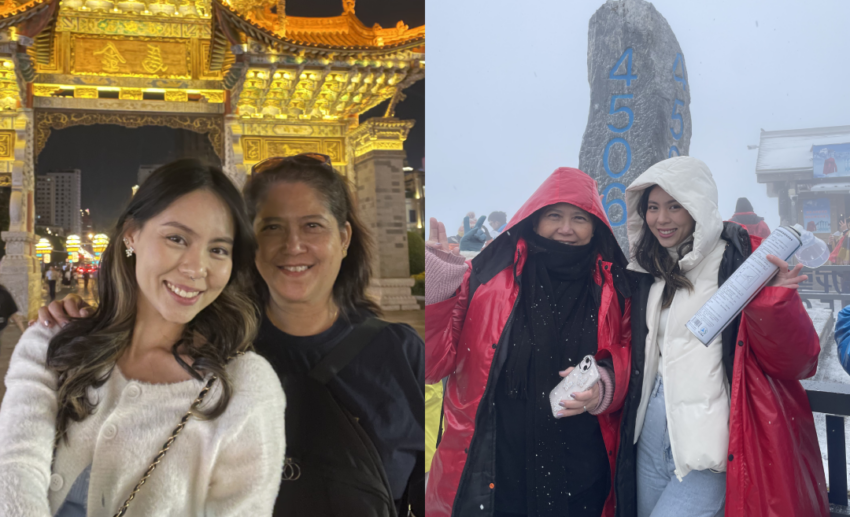
Our tour to Yulong Snow Mountain and Blue Moon Valley became the emotional high point of the entire trip.
Before going, I had been worried about altitude sickness, especially for my mum. I had packed medication, bought oxygen canisters, and kept checking if she was okay during the journey up. I was constantly checking in on her as we took the cable car up, making sure she was breathing comfortably and taking oxygen when needed.
What I wasn’t expecting was snow.
Recent videos online had shown melting conditions, so I assumed we had missed our chance. But when we arrived at the observation deck, everything was completely covered in white.
For a moment, neither of us fully processed it.
My mum was the first to break the silence.“Is this snow?” she asked, laughing in disbelief.
I remember hesitating for a second, almost convincing myself it couldn’t be real. But it was.
It was our first time seeing snow.
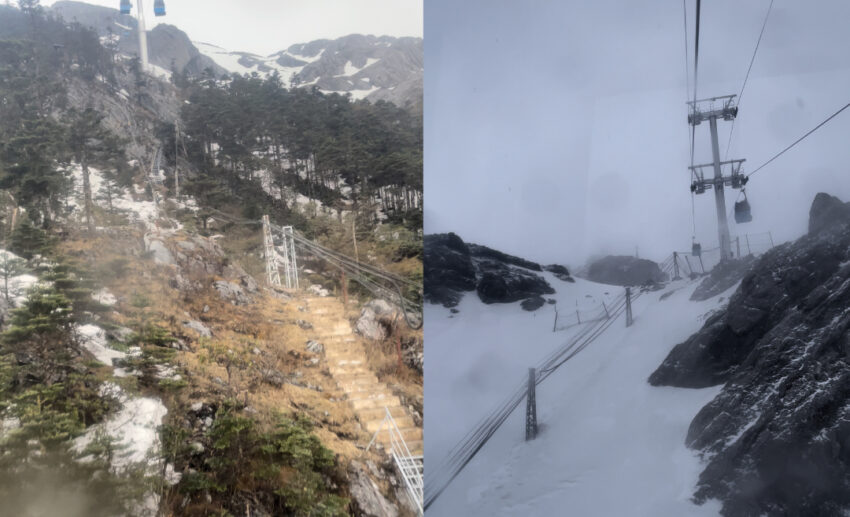
And suddenly, all the planning, worrying, and overthinking fell away.
My mum, who normally dislikes being photographed, started asking for pictures. She smiled constantly, almost childlike in her excitement. There was a softness to her that I rarely get to see.
It felt like I was watching her inner child quietly surface again; an unfiltered, unguarded side of her emerge. I was seeing not just my mum, but a person experiencing wonder in real time.
For a brief moment, nothing else mattered. It was a shared moment of joy that didn’t belong to logistics, planning, or anything else.
It was just her and me, standing there in the snow together.
What I’d do differently next time
As the trip continued and eventually came to an end, I found myself thinking less about the places we visited and more about how we moved through them together.
If I could plan this trip again, there are a few things I would do differently.
I would start by setting clearer expectations for her before we even left. As best as I could based on research, I’d walk her through what each day might look like; the walking distances, what we’d be seeing, and even small details like what to wear or bring. Not to over-control the experience, but to reduce the uncertainty that comes with unfamiliar places.
Because what feels manageable in your twenties or thirties can feel very different when travelling with ageing parents, even if they don’t openly say it.
I realised this most clearly when we moved between cities. Travelling from Kunming to Lijiang and back again involved DiDi rides, speed trains, and navigating pick-up points while managing luggage. What looked straightforward on paper became far more tiring in practice. And while that might be part of the adventure for me, I realised it wasn’t the easiest way to travel for her.
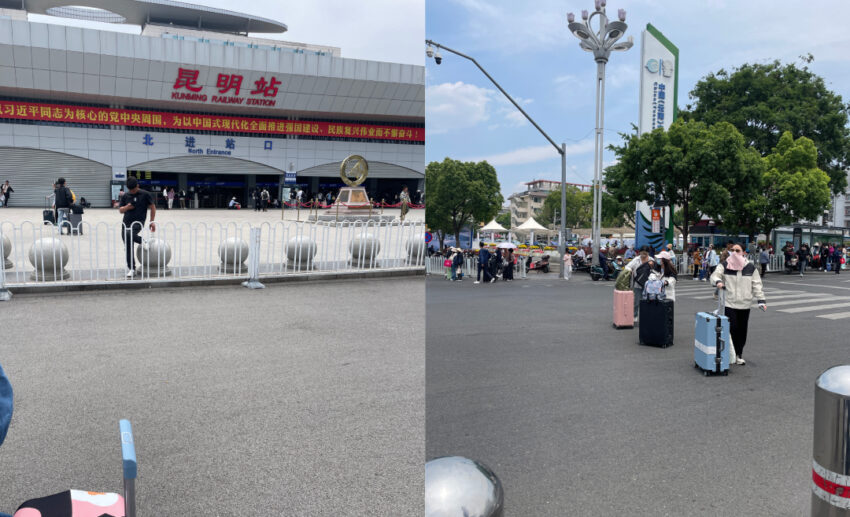
If I were to do it again, I’d prioritise ease over efficiency. Less rushing, fewer transitions, and probably private transport whenever possible.
Not for luxury, but for comfort.
There were smaller things I overlooked as well.
Food, for example. I had planned extensively around what we would see, but barely thought about where we would eat or how often we’d need proper breaks. I focused so much on making the most of the trip that I underestimated how tiring constant movement could become.
And then there was something more personal I only recognised in hindsight.
There was a lot of walking on this trip. A lot of pushing through fatigue.

I’ve always thought of my mum as strong and resilient, and she is. But during this trip, I also started noticing the ways she was ageing, and how often she chose not to acknowledge it out loud.
She kept going because she wanted to experience everything, even when her body was telling her otherwise.
And I found myself becoming frustrated at times, not because she was doing anything wrong, but because I could see what she wouldn’t admit.
I said things like, “You should rest,” or “Let’s stop for a bit.” But I’ve since realised even that can unintentionally sound heavy.
Moving forward, I think I’d say it differently. Something softer, like: “Let’s sit here for a while,” or “I want to rest for a bit.” Not to make it about her limitations, but to make it shared.
Because sometimes travelling with your parents isn’t just about planning better.
It’s about learning how to meet them where they are, without making them feel like they’re falling behind.
The journey I remember most
What stayed with me wasn’t really Yunnan itself, or even the itinerary I spent weeks planning.
It was the smaller moments I didn’t realise I was collecting at the time.
The way my mum held my hand during take-off. The way she lit up when she saw snow for the first time. The way she kept going even when she was tired.
I used to think travelling together might change our relationship. But I realise now it didn’t change who we were.
It just gave me a clearer view of her and a clearer view of myself in relation to her.
And maybe that was the real journey after all.
All photos are by and courtesy of the writer, Ashley Lim.