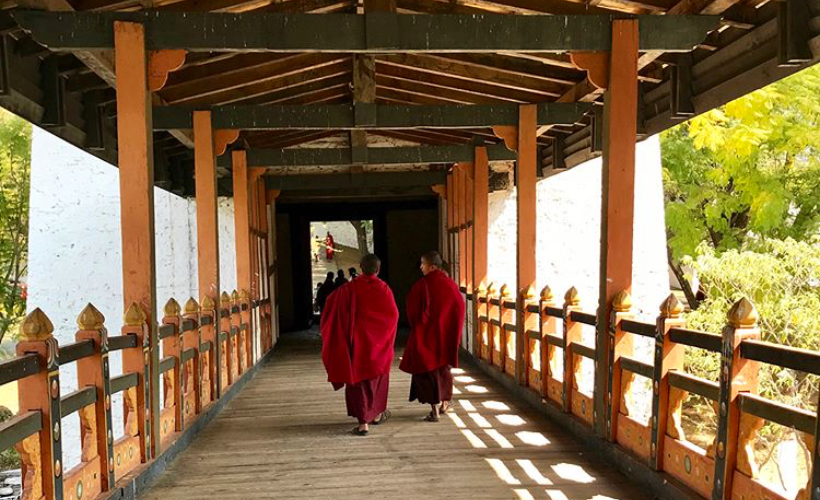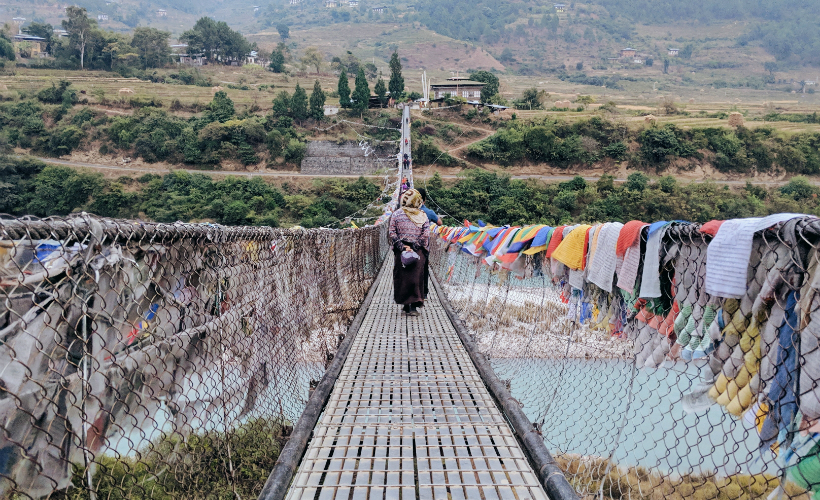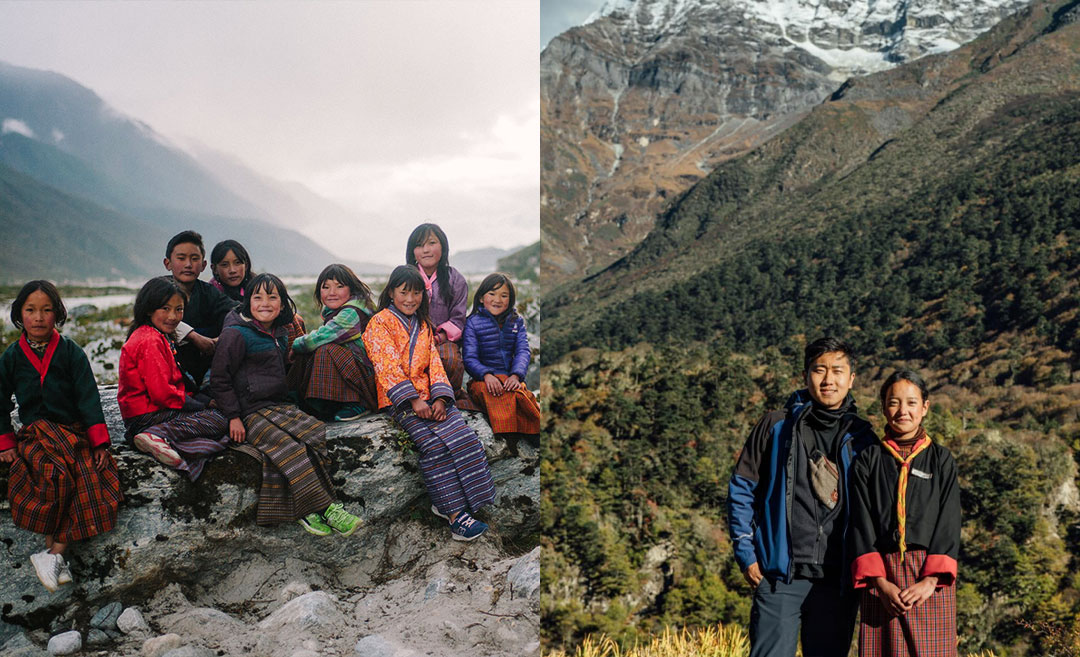
The story of Ugyen in Lunana gives us a glimpse into the slow-paced, highland life of the Bhutanese. (Left and right images by Lunana: A Yak in the Classroom)
Bhutan is famed for its rugged landscapes, strong Buddhist tradition, as well as a national policy that values happiness over materialism or modernisation.
These three elements are not only central to the movie Lunana: A Yak in the Classroom—they became the essence of its simple, yet raw storytelling.
This directorial debut by Bhutanese filmmaker Pawo Choyning Dorji made headlines when it was nominated for Best International Feature Film at the 94th Academy Awards.
Quite a feat for a nation that legally welcomed television and the internet only in 1999—the last country on the planet to do so.
Where is Lunana?
Lunana: A Yak in the Classroom tells the story of Ugyen Dorji (played by Sherab Dorji), a city boy who is sent to teach at the country’s most remote school in the far-flung highlands of Lunana.
Nestled in the northern district of Gasa, the region borders China’s Tibetan Himalayan range, which boasts postcard-perfect pastoral fields, cordilleras, lakes, and glaciers.
The road to Lunana is a path rarely taken. In fact, there is no road at all.
In the movie, Ugyen travels for eight days, starting with a bus ride from the capital Thimphu to Gasa Dzong, followed by six days of trekking through lush jungles and jagged peaks—a journey that isn’t so far-fetched in real life.
In order to film the movie, the cast and crew of 35 travelled with food, equipment, and other supplies on their backs and with the help of 65 mules. In Lunana, there was no electricity, running water, or internet, and the crew had to rely entirely on solar power throughout their three-month shoot.
The original remote learning
“When I captured Lunana, I really wanted to capture the untouched purity of the people there,” Pawo shared in a conversation with Ang Lee, a three-time Oscar-winning director.
Much of the raw innocence in the film is owed to the cast, especially the kids that Ugyen has to teach. To keep it authentic, Pawo enlisted Lunana natives, including the adorable class captain Pem Zam, to act in the movie.
Even though he is initially reluctant to stay, Ugyen eventually swaps his T-shirt and jeans for a gho, the traditional attire for Bhutanese men, and kicks off his lessons in maths, English, and Dzongkha, the official national language.
Later on, he begins to amp up the lessons with guitar sessions and even teaches the kids how to brush their teeth. The scene was, in fact, a real first experience for the kids, who have never watched a movie or seen a car.
Much of the film was shot at Mindrelthang Primary School, which the kids go to. Its real-life teacher, Ugyen Rinzin, even makes a cameo towards the end.
The yak in the classroom
Aside from Ugyen, the two other major characters are villager Michen (Ugyen Norbu Lhendup) and songstress Saldon (Kelden Lhamo Gurung).
Ugyen first meets Saldon while foraging the fields for yak dung, which is used as a fuel source. Later on, Saldon gifts him a gentle old yak named Norbu (meaning “jewel”) and teaches him the Bhutanese yak herder hymn, “Yak Legbi Lhadar”.
Yaks have been a big part of Himalayan life for centuries. Their meat, known to be low in calories and cholesterol, is turned into delicacies like kargyong (sausage) and sachu (dried or smoked meat). Yak milk, meanwhile, makes for delicious butter and durukho (fermented cheese).
After a year with the kids, the yak, Michen, and Saldon, Ugyen finds he has a hard time leaving the slow pace and humble beauty of Lunana.
Pride of Bhutan
Lunana doesn’t offer a wishful ending, but rather, a straightforward tale about a city slicker’s experiences in the remote highlands, setting the movie apart from other boy-meets-world stories.
Since its release in 2019, the movie has been making the rounds on the international film circuit, including the Busan International Film Festival and Palm Springs International Film Festival, before venturing into mainstream cinema with the 2022 Oscars.
Other films nominated in the same category are Drive My Car (Japan), Flee (Denmark), The Worst Person in the World (Norway), and The Hand of God (Italy).
This story by Irvin Hanni was originally published on AirAsia. Zafigo republished this story in full with permission from the publisher, simply because good stories should be read by as many people as possible! If you have stories that will be of interest and useful to women travellers, especially in Asia, please get in touch with us at [email protected].