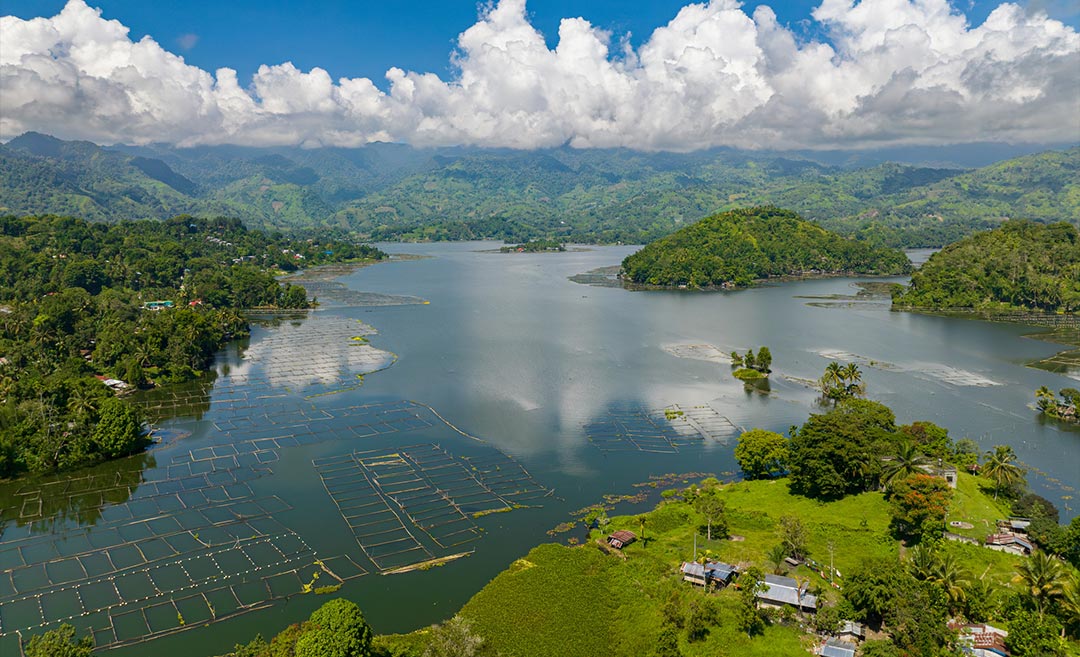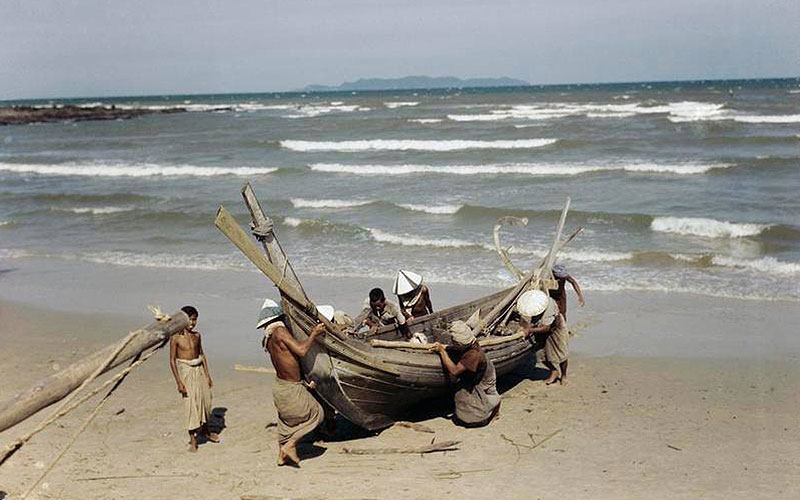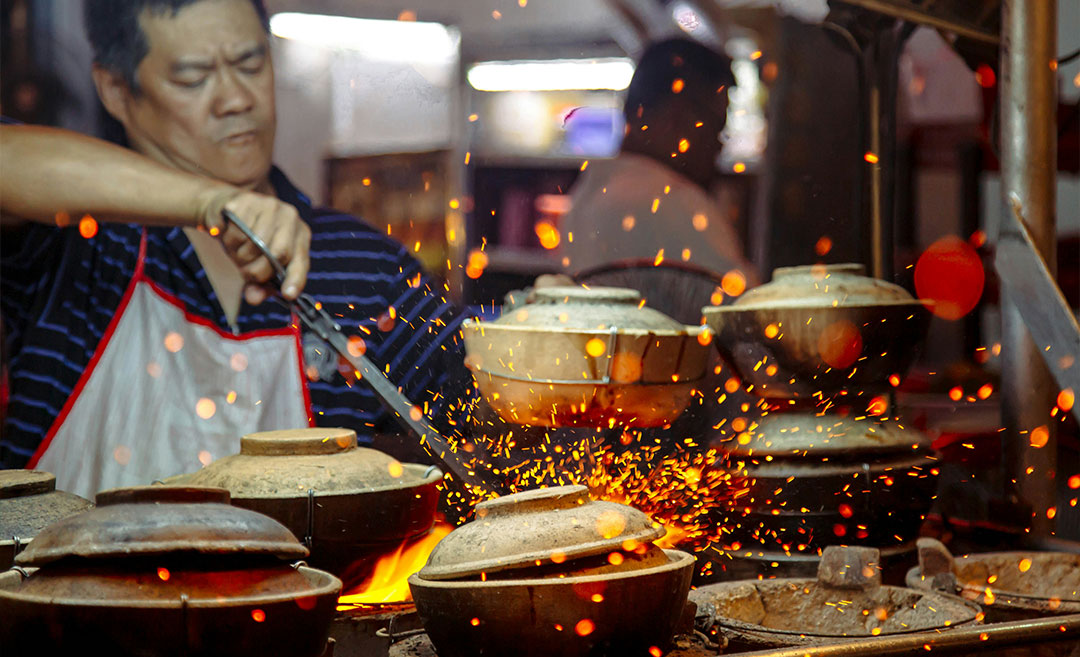
A journey through Malaysia’s soundscapes reveals how ordinary noises can become powerful reminders of home and belonging. (Image by Ash Edmonds)
“…and to all Malaysians, welcome home.”
I’ve heard those words more times than I can count.
Sometimes after a holiday overseas. Many times after flying home from university, and later, after travelling for work – when “home” had briefly become somewhere I visited rather than somewhere I lived. It didn’t matter where I was flying back from. The moment the captain welcomed everyone home, something settled. I hadn’t even stepped off the plane yet, but I already felt like I’d arrived.
Growing up, I experienced Malaysia the way most people do. I remembered beaches by the colour of the water, towns by their skylines, and holidays through family photos tucked into albums. Whether it was a trip home to Popo’s kampung, a school trip, or a weekend away with friends, travel then was mostly about what I could see.
It wasn’t until I left to study overseas that I realised home could introduce itself in other ways too. Not only through landmarks, but through the sounds I’d never noticed before because they’d always been there.
Once I started paying attention, I realised every corner of Malaysia has its own cadence. Some are loud, some are subtle, but each one has a way of telling you exactly where you are, sometimes before you’ve even looked around. These are the sounds that remind me of Malaysia, my version of home.
“Next station, Masjid Jamek.”
If there’s one sound that tells me I’m back in Kuala Lumpur, it’s not the city’s traffic or even the chatter spilling out from a mamak late at night. It’s the familiar chime of the LRT, followed by the calm voice announcing the next station before the doors slide open.
I’ve heard it on countless commutes when KL was just part of everyday life. It was just background noise then. Now, after time away, it feels oddly reassuring.
Each station carries its own memories: meeting friends after lectures, wandering through Central Market, spending an afternoon in bookstores, or ending the day in Bukit Bintang, where buskers compete with the buzz drifting from cafes, bars, and roadside stalls.
Temple bells in the limestone hills
Ipoh has plenty of sounds that could define it. The clatter of porcelain cups in kopitiams. Chatter outside old-timey biscuit shops. Vehicles slowly moving through the old town. Yet the sound I return to most isn’t in the city streets at all.
It’s the sound of temple bells echoing through the limestone caves.
Inside cave temples like Sam Poh Tong, the world seems to soften. Conversations instinctively become quieter, footsteps slow, and every echo of the bell carries just a little further against the rock walls.
Clatter. Crackle. “Char koay teow!”
Dinner in Penang doesn’t begin when the food arrives. It begins with noise. Someone calls out an order across the room. Woks roar over fierce flames. Chopsticks knock against bowls. Glass bottles clink into crates. Families, like mine, on many occasions, debate what to order while another table is already halfway through dessert.
It’s busy, occasionally overwhelming, and completely wonderful.
Family trips to Penang always seemed to revolve around food. We planned our days around what to eat next, and along the way, I realised every hawker centre and dai chow had its own orchestra. No single sound dominates, yet together they become unmistakable.
The rush of falling water
Growing up in the Klang Valley, a day or weekend trip usually meant escaping the city rather than leaving the state. For my family, that often meant somewhere with water.
The moment we arrive at places like Kanching Falls or Sungai Congkak, the soundtrack changes completely. City noise gives way to rushing water. My cousins and I would race ahead to the banks before the adults had unpacked the picnic. Our parents called after us to be careful, knowing full well we’d already be soaked waist deep.
It’s one of those sounds that I feel is unmistakably Malaysian. Not because waterfalls are unique to us, but because of everything happening around them. Plastic containers filled with home-cooked food. Portable camping chairs scraping across rocks. Someone firing up a barbecue while another group shares sliced fruit they’ve kept cool in the stream.
“Tiga ikat, lima Ringgit!”
Malaysian pasars also have a language of their own. At places like Siti Khadijah Market in Kota Bharu, it’s the constant verbal exchanges that stayed with me most. Questions about prices. Friendly bargaining. Familiar greetings between traders and regulars. Laughter carried from one aisle to the next.
It’s all a reminder that markets have never just been places to shop but where communities check in with one another, where news travels as quickly as produce changes hands. You’ll find markets all over Malaysia, each with its own character.
A party on three wheels
I hear them before I see them. Their colourful lights have become one of Melaka’s most recognisable sights, but it’s the music drifting through Jonker Street that announces they’re nearby.
Depending on the driver, it could be Teresa Teng, BlackPink, Sudirman, or the latest pop hits, all played with equal enthusiasm.
Some people love them. Others wish they’d turn the volume down. Either way, trishaws (called beca, in Malay) are part of the city’s personality.
Every visit to Melaka reminds me that not every travel memory has to be grand. Sometimes it’s something delightfully unexpected that sticks.
A harmonious buzz
I’ve always thought silence in the countryside was a funny idea. Spend enough time in any part of Negeri Sembilan’s natural pastures, and you’ll realise it’s never truly quiet.
On misty mornings, the sounds of insects and birds blend so well in harmony. On afternoons, especially around areas in Seri Menanti or Kuala Pilah, the loudest sound I recall is the chorus of cicadas hidden high in the trees, filling the air with a steady buzz. And a buzz that seems to grow louder the hotter the day becomes.
When the rainforest wakes first
I’ve visited Taman Negara twice. On both occasions, the first thing that surprised me about spending nights there wasn’t what I saw. It was how much I could hear.
Before sunrise, the rainforest is already awake. Birds call to one another from somewhere beyond the canopy. Insects hum so steadily they almost disappear into the background. Now and then, something rustles through the undergrowth just long enough to remind you you’re only a visitor here.
It’s impossible to identify every sound. Maybe that’s the point. The rainforest carries on around you, whether you’re listening or not.
The roar of engines
For a long time, Langkawi existed in my mind as the place every school holiday seemed to lead to. But before the beaches, cable cars, or Underwater World, there was always the jetty.
Suitcases rolling across the terminal. Families counting heads before boarding. Boat crews loading cargo and preparing for departure. Then, finally, the rumble of engines as ferries pulled away from Kuala Kedah.
Those sounds became part of the holiday long before we ever saw the island appear on the horizon.
When the wind does the talking
Perlis is one of the few states I have yet to spend proper time exploring, but even from afar, it has always represented a quieter side of Malaysia. Not silence exactly. Just… space.
Drive through the paddy fields around Kangar or Arau with the windows down, and you’ll hear the wind moving through the stalks long before another car passes by. Birds seem louder here too. Even the occasional motorcycle feels like an interruption rather than part of the background.
And there’s something comforting about that. Malaysia is often celebrated for its energy, its food, and its lively streets. Perlis, in contrast, is a reminder that the country also knows how to be unhurried.
“Please proceed to the counter.”
Some places announce themselves through what you see. Johor announces itself through movement. A lot of movement. If you’ve ever driven or taken the bus across to Singapore, you’ll know exactly what I mean.
The first sounds of Johor are not waves or forests, but the pulse of the Causeway: buses pulling in, announcements echoing through immigration halls, the rush of people trying to make their way through queues as quickly as possible, and conversations happening in a mix of languages as people move between two countries.
It is a place of arrivals and departures. Workers beginning their day. Families visiting loved ones. Travellers heading north or south. The constant movement can feel chaotic, but to me, there’s a welcomed familiarity to it too. The Causeway is not the prettiest introduction to Johor, but to me, it might be one of the most honest.
Tap. Pull. Tie. Repeat.
There are beaches in Terengganu that deserve every bit of attention they receive, but it’s often the calmer moments that stay with me. One morning, before the shops had opened and before anyone had laid out towels on the sand, I found myself watching fishermen repairing their nets beside rows of colourful boats.
The work was almost rhythmic. A knot tightened. A wooden float knocked gently against another. Someone called across the jetty. Then back to the net again.
The mountain that spoke in silence
I arrived in Sabah with a goal: to climb the mountain. At the start, the sounds were familiar ones. Boots hitting the trail. Walking sticks tapping against stone. Hikers who started as strangers but quickly became companions. The footsteps as everyone moved towards the same destination.
Then, as the climb became harder, everything grew quieter. Chatter faded. Breathing became louder. Every step became something to focus on. Mount Kinabalu had a way of stripping everything back until the only sounds were of my own footsteps and breath.
Near the summit, as darkness gave way to the first light of morning, the sounds changed again. The wind grew stronger. Voices became even softer. And for a moment, standing above the clouds, the only thing I could hear was the feeling of having made it.
The hum of a longboat
If Pahang taught me to listen to the forest, Sarawak taught me to listen to the journey.
Travelling upriver by longboat is unlike any other journey I’ve taken in Malaysia.
The hum of the engine becomes almost hypnotic as towns and villages slowly give way to rainforest. Phones stay tucked away. Everyone seems content to watch the river unfold ahead.
It’s one of the rare forms of transport where the journey never feels like the bit between destinations. The sound of the engine becomes part of the destination itself.
For years, I thought travel was about noticing what was different. Different languages, different customs, different landscapes. But leaving home taught me to appreciate what was familiar, too. These days, I still take photos when I travel, but I also find myself listening.
So, what does home sound like to you?
Maybe it’s the clatter of a hawker centre, the call of the Azan, the rush of a waterfall, or the voice announcing a destination. Or maybe it’s something entirely different. Whatever it is, I hope it’s one of those small, ordinary sounds you’ve never really noticed — until one day, you realise you’d recognise it anywhere.